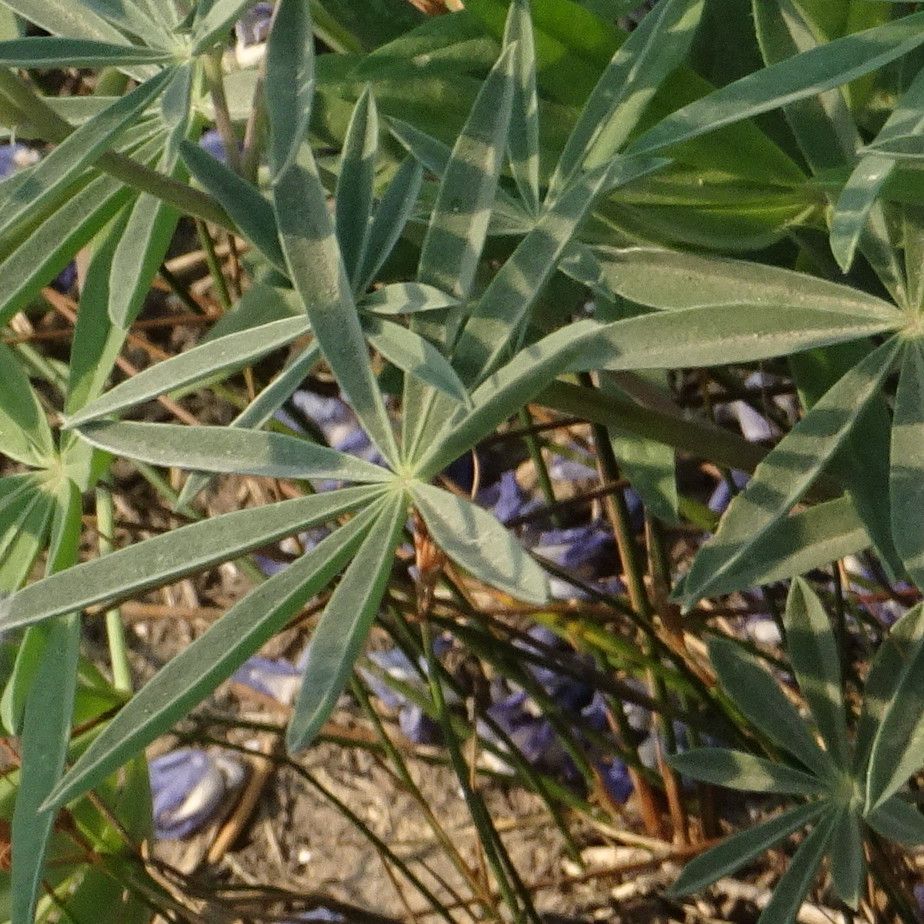
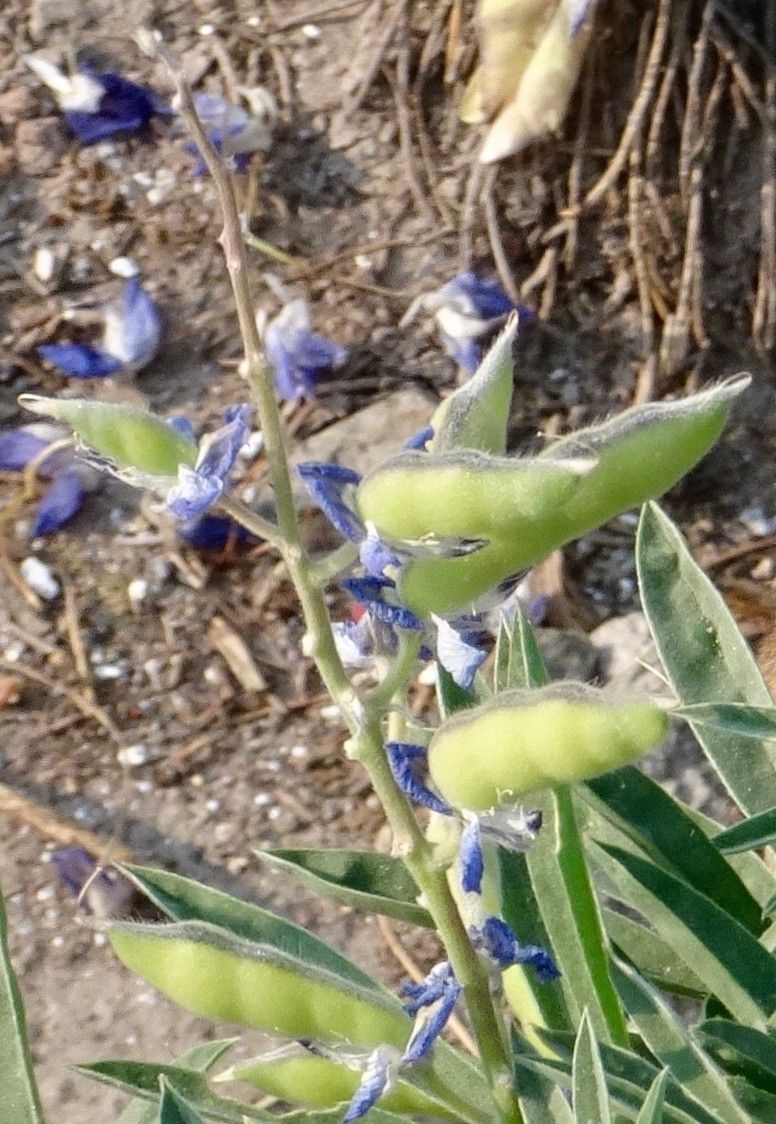
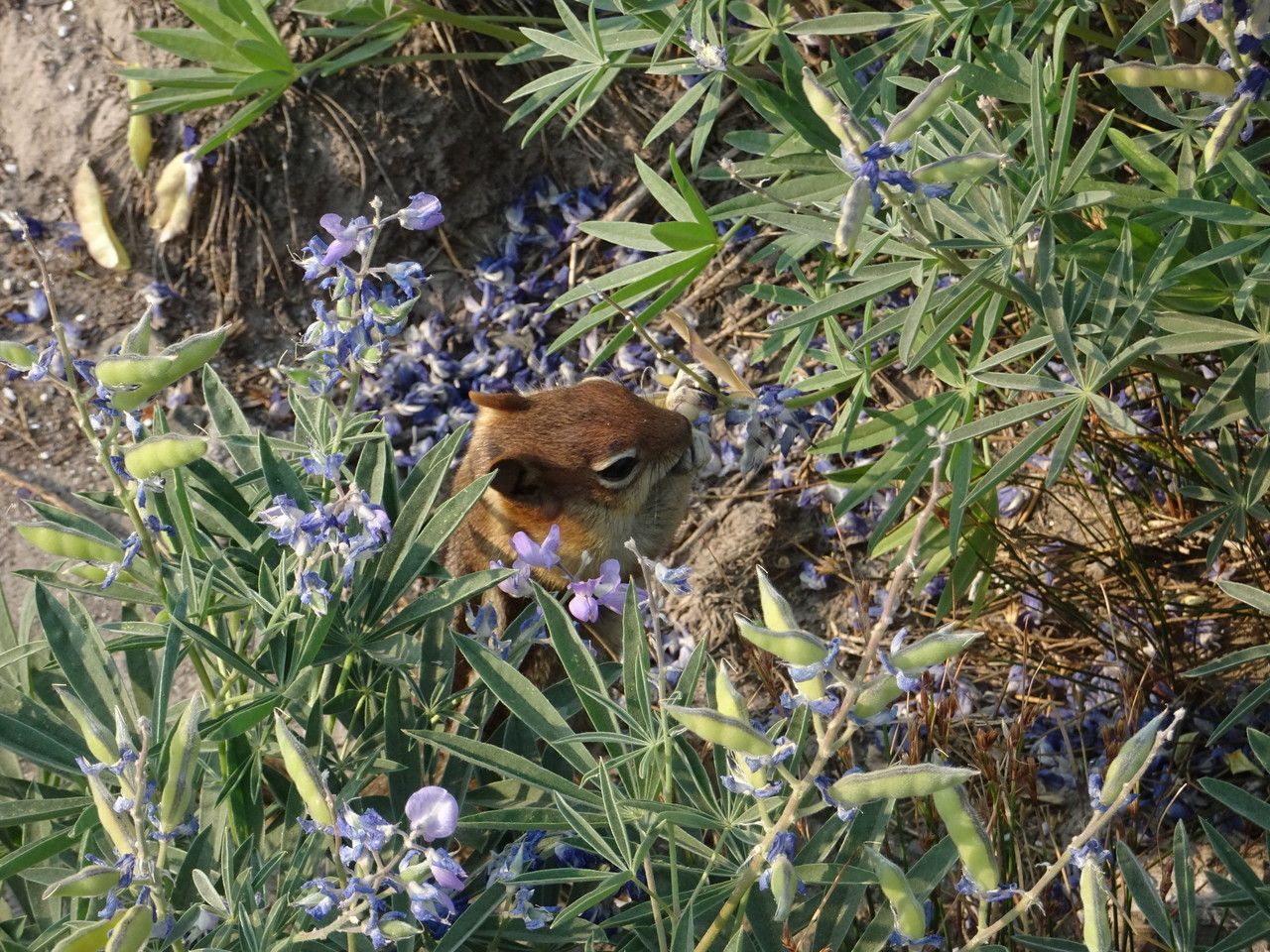
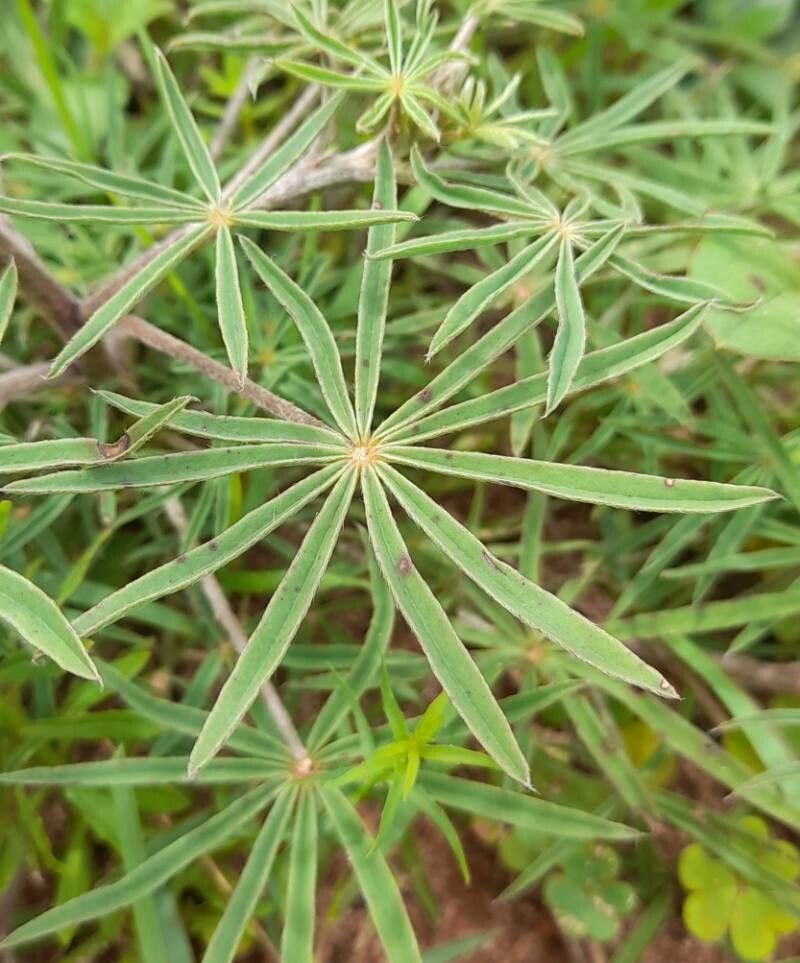
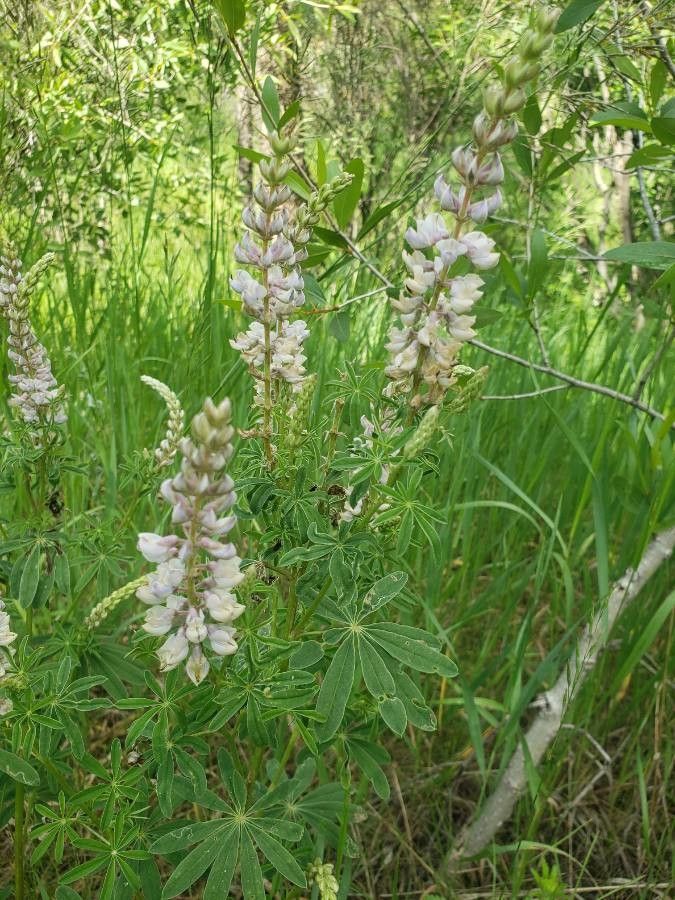
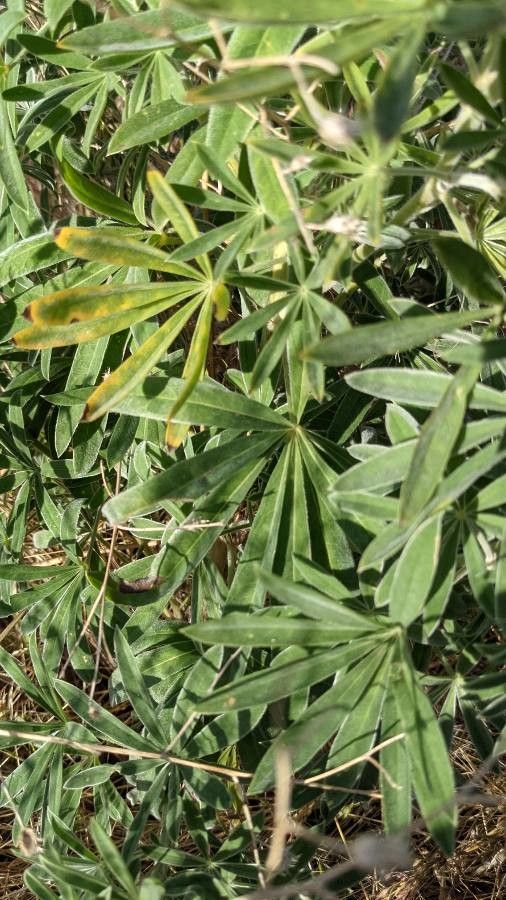
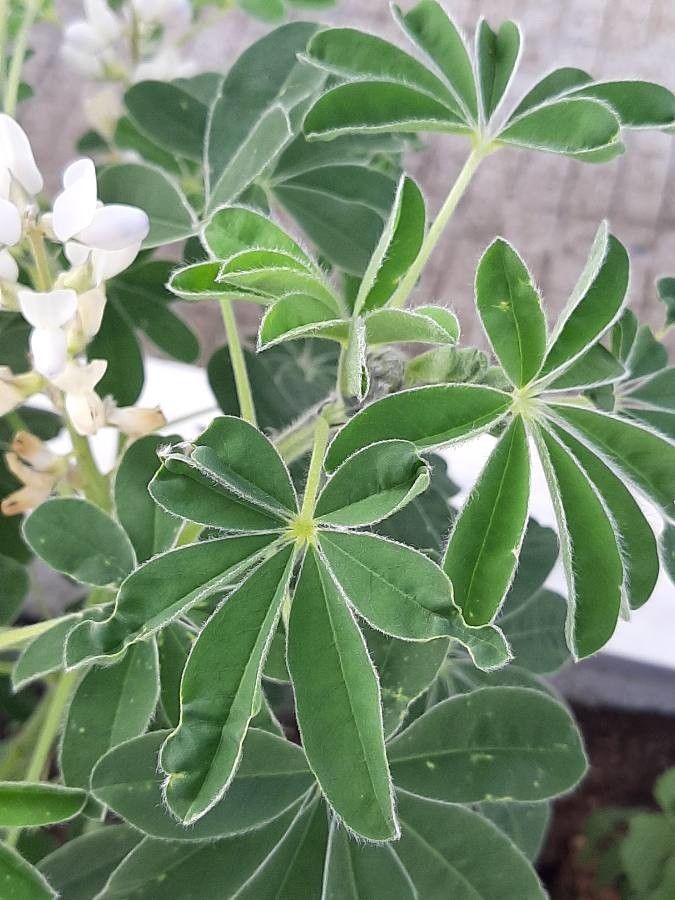
Lupinus latifolius is a species of lupine known by the common name broadleaf lupine. It is native to western North America from British Columbia to Baja California to New Mexico, where it is common and can be found in several types of habitat. There are several subtaxa, described as subspecies or varieties, some common and some rare. They vary in morphology. In general this plant is an erect perennial herb. It grows 30 centimeters to over two meters in height, in texture hairy to nearly hairless. Each palmate leaf is made up of several leaflets, those on larger plants up to 10 centimeters long. The inflorescence bears many flowers, sometimes in whorls. Each flower is one to two centimeters in length, purple to blue to white in color, the spot on its banner yellowish, pinkish, or white. One rare subtaxon, Lupinus latifolius var. barbatus, is endemic to the Modoc Plateau of northeastern California and adjacent territory in Oregon and Nevada. The subtaxon dudleyi is known only from the San Francisco Bay Area. It is a larval host to Boisduval's blue, clouded sulphur, orange sulphur, Persius duskywing, and silvery blue butterflies.
Broadleaf Lupine is fairly disease-resistant and typically not prone to illness. Nevertheless, it can be affected by pests and diseases found nearby. These problems are generally mild. Regarding care, the plant needs moderate maintenance. It should be pruned regularly to keep a good appearance and encourage healthy growth. Fertilizing can also help promote flowering. Broadleaf Lupine is a good choice for anyone with outdoor space like a garden or patio and does not demand extensive gardening experience. When grown indoors, it may need additional attention.
How to keep Lupinus Latifolius.
Light
Broadleaf lupine does best when it receives most of the day's light, which supports healthier development. It can tolerate partial sun, but that may reduce its growth and flowering. In its native habitat it occurs in places with plentiful sunlight. Both too much and too little light can impair growth and cause discoloration.
Temperature
Broadleaf Lupine is native to areas with mild temperatures, typically preferring a range of 59 to 89.6 °F (15 to 32 ℃). In colder seasons, it is recommended to keep indoor temperatures within this range for optimal growth.
Fertilizer
The best time to fertilize a Broadleaf Lupine is in early spring, as it emerges from dormancy and starts active growth. Fertilizing supplies essential nutrients for healthy development. Although Broadleaf Lupine has fairly low fertilizer requirements, applying fertilizer annually can improve its survival and encourage better, longer-lasting blooms.
Pruning
Pruning broadleaf lupines from early to late spring can significantly enhance their growth and the vibrancy of their blooms. Important techniques include removing damaged stems, thinning out excess growth, and deadheading spent flowers. To prevent disease, it's essential to use clean tools. Regular maintenance helps maintain the plant's shape and vitality, ensuring a strong and attractive presence in the garden.
Botanical profile.
- Plant Type
- Herb
- Life Cycle
- Perennial
- Genus
- Lupinus
- Family
- Leguminosae
- Hardiness Zone
- 7
- Mature Height
- 0.61 m to 1.22 m
- Mature Spread
- 0.61 m to 1.52 m
- Leaf Color
- Green, Dark Green
- Leaf Type
- Deciduous
- Flower Color
- Purple, Blue, Pink
- Flower Size
- 1.02 cm to 2.03 cm
- Bloom Time
- Late spring, Early summer, Mid summer
- Planting Time
- Autumn, Winter
- Harvest Time
- Mid summer, Late summer, Early fall
Other names.
Reader questions.
How should I water my Broadleaf Lupine?
To ensure the health of the Broadleaf Lupine, it is recommended to use filtered water at room temperature or slightly warmer. Tap water may contain harmful particles, so filtered water is better. The reason for using room temperature water is that the Broadleaf Lupine is naturally found in warm environments and cold water can be a shock to its system. Avoid overhead watering as it can cause problems with the foliage. Instead, apply the filtered room temperature water directly to the soil until it is completely soaked. This helps to moisturize the roots and allow them to spread through the soil to gather the necessary nutrients.
Why should I put fertilizer on my Broadleaf Lupine plant?
Fertilization is important for the Broadleaf Lupine for a few reasons. One, it provides key nutrients that help the plant grow both above and below ground. However, the Broadleaf Lupine doesn't require a lot of fertilization. In some cases, it can survive without it. But, annual fertilization can be very beneficial for the plant's overall health and flowering. So, if you want your Broadleaf Lupine to look its best, it's recommended to fertilize it annually.
What kind of sunlight does Broadleaf Lupine require?
Broadleaf Lupine requires at least six hours of full sun each day to maintain the health of its leaves, roots, and blooms. While other perennials, such as the Orange Daylily or Giant Coreopsis, can survive on a minimum of three hours of sunlight daily, they will not thrive as well as they would in sunnier conditions.
How can I keep Broadleaf Lupine safe from very hot or cold weather?
To protect Broadleaf Lupine from cold damage during the growing season when temperatures drop below 15℉(-10℃), there are a few recommended measures. If you have planted the Lupine in a container, you can bring the container indoors where it can be exposed to bright, indirect light until temperatures rise above the lower threshold again. On the other hand, if the Lupine is planted in the ground, it is advisable to create an insulated barrier around the plant using mulch or horticultural fabric. This barrier will protect the plant from frost and cold wind. When temperatures exceed 80℉(27℃) in the shade during the day, it is important to limit the amount of sunlight the Broadleaf Lupine receives to six hours or less per day, preferably in the morning hours. To achieve this, shade cloth or a fine plastic mesh can be utilized to reduce direct sunlight exposure during the hottest parts of the day. Additionally, installing a misting system that provides a slow release of cooling mist around the base of the plant can help lower ground temperatures throughout the day.
How many times should I give water to my Broadleaf Lupine plant?
If your Broadleaf Lupine is potted, the most precise way to determine if it needs water is by sticking your finger into the soil. If the top two to three inches of soil are dry, it's time to water it. The same method can be used for outdoor Broadleaf Lupines growing in the ground. If the first few inches of soil have dried out, it's time to water. Typically, watering once a week during spring and early fall is sufficient. However, during extremely hot weather, you may need to water twice or more per week. It's worth noting that mature and well-established Broadleaf Lupines have an impressive ability to endure drought.
When should I fertilize my Broadleaf Lupine?
To successfully fertilize a Broadleaf Lupine, it is best to do so in late winter to early spring. This is when the plant is transitioning from its dormant phase to a period of active growth. Fertilizing at this time promotes healthy growth and sets the plant up for a productive season. While early spring is generally the optimal time, fertilizing in the fall is also acceptable. However, it is not recommended to fertilize during the summer or winter seasons.
Can the sun harm Broadleaf Lupine? How can I keep Broadleaf Lupine safe from the sun and heat?
In warm climates, some Perennial Flowering Plants may struggle with excessive heat and suffer from sun damage. They can wilt, dry out, or even experience growth problems if they are consistently exposed to the intense afternoon sun. However, not all plants require protection from the light afternoon sun. For those that are harmed by intense afternoon exposure, it is recommended to provide them with some shade in warmer climates. Gardeners can achieve this by planting these plants in areas that do not receive direct heat during the afternoon, such as under trees or behind bushes.
What is the best temperature for Broadleaf Lupine?
The temperature requirements for Broadleaf Lupine vary depending on the time of year. There are two main seasons to consider: the growing season and the dormancy season. During the growing season, when the plant is sprouting, the optimal temperature range should be between 65-80℉ (18-27℃). If the temperature drops below 15℉ (-10℃), the plant may suffer, causing its leaves to turn brown and wilt. However, if this cold spell is short, Broadleaf Lupine can potentially survive with some assistance. On the other hand, during the warmer months, it is important to protect Broadleaf Lupine from excessively high temperatures. The upper limit of its temperature range is 95-105℉ (35-40℃), as anything beyond that can damage the plant's foliage and blooms. Hotter temperatures can result in wilting, drooping, and even sunburn on the leaves, which can be challenging for the plant to recover from. Fortunately, there are several quick and easy methods to address this issue.
What do I do if I give my Broadleaf Lupine too much or too little water?
Overwatering is a common issue for Broadleaf Lupines and can cause stems and leaves to wilt and turn yellow. It can also lead to diseases like root rot, mold, and mildew, which can be fatal for the plant. Underwatering is less common but can still happen, resulting in brittle and brown leaves. It's important to detect signs of overwatering early and reduce watering immediately. If the soil doesn't drain well, it should be replaced with a loose, well-draining potting mix. To address underwatering, simply increase watering until the signs subside.
When is the best time to not fertilize my Broadleaf Lupine?
For your Broadleaf Lupine, it's best to fertilize only during late winter and early spring. This plant doesn't require much fertilizer, so one feeding per year is enough. Fertilizing during spring, summer, and fall can lead to overfertilization and its complications. However, if you skipped fertilizing in spring, you can still feed the plant in fall. During most of the growing season, it's best not to fertilize. The plant doesn't need any fertilizer during winter either since it will be in a dormant growth phase, not producing new growth. Therefore, it's not advisable to fertilize during most of the winter.
Do I need to shield Broadleaf Lupine from the sun?
Certain perennial plants require ample sunlight to reach their maximum bloom. However, in warmer climates, some of these plants actually benefit from less sun. For instance, individuals residing in hotter regions might find it beneficial to shade their flowering perennials during the intense afternoon sun, especially during summer months. Although many perennial flowering plants prefer partial shade in the hottest climates, there are exceptions. Take the Giant Coreopsis, for example, as it is not bothered by excessive sun exposure. These plants can flourish even when placed in the full sun during scorching weather.
These are the temperature needs for new or young Broadleaf Lupine plants.
If you are growing a Broadleaf Lupine outside for the first year, it may need extra care during the cold months. Frost can harm the plant and hinder its growth in the spring. To prevent this, the temperature should be kept at 40℉(5℃) or above. This can be done by either bringing the plant inside or using mulch or fabric barriers. During the first year or two, it is best to plant the Broadleaf Lupine in a shadier area. This is because smaller and weaker plants struggle to regulate their temperature in the heat. The plant should receive no more than five hours of direct sunlight per day, especially if the temperature exceeds 80℉(27℃). To control the summer heat, use shadecloth and water or mist the plant frequently.