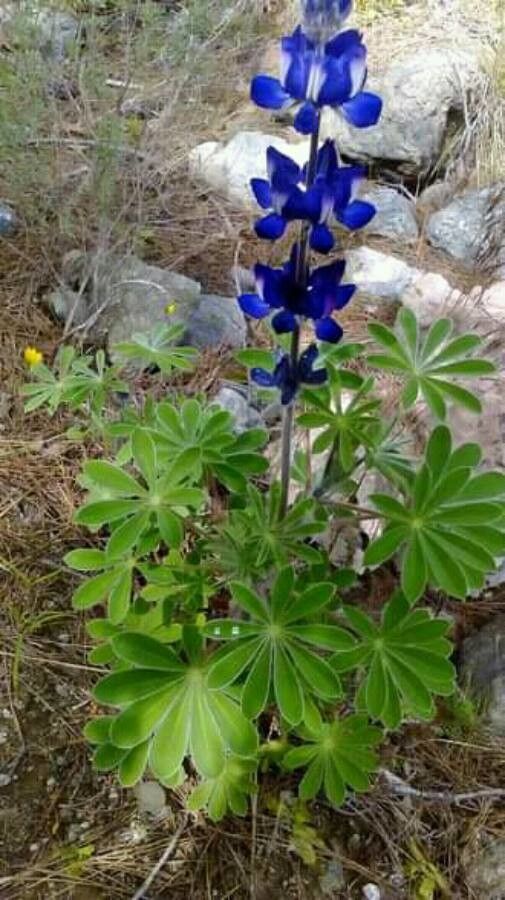
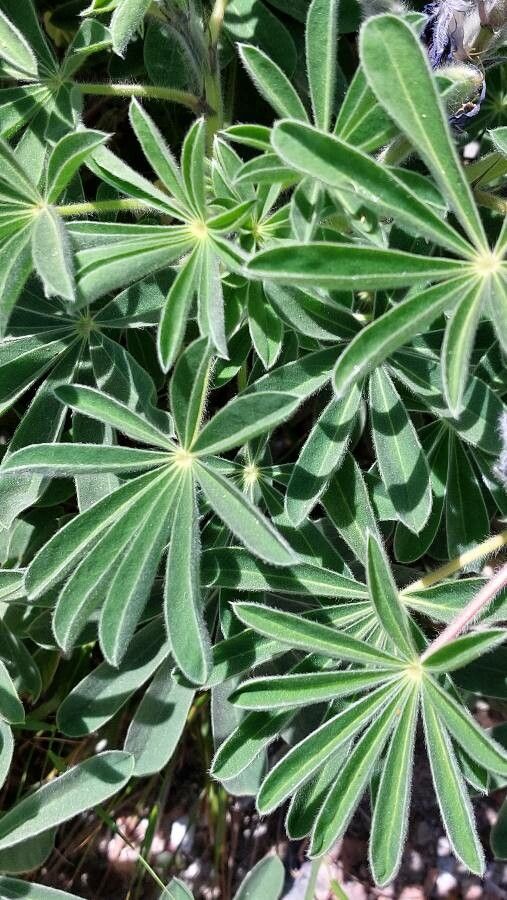
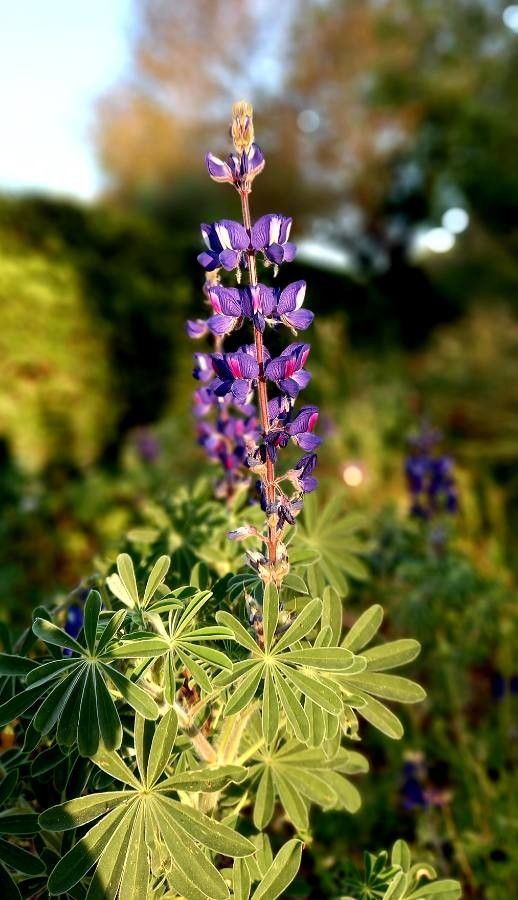
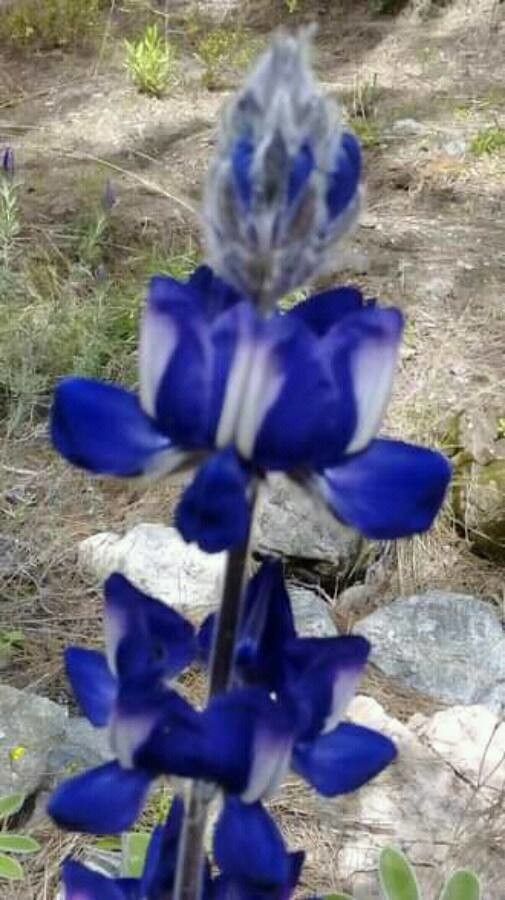
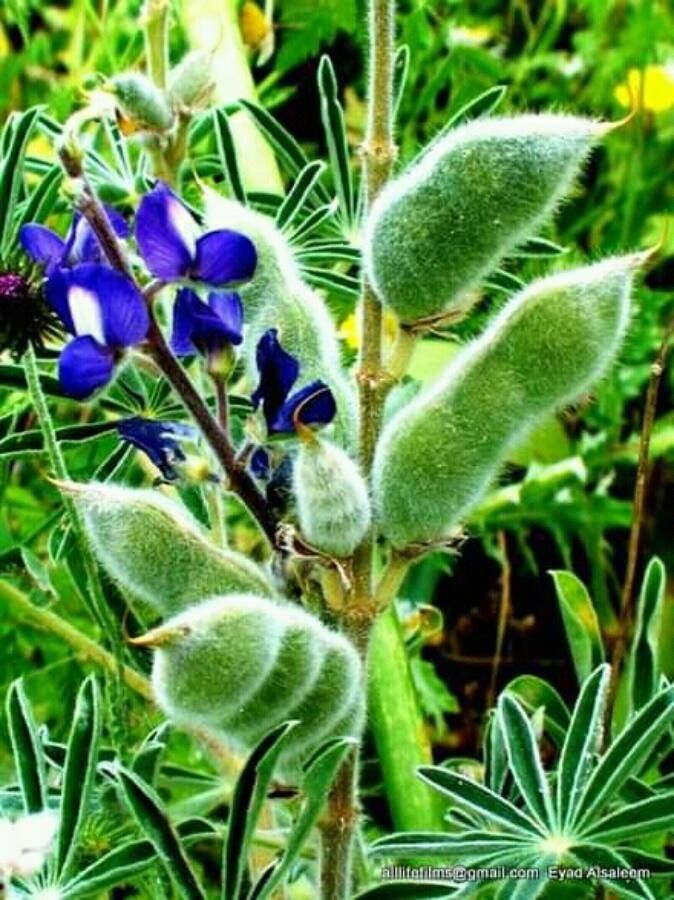
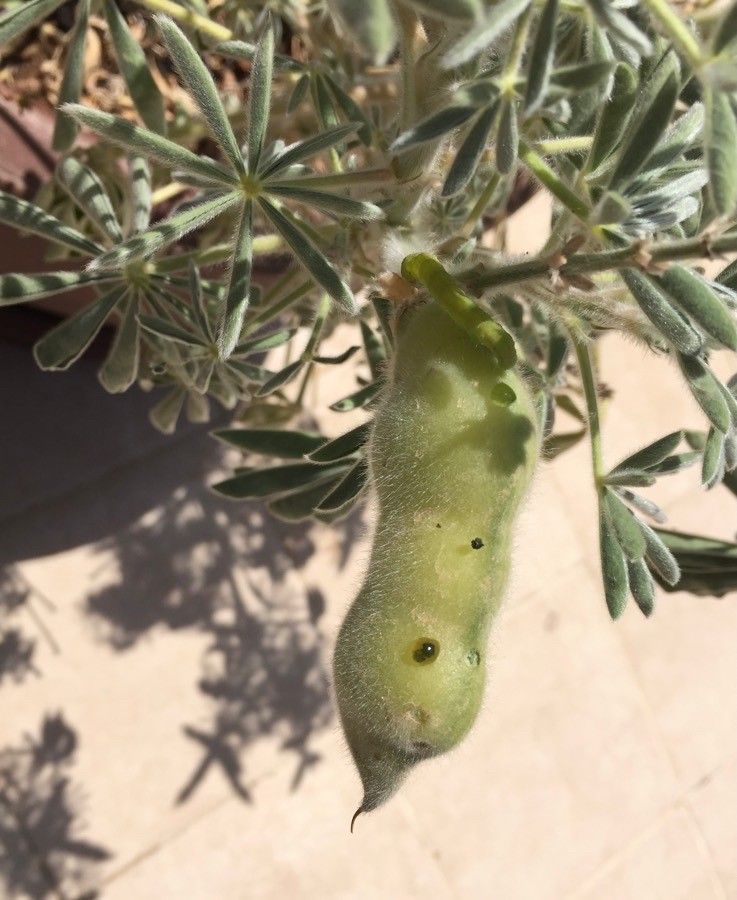
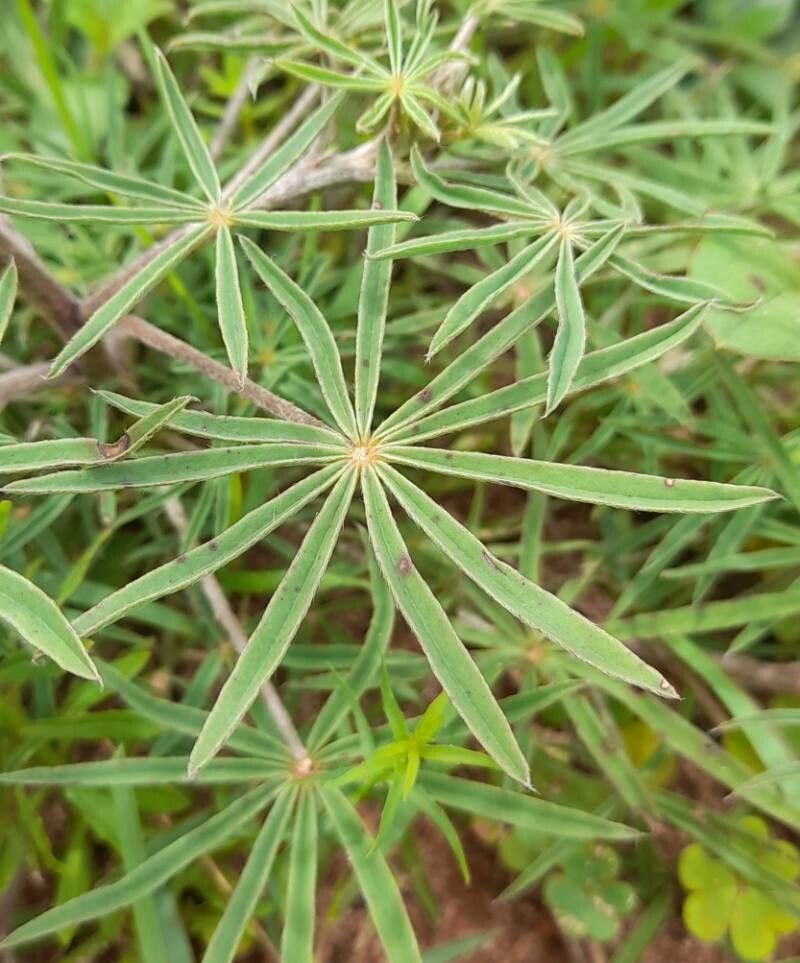
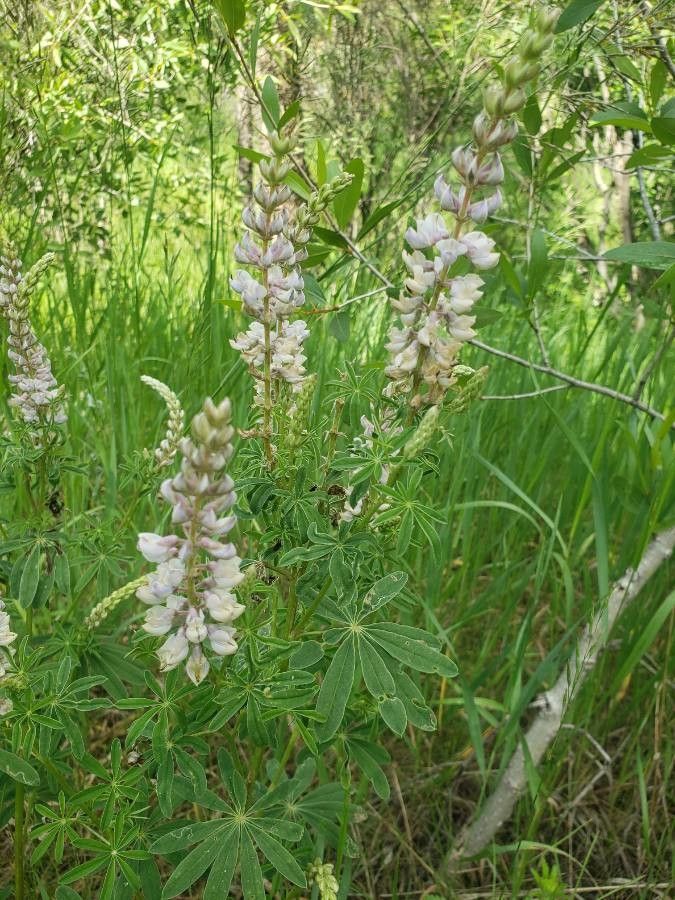
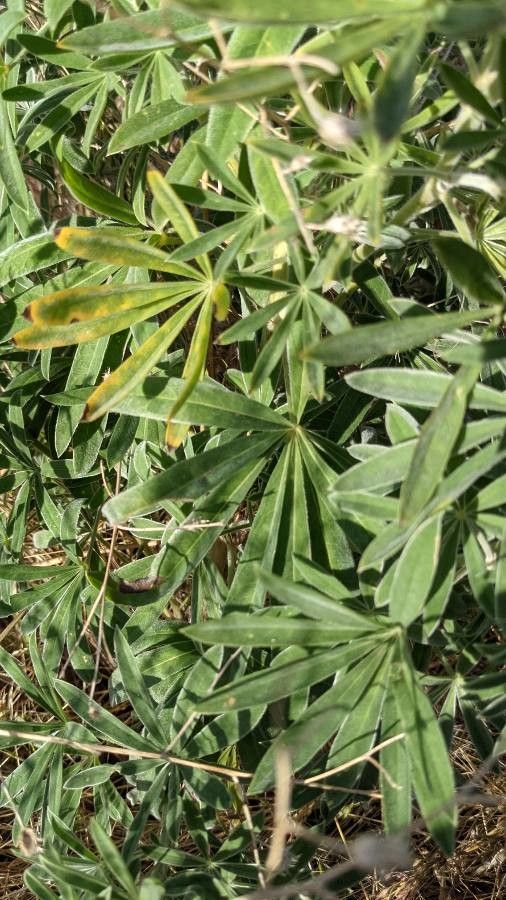
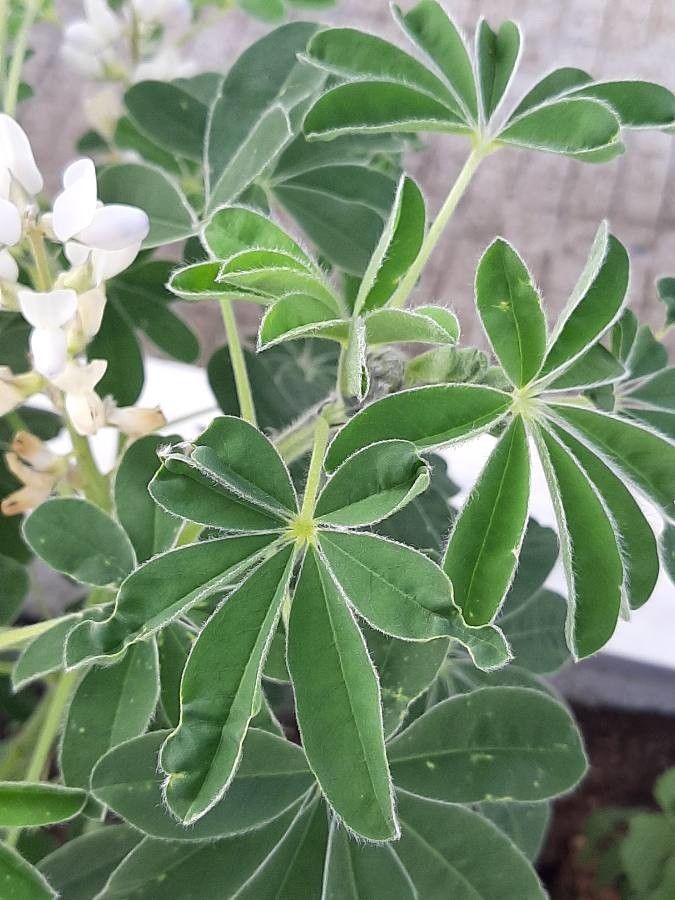
Lupinus pilosus, commonly known as blue lupine, (Hebrew: תורמוס ההרים, Arabic: ترمس برّي) is a species of flowering plant from the family Fabaceae which is endemic to Israel where it is found in Mediterranean scrubland. It has a 30–70 centimetres (12–28 in) long stem and 3–8 centimetres (1.2–3.1 in) long legume. The species blooms from February to May. The species have white coloured flowers which are 1–1.5 centimetres (0.39–0.59 in) long and pods the diameter of which is 3–8 centimetres (1.2–3.1 in). In Israel the Lupinus pilosus has blue flowers with white vertical spot at the middle.
Blue lupine has strong resistance to disease and typically does not suffer from them. However, it can be vulnerable to pests and diseases present in its environment. Any infections that occur are generally mild. Carewise, this plant needs moderate attention. It should be pruned regularly to maintain a neat appearance and support healthy growth. Applying fertilizer can also help encourage flowering. Blue lupine is suitable for anyone with outdoor space, such as a garden or patio, and does not demand much gardening experience. It may need more care when cultivated indoors.
How to keep Lupinus Pilosus.
Light
Blue lupine does best in bright light similar to that of its native habitat. For healthy growth, the plant should be given as much sunlight as possible. Both too much and too little light can be harmful, causing issues like stunted growth or yellowing leaves.
Water
Blue lupine thrives best with balanced moisture. While it can tolerate short dry spells, it prefers consistent weekly watering. For healthy growth, it's important to plant it outdoors in well-draining soil, which mimics its native habitat. This helps prevent root rot, which is critical for the plant’s well-being.
Temperature
Blue lupine originates from habitats with moderate temperatures of 68 to 100 °F (20 to 38 °C). It can tolerate slight temperature fluctuations but requires careful monitoring in extreme climates.
Fertilizer
When Blue lupine has opened most of its blooms to full size, resume fertilizing. Around the time blooms reach peak output, fertilize again every three to four weeks, as weather permits. After Blue lupine begins to produce fewer new blooms, stop fertilizing; there is no need to fertilize when the plant can no longer produce additional blooms.
Pruning
Known for its vibrant flowers, blue lupine thrives with regular pruning. Key techniques include deadheading spent blooms in the spring to promote continuous flowering and removing damaged stems to improve air circulation. The best time to prune is early spring, when you can maintain the plant's shape and vigor while encouraging prolific blooming.
Botanical profile.
- Plant Type
- Herb
- Life Cycle
- Annual
- Genus
- Lupinus
- Family
- Fabaceae
- Hardiness Zone
- 1-11
- Mature Height
- 30 cm to 61 cm
- Mature Spread
- 30 cm
- Leaf Color
- Green, Dark Green
- Leaf Type
- Semi-evergreen
- Flower Color
- Blue, Purple, White
- Flower Size
- 1.02 cm to 2.03 cm
- Bloom Time
- Mid spring, Late spring, Early summer
- Planting Time
- Spring, Summer, Autumn
- Harvest Time
- Summer
- Native Area
- Russia, Turkey, Syria, Greece, Lebanon
Other names.
Reader questions.
How should I water my Blue lupine plant?
Watering Blue lupine is easy and flexible. You can use various watering tools like a garden hose with a spray nozzle or a watering can. Blue lupine doesn't have specific preferences when it comes to their water source; they can survive on rainwater, tap water, or filtered water. It's generally recommended to avoid watering this plant from above as it may harm the leaves, flowers, and even invite diseases. Instead, a drip irrigation system is often the best option for watering Blue lupine. This method ensures even and direct watering of the soil. If you have a Blue lupine growing in a container, the same watering principles apply, but you can use a cup, watering can, or tap to apply water directly to the soil.
Why should I put fertilizer on my Blue lupine?
Plants need nutrients to survive, and gardeners are well aware of this. Blue lupine is especially dependent on the right nutrients to thrive. Without food, it will quickly die after pollination. To keep Blue lupine healthy and blooming with beautiful flowers throughout the season, it is important to provide the right type and amount of nutrients. Fertilizer is particularly beneficial for this plant, as it helps it develop a strong and extensive root system. Since Blue lupine has a delicate and thin root system, fertilizing during planting helps it establish a solid foundation, ensuring stability and an impressive flower display. Furthermore, timing the fertilization correctly can significantly lengthen the flowering period of Blue lupine.
What are the sunlight requirements for Blue lupine?
Blue lupine thrives in environments with generous illumination, similar to the habitat from which it originates, for robust growth. The plant requires full sun, which is above 6 hours of sunlight daily, but can also grow in partial sun, receiving about 3-6 hours of sunlight. It's crucial to monitor how sunlight moves through your garden to select spots offering the ideal balance of light and shade for your plants, ensuring their health and happiness.
What are the optimal temperature conditions for Blue lupine?
Blue lupine thrives in moderate temperatures ranging from 68 to 100 °F (20 to 38 °C). Although it has a strong cold resistance and does not usually require special frost protection measures during winter, it cannot withstand extreme temperature fluctuations without careful oversight. If winter temperatures are expected to drop below -45°C, it's important to provide cold protection by covering the plant with soil or straw. Additionally, before the first freeze of autumn, it's recommended to water the plant abundantly to ensure the soil remains moist and enters a frozen state, which helps prevent drought and water scarcity during winter and early spring.
What do I need to do if I give my Blue lupine too much or too little water?
Underwatering Blue lupine is easily addressed by increasing the frequency of watering when you notice the plant lacks moisture. On the other hand, overwatering is more problematic and can have severe consequences if not addressed early. Overwatering can lead to diseases that cause the decline and death of the plant. To prevent this, it's important to choose a suitable location for growing Blue lupine, one with ample sunlight to dry the soil and good drainage to avoid waterlogged soil. If you overwater Blue lupine in a pot, it may be necessary to repot it. The previous container may have had poor soil drainage or insufficient drainage holes. When repotting an overwatered Blue lupine, use loose soil and a pot that drains efficiently.
When should I fertilize my Blue lupine?
Blue lupine experiences rapid growth early in the growing season, after the last frost has passed. It is important to fertilize the blue lupine during this time, specifically during planting. Whether you plant it in the ground or in planters, apply the fertilizer at this stage. This will be the only time you fertilize the blue lupine until later in the year, when the blooms are in full bloom. Once the season is in full swing and the blue lupine has opened most of its blooms at full size, it's time to resume fertilizing. Start fertilizing every three to four weeks, depending on the weather, when the blooms are at their peak output. When the blue lupine begins to produce fewer new blooms, stop fertilizing. There is no need to fertilize when the plant can no longer produce blooms.
How should Blue lupine be cared for in terms of light?
For optimal growth, Blue lupine should receive as much sunlight as possible. When natural sunlight is not sufficient, especially during winter or in less sunny locations, artificial lighting can be a crucial alternative. It's recommended to use LED lights for indoor plants because they can be tailored to provide specific wavelengths needed by the plants. Full sun plants require 30-50W/sq ft of light, partial sun plants need 20-30W/sq ft, and full shade plants should get 10-20W/sq ft. The light source should be placed 12-36 inches above the plant, mimicking natural sunlight as closely as possible, and most plants will need 8-12 hours of light per day.
How does Blue lupine react to low temperatures?
Blue lupine is cold-tolerant and flourishes best when temperatures are above 20°C. During winter, the goal is to keep it above 0°C. If temperatures fall below -45°C, you might not notice immediate changes, but there could be reduced sprouting or even no sprouting in spring. In such cases, it's advisable to remove any parts of the plant that have failed to sprout come spring.
How often do I need to water my Blue lupine?
Blue lupine requires regular watering throughout the growing season. In spring, water it once per week. As the season progresses and temperatures rise, you may need to increase watering to two to three times per week. However, watering excessively can harm the plant. It's important to keep the soil moist but not wet, regardless of the watering frequency. When it comes to potted blue lupine, you'll typically need to water it more frequently because the soil in a pot can dry out faster. In most cases, watering a container-grown blue lupine a few times per week is necessary, while an in-ground plant only needs to be watered once per week.
When is it not a good idea to fertilize my Blue lupine?
Regular fertilizing is crucial for Blue lupine, but it is important to apply it at the right time. In some situations, it may be necessary to hold off on fertilizing. These situations are typically related to the climate, but they can also involve controllable factors. If there is something wrong with the plant, soil, or climate, it is best to wait until the issue is resolved and the plant has recovered. For instance, it is not advisable to fertilize if there are sudden severe weather changes, such as a cold spell in the middle of summer. In such cases, it is better to wait for warmer weather before resuming fertilization. Similarly, if the soil becomes too dry or compacted to absorb the fertilizer properly, it is best to wait until the soil conditions improve. In this situation, the fertilizer would not reach the roots and could negatively affect the plant. Additionally, it is not recommended to fertilize during extremely hot temperatures, especially when reaching 90 degrees Fahrenheit. The breakdown of fertilizer can vary depending on temperature, and high temperatures can cause it to break down too quickly. It is also important to address any pest or disease issues before applying fertilizer again.
What are the symptoms of light deficiency in Blue lupine?
When Blue lupine is grown indoors or in conditions with inadequate light, it may show several symptoms indicating light deficiency. These include smaller new leaves, leggy or sparse growth, faster leaf drop, slower or no new growth, and lighter-colored new leaves. Additionally, chlorosis, sunscald, leaf curling, wilting, and leaf scorching can occur due to both excessive sunlight and insufficient light exposure. These signs reveal the plant's struggle with maintaining healthy growth under non-optimal light conditions.
How does Blue lupine react to high temperatures?
In the summer, it's essential to ensure that Blue lupine's environment remains below 38°C. Should the temperature rise above 43°C, you may notice the leaves turn lighter, become prone to curling, and are susceptible to sunburn; in severe cases, the plant might wilt and dry out entirely. To mitigate these effects, trim away the sunburned and dried-up parts of the plant. Moving the plant to a shaded location or using a shade cloth to protect it from midday and afternoon sun is beneficial. Additionally, watering the plant in the morning and evening will help keep the soil moist and cool.