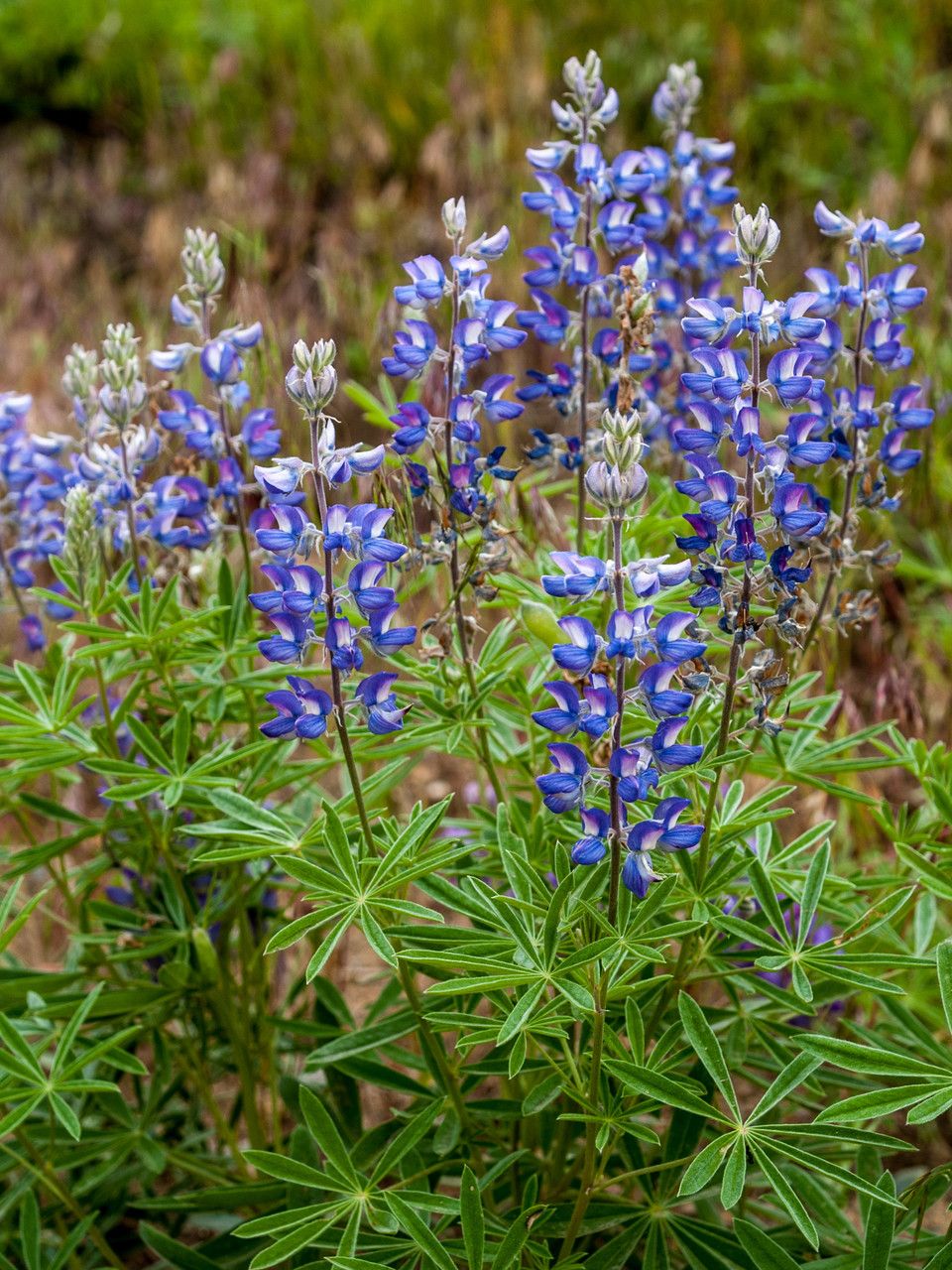
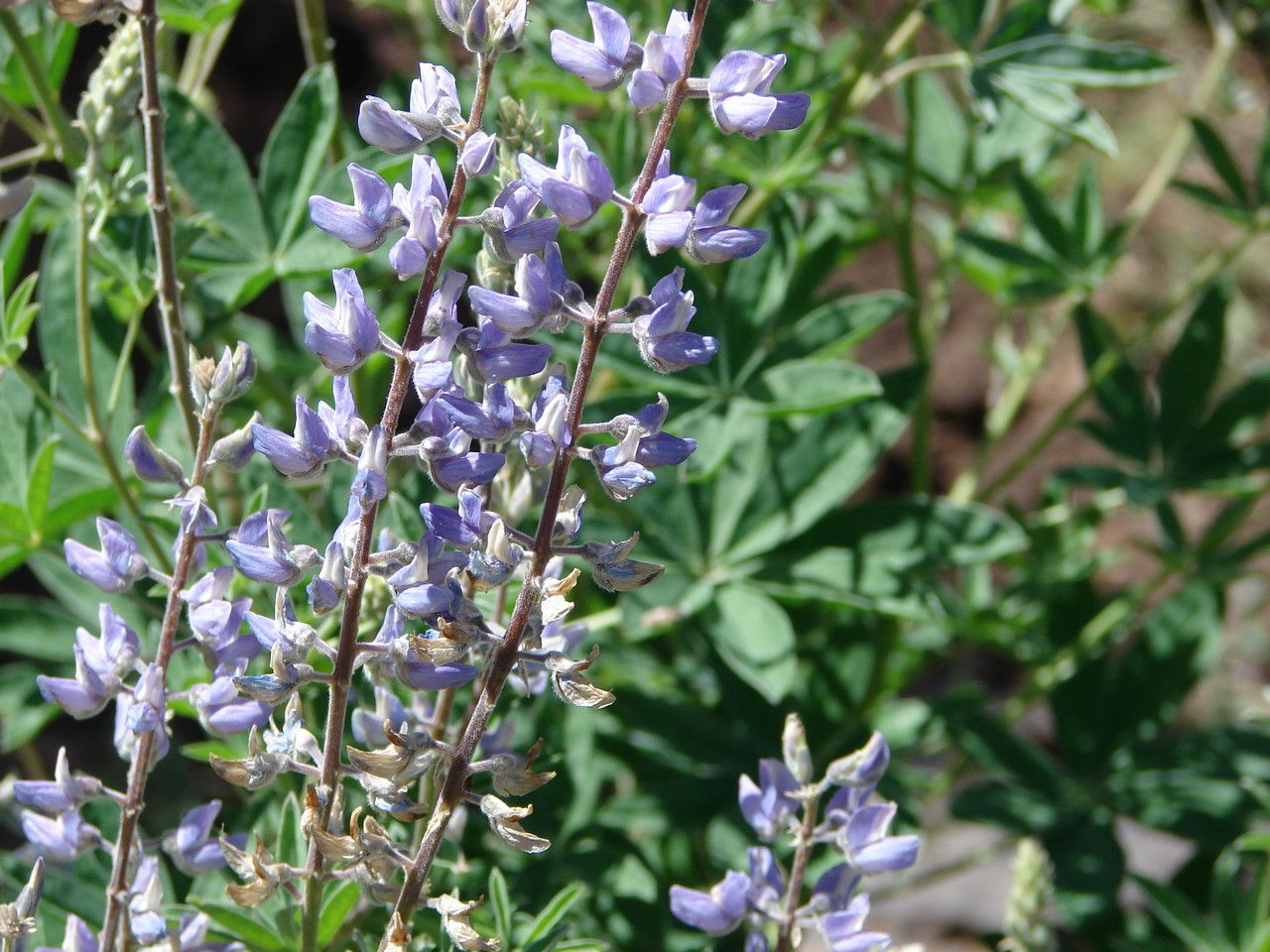
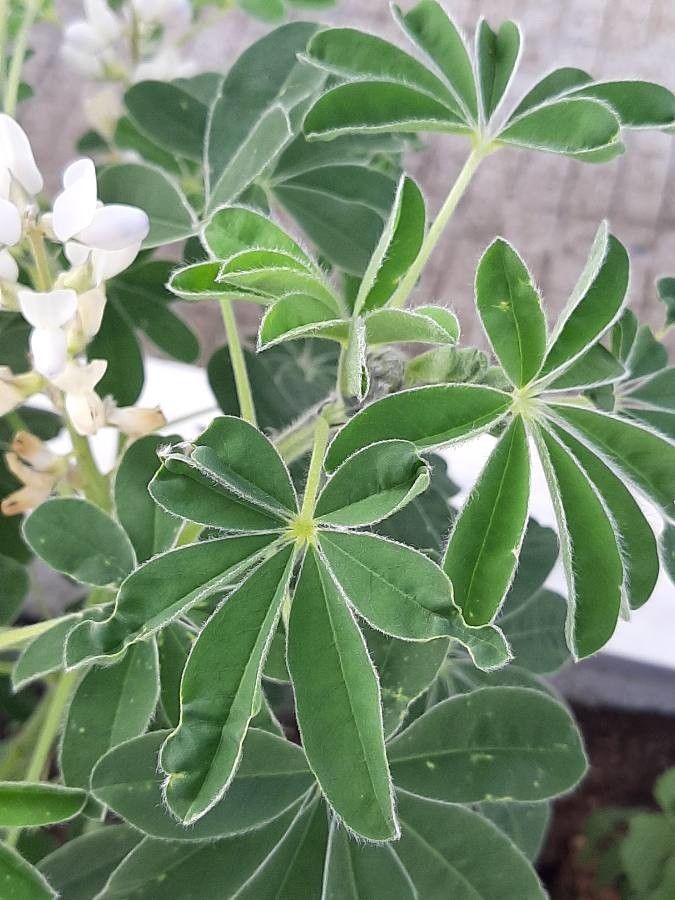
Lupinus sericeus is a species of flowering plant in the legume family known by the common name silky lupine or Pursh's silky lupine. It is native to western North America from British Columbia to Arizona and east to Alberta and Colorado.This perennial herb produces erect stems from a woody caudex and deep root system. The stems reach up to 50 centimetres (20 inches) tall and may branch or not. They are coated in silvery or reddish hairs. The leaves have up to 9 lance-shaped leaflets each up to 6 centimetres (2.4 inches) in length. They are coated in silky hairs. The inflorescence is a raceme of many flowers, usually in shades of purple or blue, but sometimes white or yellowish. The back side of the banner petal is hairy. The fruit is a hairy legume pod up to 3 centimetres (1.2 in) long containing up to 7 seeds.This plant grows in many types of habitat, including forests, woodlands, chaparral, shrubsteppe, sagebrush, and grasslands. It often grows on dry, rocky slopes, and does best in open sites without shade. It can be found at low and high elevations, up to 3,000 metres (9,800 ft) or more. It can often be found in recently burned sites. Plants associated with it include Gambel oak (Quercus gambelii), common snowberry (Symphoricarpos albus), ninebark (Physocarpus malvaceus), serviceberry (Amelanchier spp.), mountain-mahogany (Cercocarpus spp.), arrowleaf balsamroot (Balsamorhiza sagittata), western yarrow (Achillea millefolium), heartleaf arnica (Arnica cordifolia), bluebunch wheatgrass (Pseudoroegneria spicata), Sandberg bluegrass (Poa secunda), fescues (Festuca idahoensis and F. scabrella), prairie junegrass (Koeleria cristata), and sedges (Carex spp.).Like many other lupines, this species is very toxic to sheep, and less so to cattle and horses. It contains teratogenic chemical compounds that may cause birth defects in a calf if the plant is eaten by its mother during the early part of the gestation period. Its toxicity is caused by a concentration of quinolizidine alkaloids. It does not appear to be toxic to wild animals such as white-tailed deer, which often consume it. Bighorn sheep feed on it in Montana and Columbia ground squirrels feed on the leaves and flowers. Many other small mammals and birds also eat parts of it.
Silky Lupine has strong resistance to diseases and is generally not likely to suffer from them. Nonetheless, it can be vulnerable to pests and illnesses present in its environment. Such infections are typically mild. Regarding care, this plant needs moderate maintenance. It requires regular pruning to preserve a neat appearance and healthy development. Fertilizing can also aid in encouraging blooms. Silky Lupine is appropriate for anyone with outdoor space, like a garden or patio, and does not demand extensive care experience. It may need more attention when grown indoors.
How to keep Lupinus Sericeus.
Light
Silky Lupine performs best with ample sunlight, which encourages strong growth, abundant blooms, and healthier foliage. It can tolerate moderate light, but growth may be slower. Both excessive and inadequate sun exposure can cause leaf discoloration or fewer flowers. Native to open, sunlit habitats, it is adapted to those conditions.
Water
Silky Lupine is well-suited to arid climates, thanks to its ability to thrive with minimal moisture and remarkable drought tolerance. This plant flourishes with a moderate watering schedule of just once a week, as it prefers dry conditions. Ideal for xeriscaping, silky Lupine grows best in well-drained soils commonly found in open meadows and on slopes where rainfall is scarce.
Temperature
Silky Lupine favors a temperature range of 41 to 77 ℉ (5 to 25 ℃). It comes from areas with temperate climates. Across different seasons, it is recommended to adjust the temperature to match its preferences to encourage better growth.
Fertilizer
Usually one fertilizer application in spring suffices for Silky Lupine, although repeated feedings can boost growth to its fullest. Fertilize about every month to a month and a half. Feeding improves leaf appearance and function, helping sustain uniform color and a healthy texture. It also encourages root development and nutrient uptake, supporting long-term plant health.
Pruning
Silky Lupine benefits from straightforward annual pruning in the early to late spring. To encourage blooming and prevent disease, remove dead stems and spent flowers. Trim any leggy areas to improve shape and airflow, which will enhance both growth and visual appeal.
Pot & Repot
When repotting Silky Lupine, select a pot 1-2 inches (2.5–5.1 cm) larger with good drainage. Use a well-draining potting mix. Repot in spring or fall, making sure the root ball sits slightly lower than the rim of the flower pot. Water thoroughly after repotting and place in a warm spot with indirect sunlight.
Botanical profile.
- Plant Type
- Herb
- Life Cycle
- Perennial
- Genus
- Lupinus
- Family
- Fabaceae
- Hardiness Zone
- 4-6
- Mature Height
- 20 cm to 61 cm
- Mature Spread
- 46 cm
- Leaf Color
- Bronze, Brown
- Leaf Type
- Deciduous
- Flower Color
- Purple, Blue
- Flower Size
- 11.43 cm to 25.40 cm
- Bloom Time
- Late spring, Early summer, Mid summer
- Planting Time
- Summer
- Harvest Time
- Mid summer
Other names.
Reader questions.
How should I water my Silky Lupine plant the best way?
To care for the Silky Lupine, it is best to water it with filtered water at room temperature. Tap water may contain harmful particles, so using filtered water is ideal. The Silky Lupine prefers warm water to mimic its natural environment, so avoid using cold water as it can shock the plant. It is also important to avoid overhead watering to prevent foliage issues. Instead, water the plant by applying filtered room temperature water directly to the soil until it is completely soaked. This helps to moisturize the roots and promote their spread into the soil for nutrient absorption.
Why should I put fertilizer on my Silky Lupine plant?
The main structure of the Silky Lupine is made up of its leaves. Fertilization is an important way to make sure the leaves look good and function properly. Proper fertilization will give the leaves a consistent color and healthy texture. Fertilization also works below the surface to help the Silky Lupine develop new roots and maintain existing ones. This not only keeps the plant healthy now, but also improves its ability to absorb soil nutrients in the future.
How many hours of sunlight does Silky Lupine need each day to grow well?
To ensure a healthy and vibrant blooming season for your Silky Lupine, it is recommended to provide it with at least six hours of direct sunlight. However, certain perennial plants, like the Red Hot Poker and Giant Coreopsis, that thrive in hotter climates, can tolerate up to twelve hours of sunlight, depending on the local temperature and environment. In cases where outdoor sunlight is limited, some home gardeners resort to using grow lights. While most perennials can grow well under grow lights, they typically require eight to fourteen hours of artificial light to maintain their strength, as these lights are not as powerful as the sun.
What temperature is best for Silky Lupine?
Silky Lupine thrives in cooler temperatures and has a specific temperature range for optimal growth. To keep Silky Lupine healthy, maintain temperatures between 65~75℉(18~25℃). While Silky Lupine can tolerate higher and lower heat levels, it is best to keep the growing area as close as possible to the preferred range. Deviating from this range won't halt its growth, but Silky Lupine can withstand a higher range of 75~85℉(25~30℃) and a lower range as cold as 5℉(-15℃) before experiencing damage or reduced growth. However, it's crucial to pay closer attention to higher temperatures, as Silky Lupines prefer cooler environments. Allowing temperatures to exceed 85℉(30℃) may cause growth to slow down or even result in the plant dying.
What do I need to do if I give my Silky Lupine too much or too little water?
Overwatering is a common issue for Silky Lupines, as it can cause wilting, yellowing, and even diseases like root rot, mold, and mildew that can kill the plant. Underwatering is less common, but it can still happen, resulting in brittle and brown leaves. To prevent overwatering, promptly notice and address the early signs, such as reducing watering and improving soil drainage. Conversely, if underwatering occurs, simply increase regular watering until the signs improve.
When should I fertilize my Silky Lupine?
If you grow your Silky Lupine outdoors, it will start growing new leaves in early spring. When you see the leaves, it's a sign that it's time to fertilize the plant. Usually, one application of fertilizer in the spring is enough for Silky Lupines to grow well. However, if you want them to grow even more, you can feed them multiple times from spring to early summer. In this case, you can fertilize them about once every month to a month and a half.
What kind of sunlight does Silky Lupine require?
Silky Lupine, Orange Daylily, and Giant Coreopsis are all perennial plants that require sunlight to thrive. Silky Lupine specifically needs a minimum of six hours of full sun each day to keep its leaves, roots, and blooms healthy. While most perennials also need six hours of sunlight, plants like the Orange Daylily or Giant Coreopsis can survive on as little as three hours of sunlight per day. However, it's important to note that while these plants can survive with only three hours of direct sunlight, they won't be able to reach their full potential and thrive as they would in sunnier conditions.
Does Silky Lupine need different temperatures during different stages of growth?
To ensure the healthy growth of Silky Lupine, it is crucial to maintain a suitable temperature range of 65~75℉ (18~25℃) in the growing space. It is recommended to stay on the cooler side within this range, but beware of going below -5℉ (-20℃) as extremely cold temperatures can impede growth. While extremely hot temperatures are more harmful, excessively high temperatures during the budding stage can prevent Silky Lupine from flowering.
How often do I need to water my Silky Lupine?
If your Silky Lupine is in a pot, the easiest way to determine if it needs water is to stick your finger in the soil. If the top two to three inches of soil are dry, then it's time to water it. If your Silky Lupine is outdoors in the ground, you can use the same method to test the soil. Again, if the top few inches of soil are dry, it's time to water. Typically, during the spring and early fall, watering once a week is sufficient. However, in extremely hot weather, you may need to water twice a week or more. It's worth noting that mature, well-established Silky Lupines can tolerate drought quite well.
When should I not put fertilizer on my Silky Lupine?
During the late fall and winter, your Silky Lupine goes into a dormant phase and stops growing. So, it's best not to fertilize it during this period. In the spring and summer, if you decide to fertilize, you should gradually reduce the amount as summer approaches because the Silky Lupine's growth rate slows down too. It's not a good idea to fertilize the plant when the weather is excessively hot or the soil is very dry because it can harm the Silky Lupine and cause it to die prematurely.
Can the sun harm Silky Lupine? How can I keep Silky Lupine safe from the sun and heat damage?
In warm climates, some Perennial Flowering Plants may struggle with excessive heat and suffer from sun damage. They can wilt, dry out, or even experience growth problems if they are consistently exposed to the intense afternoon sun. However, not all plants require protection from the light afternoon sun. For those that are harmed by intense afternoon exposure, it is recommended to provide them with some shade in warmer climates. Gardeners can achieve this by planting these plants in areas that do not receive direct heat during the afternoon, such as under trees or behind bushes.
Three ways to regulate the temperature of Silky Lupine.
Here are some tips for growing Silky Lupine indoors: Tip #1: Choose the Coldest Room: When growing Silky Lupine indoors, select the coldest room in your home. This room should be shielded from the harsh midday sun but still receive a good amount of sunlight. Completely avoiding sunlight can hinder the growth of Silky Lupine. Tip #2: Avoid High Temperatures: During the growing season of spring and early summer, high temperatures can negatively affect Silky Lupine. This can result in non-flowering buds or partially opened buds, diminishing the plant's aesthetic quality. To ensure proper flowering, maintain a temperature range of 65-75℉ (18-25℃). Tip #3: Protect from Frost: Although Silky Lupine can withstand temperatures as low as -5℉ (-20℃), significant frost can damage the plant. Signs of frost damage include wilting, discoloration, and eventual browning or blackening. Remove any damaged parts to keep the plant healthy.