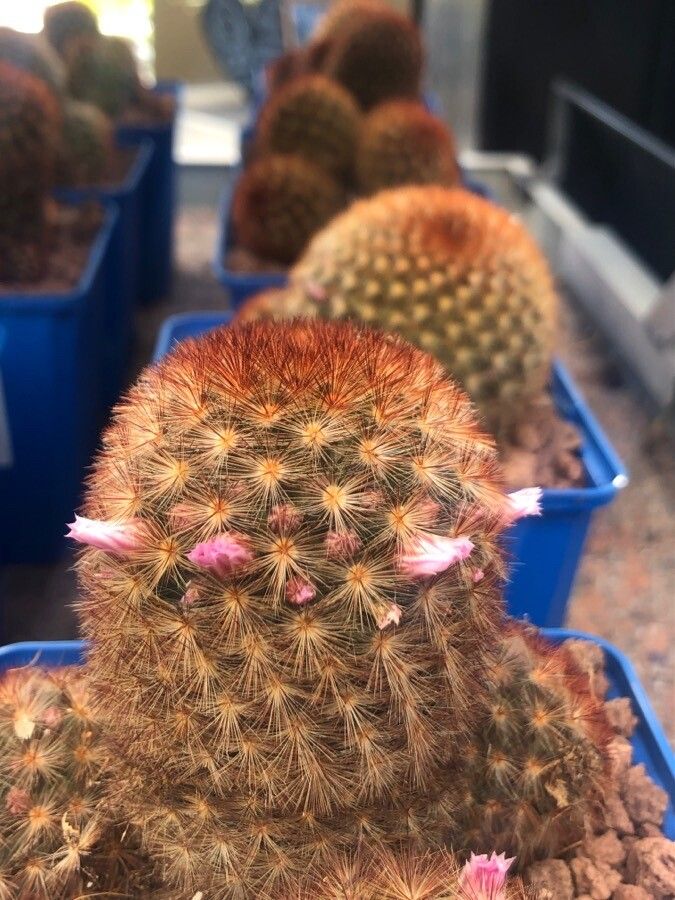
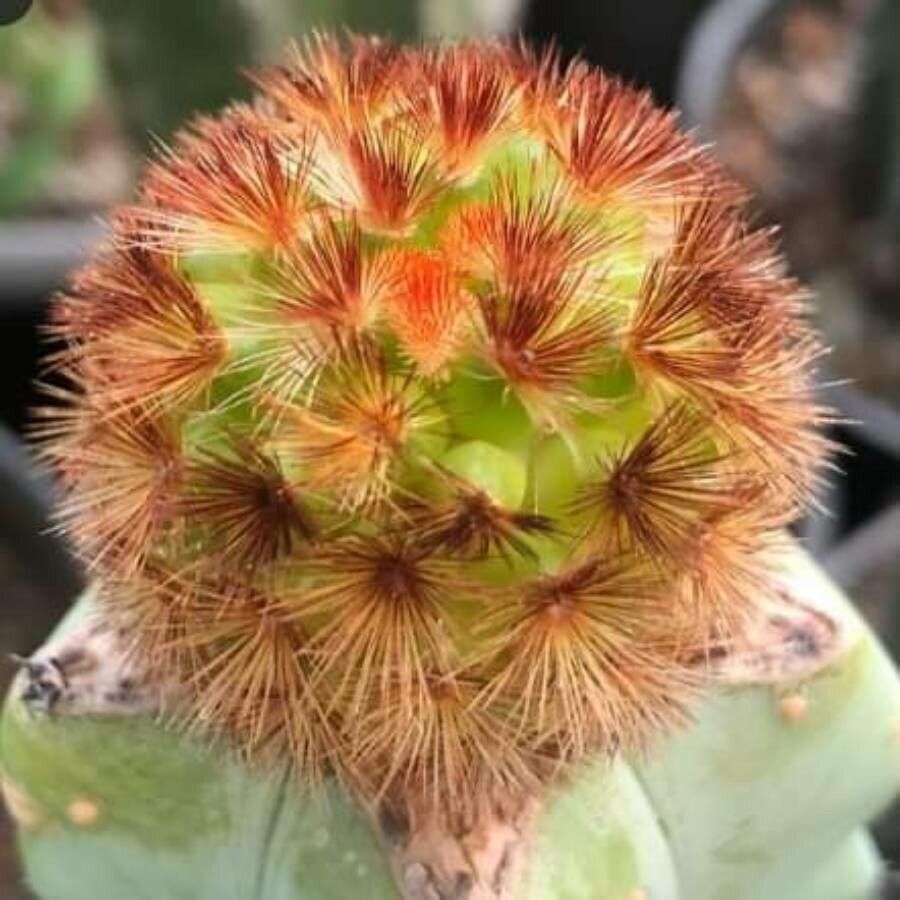
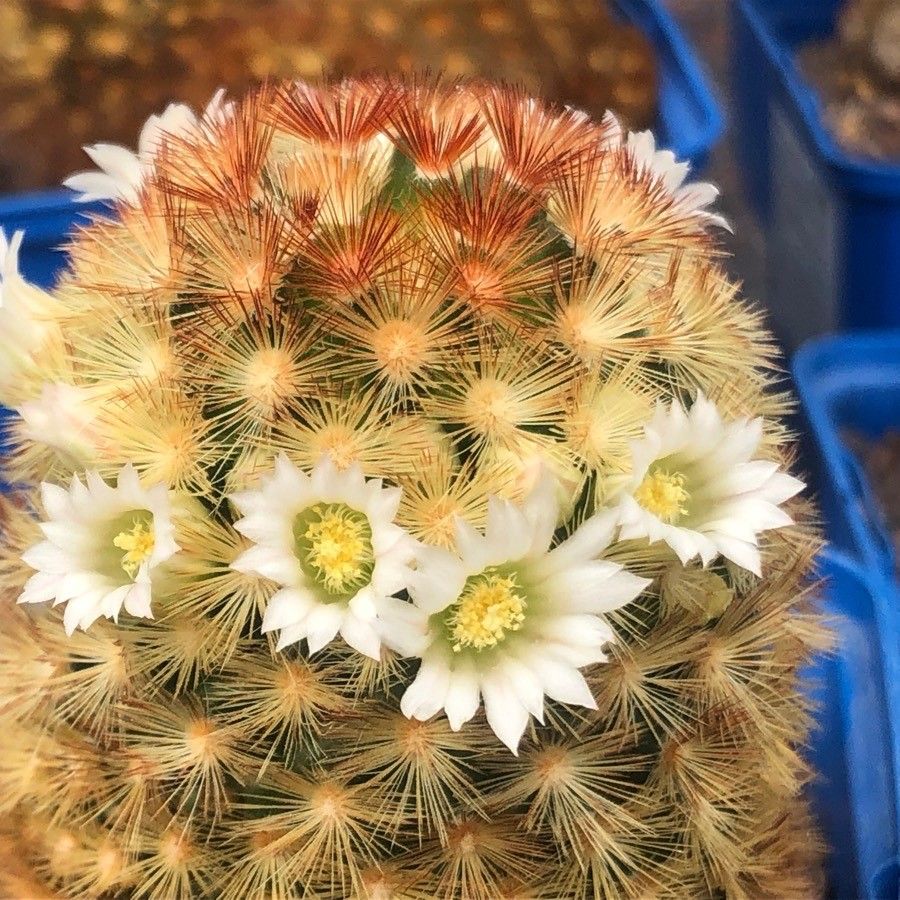
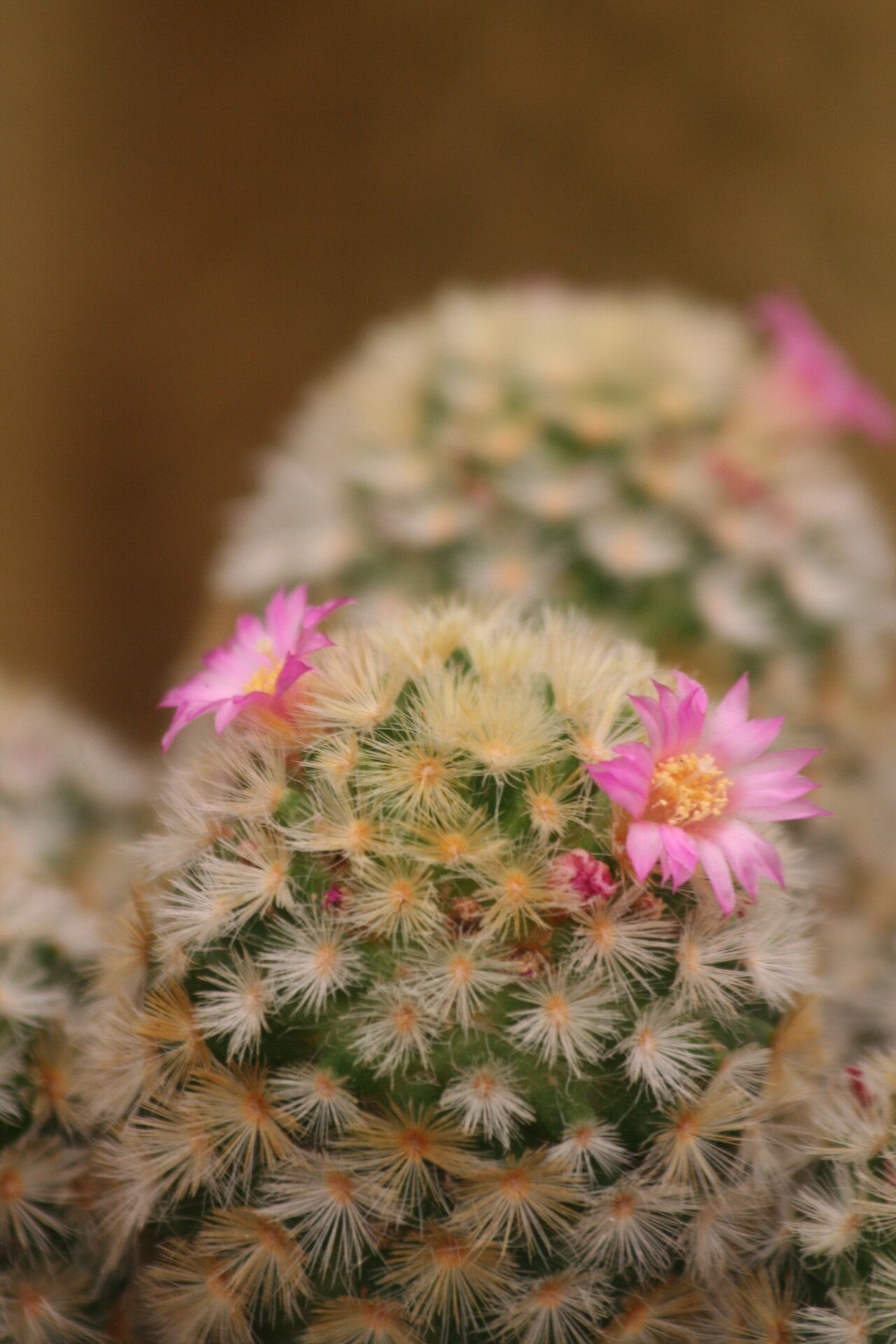
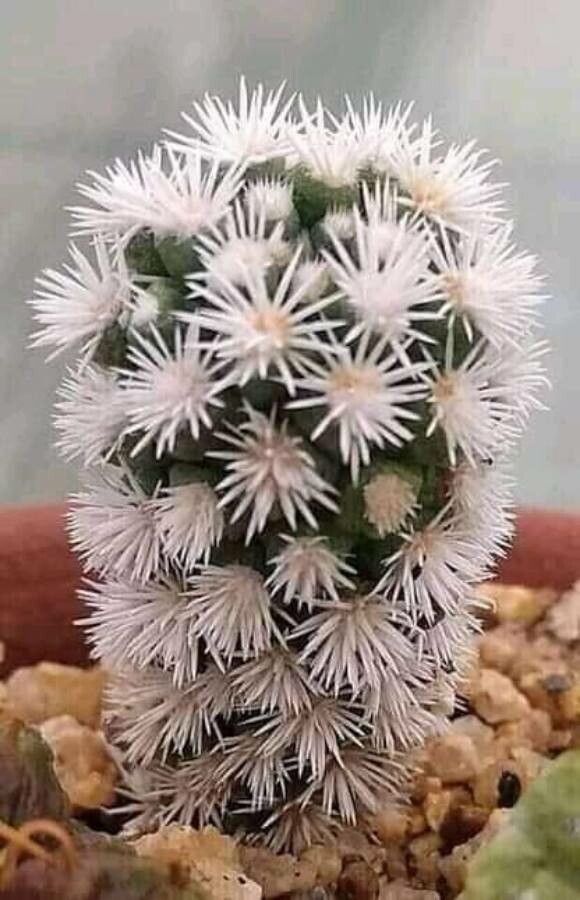
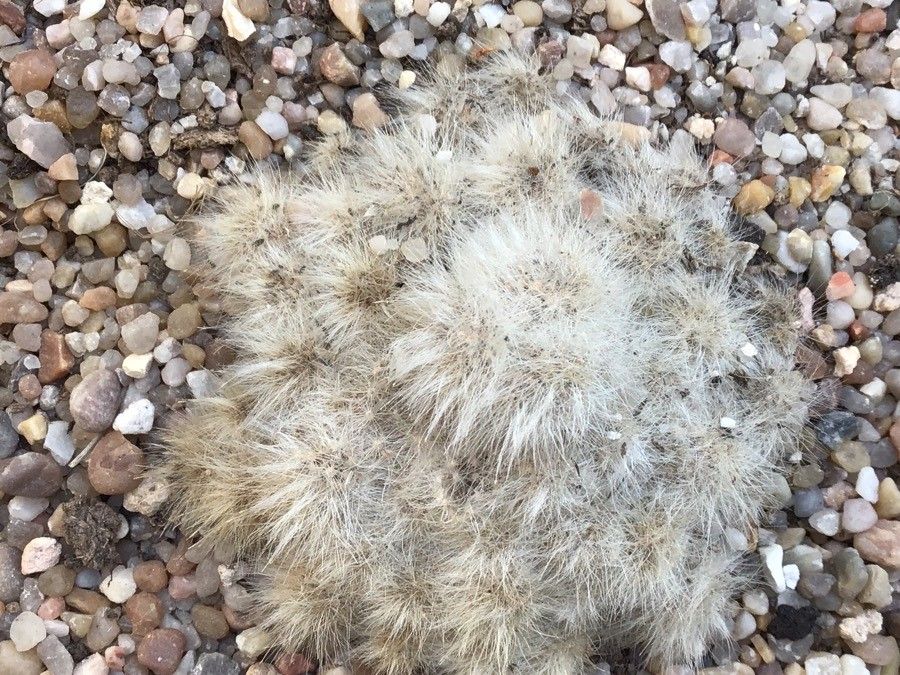
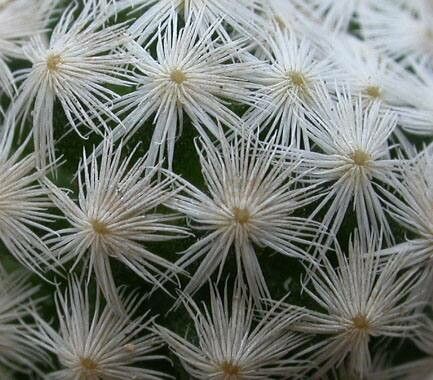
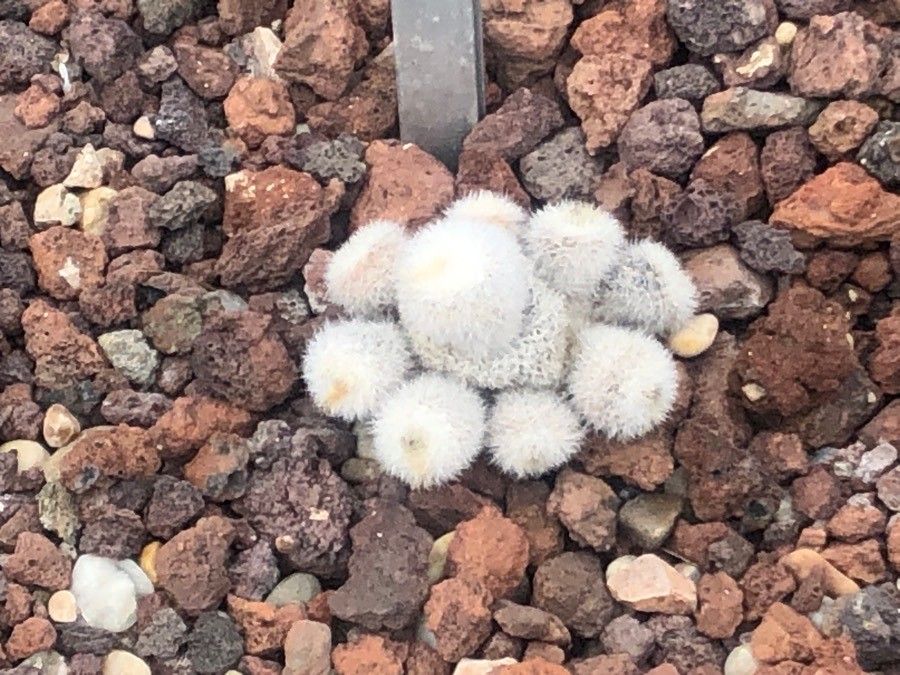
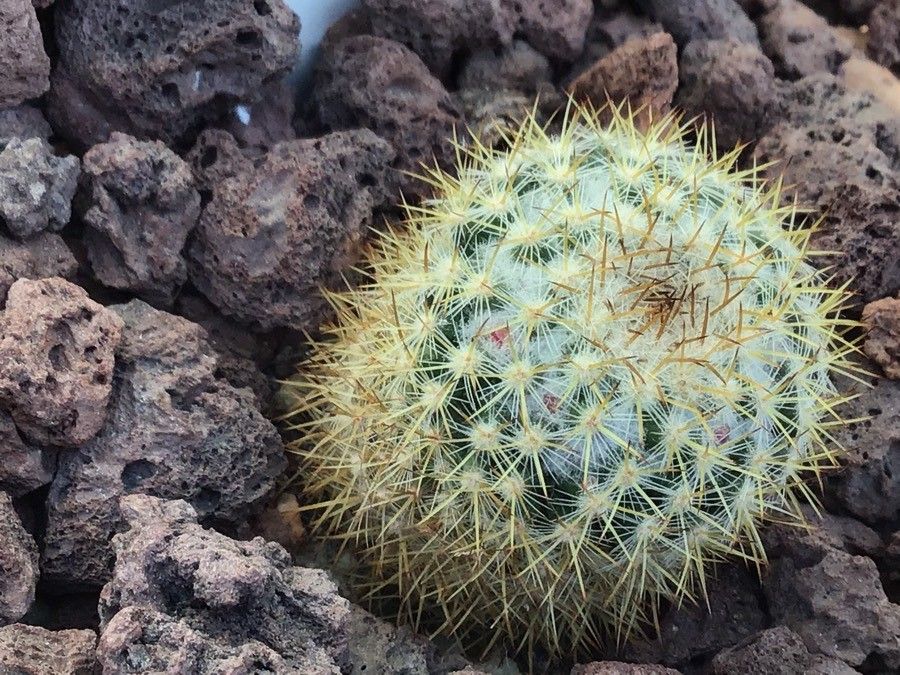
Mammillaria carmenae, the Isla Carmen pincushion cactus, is a species of flowering plant in the family Cactaceae. It is native to Tamaulipas state, in eastern central Mexico. It grows to 8 cm (3 in) tall by 15 cm (6 in) broad. The clustered egg-shaped stems, 3–4 cm thick, are covered in creamy-coloured yellow down and bristles. In spring they bear pale cream or pink-tinged flowers with yellow centres.
The Isla Carmen pincushion cactus is fairly disease-resistant and tolerates normal care without becoming sick easily. It can, however, be vulnerable to mealybugs; they may cause some damage but are generally not a serious threat. In terms of care, the Isla Carmen pincushion cactus is drought-tolerant and does not need frequent watering. It can endure long periods without water and requires little fertilizer. However, it is very prone to root rot if lighting is poor and it is overwatered. Overall, the Isla Carmen pincushion cactus is suitable for people who want a low-maintenance plant, but it’s important to understand and meet its basic needs. It is especially well-suited to those who are often away for long periods and might forget to water their plants regularly.
How to keep Mammillaria Carmenae.
Light
The Isla Carmen pincushion cactus does well with continuous sun exposure. These conditions, similar to its natural habitat, encourage vigorous growth. The plant does not require different amounts of sunlight at various growth stages. Excessive sunlight will not harm it, but too little light can result in sparse growth and unhealthy plants.
Water
The Isla Carmen pincushion cactus is well-suited for arid environments and is highly drought-tolerant. When caring for it, water it every three weeks and make sure to use well-draining soil to avoid root rot. As an indoor plant, it flourishes in bright light and benefits from occasional misting, which mimics the conditions of its native desert mornings.
Temperature
The Isla Carmen pincushion cactus comes from regions where the native temperature ranges from 68 to 100.4°F (20 to 38°C). Because it favors this warmer climate, adjustments may be necessary in cooler seasons to keep temperatures above 68°F (20℃).
Fertilizer
For Isla carmen pincushion cactus, light doses of fertilizer once or twice a year during the growing season are sufficient. Avoid fertilizing in winter and summer when it is dormant. Reduce fertilizer for repotted plants and wait a couple of months after repotting before fertilizing. Fertilizing supports healthy growth and encourages blooms.
Pruning
The Isla Carmen pincushion cactus needs very little pruning. It's important to remove any withered flowers and branches so that the plant can redirect nutrients to support healthy growth.
Pot & Repot
Repot the Isla carmen pincushion cactus in spring or summer, choosing a pot slightly larger than the current one that has good drainage. Use a sandy or gritty cactus mix that drains well. Handle the cactus carefully to avoid its spines. Let the cactus dry out before repotting to help prevent root rot. After repotting, wait one week before watering to allow the roots to heal.
Botanical profile.
- Plant Type
- Succulent
- Life Cycle
- Perennial
- Genus
- Mammillaria
- Family
- Cactaceae
- Hardiness Zone
- 10-11
- Mature Height
- 10 cm
- Mature Spread
- 5 cm
- Leaf Color
- Green, Blue
- Leaf Type
- Evergreen
- Flower Color
- Pink
- Flower Size
- 1.02 cm to 1.52 cm
- Bloom Time
- Mid spring, Late spring, Early summer
- Planting Time
- Spring, Summer, Autumn, Winter
- Harvest Time
- Mid summer, Late summer, Early fall
- Native Area
- Mexico
Other names.
Reader questions.
What are the sunlight requirements for Isla Carmen Pincushion Cactus?
The Isla Carmen Pincushion Cactus thrives best in conditions that mimic its natural environment, which means it requires full sun, or above 6 hours of sunlight daily, for robust growth. It is important to watch how sunlight moves through your garden to ensure plants receive a perfect balance of light and shade, thus ensuring their happiness. The growth stages of the Isla Carmen Pincushion Cactus do not demand varied sun exposure. While excessive sunlight won't harm them, a scarcity of sunlight may lead to sparse growth and unhealthy plants.
What is the native temperature range for the Isla Carmen Pincushion Cactus?
The Isla Carmen Pincushion Cactus, scientifically known as Mammillaria carmenae, thrives in an environment where the temperature ranges between 68 to 100.4°F (20 to 38°C). This heat-loving plant prefers warmer climates and requires specific care during the cooler seasons to ensure the temperature remains above 68°F (20°C). During winter or in cooler climates, the cactus enters a dormant state, and when the temperature drops below 5°C, it should be brought indoors for cultivation. In such cases, it's best to place the plant near a south-facing window to maximize sunlight exposure, or use supplemental lighting if natural light is not sufficient. Additionally, when temperatures fall below 20°C, its growth rate decreases, necessitating a reduction or cessation of watering to prevent root rot. Outdoor plants should not be watered at all in low temperatures, but you can consider insulating them with a temporary greenhouse or wrapping materials.
Can artificial lighting be used for Isla Carmen Pincushion Cactus, and how?
Yes, artificial lighting can be used for Isla Carmen Pincushion Cactus, especially when natural sunlight is insufficient, like in winter or less sunny spaces. Indoor plants require adequate lighting for optimal growth. LED lights are recommended as they can be customized to provide specific wavelengths needed by your plants. Full sun plants need 30-50W per square foot, partial sun plants need 20-30W per square foot, and full shade plants need 10-20W per square foot of artificial light. The light source should be placed 12-36 inches above the plant to mimic natural sunlight and left on for 8-12 hours per day.
How should you care for an Isla Carmen Pincushion Cactus in low temperature conditions?
In low temperatures, the Isla Carmen Pincushion Cactus is at risk, as it is not tolerant to cold and performs best above 20°C. It's crucial to keep the plant above 5°C during winter, and if temperatures fall below 1°C, the cactus can weaken, wilt, and become prone to root rot. For mild frost damage, the symptoms might not be apparent immediately, but wilting will occur within a week. In such cases, you should trim off the frostbitten areas and check for root rot. If the roots are rotted, they should be removed, and the plant can then be propagated through cuttings. It's important to move the cactus indoors to a warm environment promptly and ensure it receives ample sunlight by placing it near a south-facing window or providing supplemental lighting if necessary.
What are the symptoms of light deficiency in Isla Carmen Pincushion Cactus?
Symptoms of light deficiency in Isla Carmen Pincushion Cactus include small leaves, leggy or sparse growth, faster leaf drop, slower or no new growth, lighter-colored new leaves, chlorosis, sunscald, leaf curling, wilting, and leaf scorching. These issues arise when the plant is placed in suboptimal lighting conditions, leading to various signs of stress such as the development of smaller new leaves, elongated spaces between leaves or stems giving a stretched-out appearance, and leaves losing their green color due to a lack of chlorophyll.
What should you do if an Isla Carmen Pincushion Cactus experiences high temperature?
During the summer months, it's essential to ensure that the Isla Carmen Pincushion Cactus is not exposed to temperatures above 38°C, as extreme high temperatures over 43°C can halt its growth, causing water loss, wilting, and increased susceptibility to sunburn. To care for a cactus affected by high temperatures, you should first remove any sunburned or rotted parts. Then, protect the plant from the harsh afternoon sunlight until it shows signs of recovery and begins to grow again. For plants suffering from root rot due to overwatering during high temperatures, watering should be stopped until new roots form, signifying recovery.
How can I address and prevent light deficiency in Isla Carmen Pincushion Cactus?
To prevent and address light deficiency in Isla Carmen Pincushion Cactus, ensure the plant receives at least 6 hours of direct sunlight daily. Gradually move plants to sunnier locations each week to avoid shock and use a south-facing window for indoor plants, keeping curtains open during the day. If moving the plant isn't feasible, consider using artificial lighting like a desk or ceiling lamp for at least 8 hours daily, or invest in professional plant grow lights for sufficient illumination. For outdoor plants, avoid sudden changes in light intensity to prevent sunburn. Obstructions blocking sunlight can be reduced by pruning or transplanting to a location with adequate sunlight and good drainage.