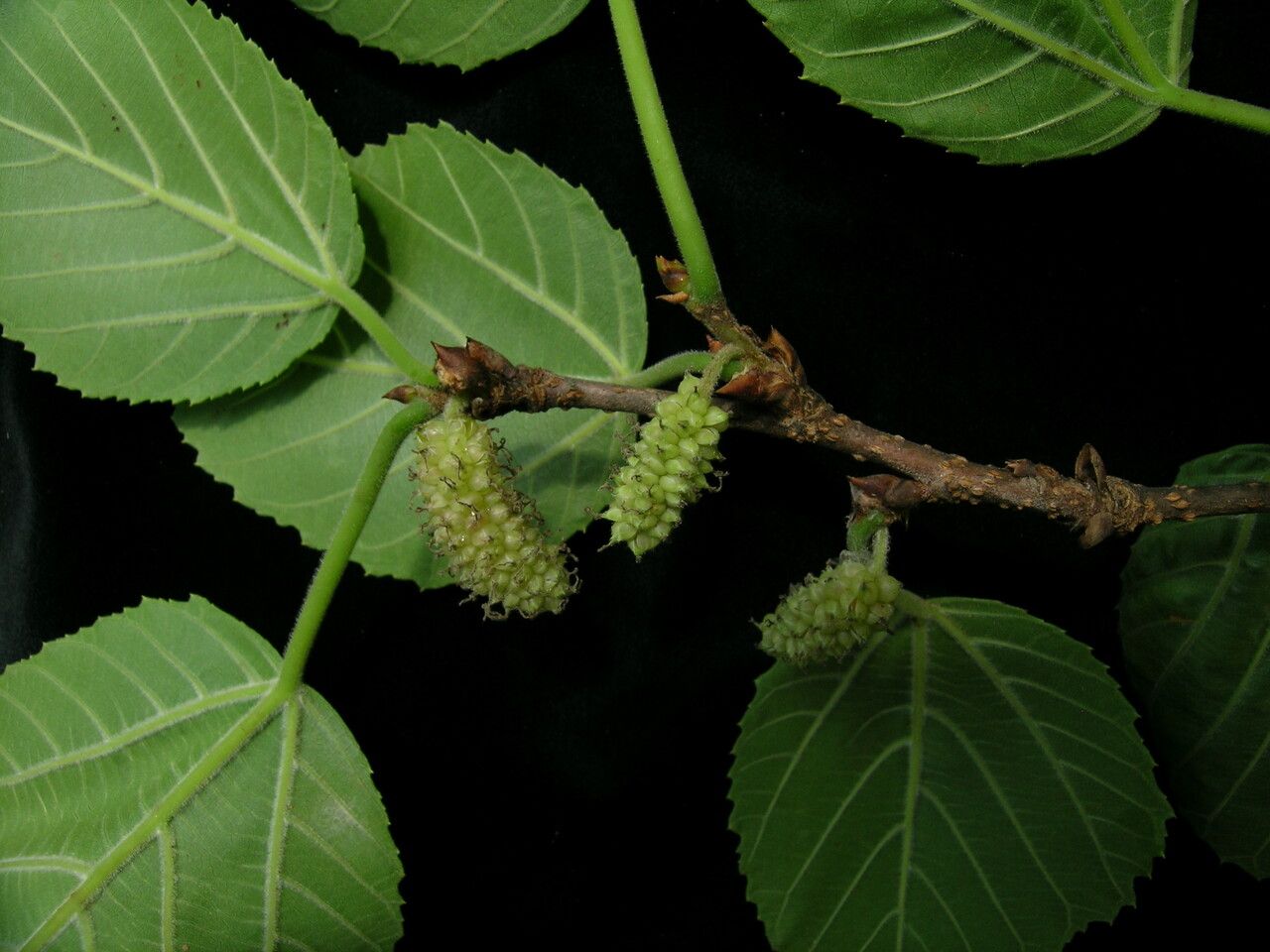
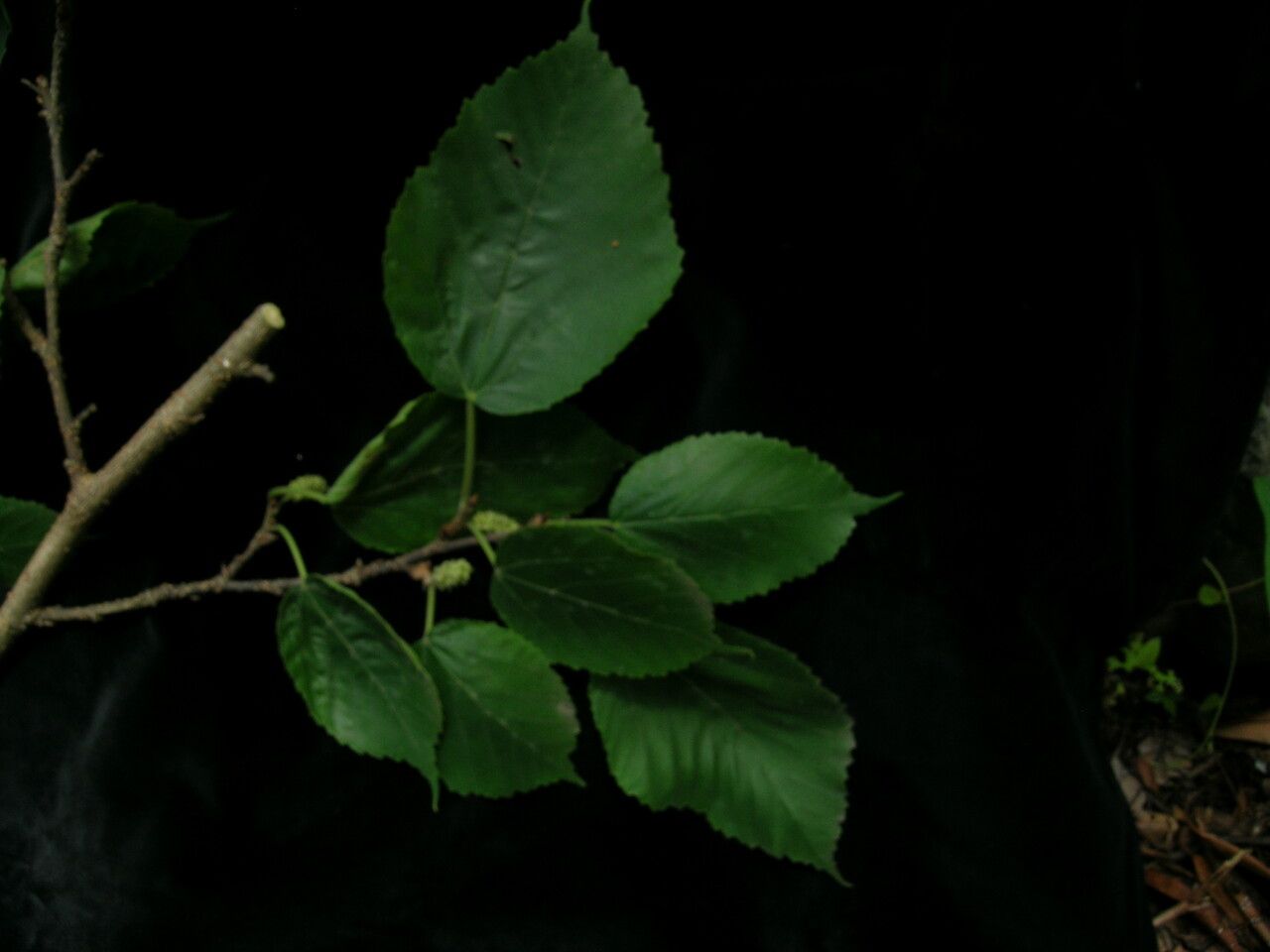
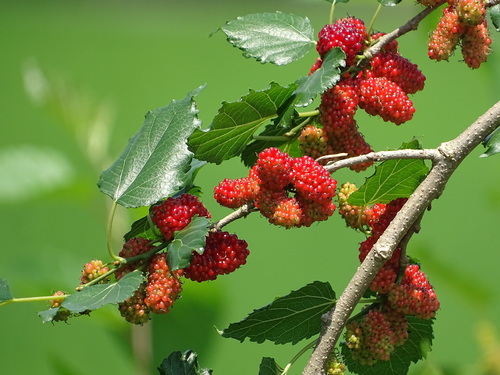
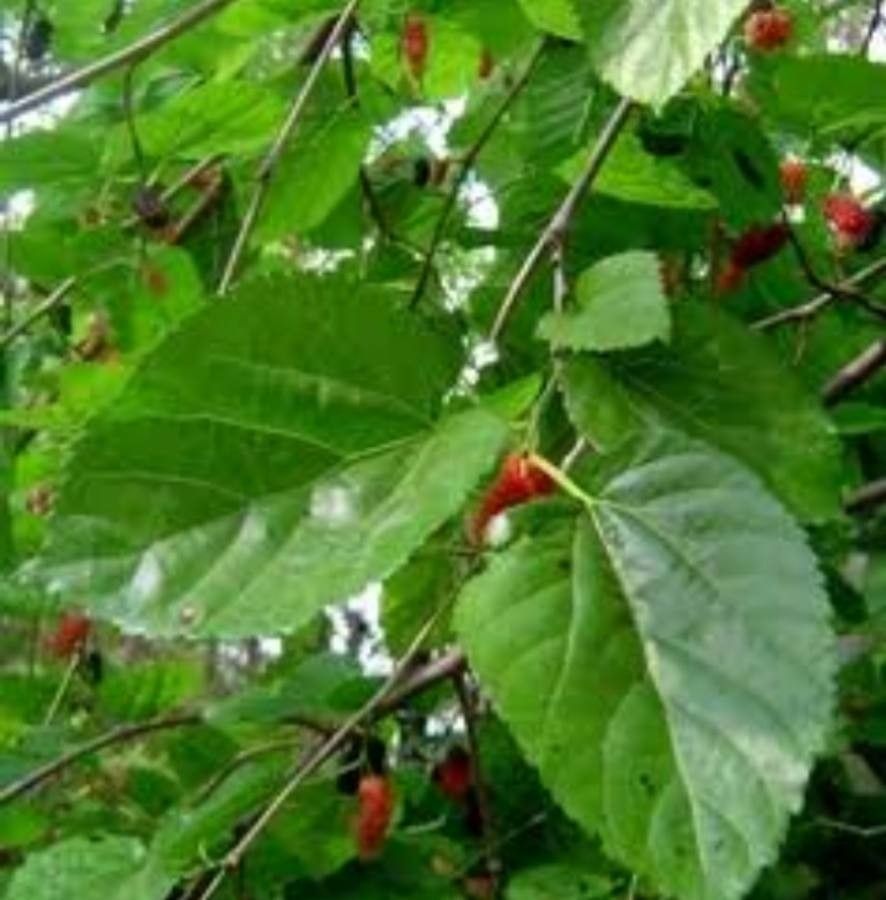
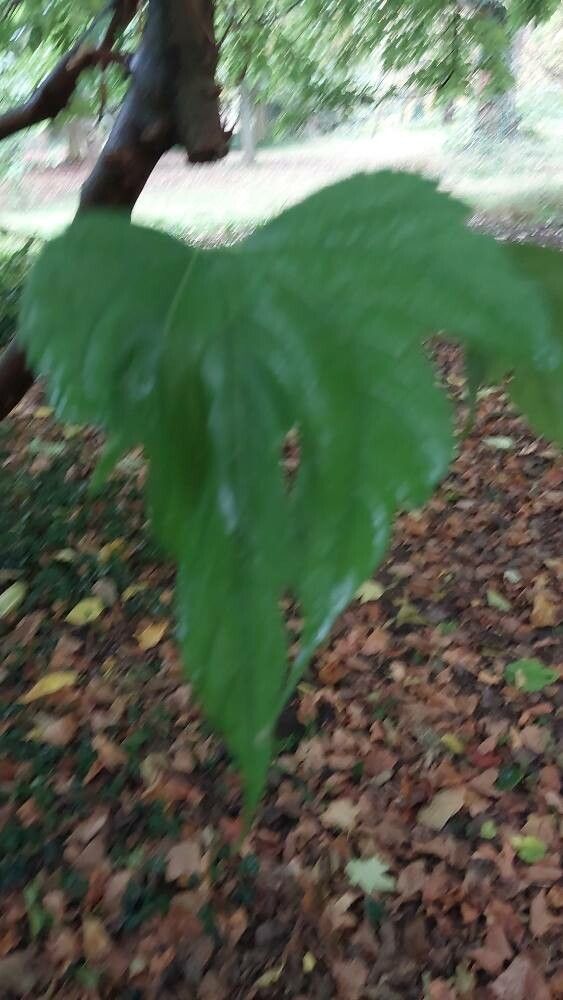
Morus serrata, known as Himalayan mulberry, is a species of mulberry native to the Himalaya and the mountains of southwestern China, at altitudes of up to 2,300 metres (7,500 feet). It is a small deciduous tree growing to 15 m (49 ft) tall. The leaves are 10–14 centimetres (4–5+1⁄2 inches) long and 6–10 cm (2+1⁄4–4 in) broad and are densely hairy on the veins underneath, with the upper surface hairless. The edible fruit is a 2–3 cm (3⁄4–1+1⁄4 in) long compound cluster of several small drupes that are red when ripe. It is considered by some authorities to be a variety or subspecies of white mulberry (M. alba) and is also similar to black mulberry (M. nigra).
Mulberry has strong resistance to disease and is typically not susceptible to illnesses. With regard to care, this plant is fairly low maintenance. When grown outdoors it needs only minimal watering, and larger specimens generally do not require pruning. Smaller plants, however, should be pruned after they finish blooming. Mulberryt is appropriate for anyone who has outdoor space, such as a garden or a deck, and it does not demand extensive experience in plant care.
How to keep Morus Serrata.
Light
Mulberry flourishes best with abundant sunlight, mirroring the conditions of its original environment. Adequate light is crucial for its well-being, as it impacts the plant's effectiveness in photosynthesis. It's also capable of tolerating places with slightly less sunlight. Too much or too little sunlight can detrimentally affect its development, potentially leading to leaf scorch or inadequate growth.
Temperature
Mulberry, originating from Asia, thrives in a climate that's temperate, ideally featuring an average temperature that fluctuates between 32 to 95 ℉ (0 to 35 ℃). This kind of timber-like plant favors direct sunlight and can withstand hot summers, though it is unable to handle exceedingly warm temperatures. Sub-zero temperatures during winter could lead to harm or even kill it. Broadly cultivated for its tasty produce , it can acclimate to a variety of temperature conditions given appropriate maintenance.
Fertilizer
The Mulberry plant needs ample nutrients to produce fruit at its best. To encourage new growth and the formation of blooms, apply fertilizer in the early spring. Frequent fertilization supports the plant's health, promotes the growth of tastier fruit, and averts problems associated with nutrient scarcity, such as yellow leaves and substandard fruit yield.
Botanical profile.
- Plant Type
- Tree
- Life Cycle
- Perennial
- Genus
- Morus
- Family
- Moraceae
- Hardiness Zone
- 3-10
- Mature Height
- 9.14 m to 20.12 m
- Mature Spread
- 9.14 m to 14.94 m
- Leaf Color
- Green
- Leaf Type
- Deciduous
- Flower Color
- Green, Yellow
- Flower Size
- 1.02 cm to 3.56 cm
- Bloom Time
- Mid spring, Late spring
- Planting Time
- Autumn
- Harvest Time
- Late spring, Early summer, Mid summer
- Native Area
- Turkey, India, Myanmar, Pakistan, Laos, China
Other names.