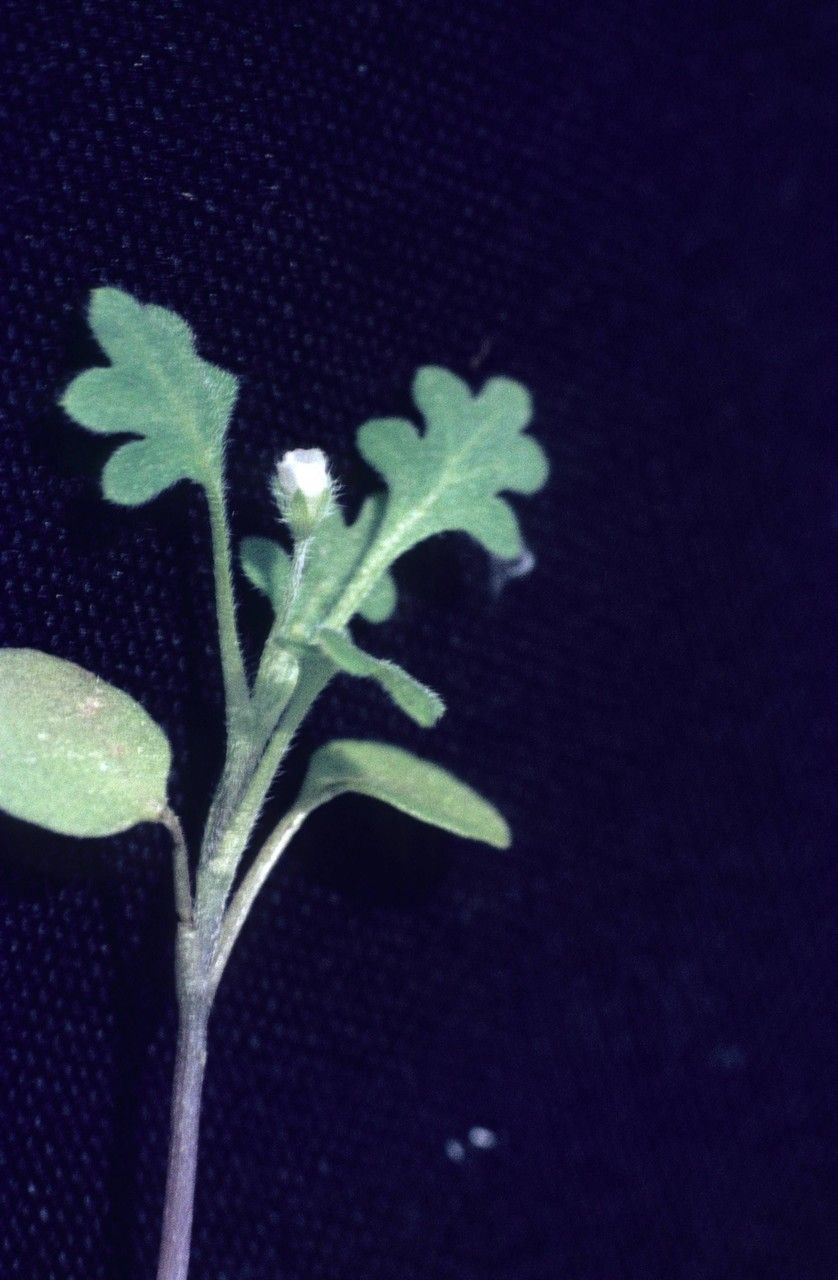
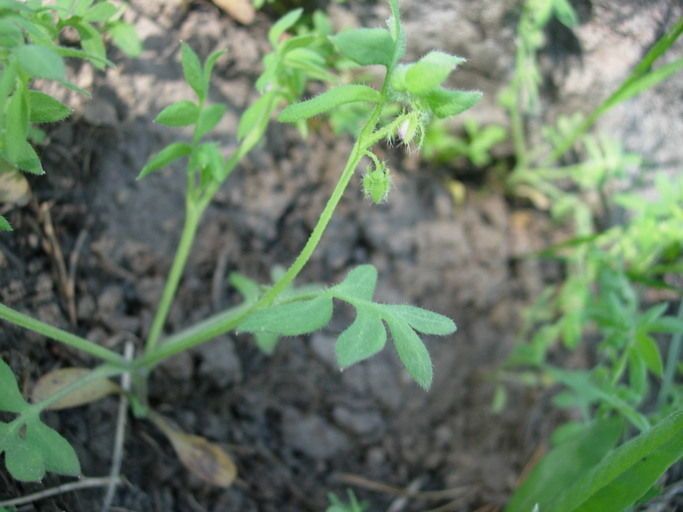
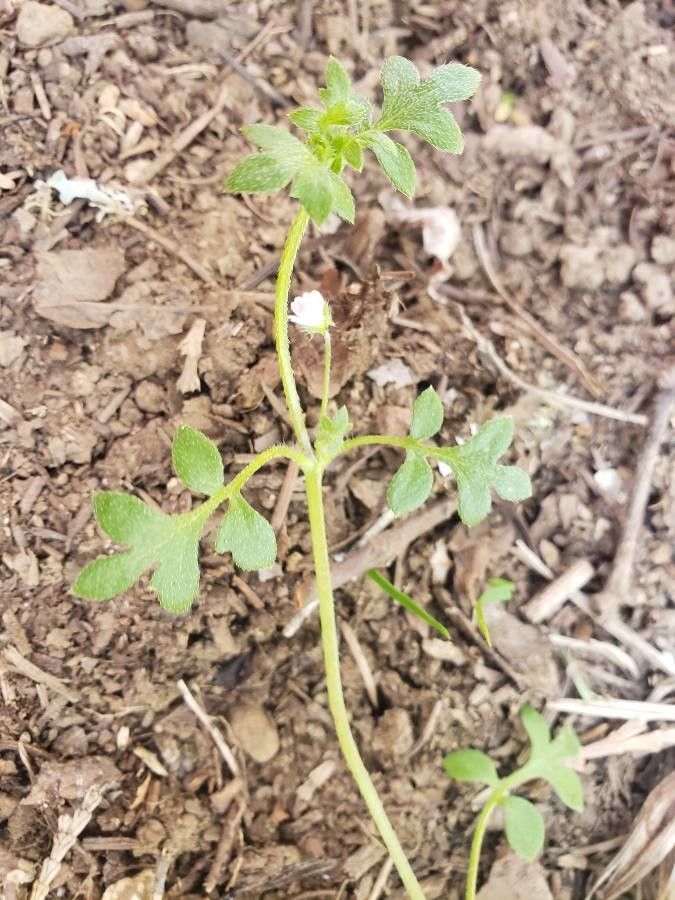
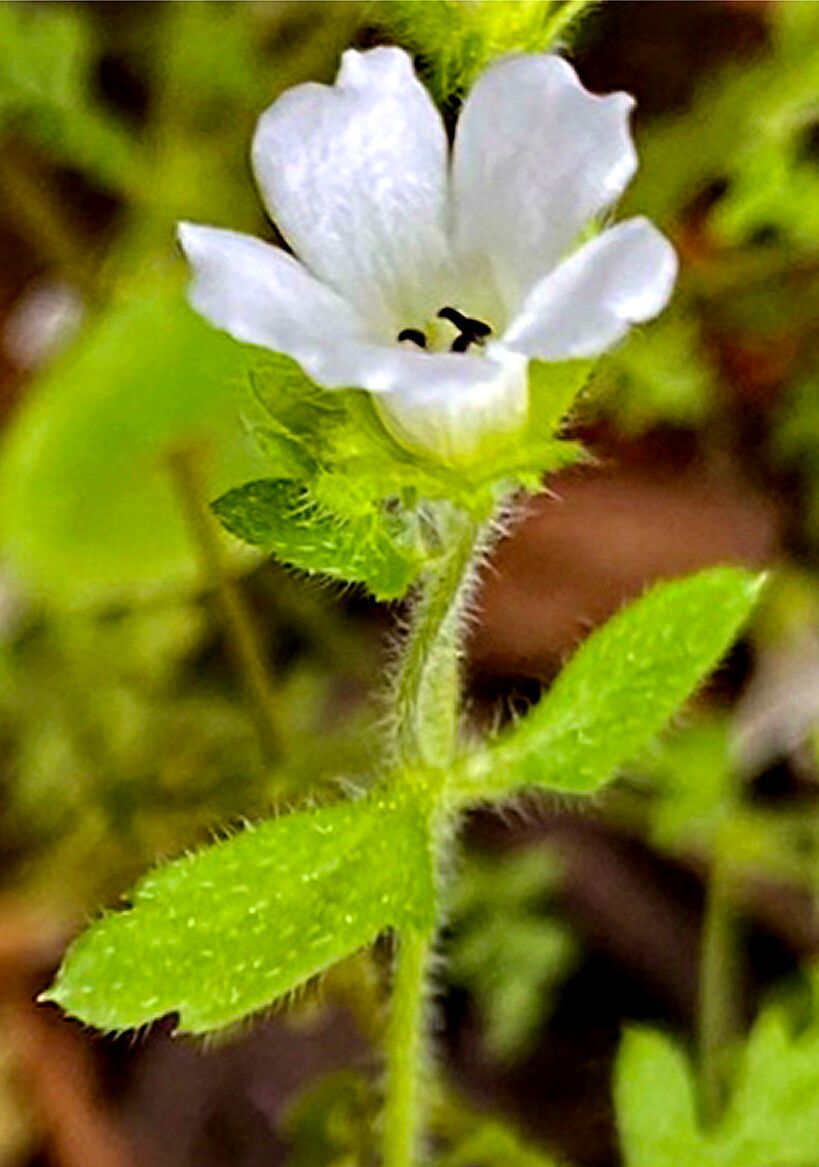
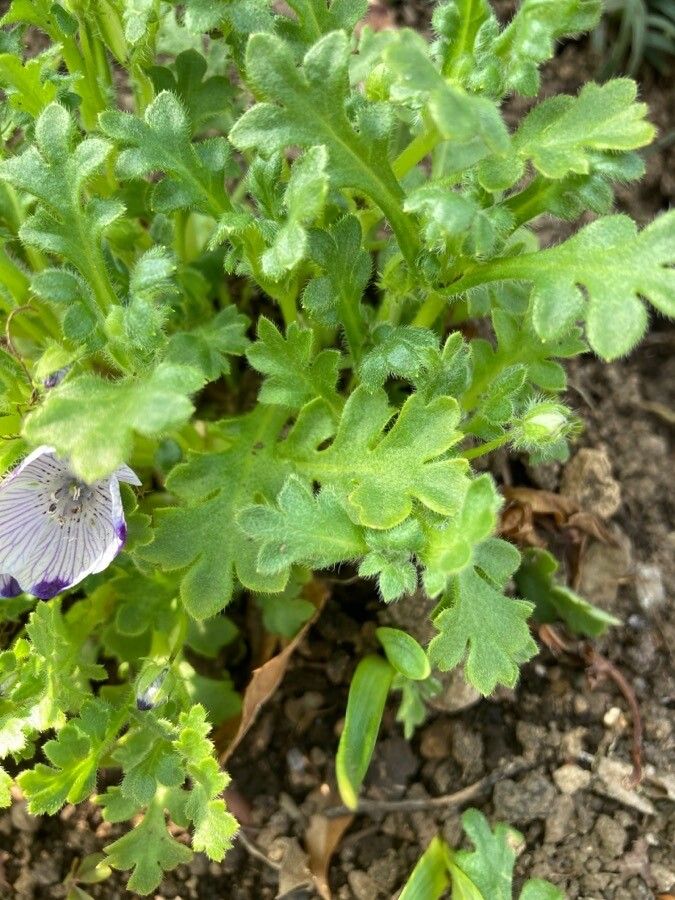
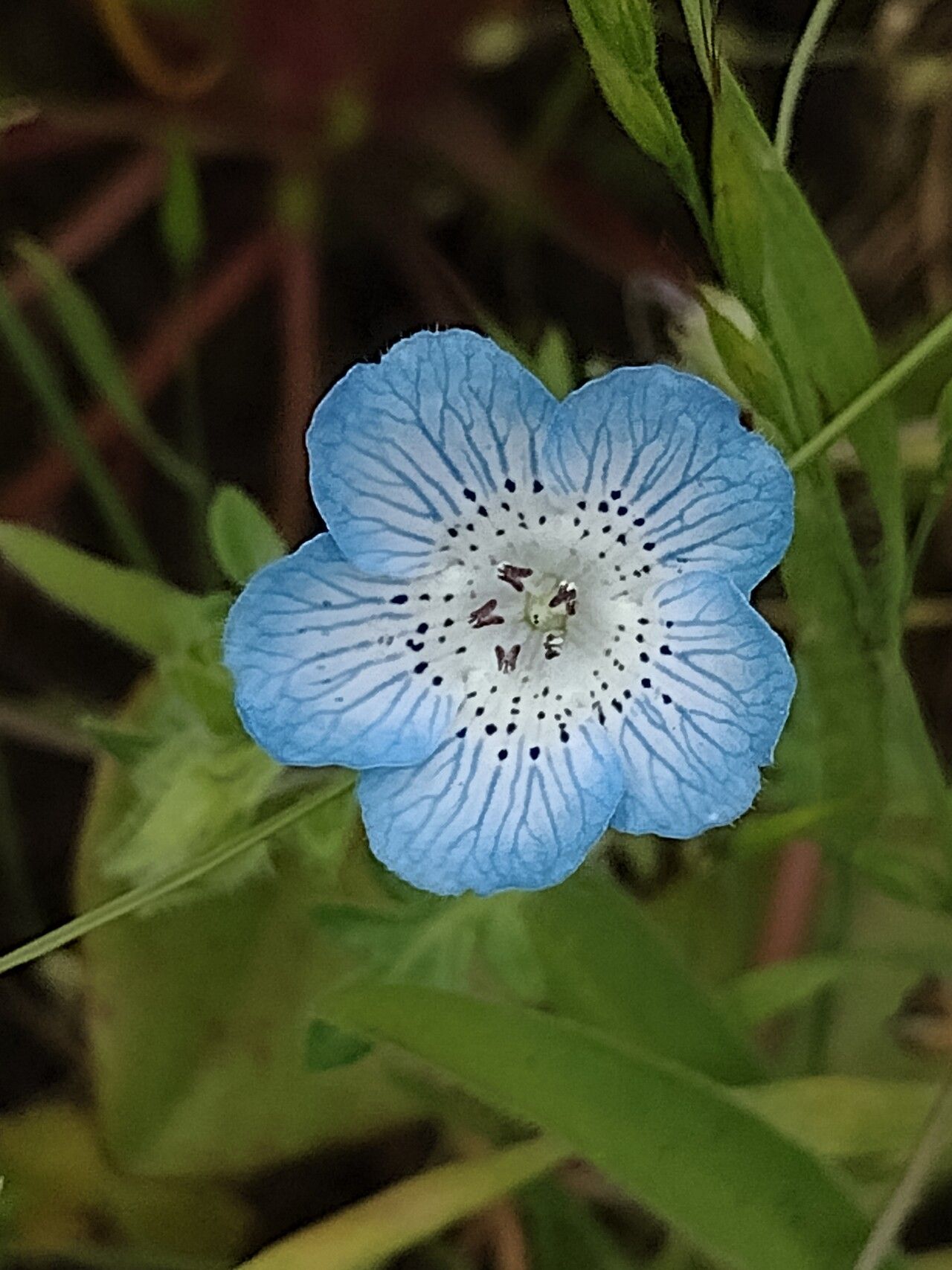
Nemophila breviflora is a species of flowering plant in the borage family known by the common names basin nemophila, Great Basin nemophila, and Great Basin baby-blue-eyes. It is native to southwestern Canada and the northwestern United States, where it generally grows in wooded and forested areas in thickets and moist streambanks. It is an annual herb with a fleshy, somewhat prickly stem growing 10 to 30 centimeters tall. The alternately arranged leaves are divided into several wide, pointed lobes. Flowers are solitary, each on a short pedicel. The flower has a calyx of sepals each a few millimeters long, pointed, and edged with stiff hairs, and there are reflexed appendages between the sepals. The bell-shaped flower corolla is white or purple-tinged and a few millimeters wide. The fruit is a capsule which develops within the calyx of sepals and contains a single red, pitted seed.
Basin nemophila is fairly resistant to diseases and typically does not suffer from them. Nevertheless, it can be affected by pests and diseases present in its environment. Such infections are generally mild. For care, this plant requires moderate maintenance. It should be pruned regularly to maintain a good appearance and healthy growth. Fertilizing can also help encourage flowering. Basin nemophila is suitable for anyone with outdoor space, such as a garden or patio, and does not demand extensive gardening experience. It may need more attention if grown indoors.
How to keep Nemophila Breviflora.
Fertilizer
Basin nemophila benefits from frequent, light applications of fertilizer to encourage healthy leaf growth. You should fertilize Basin nemophila about once a month during the summer months. Nitrogen is essential for foliage, and adding nitrogen-rich sources helps Basin nemophila thrive.
Botanical profile.
- Plant Type
- Herb
- Life Cycle
- Annual
- Genus
- Nemophila
- Family
- Boraginaceae
- Hardiness Zone
- 2-11
- Mature Height
- 0 cm to 30 cm
Other names.