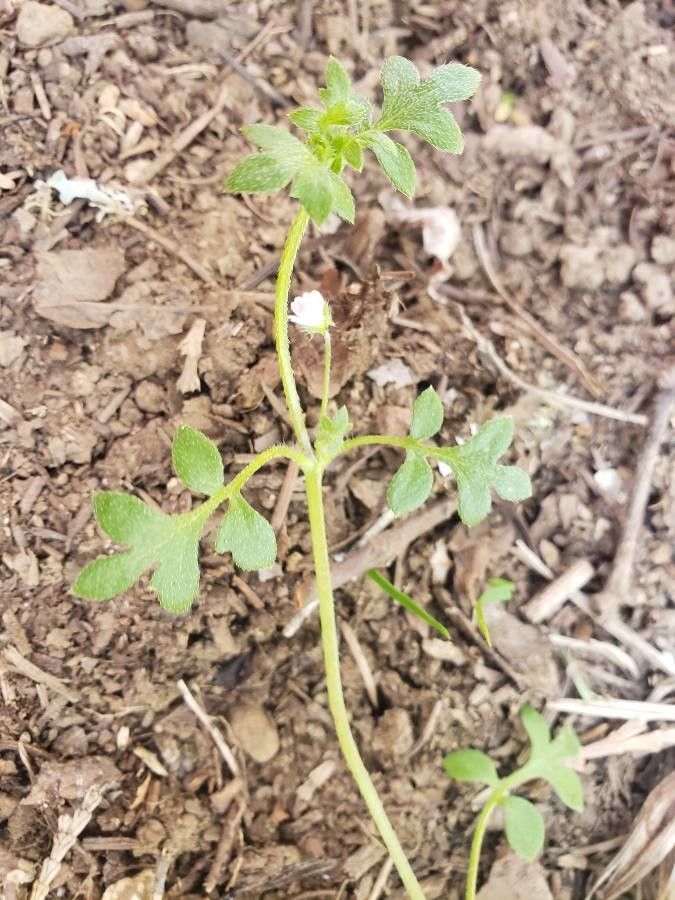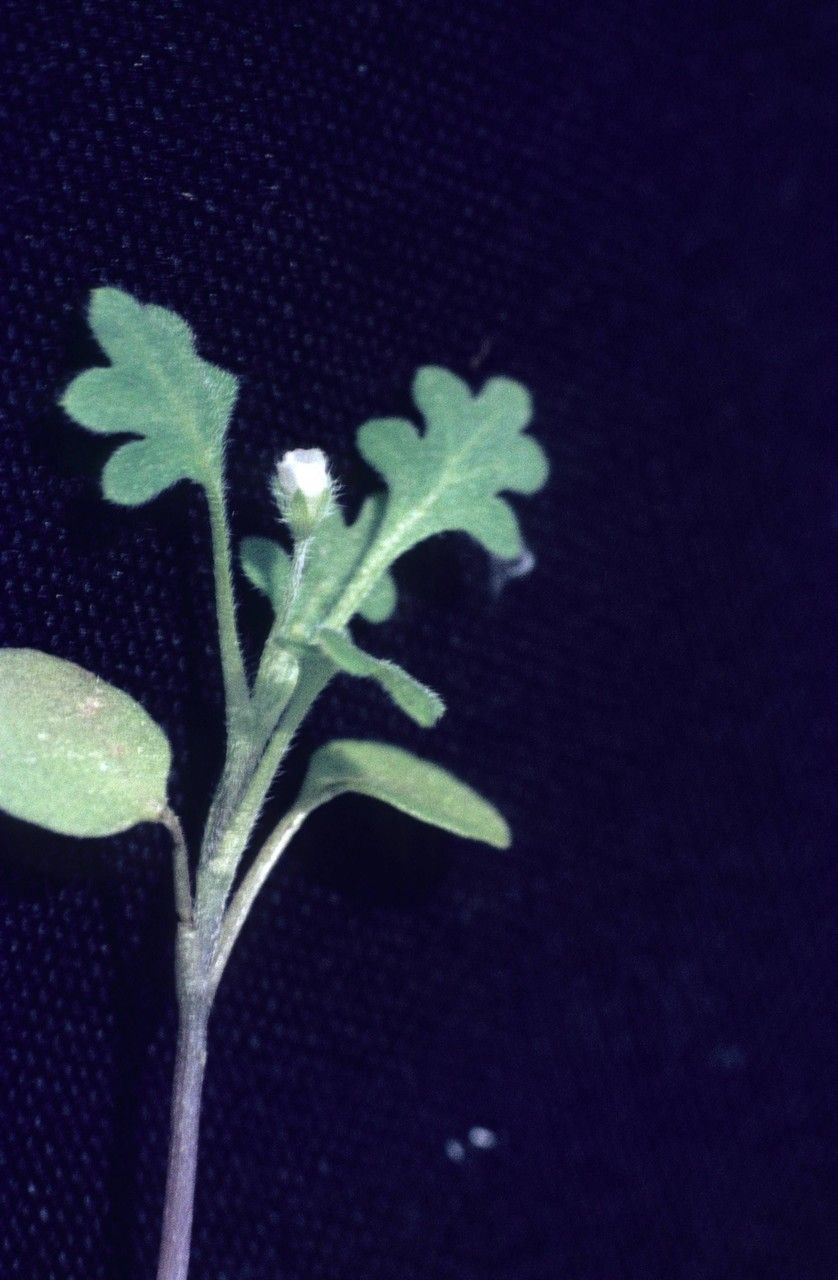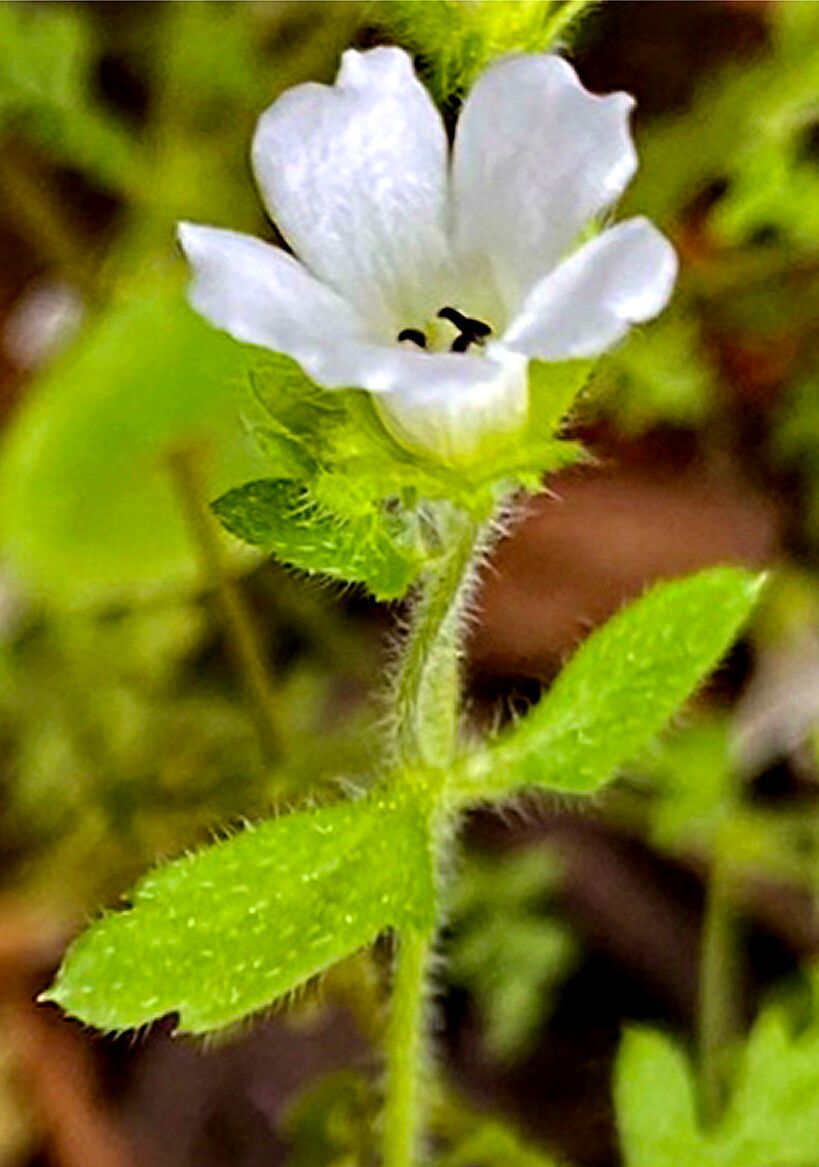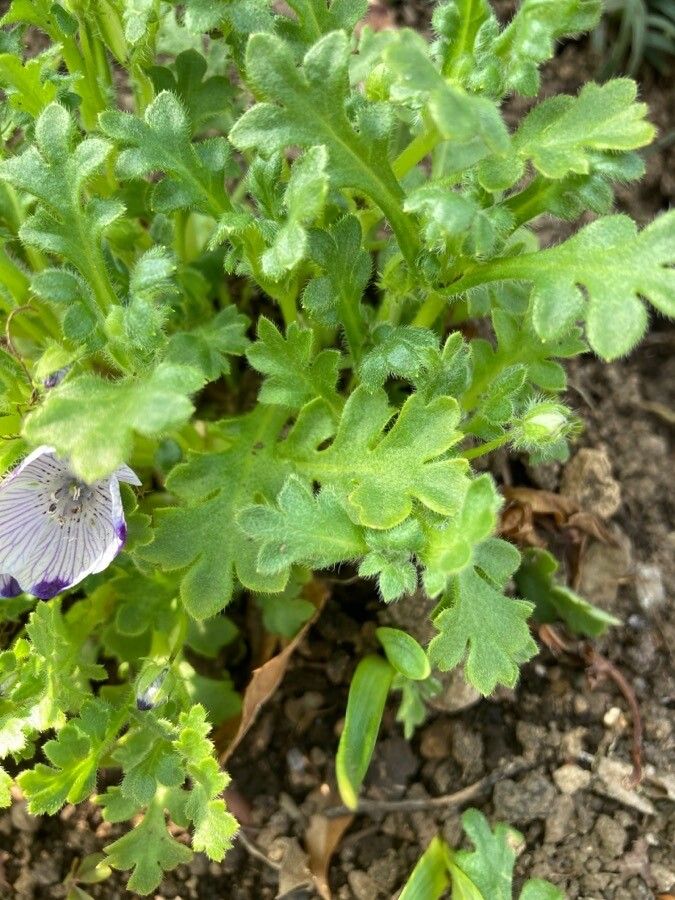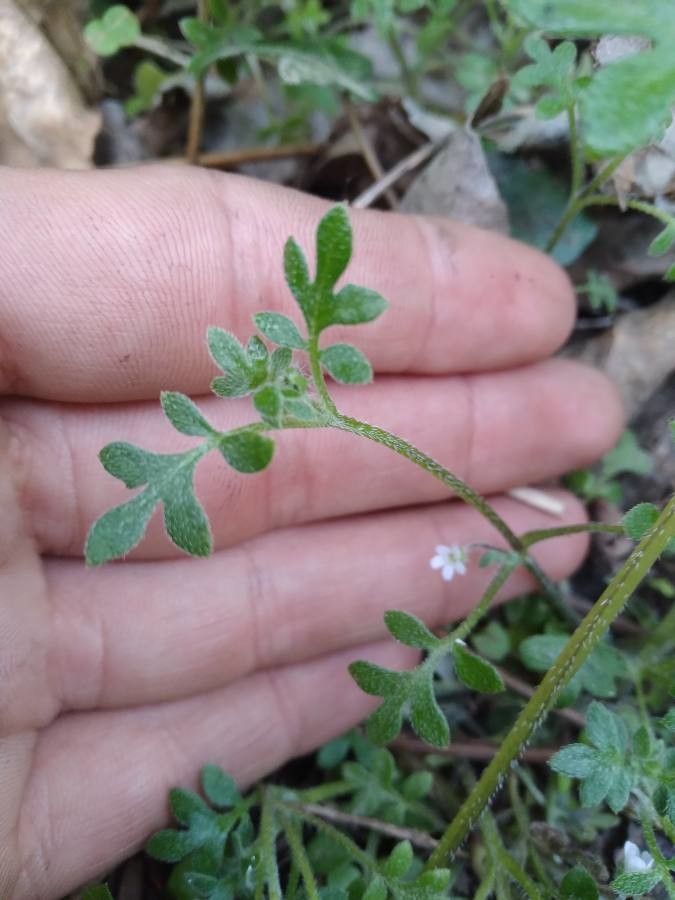
Nemophila parviflora, commonly known as the small-flowered nemophila or baby blue eyes, is a delicate annual plant belonging to the Boraginaceae family. Native to western North America, it thrives in diverse habitats such as meadows, grasslands, and open woodlands.
This plant typically grows to a height of up to 30 cm, featuring dainty blue or white flowers with yellow centers that bloom from spring to early summer. Its leaves are deeply lobed, resembling a fern-like appearance.
Nemophila parviflora is an easy-to-grow plant that prefers well-drained soil and can thrive in both full sun and partial shade. It can be propagated by sowing seeds directly into the soil in early spring or fall.
Often used as an ornamental plant, the small-flowered nemophila is celebrated for its delicate beauty and its ability to attract pollinators such as bees and butterflies. Additionally, it possesses medicinal properties; traditionally, Native Americans used its leaves to treat various ailments, including coughs, colds, fever, headaches, and stomach problems.
Overall, Nemophila parviflora is a charming annual flower that enhances any garden with its aesthetic appeal, while also offering practical medicinal benefits.
Small-flower nemophila is fairly disease-resistant and typically not vulnerable to illnesses. However, it can be affected by pests and diseases found in its environment. These infections are generally mild. Regarding care, this plant needs moderate maintenance. It should be pruned regularly to keep a neat appearance and support healthy growth. Applying fertilizer can also help encourage flowering. Small-flower nemophila is appropriate for anyone with an outdoor area, such as a garden or patio, and does not demand extensive care experience. It may need more attention if grown indoors.
How to keep Nemophila Parviflora.
Light
The small-flower nemophila usually does best in places with light levels between full sun and partial shade. Sunlight is important for its growth and health, although it does not require constant strong light. Sun exposure is necessary at every stage of its development. It comes from habitats where the amount of sunlight varies. Excessive exposure can cause damage, but it can tolerate some degree of deficiency.
Water
Small-flowered nemophila thrives in moist woodland environments where it requires regular moisture and can tolerate moderate drought conditions. To maintain its health, weekly watering is recommended, though outdoor growth often benefits from natural rainfall. As an herbaceous plant, it needs sufficient hydration during its active growth season to ensure lush foliage and optimal development.
Temperature
Small-flower nemophila originates from temperate regions and thrives in a temperature range of 68 to 100 °F (20 to 38 ℃). During cooler seasons, consider increasing ambient heat to meet its warmth preference.
Fertilizer
When most of the Small-flower nemophila's blooms have opened fully, resume fertilizing. At the height of bloom production, fertilize once every three to four weeks, as weather allows. Then, when the Small-flower nemophila begins to produce fewer new blooms, stop fertilizing; there's no need to feed it when it can no longer produce more flowers.
Pruning
Small-flowered nemophila benefits greatly from pruning, which is best performed from early to late spring. By trimming dead stems and spent flowers, you can improve the plant's health, encourage new growth, and extend the blooming period. Regular pruning also helps create denser foliage, making the plant's display more attractive for a longer time.
Botanical profile.
- Plant Type
- Herb
- Life Cycle
- Annual
- Genus
- Nemophila
- Family
- Boraginaceae
- Hardiness Zone
- 2-11
- Mature Height
- 20 cm to 49 cm
- Mature Spread
- 61 cm
- Leaf Color
- Green, Blue
- Leaf Type
- Deciduous
- Flower Color
- White
- Flower Size
- 0.10 cm to 0.51 cm
- Bloom Time
- Early spring, Mid spring
- Planting Time
- Spring
- Harvest Time
- Late spring, Early summer
Other names.
Reader questions.
What are the sunlight requirements for Small-flower nemophila?
Small-flower nemophila thrives best when exposed to levels of daylight that fall between full sun and semi-shade, necessitating about 3-6 hours of sunlight daily. Originating from environments with fluctuating sunlight intensities, it's vital for the plant's growth and well-being to have access to sunlight, though not necessarily continuous intense light. Excessive sunlight can potentially harm the plant, but it can endure a certain degree of light deficiency. It's also advised to observe how sunlight moves through your garden to ensure plants receive the ideal balance of light and shade.
What is the ideal temperature range for small-flower nemophila?
Small-flower nemophila, with its botanical name Nemophila parviflora, thrives in temperate environments, preferring a temperature range of 68 to 100 °F (20 to 38 °C). It flourishes best when the temperature is maintained within this range, making it adaptable to a variety of temperate conditions.
How can artificial lighting be used for Small-flower nemophila?
In scenarios where natural sunlight is insufficient, especially during winter or in less sunny spaces, artificial lighting can be crucial for the growth of indoor Small-flower nemophila plants. Opt for artificial lights like LEDs, which can be customized to emit specific wavelengths necessary for the plant. The general guideline suggests that full sun plants require 30-50W/sq ft, partial sun plants 20-30W/sq ft, and full shade plants 10-20W/sq ft of artificial light. Placement should be 12-36 inches above the plant to imitate natural sunlight conditions, ensuring plants receive 8-12 hours of light per day.
How should small-flower nemophila be protected from cold?
Small-flower nemophila exhibits strong cold resistance, making special frost protection measures generally unnecessary. However, in anticipation of temperatures dropping below -40°C, it is important to protect the plant using materials like soil or straw to cover it. Additionally, abundantly watering the plant before the first freeze in autumn ensures the soil remains moist and enters a frozen state, which aids in preventing drought and water scarcity during the winter and early spring months.
What are the symptoms of insufficient or excessive sunlight in Small-flower nemophila?
Small-flower nemophila exhibits specific symptoms under insufficient or excessive sunlight. Insufficient sunlight may lead to smaller new leaves, leggy or sparse growth, faster leaf drop, slower or halted growth, and lighter-colored new leaves, indicating a lack of chlorophyll and essential nutrients. On the other hand, excessive sunlight can cause chlorosis (leaves turning yellow), sunscald (damage from intense sunlight exposure), leaf curling (a defense mechanism to minimize water loss), wilting (due to increased water loss), and leaf scorching (brown, dry edges on leaves). These symptoms highlight the plant's struggle to adapt to inappropriate light conditions.
What are the symptoms and solutions for low temperature effects on small-flower nemophila?
When temperatures fall below 0°C, small-flower nemophila remains cold-tolerant, showing no immediate signs of distress. Yet, if temperatures plummet below -40°C, one might observe a decrease or complete lack of sprouting in the following spring. To mitigate this, it's advisable to remove any parts of the plant that have failed to sprout as spring arrives.
What solutions can help manage Small-flower nemophila under varying light conditions?
To manage Small-flower nemophila under varying light conditions, indoor plants can benefit from being gradually shifted to sunnier locations, receiving 3-6 hours of direct sunlight daily, or utilizing artificial light sources like desk or ceiling lamps for at least 8 hours daily. For outdoor plants, a gradual relocation to optimal sunlight spots is recommended to prevent sunburn, ensuring plants adapt without shock to changes in light intensity. Reducing obstructions such as pruning nearby trees can increase sunlight exposure, and for smaller plants, consider transplanting to more sunlit locations with good drainage during their dormant period. It's important to note that while affected parts may not recover, new growth will be healthy post-adjustment.
What are the symptoms and solutions for high temperature effects on small-flower nemophila?
In the face of temperatures rising above 38°C during summer, the nemophila may exhibit symptoms such as lighter leaf colors, curling leaves, susceptibility to sunburn, and in extreme cases, wilting or drying out. Addressing these issues involves trimming away sunburned and dried parts of the plant, relocating it to a shaded area, or using a shade cloth to protect it from intense midday and afternoon sun. Ensuring the soil remains moist through morning and evening watering can also help alleviate stress caused by high temperatures.