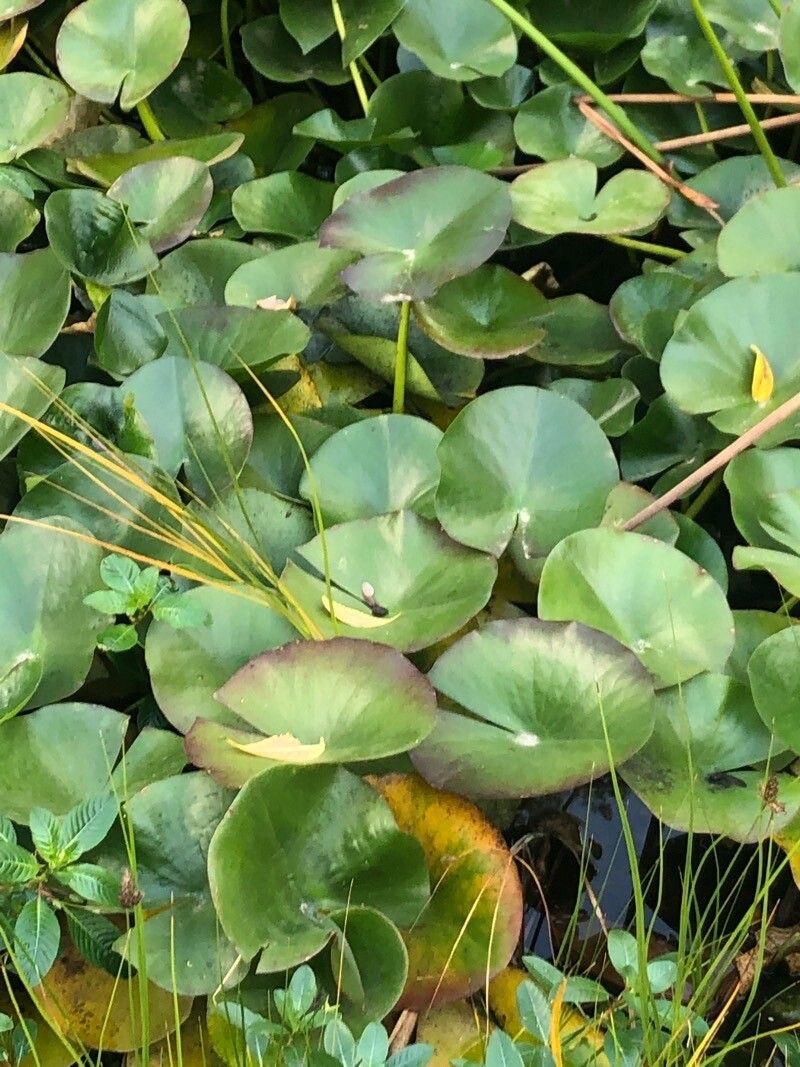
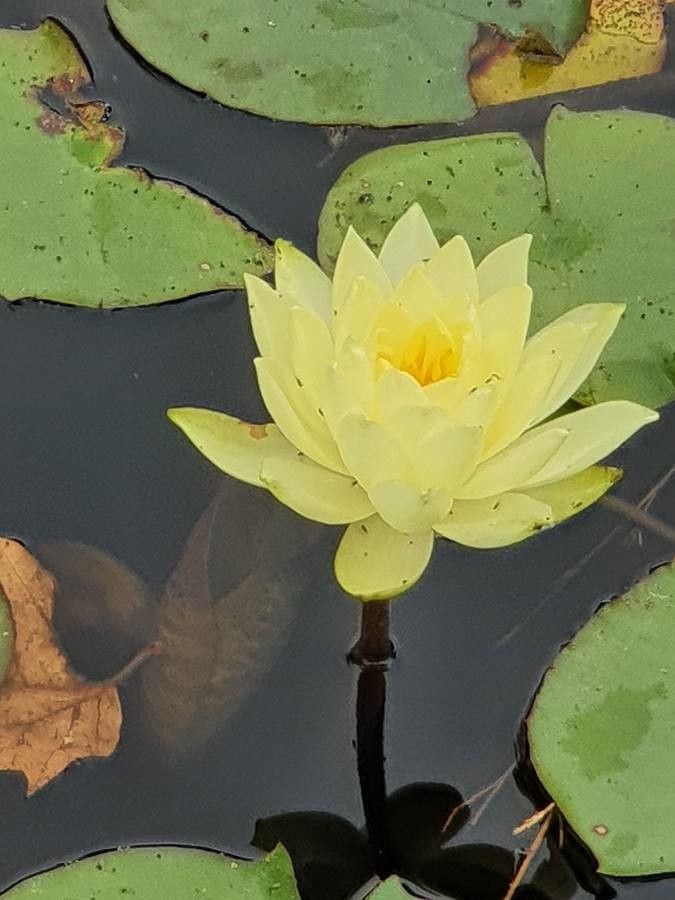
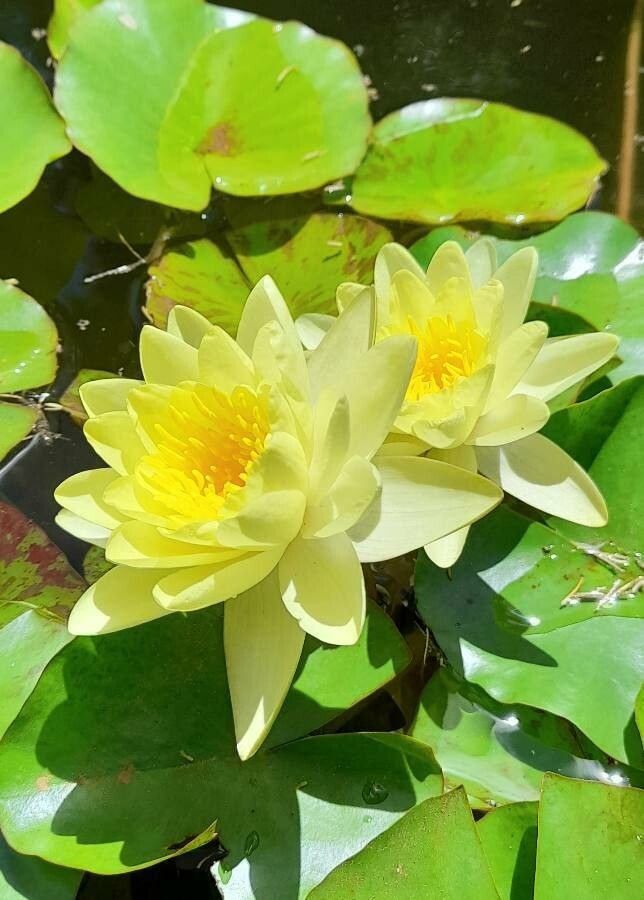
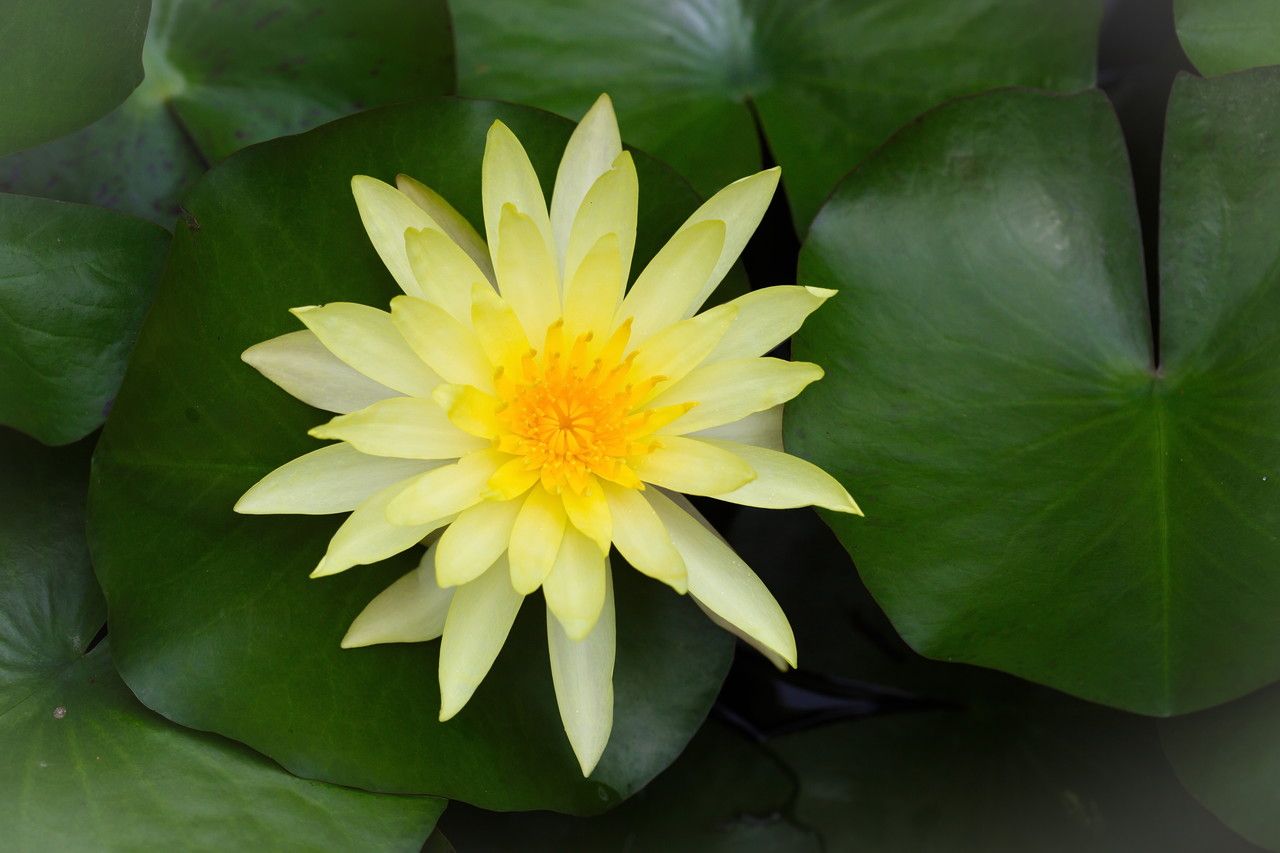
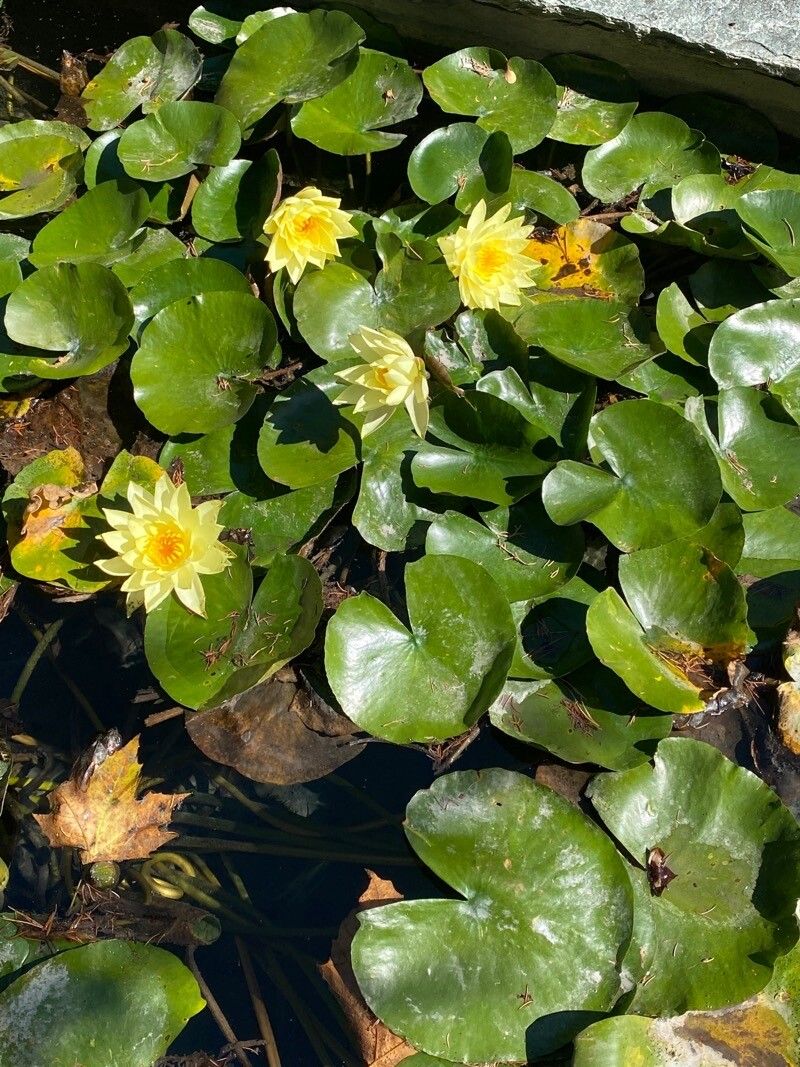
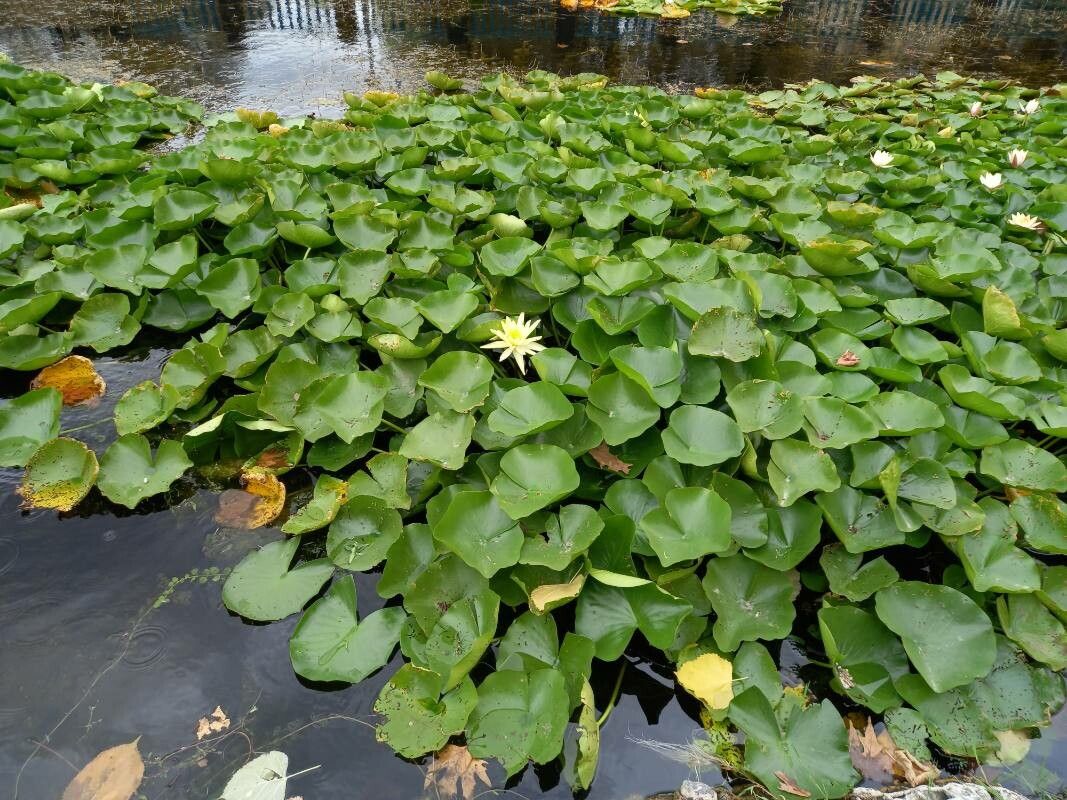
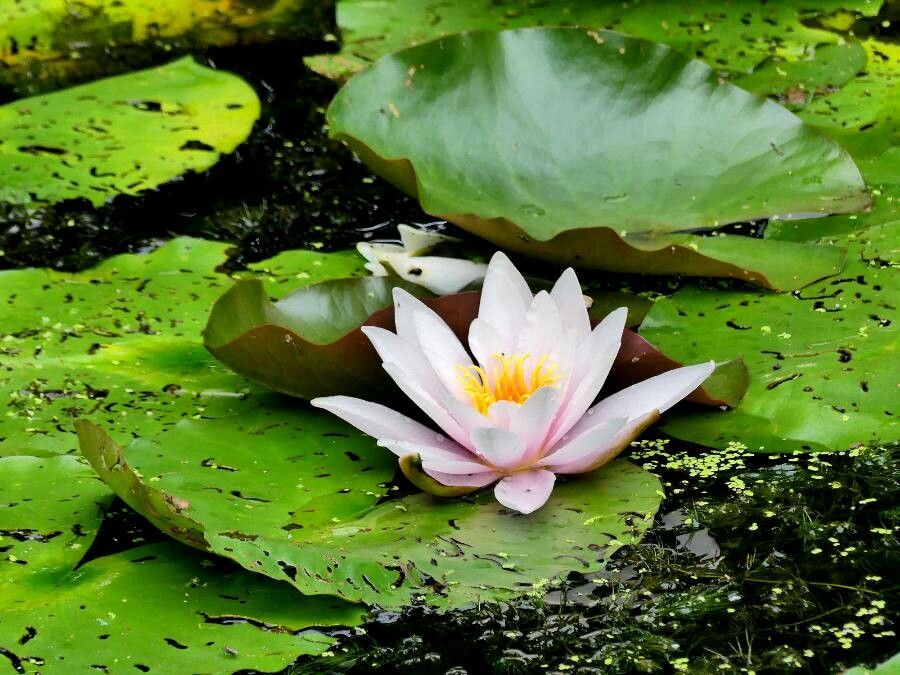
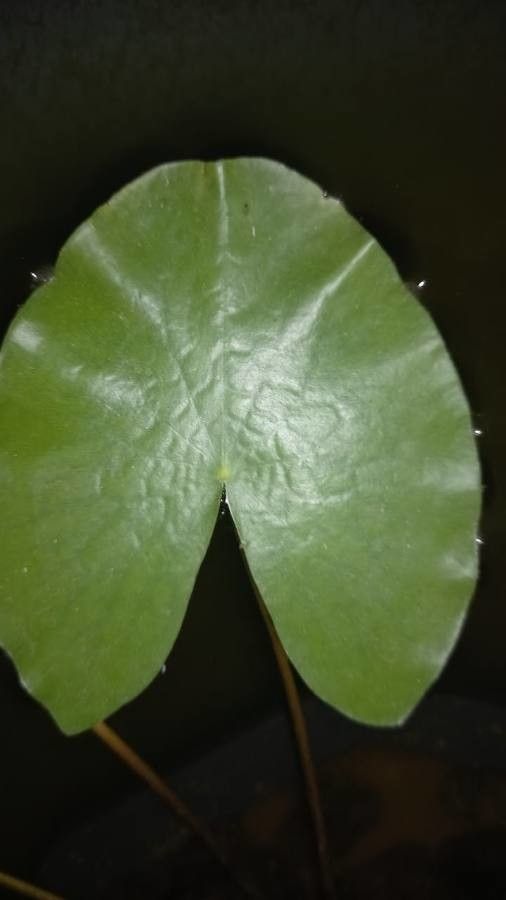
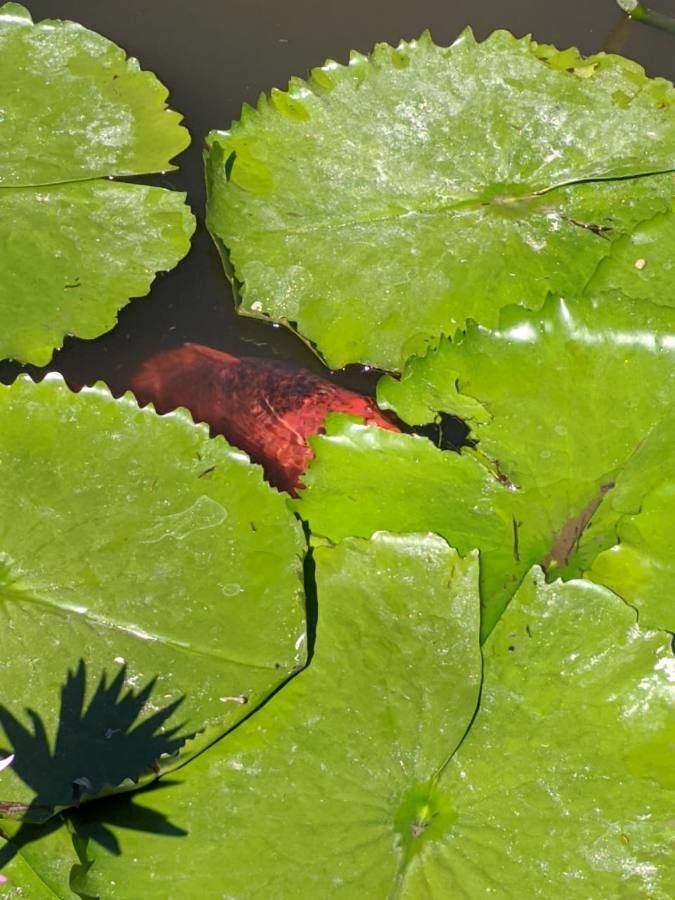
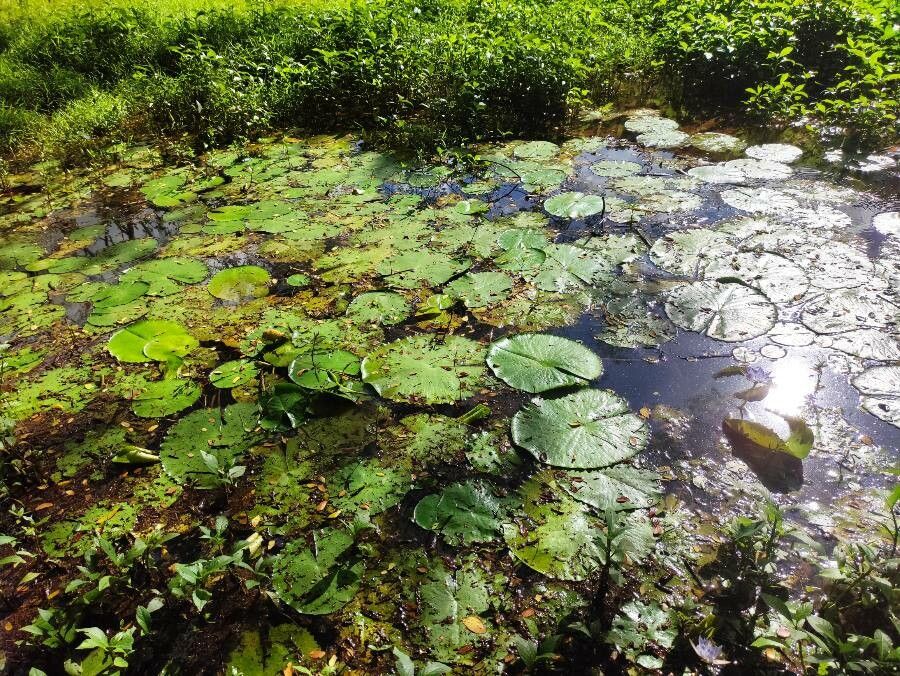
Nymphaea mexicana is a species of aquatic plant that is native to the Southern United States and Mexico as far south as Michoacán. Common names include yellow waterlily, Mexican waterlily and banana waterlily. Nymphaea mexicana is perhaps best known as a noxious weed in wetlands outside of its native range, such as California. It can easily invade similar aquatic ecosystems when it is introduced. The plant is attractive and has been introduced to new habitats for ornamental purposes. Nymphaea mexicana has thick rhizomes and long, spongy creeping stolons which bear bunches of small yellow roots that resemble miniature bananas. The plant can grow from seedlings or send out new shoots from its stolons. The large, flat leaves are green with purple or brown patterning, and float on the surface of the water. The floating lotus flowers have yellow petals and pointed, star-like, greenish-yellow sepals. The flowers close at night.
The plant flowers during the summer, and also during spring and fall in warmer areas. Seeds are contained in green berries which grow underwater. It grows in marshes and readily invades canals and other shallow waterways, sometimes becoming a nuisance. The Canvasback duck, Aythya valisineria, feeds on the banana-like roots of the plant.
Yellow waterlily has strong resistance to disease and is usually not affected by many ailments. However, it can be vulnerable to pests or diseases present in its environment. These problems are typically not serious. For care, this plant needs a moderate amount of maintenance. It should be pruned regularly to keep a good appearance and support healthy growth. Fertilizing can also help encourage flowering. Yellow waterlily is well suited for anyone with outdoor space, such as a garden or patio, and does not demand extensive plant-care experience. It may need more attention if grown indoors.
How to keep Nymphaea Mexicana.
Light
The yellow waterlily does best in full sun but can tolerate periods of lower light. Native to sun-drenched habitats, it grows healthily with plenty of sunlight. Its development stages are not greatly affected by light levels. Too little light can lead to stunted growth, while too much can cause scorching.
Water
The yellow waterlily is well-suited for moist environments, needing weekly watering to stay well-hydrated. As an aquatic perennial, it thrives when submerged or growing at the water's edge in outdoor ponds. It shows vigorous growth when it has plenty of water and full exposure to sunlight.
Temperature
The yellow waterlily prospers in its native habitat where temperatures range from 41 to 95 °F (5 to 35 ℃). It tolerates a wide span of temperatures but favors environments within that range. Seasonal temperature adjustments may be required to sustain optimal growth.
Pruning
The yellow waterlily is an aquatic plant known for its large leaves and vibrant yellow flowers. To encourage growth and remove decaying foliage, it's best to prune this plant from late winter to early spring. Additionally, trimming spent flowers will help prevent seed propagation. Make sure to clean your tools before use to avoid spreading diseases.
Botanical profile.
- Plant Type
- Herb
- Life Cycle
- Perennial
- Genus
- Nymphaea
- Family
- Nymphaeaceae
- Hardiness Zone
- 4-10
- Mature Height
- 10 cm to 30 cm
- Mature Spread
- 61 cm to 91 cm
- Leaf Color
- Green, Brown
- Leaf Type
- Evergreen
- Flower Color
- Yellow
- Flower Size
- 5.08 cm to 7.62 cm
- Bloom Time
- Late spring, Summer, Fall
- Planting Time
- Spring, Summer
- Harvest Time
- Summer, Fall, Early winter
- Native Area
- Mexico
Other names.
Reader questions.
How should I water my Yellow waterlily?
To water the Yellow waterlily effectively, it is best to use filtered room temperature water. Tap water may have harmful particles, so filtered water is preferred. This plant is used to warm environments, so it is important to avoid using cold water, as it can be a shock. It is also not recommended to water the plant from above, as this can cause issues with the leaves. Instead, water the soil directly until it is completely soaked. This will help to moisturize the roots and support their growth and nutrient absorption.
Why do I have to use fertilizer for my Yellow waterlily?
Fertilization is important for the Yellow waterlily because it provides key nutrients needed for the plant's overall growth, both above and below ground. Although the Yellow waterlily has relatively low fertilization needs and can sometimes survive without it, annual fertilization is highly beneficial. It helps keep the plant alive and may even result in better, longer-lasting flowers. Therefore, those who want their Yellow waterlily to thrive should prioritize annual fertilization.
What are the sun requirements for Yellow Waterlily?
The Yellow Waterlily, with its botanical name Nymphaea mexicana, requires full sun exposure to thrive, meaning it should receive above 6 hours of sunlight daily. However, it can also tolerate partial sun, which amounts to about 3-6 hours of sunlight. Monitoring how sunlight moves through your garden is crucial, as choosing the right spots ensures a balance of light and shade, promoting the plant's health and happiness.
What is the optimal temperature range for Yellow Waterlily?
Yellow Waterlily, or Nymphaea mexicana, thrives in its native environment with temperature ranges of 41 to 95 °F (5 to 35 °C). It has broad temperature tolerances but prefers climates within this range. The plant is quite adaptable, showing strong cold resistance, meaning special frost protection measures are usually not necessary during winter. However, adjustments may be needed seasonally to maintain optimal growth, and if winter temperatures are expected to drop below -30°C, it is important to provide cold protection, which can be achieved by covering the plant with materials such as soil or straw.
What should I do if I give my Yellow waterlily too much or too little water?
Overwatering is a common issue that can harm your Yellow waterlily. It can cause wilting and yellowing of the stems and leaves. Prolonged overwatering can also lead to diseases like root rot, mold, and mildew, which can be fatal for the plant. Underwatering is less likely, but it can still happen. Signs of underwatering include brittle and brown leaves. It's important to notice the signs of overwatering early to prevent irreversible damage, such as root rot. If you see these signs, reduce your watering schedule and check the soil's drainage. Poor drainage may require replacing the soil with a well-draining potting mix. On the other hand, if your Yellow waterlily is not getting enough water, simply increase your watering frequency until the symptoms improve.
When should I fertilize my Yellow waterlily for the best results?
The best time to fertilize a Yellow waterlily is late winter to early spring when it is coming out of dormancy and starting to grow. Fertilizing during this time will promote healthy growth and give the plant a great start for the season. While it is best to fertilize in early spring, fertilizing in the fall is also acceptable. Avoid fertilizing in summer and winter as it is not beneficial for the Yellow waterlily.
What are the essentials for growing Yellow Waterlily?
The Yellow Waterlily thrives in environments of complete solar exposure but can also withstand periods of reduced luminosity. Originating from regions abundant in sunlight, it manages healthy growth irrespective of light levels. Inadequate light might lead to stunted growth, while too much can cause scorching. For indoor plants that can't access sufficient natural light, especially during winter or in less sunny spaces, artificial lighting becomes crucial. This includes LED lights that can be customized to offer specific light wavelengths needed by the plants. The amount of artificial light needed varies by plant type: full sun plants require 30-50W/sq ft, partial sun plants need 20-30W/sq ft, and full shade plants need 10-20W/sq ft.
How should Yellow Waterlily be cared for in low temperatures?
Yellow Waterlily is cold-tolerant and can thrive when temperatures are kept above 5°C. In winters, ensure the temperature is maintained above -25°C. Should the temperature drop below -30°C, the plant may not show immediate changes, but there could be a decrease in sprouting or even no sprouting during the following springtime. To protect the plant in spring, it is recommended to remove any parts that have failed to sprout. Additionally, before the first freeze in autumn, water the plant abundantly to keep the soil moist and help prevent drought and water scarcity during the colder months.
How often should I give water to my Yellow waterlily?
If your Yellow waterlily is in a pot, the most precise way to determine if it needs water is by checking the soil. Plunge your finger into the soil and if the top two to three inches are dry, then it's time to water it. For Yellow waterlilies grown outdoors in the ground, you can use a similar method. When you find that the top few inches of soil have dried out, it's time to add water. Usually, during spring and early fall, watering once a week will be sufficient. However, in extremely hot weather, you may need to water twice or more per week. It's worth noting that mature, well-established Yellow waterlilies can endure drought conditions.
When is the best time to not fertilize my Yellow waterlily?
To properly care for your Yellow waterlily, it is important to know when to fertilize. The best time to fertilize this plant is during late winter and early spring. Since the Yellow waterlily has low fertilization needs, one annual feeding during this time is sufficient. It is important to avoid fertilizing during spring, summer, and fall as overfertilization can occur and lead to complications. However, if you missed fertilizing in the spring, it is acceptable to feed the plant during the fall. Additionally, there is no need to fertilize during the winter, as the Yellow waterlily will be in a dormant growth phase and won't produce new growth. Therefore, fertilization during most of the winter is not recommended.
What are the symptoms of inadequate or excessive sunlight in Yellow Waterlily?
Yellow Waterlily exhibits several signs when exposed to inadequate or excessive sunlight. Insufficient light can lead to smaller new leaves, leggy growth, early leaf drop, slower or halted new growth, lighter-colored new leaves, indicating a lack of essential nutrients. Excessive sunlight, on the other hand, can cause chlorosis (leaves turning yellow), sunscald, leaf curling as a defense mechanism to minimize water loss, wilting due to high water loss, and leaf scorching, seen as brown, dry edges on leaves which affects the plant's health.
How to manage high temperatures for Yellow Waterlily?
During summer, it's crucial to ensure that Yellow Waterlily's temperature remains below 35°C. Exceeding 41°C can cause the leaves to become lighter in color, curl, become prone to sunburn, and in severe cases, lead to the wilting and drying of the entire plant. To mitigate high-temperature effects, trim away any sunburned and dried-up parts of the plant. Move it to a location that offers shade during the midday and afternoon sun or use a shade cloth to protect it. Keep the soil moist by watering the plant in the morning and evening.