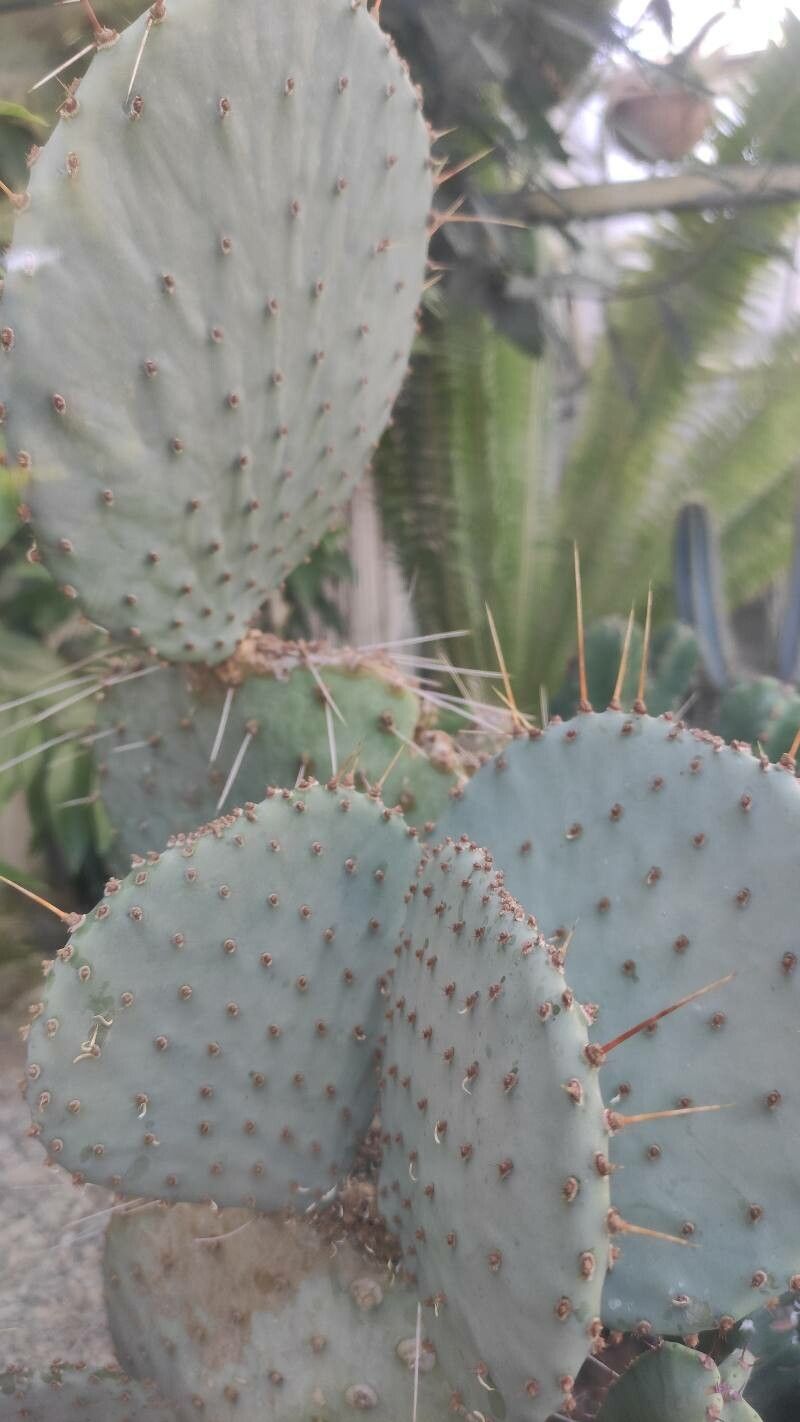
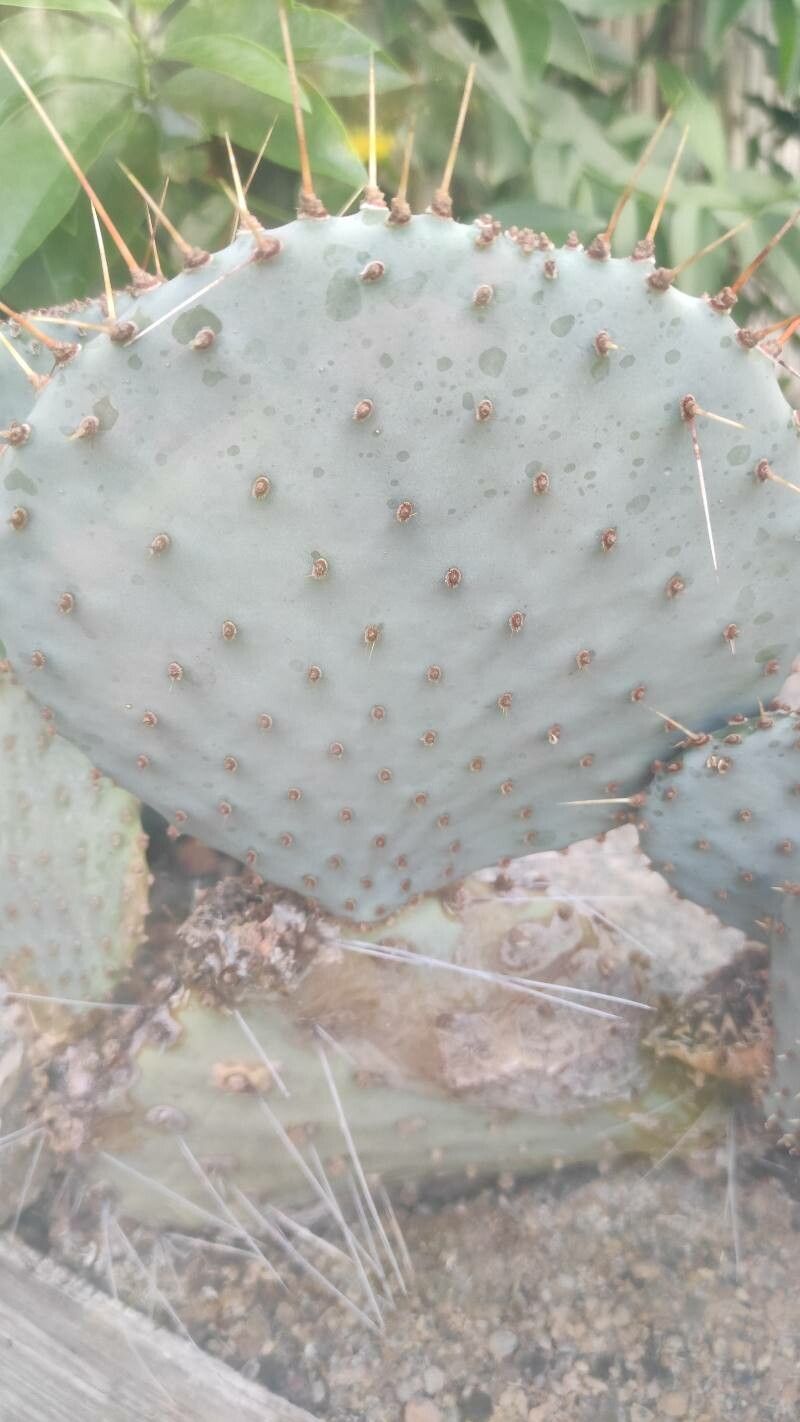
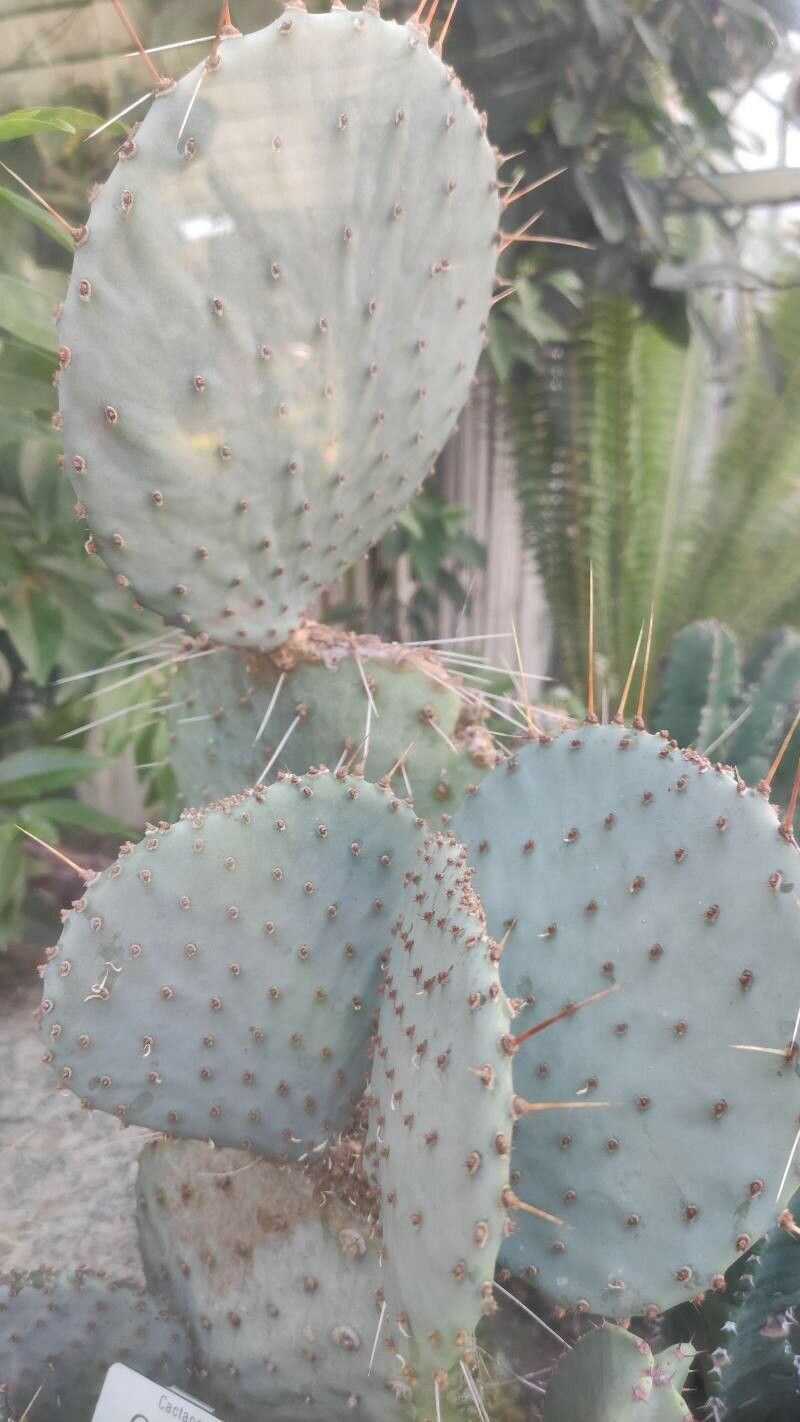
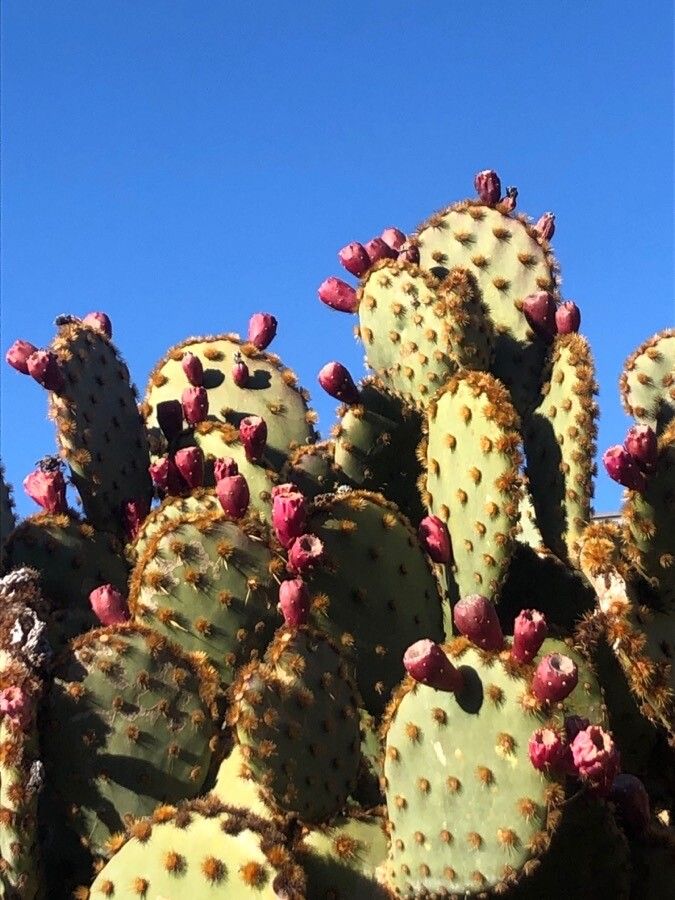
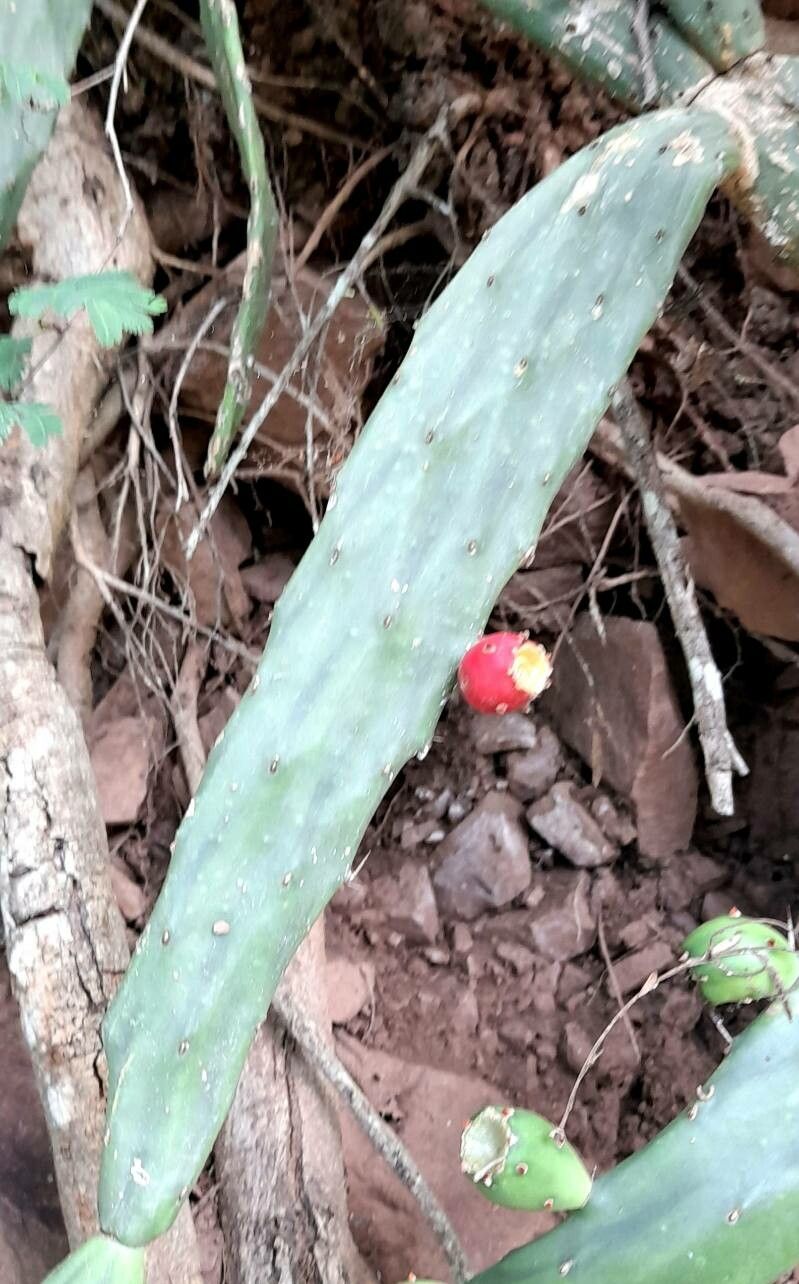
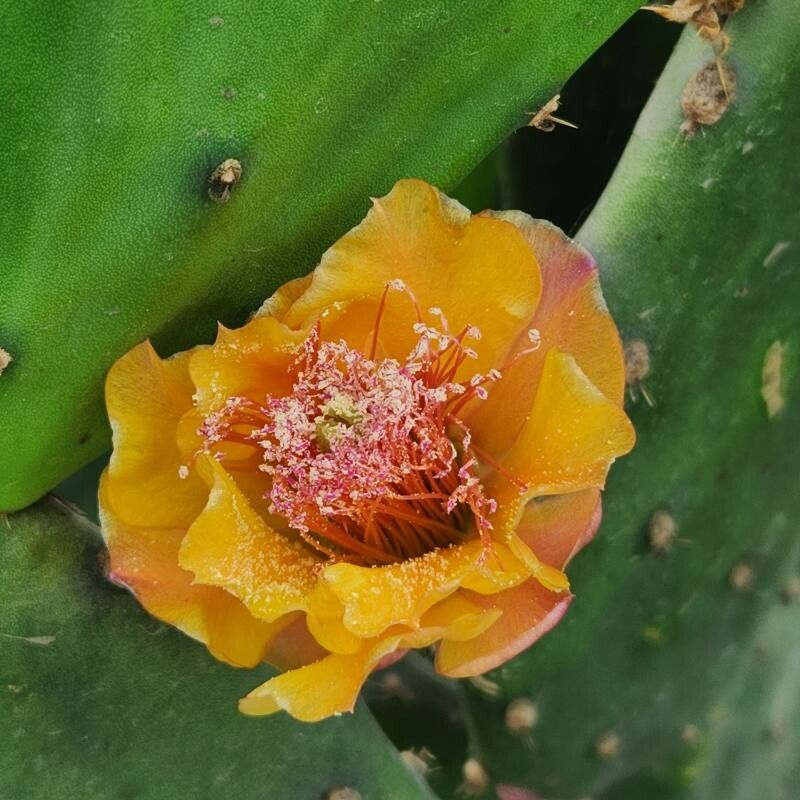
Opuntia azurea, the purple prickly pear or coyotillo, is a long-spined prickly pear that is native to a variety of habitats, including desert, mountain grasslands, and slopes in the Big Bend region of Texas and in the states of Coahuila, Chihuahua, Durango, and Zacatecas in Mexico. It flowers from March to May, with bright yellow flowers with red centres which produce red/purple fruits. Opuntia azurea forms sprawling clusters, two to three feet high.Its subspecies may include: O. azurea aureispina O. azurea discolor O. azurea azurea O. azurea diplopurpurea O. azurea parva. O. azurea arueispinaHowever, instead of subspecies, five varieties have been described and ssp. "arueispina" is not recognized.
O. aureispina O. azurea O. discolor O. diplopurpurea, and O. parva.
Tulip prickly pear is fairly disease-resistant and generally tolerates normal care without becoming sick easily. It can, however, be vulnerable to mealybugs; these pests may cause some damage but are usually not a serious threat. Regarding care, Tulip prickly pear is drought-tolerant and does not need frequent watering. It can withstand long periods without water and requires little fertilizer. That said, if lighting is poor and it is overwatered, it is highly prone to root rot. Overall, Tulip prickly pear is well suited to people who prefer to spend less time on plant care, though it’s important to know and meet its basic needs. It is particularly appropriate for those who are away for long periods and might forget to water regularly.
How to keep Opuntia Azurea.
Light
Tulip prickly pear performs best in abundant sunlight but can tolerate lightly dappled shade. Their health depends on receiving plenty of sun, which promotes sturdy growth and flowering. In the wild they do well in open areas where light is plentiful. However, too little or too much light can hinder growth, cause stress, and reduce flowering.
Temperature
Tulip prickly pear is best suited to conditions resembling its original environment, with temperatures ranging from 59 to 100°F (15 to 38 ℃). While tolerant, keeping temperatures within this range ensures optimum growth.
Fertilizer
For Tulip prickly pear, apply light amounts of fertilizer once or twice a year during the growing season. Do not fertilize in winter or summer when the plant is dormant. Use less fertilizer for plants that have been repotted, and wait a couple of months after repotting before you fertilize. Fertilizing helps maintain healthy growth and promotes blooming.
Botanical profile.
- Plant Type
- Succulent
- Life Cycle
- Perennial
- Genus
- Opuntia
- Family
- Cactaceae
- Hardiness Zone
- 8-11
- Mature Height
- 30 cm to 91 cm
- Mature Spread
- 2.44 m
- Leaf Color
- Green, Blue
- Leaf Type
- Evergreen
- Flower Color
- Yellow, Orange, Pink
- Flower Size
- 3.05 cm to 4.06 cm
- Bloom Time
- Late spring, Early summer
- Planting Time
- Spring, Summer, Autumn
- Harvest Time
- Mid summer, Late summer, Early fall
- Native Area
- Mexico
Other names.