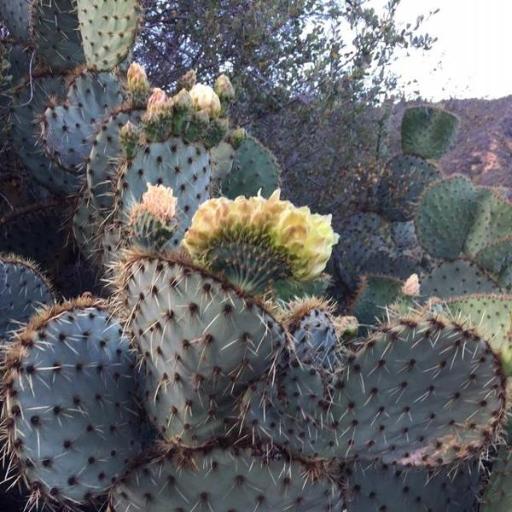
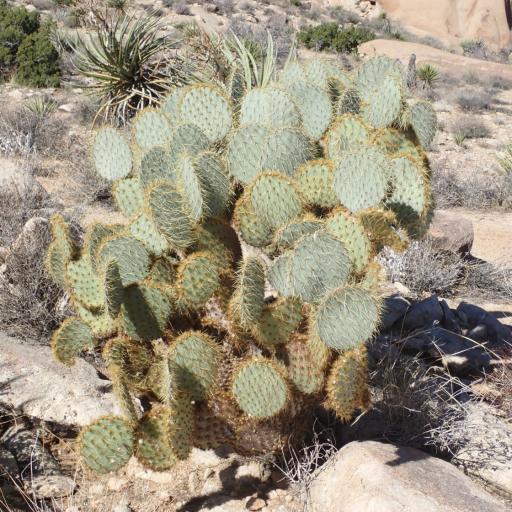
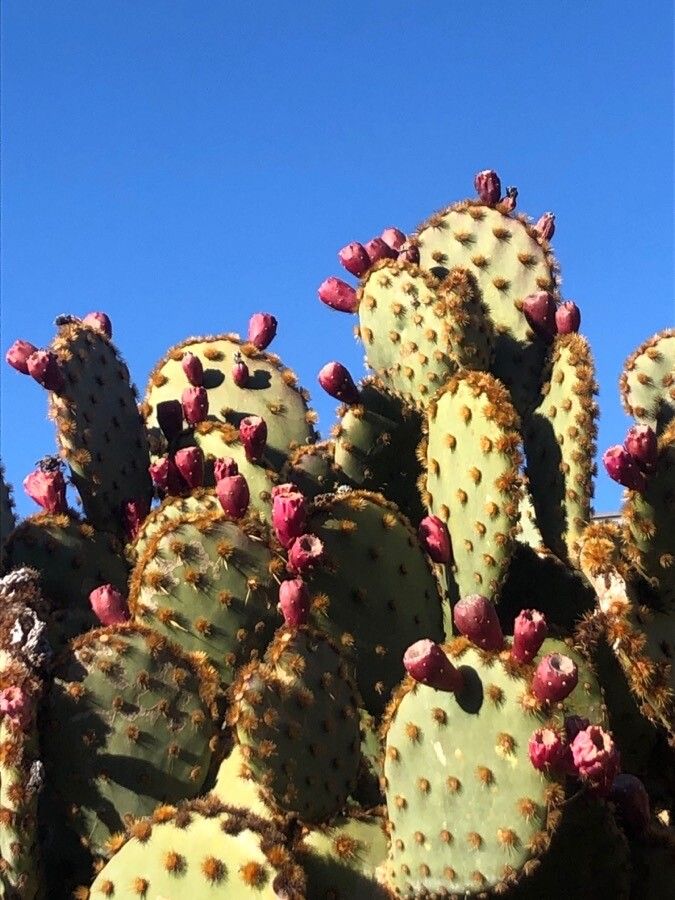
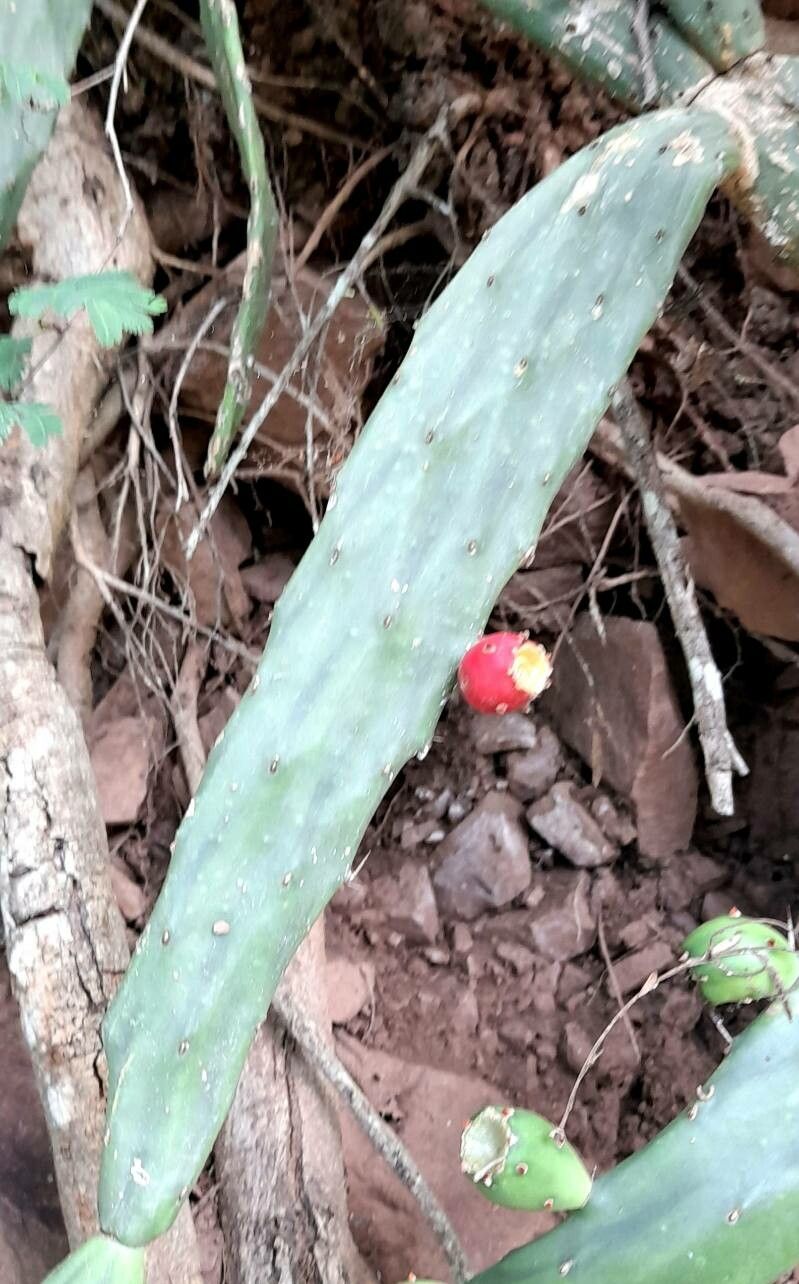
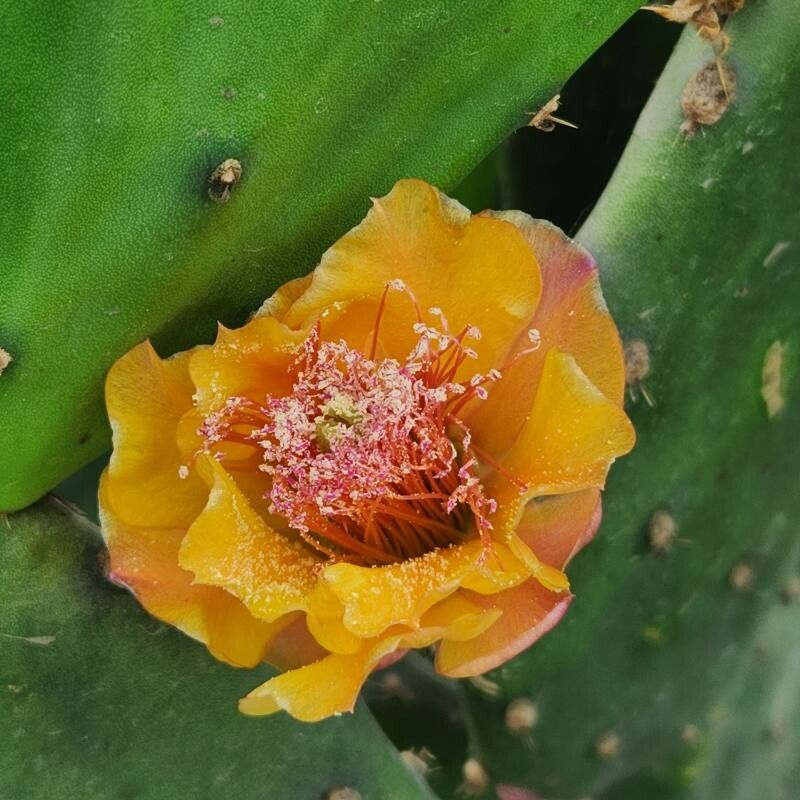
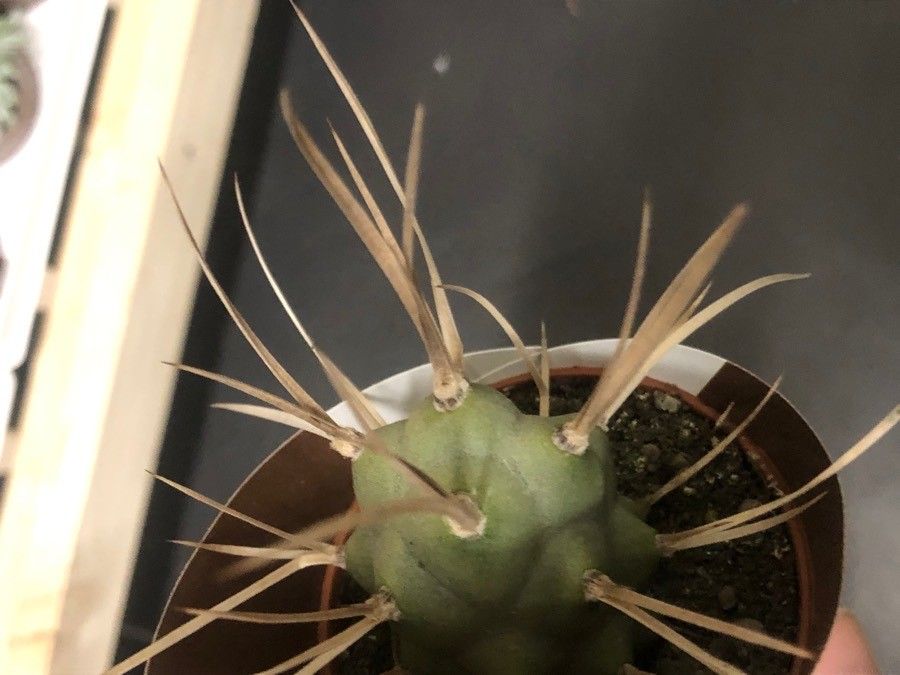
Opuntia chlorotica is a species of plant in the family Cactaceae. It is a species of prickly pear native to the southwestern United States and northern Mexico. Its common names include pancake prickly pear, flapjack prickly pear and dollarjoint prickly pear. This cactus is bluish-green and manifests a bushy to erect form that may attain a height of two meters or more. Some analysis of the prehistoric range of O. chlorotica has been conducted by studies in the Waterman Mountains of Arizona; these pollen core analyses indicate that this cactus species was present in northern Arizona in late Wisconsinan glaciation period.
Dollarjoint pricklypear has strong disease resistance and can tolerate normal care routines without becoming sick easily. It can, however, be vulnerable to mealybugs; these pests may cause some damage but are generally not a serious concern. In terms of care, Dollarjoint pricklypear is drought tolerant and does not require frequent watering. It can withstand long stretches without water and needs little fertilizer. It is, however, highly prone to root rot if lighting is poor and it is overwatered. Overall, Dollarjoint pricklypear suits people who want to spend less time on plant care, but it is important to know and meet its basic needs. It is particularly well suited to those who are often away for long periods and may forget to water their plants regularly.
How to keep Opuntia Chlorotica.
Light
The dollarjoint pricklypear does best when given a full daily dose of sunlight, which allows optimal photosynthesis and supports robust health. It can tolerate a lack of light, but that may impair its growth. It comes from habitats where sunlight is abundant for most of the year. Both extreme scarcity and extreme abundance of light can result in weakened or stunted growth.
Water
The Dollarjoint pricklypear thrives in dry climates due to its remarkable drought resistance. This evergreen plant requires watering only once every three weeks, as it efficiently retains water, even in extreme heat. Its adaptability makes it ideal for outdoor settings.
Temperature
Dollarjoint pricklypear is native to regions where temperatures typically fall between 68 and 105.8°F (20 and 41°C). It performs best when temperatures stay within that range. If growing it in climates outside this range, consider making seasonal temperature adjustments.
Fertilizer
For Dollarjoint pricklypear, apply light amounts of fertilizer once or twice a year during the growing season. Do not fertilize in winter or summer when the plant is dormant. Use less fertilizer for plants that have been repotted and wait a couple of months after repotting before feeding. Fertilizing helps maintain healthy growth and encourages flowering.
Pruning
The dollarjoint prickly pear needs minimal pruning. To promote healthy growth, simply remove any withered flowers and branches regularly. This helps the plant direct nutrients to its healthier parts.
Botanical profile.
- Plant Type
- Succulent
- Life Cycle
- Perennial
- Genus
- Opuntia
- Family
- Cactaceae
- Hardiness Zone
- 10-13
- Mature Height
- 20.12 m to 24.99 m
- Mature Spread
- 0.91 m to 2.13 m
- Leaf Color
- Green Yellow, Olive Drab
- Leaf Type
- Semi-evergreen
- Flower Color
- Yellow
- Flower Size
- 5.08 cm to 6.35 cm
- Bloom Time
- Late spring, Early summer, Mid summer
- Planting Time
- Spring, Summer, Autumn
- Harvest Time
- Mid summer, Late summer, Early fall
- Native Area
- Mexico
Other names.