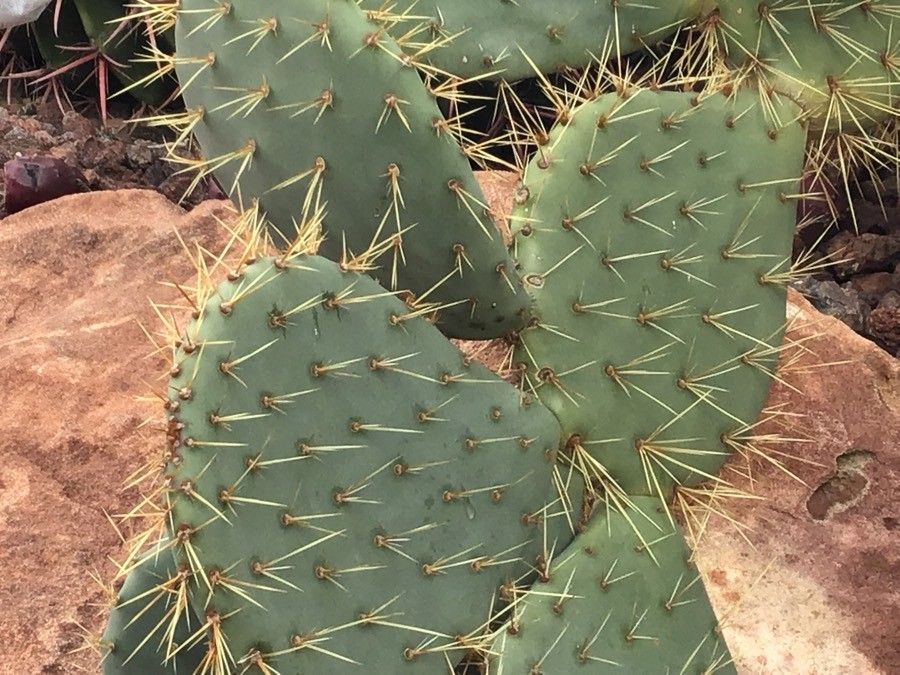
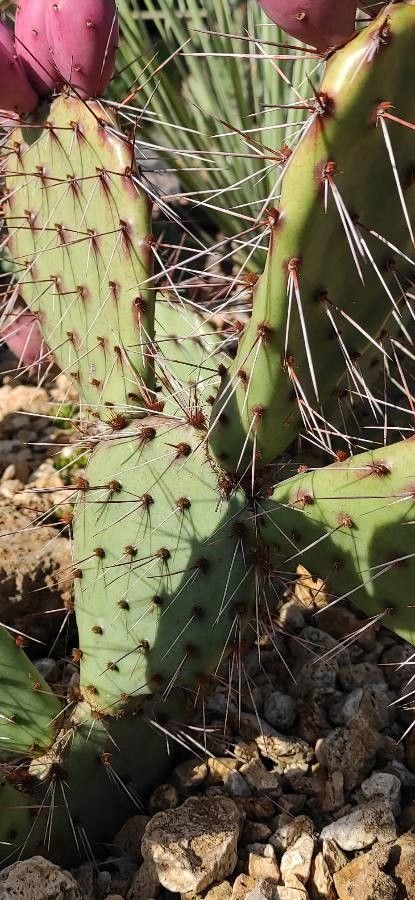
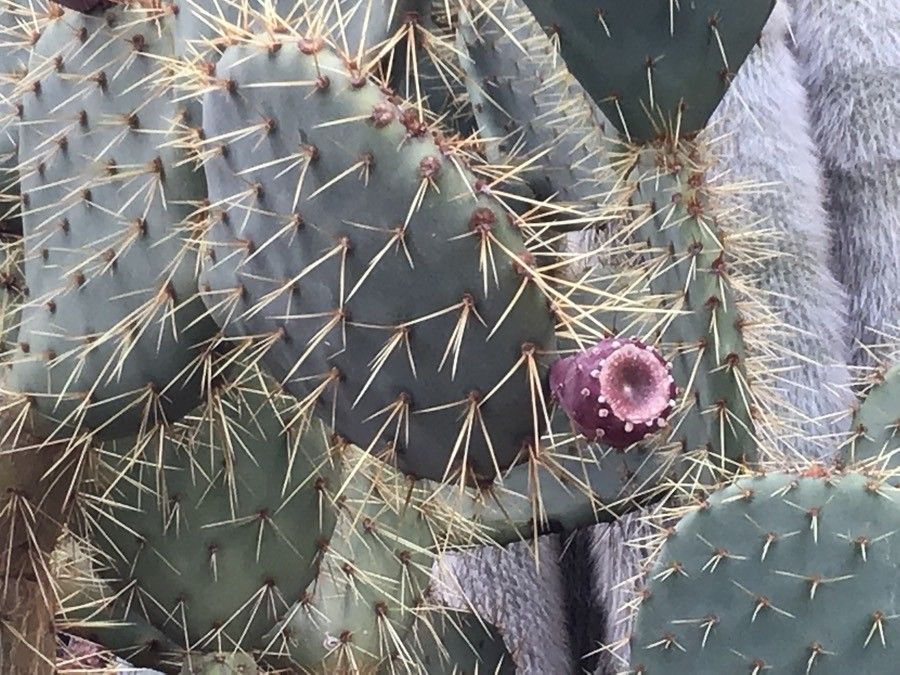
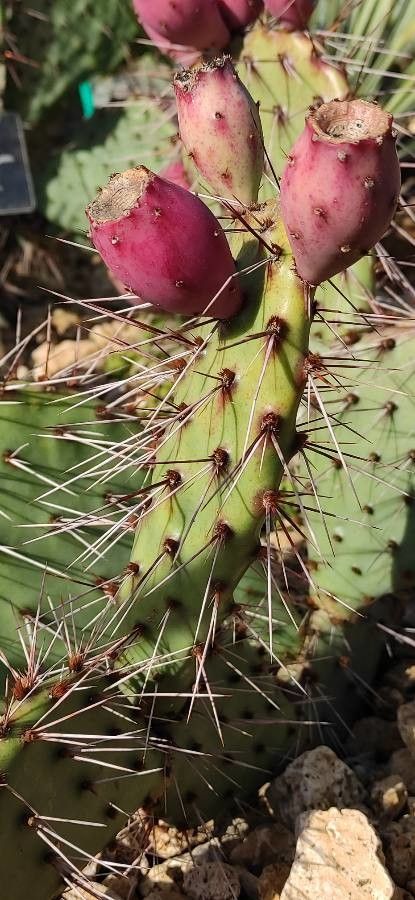
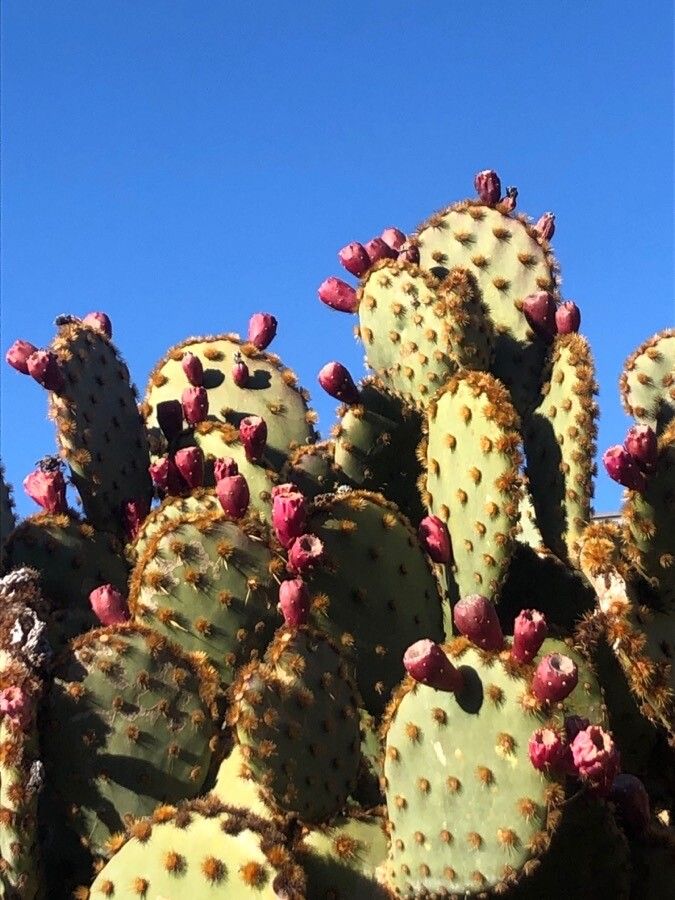
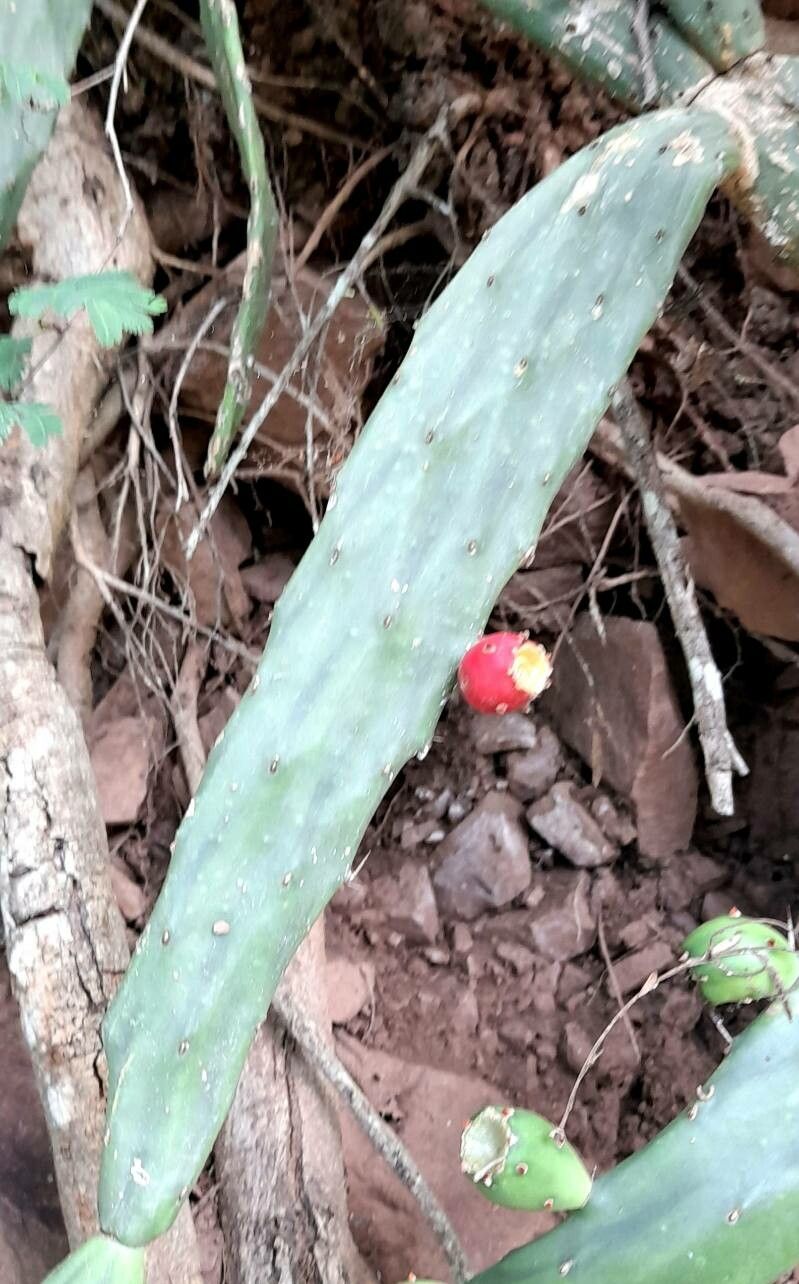
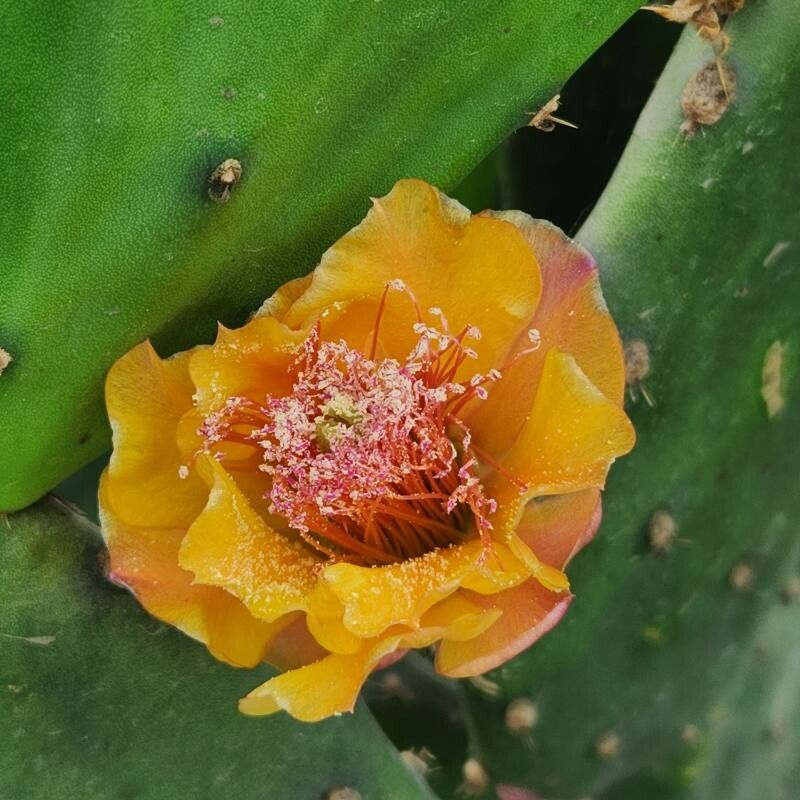
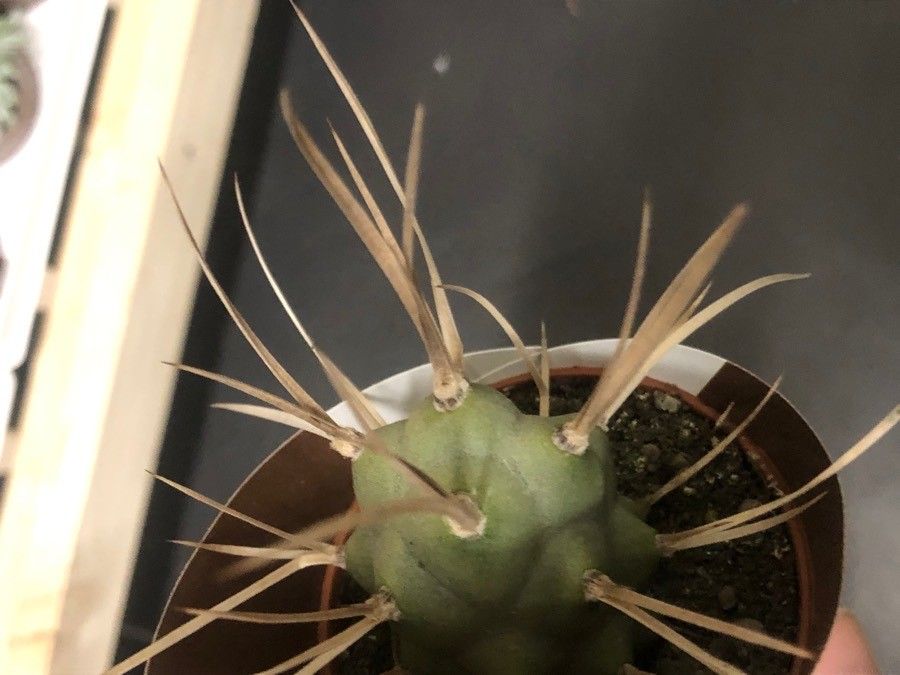
Opuntia phaeacantha, commonly known as the desert prickly pear, is a species of cactus native to the southwestern United States and northern Mexico. This low-growing plant typically reaches heights of 1 to 2 feet and spreads outward to form dense clusters. Its flat, oval-shaped pads are covered in spines and small hairs.
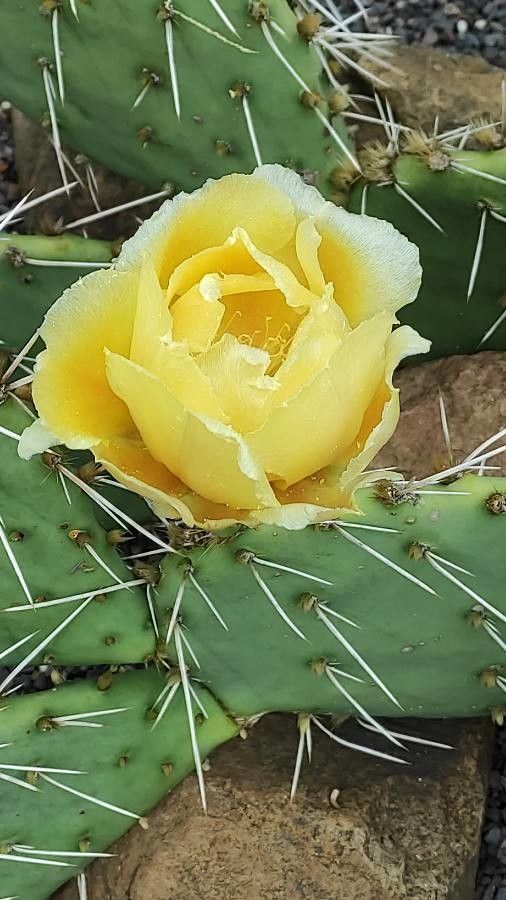
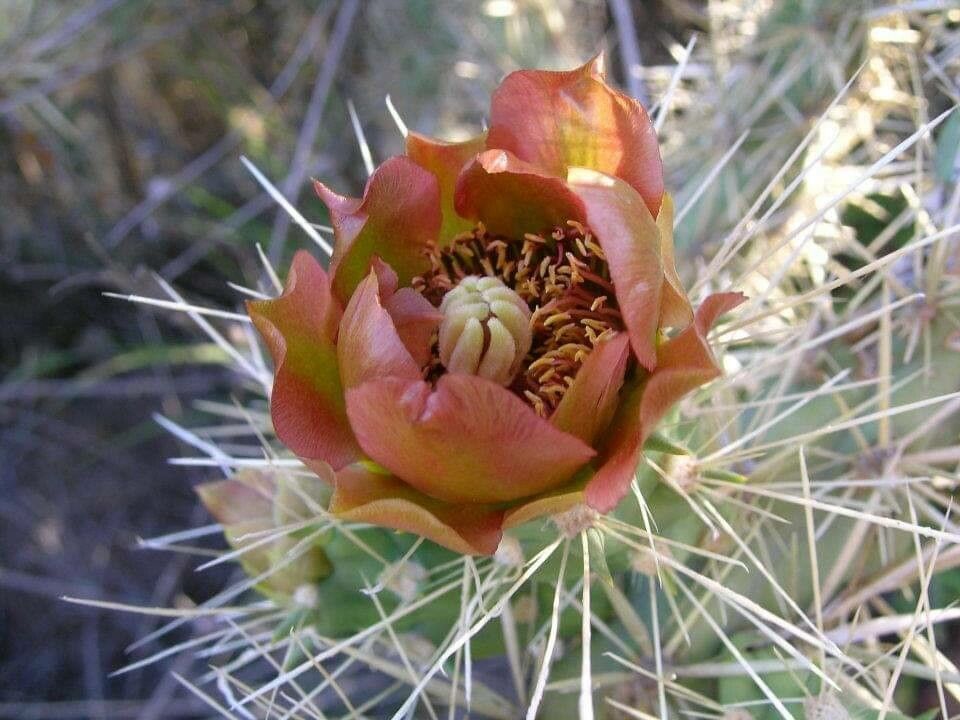
In the spring, Opuntia phaeacantha produces bright yellow flowers that bloom for several weeks. These flowers are followed by edible fruits known as prickly pears or tunas. The fruit is sweet and juicy, but it is covered in small spines that must be removed before consumption.
Opuntia phaeacantha is well-adapted to arid environments with low rainfall and high temperatures. It can survive long periods of drought by storing water in its thick pads, which also serve as a source of food for desert animals such as rabbits, squirrels, birds, and insects.
For centuries, indigenous peoples have used this plant for medicinal purposes, including treating wounds and digestive issues. Today, it remains popular among gardeners due to its unique appearance and ability to thrive in harsh conditions with minimal care.
Overall, Opuntia phaeacantha is an interesting cactus species with beautiful flowers and edible fruits, making it an important part of desert ecosystems and useful for human consumption!
Tulip prickly pear is fairly disease-resistant and generally tolerates normal care without becoming sick easily. It can, however, be vulnerable to mealybugs; these pests may cause some damage but are usually not a serious threat. Regarding care, Tulip prickly pear is drought-tolerant and does not need frequent watering. It can withstand long periods without water and requires little fertilizer. That said, if lighting is poor and it is overwatered, it is highly prone to root rot. Overall, Tulip prickly pear is well suited to people who prefer to spend less time on plant care, though it’s important to know and meet its basic needs. It is particularly appropriate for those who are away for long periods and might forget to water regularly.
How to keep Opuntia Phaeacantha.
Light
Tulip prickly pear performs best in abundant sunlight but can tolerate lightly dappled shade. Their health depends on receiving plenty of sun, which promotes sturdy growth and flowering. In the wild they do well in open areas where light is plentiful. However, too little or too much light can hinder growth, cause stress, and reduce flowering.
Water
The tulip prickly pear is well-suited to arid environments, as it stores water in its fleshy pads. It requires watering infrequently, about once every three weeks. During its growing season, slightly increasing the watering frequency can support flowering; however, good drainage remains crucial, particularly when it is grown outdoors in full sunlight.
Temperature
Tulip prickly pear is best suited to conditions resembling its original environment, with temperatures ranging from 59 to 100°F (15 to 38 ℃). While tolerant, keeping temperatures within this range ensures optimum growth.
Fertilizer
For Tulip prickly pear, apply light amounts of fertilizer once or twice a year during the growing season. Do not fertilize in winter or summer when the plant is dormant. Use less fertilizer for plants that have been repotted, and wait a couple of months after repotting before you fertilize. Fertilizing helps maintain healthy growth and promotes blooming.
Pruning
The tulip prickly pear requires very little pruning. To keep the plant healthy and vibrant, regularly remove any withered flowers and branches. This helps direct nutrients toward healthy growth and promotes overall vitality.
Pot & Repot
Repot the tulip prickly pear every 2-3 years during the spring. Use a well-draining pot to prevent moisture build-up. Ensure the plant receives full sun exposure, and water it minimally after repotting to aid in its recovery. Although resilient, the tulip prickly pear flourishes when you consider its unique desert origins.
Botanical profile.
- Plant Type
- Succulent
- Life Cycle
- Perennial
- Genus
- Opuntia
- Family
- Cactaceae
- Hardiness Zone
- 8-11
- Mature Height
- 30 cm to 91 cm
- Mature Spread
- 2.44 m
- Leaf Color
- Green, Blue
- Leaf Type
- Evergreen
- Flower Color
- Yellow, Orange, Pink
- Flower Size
- 3.05 cm to 4.06 cm
- Bloom Time
- Late spring, Early summer
- Planting Time
- Spring, Summer, Autumn
- Harvest Time
- Mid summer, Late summer, Early fall
- Native Area
- Mexico
Other names.
Reader questions.
What do I need to do if I give my Tulip prickly pear plant too much or too little water?
Tulip prickly pear and other succulents can typically survive without water for long periods, so it's rare to find them suffering from underwatering. However, if you forget to water your Tulip prickly pear for a month or more, you might notice signs of thirst or damage. An underwatered Tulip prickly pear will appear dull and wrinkled, with some plants drying up completely or turning brown. The soil will also be completely dried out. To remedy this, give the plant plenty of water by submerging the pot in water for 5-10 minutes until the soil is moist. On the other hand, overwatering is dangerous for Tulip prickly pear and can be fatal if not addressed. Over time, too much moisture leads to root rot, which prevents the roots from absorbing nutrients and water. This occurs when wet conditions allow fungi and bacteria to thrive in the soil and attack the roots. Symptoms of overwatering include yellow, swollen, and translucent organs that may burst open. If left untreated, the plant may turn brown or black and its leaves may fall off easily. To address overwatering, change the growing conditions, increase air ventilation, and adjust watering frequency. Saving an overwatered plant is challenging but possible if caught early. Check the roots and soil by removing the plant from its pot. Gently remove wet soil around the roots and rinse them clean in room-temperature water to remove any lurking fungus. If the roots have already developed root rot, they will appear dark brown or black, soft, mushy, or slimy. If most of the roots are affected, saving the plant may not be possible. In this case, remove any healthy stem and try to propagate a new Tulip prickly pear. If only a portion of the roots are affected, there is a chance to save the plant. Remove unhealthy roots with a sterilized cutting tool and dip the remaining firm, pale roots in a fungicide. Repot the plant in fresh, well-draining soil. While this doesn't always work, in most cases the plant will recover and produce new growth in the next growing season.
Why should I put fertilizer on my Tulip prickly pear?
Fertilizing Tulip prickly pear enhances the nutrients in the growing medium and supports healthy growth during the growing season. Adding plant food can also stimulate blooming in mature specimens.
What are the sunlight requirements for tulip prickly pear?
Tulip prickly pear plants thrive in conditions where they can bask in ample sunlight. Ideally, they need more than 6 hours of direct sunlight a day, referred to as 'Full sun', to encourage robust growth and flowering. They can also grow under 'Partial sun' conditions, which means about 3-6 hours of sunlight daily. It's crucial to monitor the movement of sunlight through your garden and find spots that offer a harmonious balance of light and shade to ensure the well-being of your plants.
What are the ideal conditions for growing a Tulip prickly pear?
The Tulip prickly pear thrives in environments that closely resemble its natural habitat, with temperature fluctuations ranging from 59°F to 100°F (15°C to 38°C). It is a heat-loving plant that slows down its growth and enters a dormant state during the winter. To ensure optimum growth, it is crucial to maintain the temperature within this range. When temperatures drop below -5°C, it's advisable to move the plant indoors near a south-facing window to maximize sunlight exposure. In cases of insufficient natural light, supplemental lighting may be necessary. Additionally, the plant's watering needs decrease as the temperature falls below 15°C to prevent root rot, especially for plants grown outdoors. During colder temperatures, watering should be stopped altogether, and measures like setting up a temporary greenhouse or wrapping the plant with plastic film or fabric can provide insulation.
How often should I water my Tulip prickly pear plant?
To determine how often to water Tulip prickly pear, check the soil and only water when it's completely dry. You can use your finger or a moisture meter to check the soil's moisture level. In a deep pot, you can use a stick or chopstick to do this. If the soil feels even slightly moist, wait a few days before checking again. In general, most people will need to water Tulip prickly pear every two weeks in summer and once a month in winter. However, there are several factors that can affect the watering frequency. Refer to the section below for considerations that can help you determine how often to water.
When should I fertilize my Tulip prickly pear plant?
Tulip prickly pear plants only require a small amount of fertilizer during the growing season, about 1-2 times a year. It is recommended to fertilize them in the spring and autumn, but not during winter and summer when they are dormant. If you have recently repotted your plants, be cautious with the amount of fertilizer you use. It’s best to wait a few months after repotting before applying any fertilizer.
How does sunlight affect the growth of tulip prickly pear?
Sunlight plays a pivotal role in the health and development of tulip prickly pear, facilitating sturdy growth and blooming. These plants are native to open, sun-drenched habitats and their well-being is closely tied to receiving sufficient natural light. Lack of appropriate sunlight can stress the plants, leading to poor growth and reduced flowering. Conversely, too much direct exposure without relief can also have detrimental effects. To offset insufficient natural light, particularly in winter or less sunny locations, artificial lighting such as LED lights can be a valuable recourse, offering a spectrum suited to plant needs and promoting healthier growth.
How do I care for a Tulip prickly pear during low temperatures?
Tulip prickly pear prefers high temperatures and struggles with low temperatures, thriving best above 15°C. During winter, keep the plant above -5°C to avoid damage. If temperatures fall below -10°C, the plant may weaken, wilt, and become prone to root rot. In the event of mild frost damage, symptoms may not appear immediately but will show after a week as gradual wilting. Care involves trimming off frostbitten areas and checking the roots for rot. If the roots are rotted, they need to be removed, and the plant should be propagated from cuttings. Then, move the plant indoors to a warm environment and place it near a south-facing window to ensure ample sunlight. If the light is insufficient, supplemental lighting can be used.
What do I need to think about when watering my Tulip prickly pear?
To properly water your Tulip prickly pear, you need to consider a few environmental factors. The size of the container and the type of soil will determine how often and how much water to use. Make sure the container has good drainage to prevent excess water from accumulating. A smaller container holds less moisture, so it will need to be watered more frequently. On the other hand, a larger pot retains moisture better and requires less frequent watering. Avoid using an oversized pot, as this can lead to overwatering. When repotting, choose a container that is only slightly larger than the current one, and opt for a shallow container since the plant has shallow roots. The watering needs of the Tulip prickly pear change throughout the year. It requires less water during winter when growth slows down and evaporation rates are lower. The soil tends to stay wetter for a longer period in cooler temperatures. Additionally, the climate of your location plays a role in watering frequency. If you live in a humid area with regular rainfall, you'll need to water less compared to a dry, arid climate. Keep in mind that even within the same location, conditions can vary with seasons and the use of indoor heating or air conditioning. If you have planted your Tulip prickly pear in the ground, it typically doesn't require supplemental watering once the root system is established. However, during extended dry periods, it may benefit from occasional watering. In areas where the plant can only be grown in a container, you can move it outdoors in spring and summer, but bring it inside as temperatures start to drop. Note that potted plants kept outside will generally need more water due to increased sun exposure, even if they are placed on a shaded porch.
When is the best time to not fertilize my Tulip prickly pear?
Tulip prickly pear, like other plants, goes through a dormancy period. This is the time when you should avoid using fertilizer. In both summer and winter, the plant stops growing, so that's another time when you want to hold off on fertilizer. It's also recommended to wait a few months after repotting in the spring before applying fertilizer.
What are the symptoms of incorrect lighting for tulip prickly pear?
When tulip prickly pears are placed in suboptimal lighting, they may exhibit several symptoms indicating distress. In low light, new leaves might grow smaller, and the plant could develop a leggy appearance due to elongated spaces between leaves or stems. There might also be an accelerated leaf drop to conserve resources. Conversely, excessive light can cause chlorosis, sunscald, leaf curling, wilting, and leaf scorching, impacting the plant's ability to photosynthesize and maintain health. Recognizing these symptoms early can help in adjusting the plant's exposure to light adequately.
What steps should be taken if a Tulip prickly pear experiences high temperatures?
During the summer, it is important to keep the Tulip prickly pear below 38°C to prevent growth cessation, water loss, wilting, and susceptibility to sunburn when temperatures exceed 43°C. The care for a plant affected by high temperatures involves removing the sunburned and rotten parts of the plant and protecting it from the afternoon sunlight until it shows signs of recovery and resumes growth. For plants affected by root rot, cease watering until new roots start to develop.