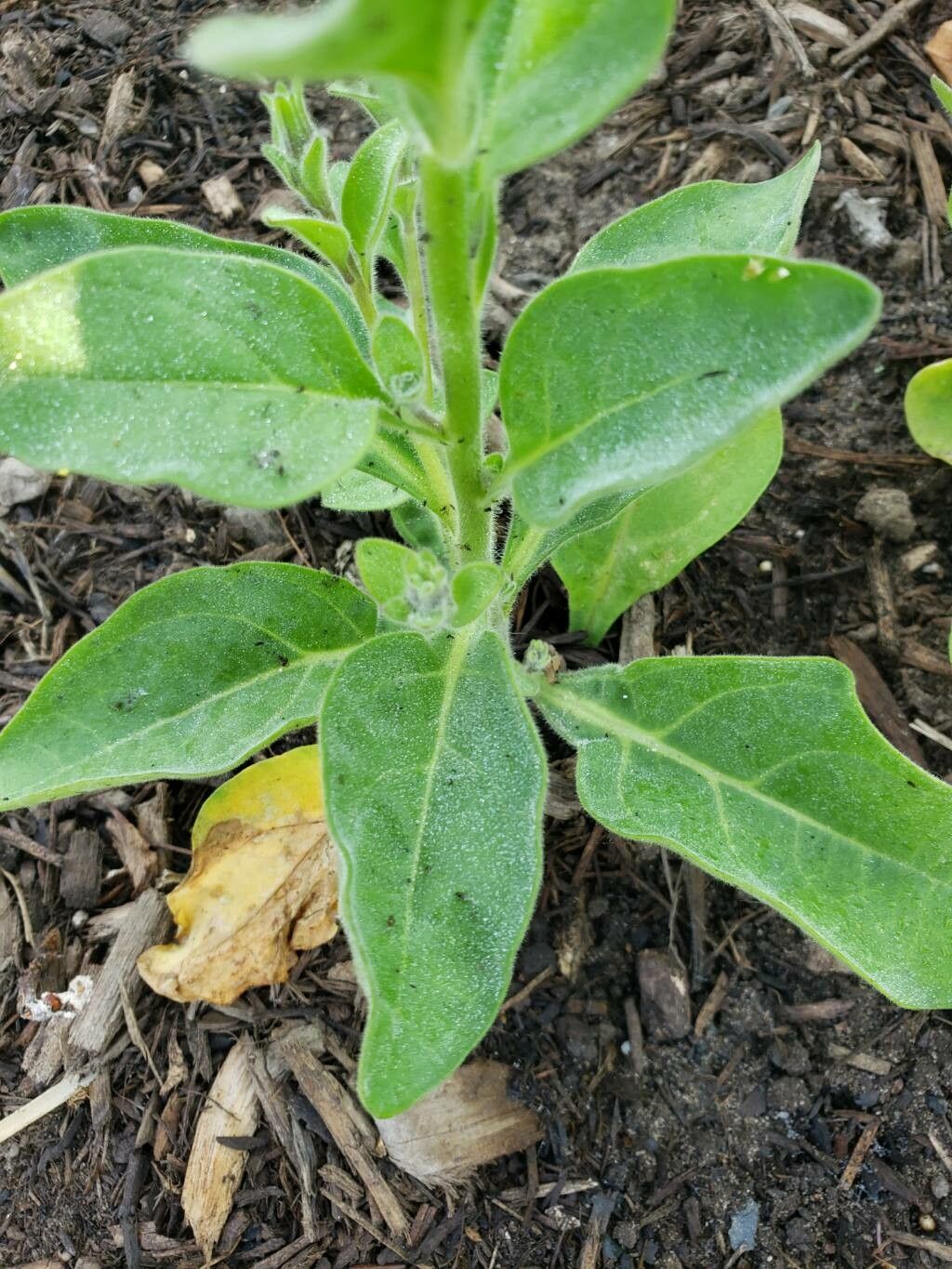
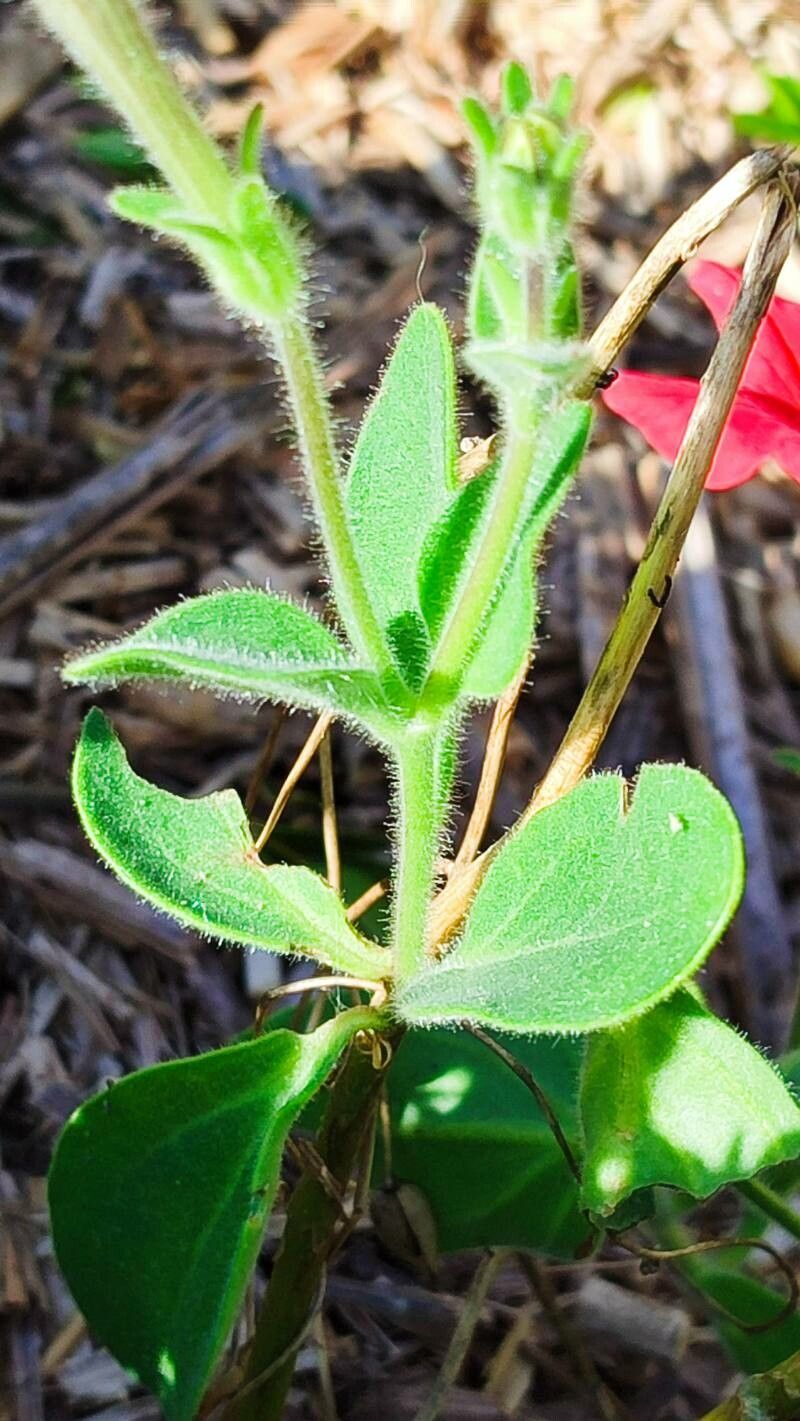
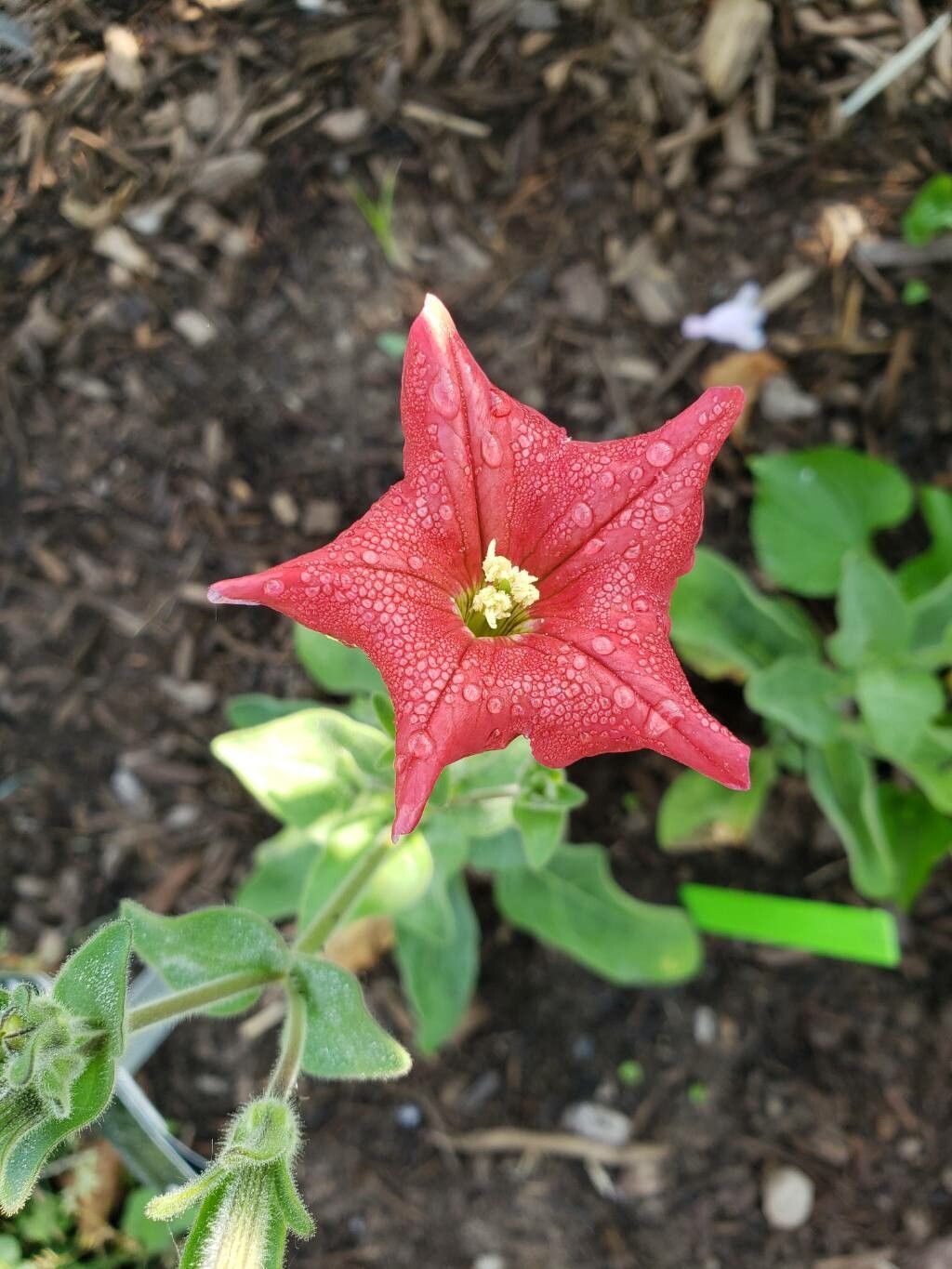
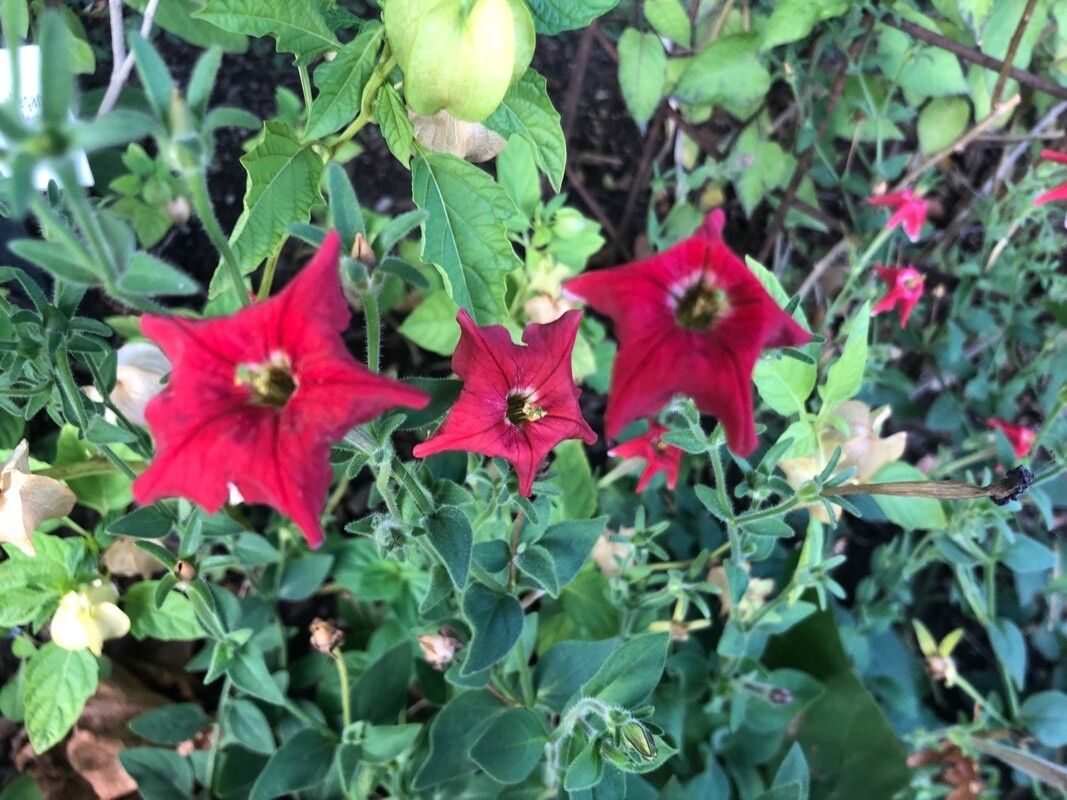
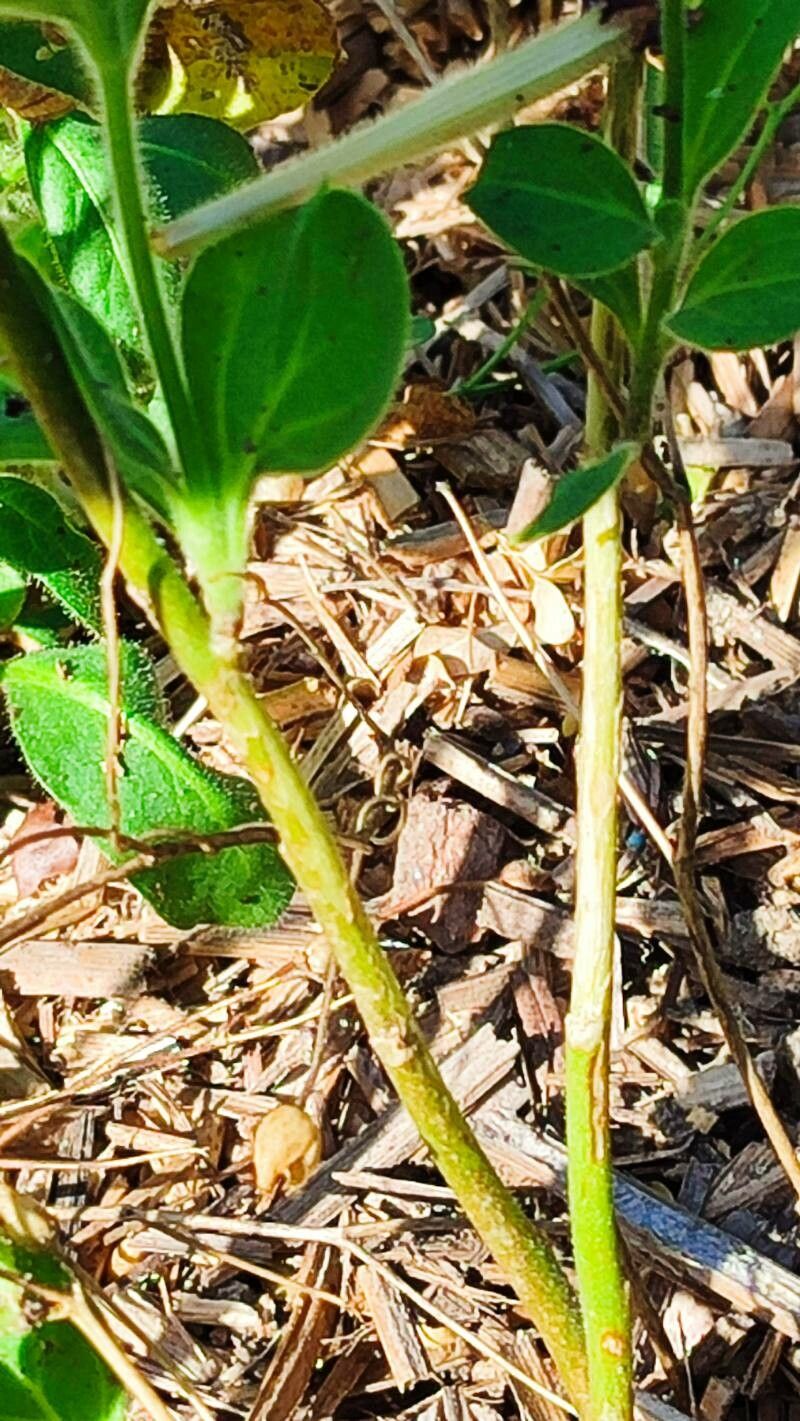
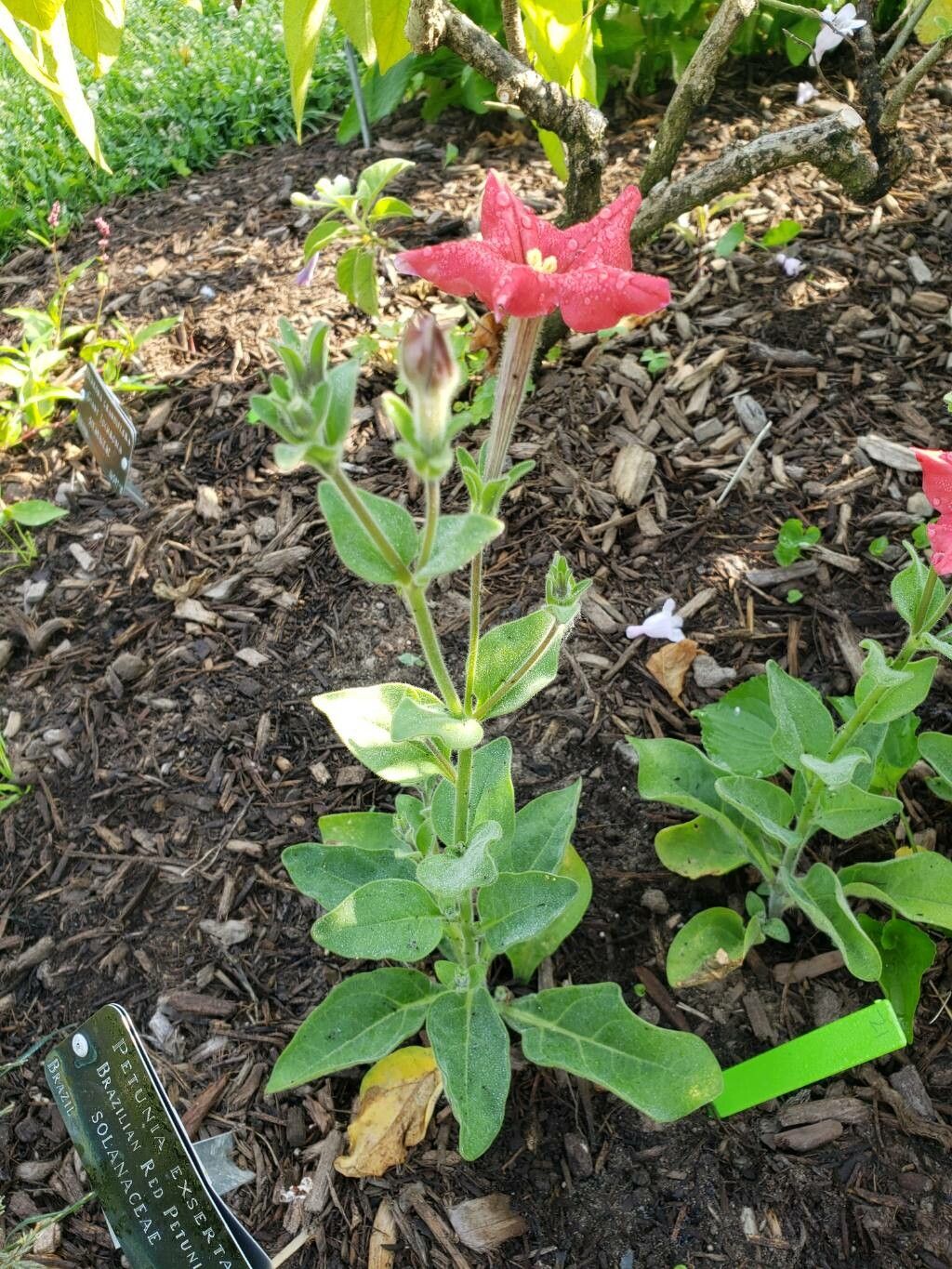
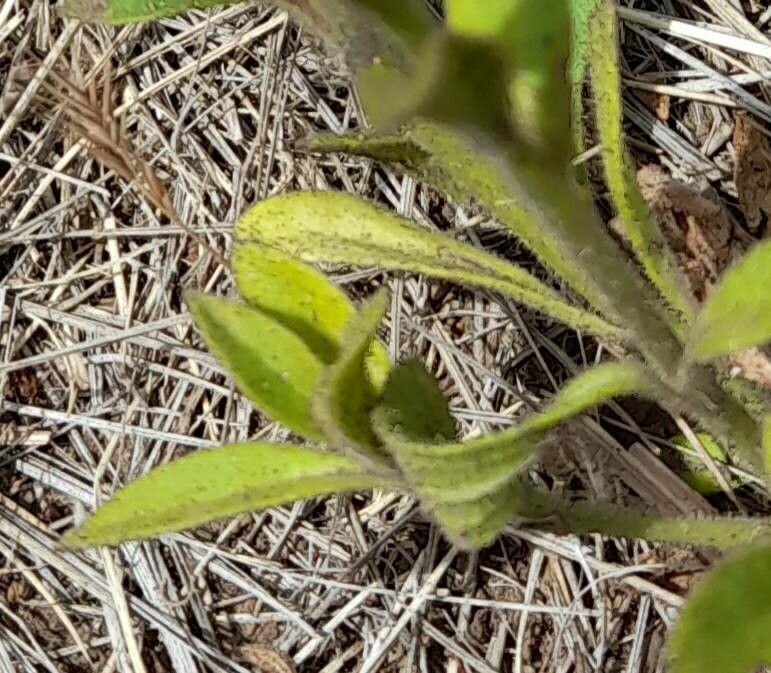
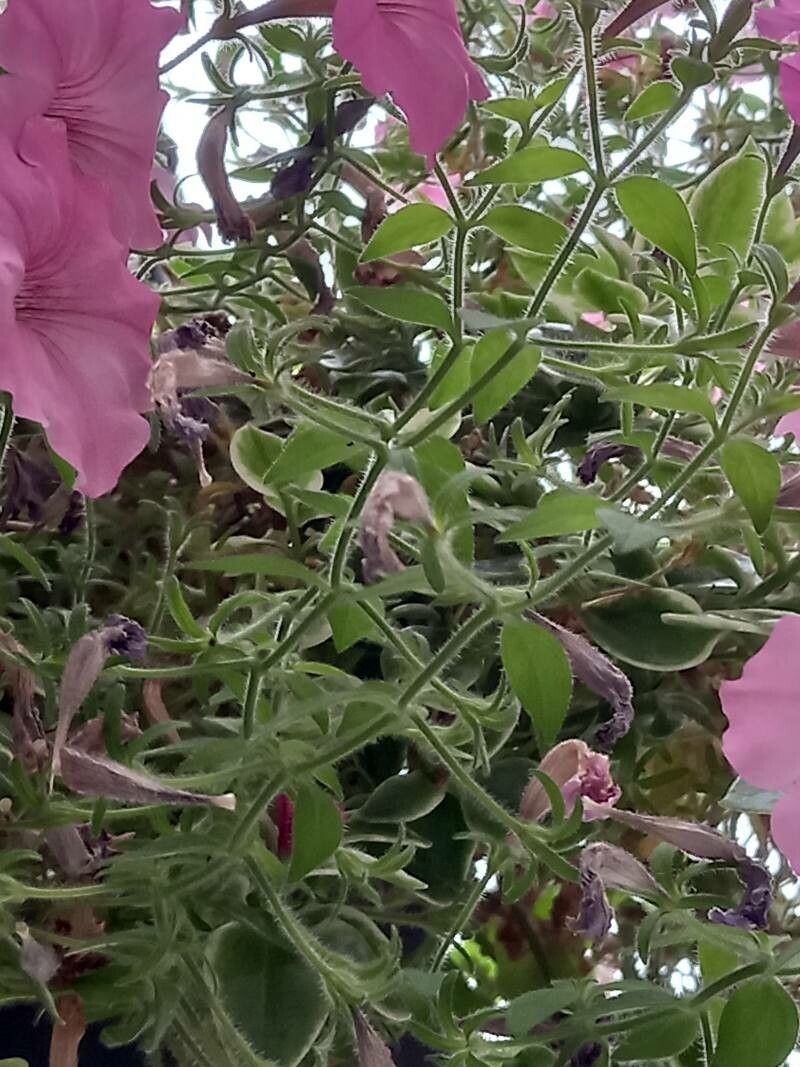
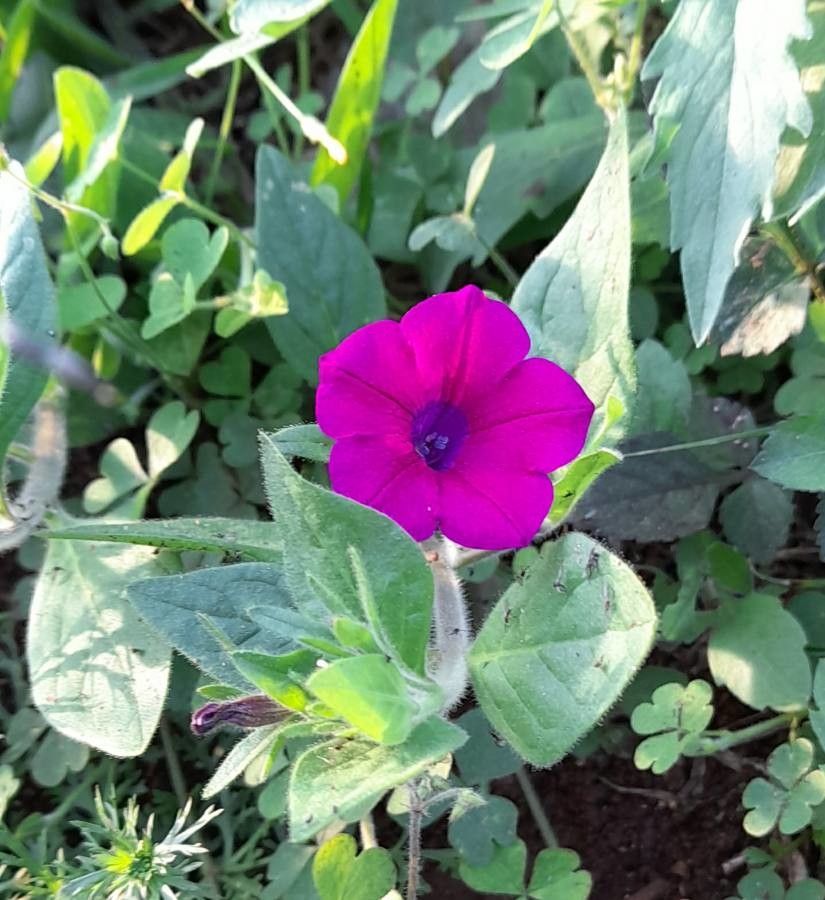
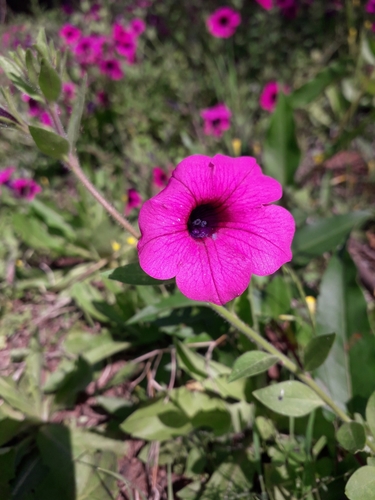
Petunia exserta is a rare member of the genus Petunia, endemic to the Serras de Sudeste in southern Brazil. First described in 1987, only fourteen plants were found in the wild during an expedition in 2007. In the wild, the plant is found growing only in shaded cracks on sandstone towers. It is the only Petunia species that is naturally pollinated by hummingbirds, and the only naturally red flowered Petunia species.
Brazilian red petunia has good resistance to disease and is generally not prone to problems. However, it can be affected by pests and diseases present in its surroundings. These infections are usually not severe. In terms of care, this plant requires moderate maintenance. It should be pruned regularly to maintain a good appearance and healthy growth. Fertilization can also help promote flowering. Brazilian red petunia is suitable for anyone with an outdoor space, such as a garden or patio, and does not require much care experience. It may require more attention when grown indoors.
How to keep Petunia Exserta.
Light
The Brazilian red petunia is a sun-loving, herbaceous perennial that comes from open habitats and is often found in meadows and grasslands. It prefers full sun but can also tolerate partial sun.
Water
The Brazilian red petunia, native to Brazil, thrives in high humidity and consistent moisture. While it can withstand moderate drought, it flourishes with weekly watering. To cultivate it successfully, it's important to mimic natural wet and dry cycles. When grown outdoors, this plant requires well-draining soil to encourage flowering and prevent root rot.
Temperature
The Brazilian red petunia comes from tropical areas where the climate is generally warm and humid. Consequently, it is adapted to high temperatures and humidity. It does not tolerate sudden temperature changes and prefers a steady temperature, so indoor temperature fluctuations should be avoided. It usually cannot withstand cold and needs higher temperatures to grow. If the surrounding temperature becomes too low, the plant may stop growing or even die.
Fertilizer
Appropriate fertilization is vital for the health and appearance of the Brazilian red petunia. Fertilize the Brazilian red petunia in summer, repeating the application monthly throughout the season. Nutrients support growth and help maintain the plant’s parts. Fertilizing improves the Brazilian red petunia’s floral display, ensuring the best blooms.
Pruning
The Brazilian red petunia showcases vibrant red flowers and requires pruning from early to late spring, before new growth starts. To maintain its health and appearance, remove any dead stems and thin out crowded areas to improve air circulation. Additionally, deadhead the spent blooms to encourage continuous flowering. These practices will enhance the plant's health, flowering, and overall structure.
Botanical profile.
- Plant Type
- Herb
- Life Cycle
- Perennial
- Genus
- Petunia
- Family
- Solanaceae
- Hardiness Zone
- 9-11
- Mature Height
- 61 cm
- Mature Spread
- 55 cm
- Leaf Color
- Green
- Leaf Type
- Evergreen
- Flower Color
- Red
- Flower Size
- 5.08 cm to 6.35 cm
- Bloom Time
- Late spring, Summer, Early fall
- Planting Time
- Spring, Summer, Autumn
- Harvest Time
- Mid summer, Late summer, Fall