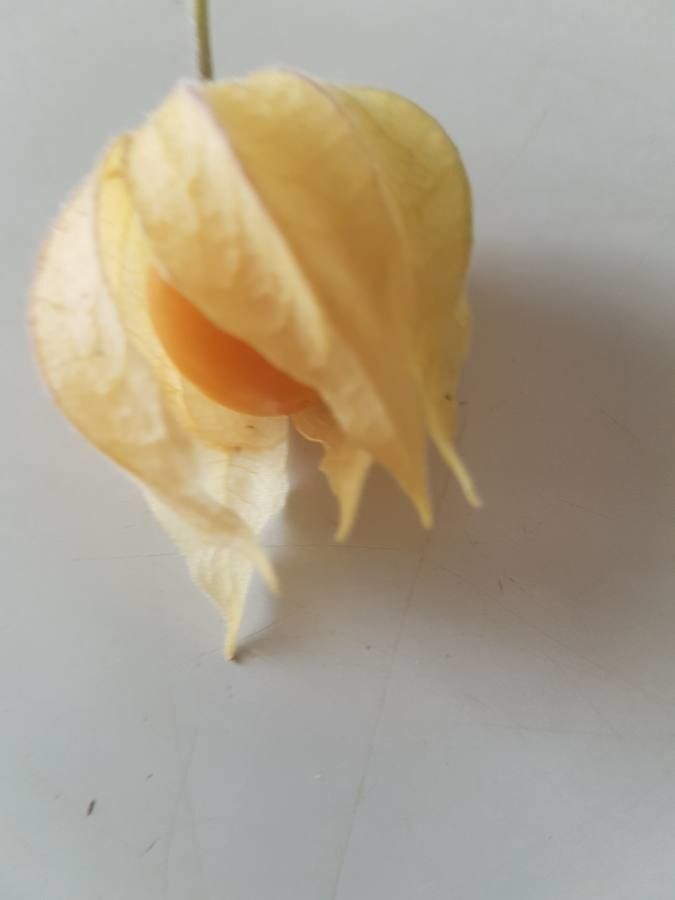
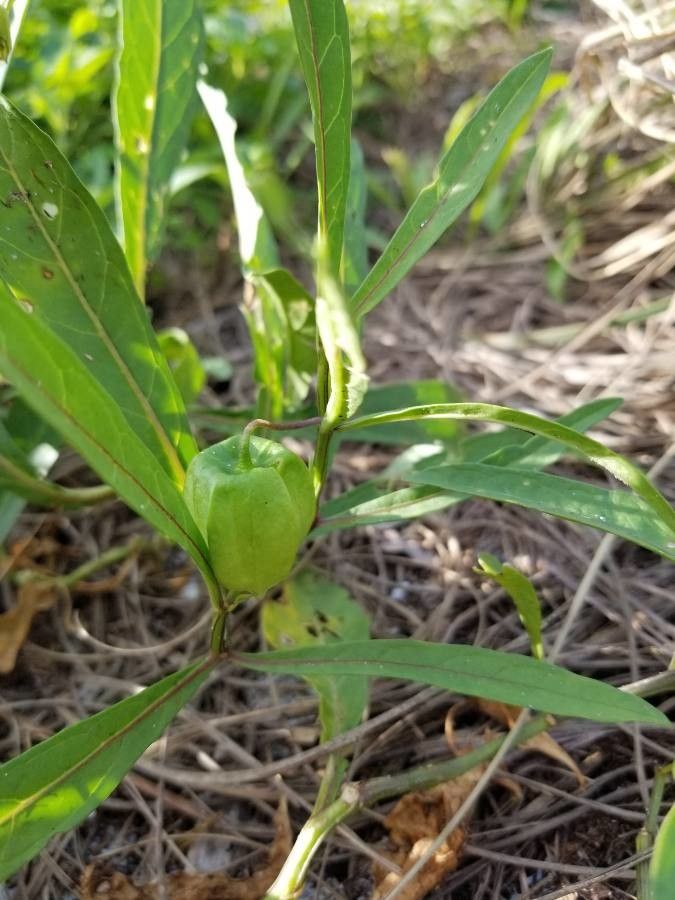
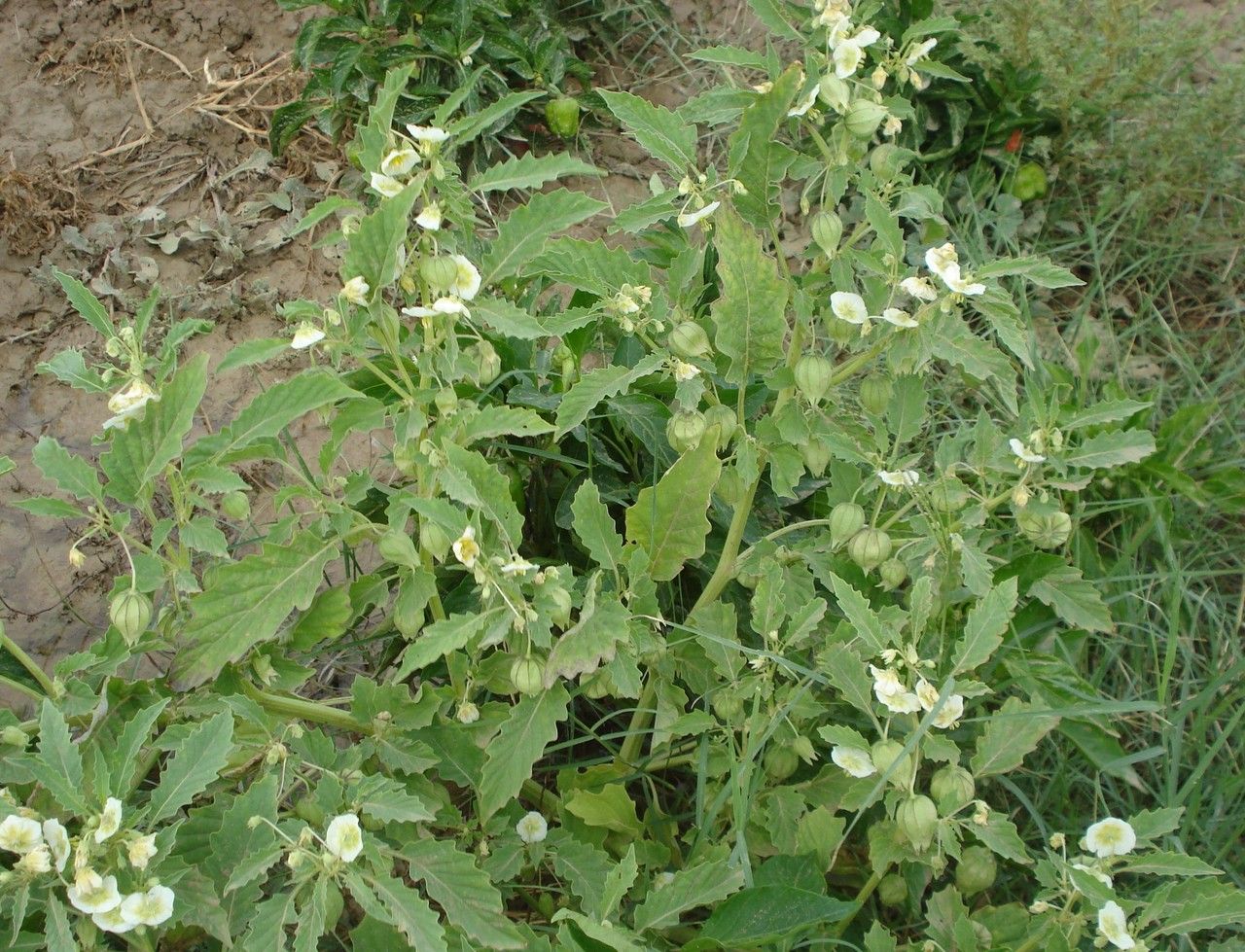
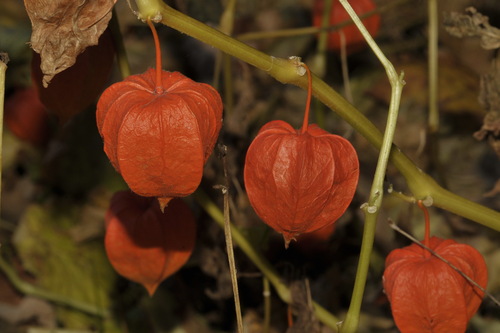
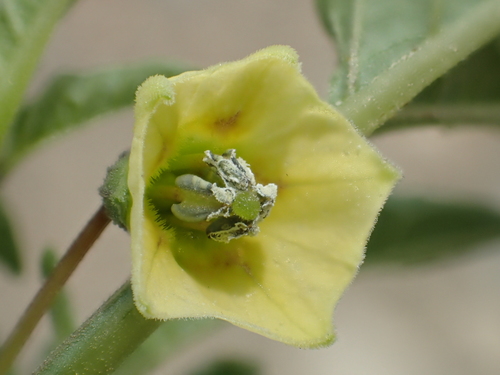
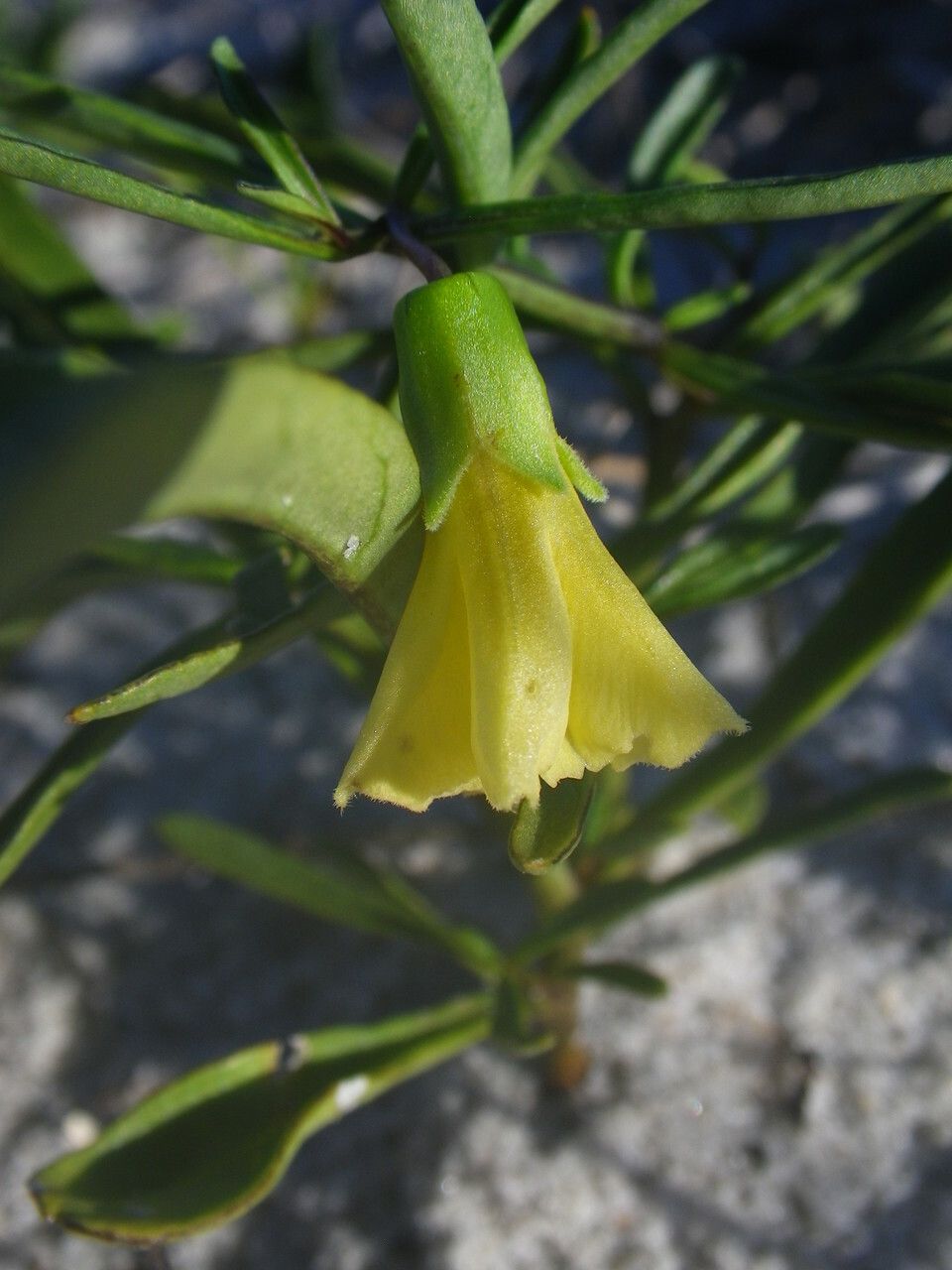
Physalis walteri, commonly known as Walter's groundcherry or dune groundcherry, is a species of flowering plant. Its native distribution is Alabama, Florida, Georgia and Virginia in the United States as well as Northeast Mexico. Its habitat is pinelands and open coastal areas.It is a perennial herb that grows to a height of around 2 feet with yellow flowers that bloom from May to September. It grows from deep and stout roots with stems that are a mix of erect and ground spreading densely covered with very small hairs. The leaves are 3 to 13 cm long and 1.5 to 5 cm wide.It is named after Thomas Walter a botanist born in Britain who moved to Charleston, South Carolina in the 18th century.
Walter's groundcherry is fairly disease-resistant and usually not prone to illnesses. However, it can be vulnerable to pests and diseases present in its surroundings. These issues are typically minor. For care, the plant requires moderate maintenance. It should be pruned regularly to maintain a neat appearance and healthy growth. Fertilizing can also encourage flowering. Walter's groundcherry is suitable for anyone with outdoor space, such as a garden or patio, and does not demand extensive care experience. It may need more attention when grown indoors.
How to keep Physalis Walteri.
Light
Walter's groundcherry is a perennial herbaceous plant that prefers sunny conditions and comes from open habitats, commonly found in meadows and grasslands. It favors full sun but can also tolerate partial sun.
Temperature
Walter's groundcherry shows good temperature adaptability, able to endure higher heat and broader temperature fluctuations. During hot periods, be mindful of irrigation and provide some shade to avoid sunscald. Conversely, Walter's groundcherry is fairly sensitive to low temperatures; it can tolerate a bit of cold, but excessively cold conditions can cause frost injury.
Fertilizer
The best time to fertilize a Walter's groundcherry is in early spring, as it comes out of dormancy and begins active growth. Applying fertilizer supplies essential nutrients for robust growth. While Walter's groundcherry does not require much fertilization, giving it fertilizer once a year can improve its survival and encourage healthier, longer-lasting blooms.
Botanical profile.
- Plant Type
- Herb
- Life Cycle
- Perennial
- Genus
- Physalis
- Family
- Solanaceae
- Hardiness Zone
- 7-10
- Mature Height
- 0 cm to 91 cm
- Mature Spread
- 30 cm to 46 cm
- Leaf Color
- Green, Dark Green
- Leaf Type
- Deciduous
- Flower Color
- Yellow
- Flower Size
- 1.02 cm to 2.03 cm
- Bloom Time
- Late spring, Early summer, Mid summer
- Planting Time
- Spring
- Harvest Time
- Late summer, Early fall, Mid fall
- Native Area
- Mexico
Other names.