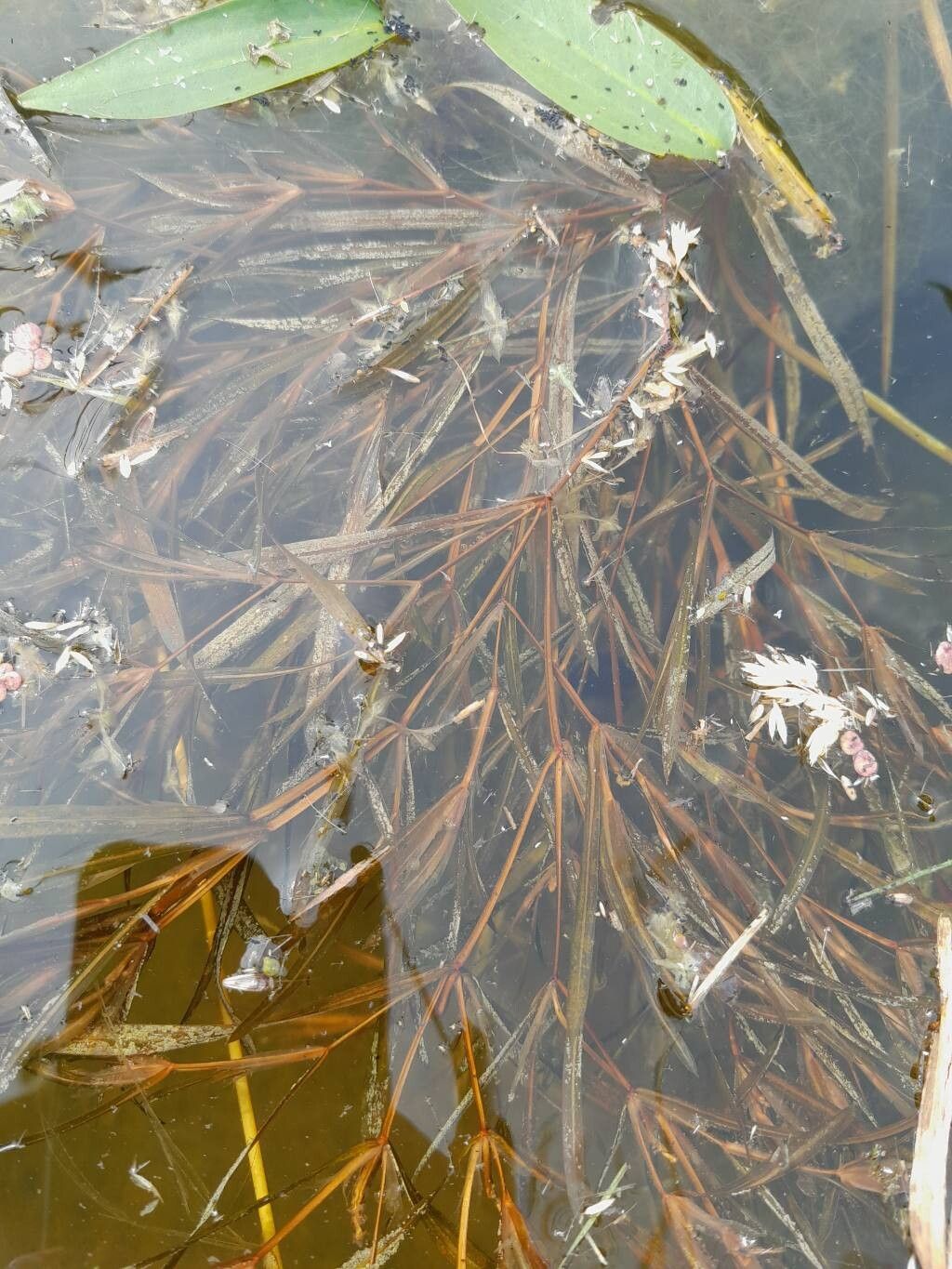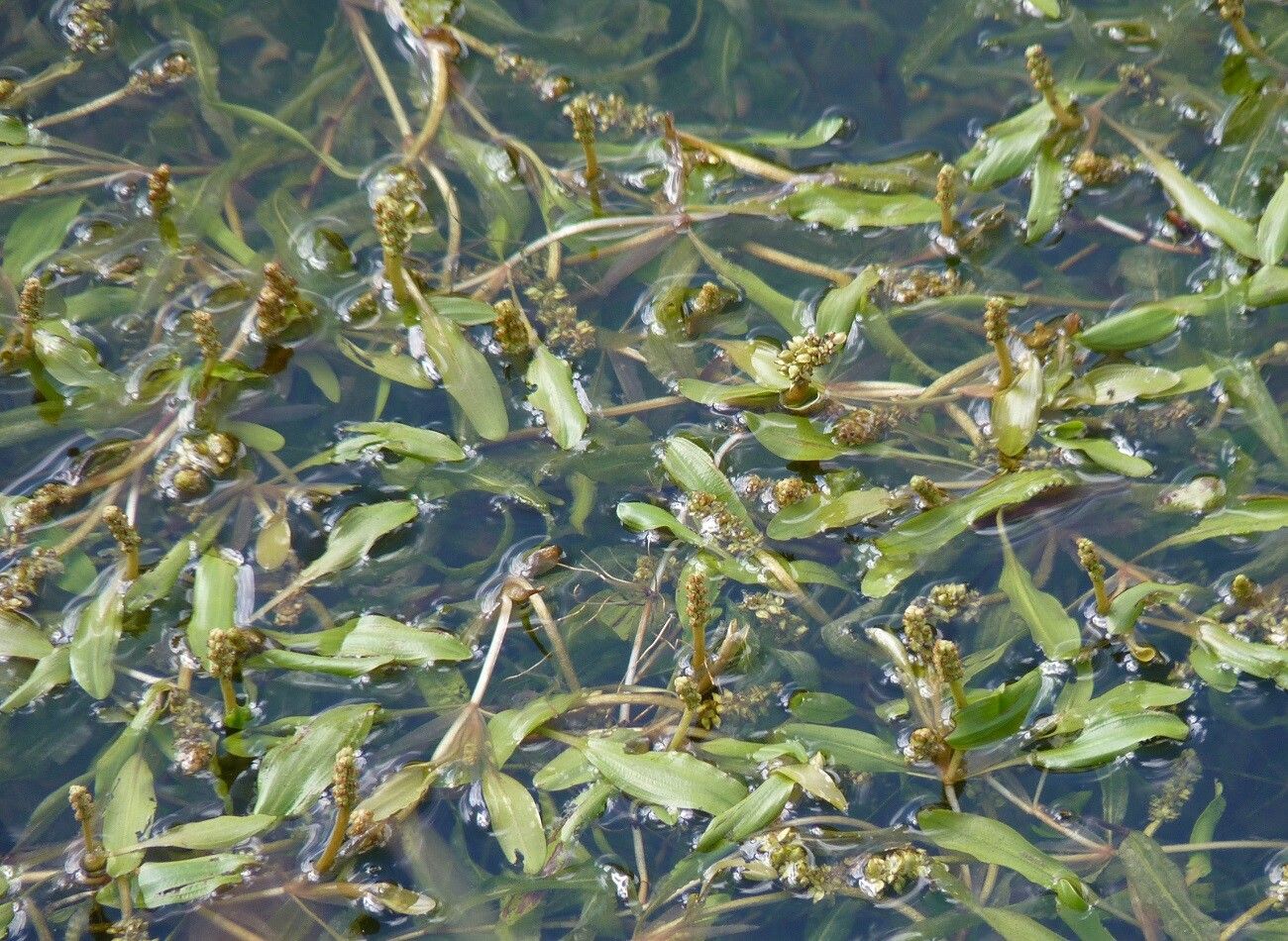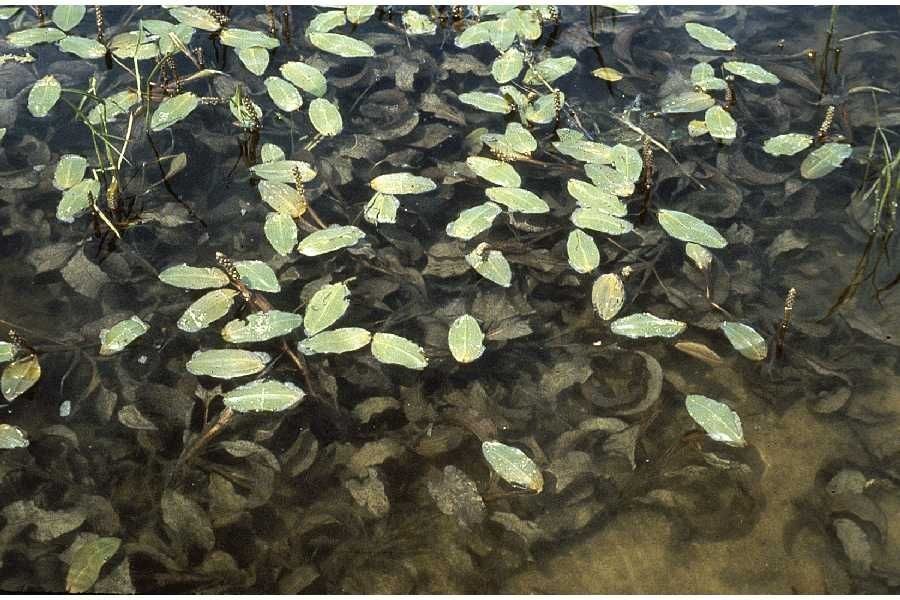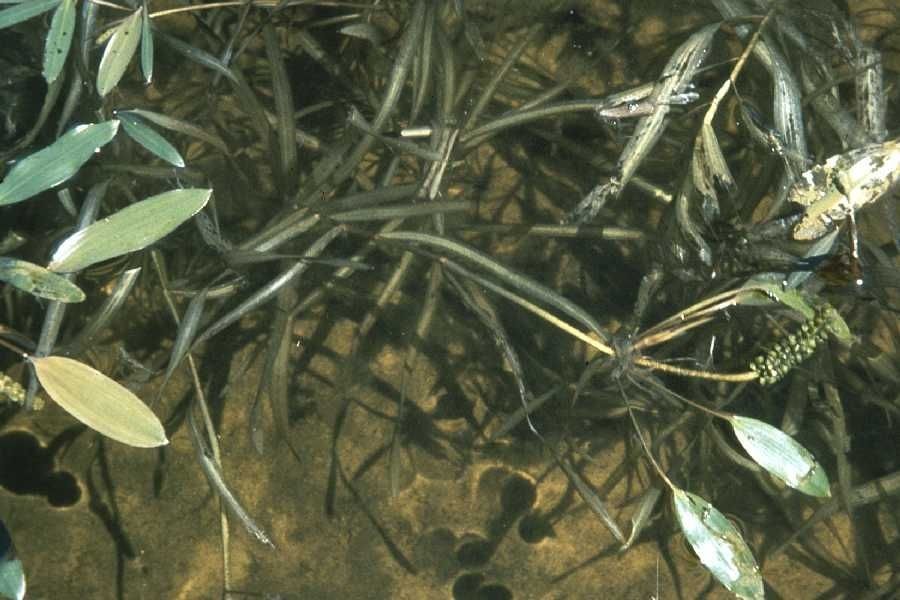
Potamogeton epihydrus, commonly known as ribbon-leaved pondweed, is an aquatic plant species that belongs to the family Potamogetonaceae. This perennial plant thrives in freshwater habitats such as ponds, lakes, and slow-moving streams. It features long, ribbon-like leaves that can reach up to 30 cm in length and 1 cm in width. The leaves are dark green and have a smooth texture. During the summer months, Potamogeton epihydrus produces small flowers on spikes that extend above the water's surface. These flowers are greenish-white and lack both petals and sepals. This plant plays a crucial role in aquatic ecosystems by providing shelter for fish and other aquatic organisms. Additionally, it helps improve water quality by absorbing excess nutrients from the water column. Potamogeton epihydrus is widely distributed across North America, Europe, Asia, Africa, Australia, and New Zealand, where it is typically found in shallow waters up to 3 meters deep. Overall, Potamogeton epihydrus is important for maintaining healthy freshwater ecosystems. It provides habitat for fish while also enhancing water quality through nutrient absorption from its surroundings.
American pondweed is fairly disease-resistant and typically does not tend to get sick. However, it can be vulnerable to pests and diseases present in its surroundings, and such problems are usually mild. For care, this plant needs moderate maintenance. It should be pruned regularly to preserve a neat appearance and support healthy growth. Fertilizing can also aid in encouraging flowering. American pondweed is appropriate for anyone with an outdoor area, like a garden or patio, and does not require extensive care experience. It may need more attention when cultivated indoors.
How to keep Potamogeton Epihydrus.
Light
American pondweed comes from habitats with plentiful sunlight, for example the shallow margins of ponds and lakes. It prefers full sun, although it can tolerate partial sun.
Water
American pondweed thrives in aquatic environments, where it adapts well to being submerged and to areas with high moisture levels. Watering it once a week is enough to replicate its natural habitat. As an aquatic perennial, it grows best outdoors and benefits from regular rainfall throughout its growth cycle.
Temperature
American pondweed can tolerate a wide range of temperatures, but its distribution may still be constrained by particular combinations of water and heat conditions. It does best in warm summer climates with sufficient rainfall or irrigation. Extended stretches of cloudy, rainy weather or prolonged high temperatures can raise the chances of the plant dying. In winter, protecting it from cold can increase its survival rate.
Pruning
American pondweed is an aquatic plant with long, ribbon-like leaves. To manage its growth and improve water clarity, it's best to prune it during early to late spring, being careful not to overcut. This maintenance practice promotes healthy growth, optimizes light and air penetration, and prevents excessive spread, helping to maintain a balanced ecosystem.
Botanical profile.
- Plant Type
- Herb
- Life Cycle
- Perennial
- Genus
- Potamogeton
- Family
- Potamogetonaceae
- Hardiness Zone
- 4-9
- Mature Height
- 30 cm to 91 cm
- Mature Spread
- 20 cm to 49 cm
- Leaf Color
- Green, Olive Drab
- Leaf Type
- Deciduous
- Flower Size
- 0.20 cm to 0.25 cm
- Bloom Time
- Summer
- Planting Time
- Spring, Summer, Autumn
- Harvest Time
- Late summer, Early fall, Mid fall
- Native Area
- Georgia, United Kingdom