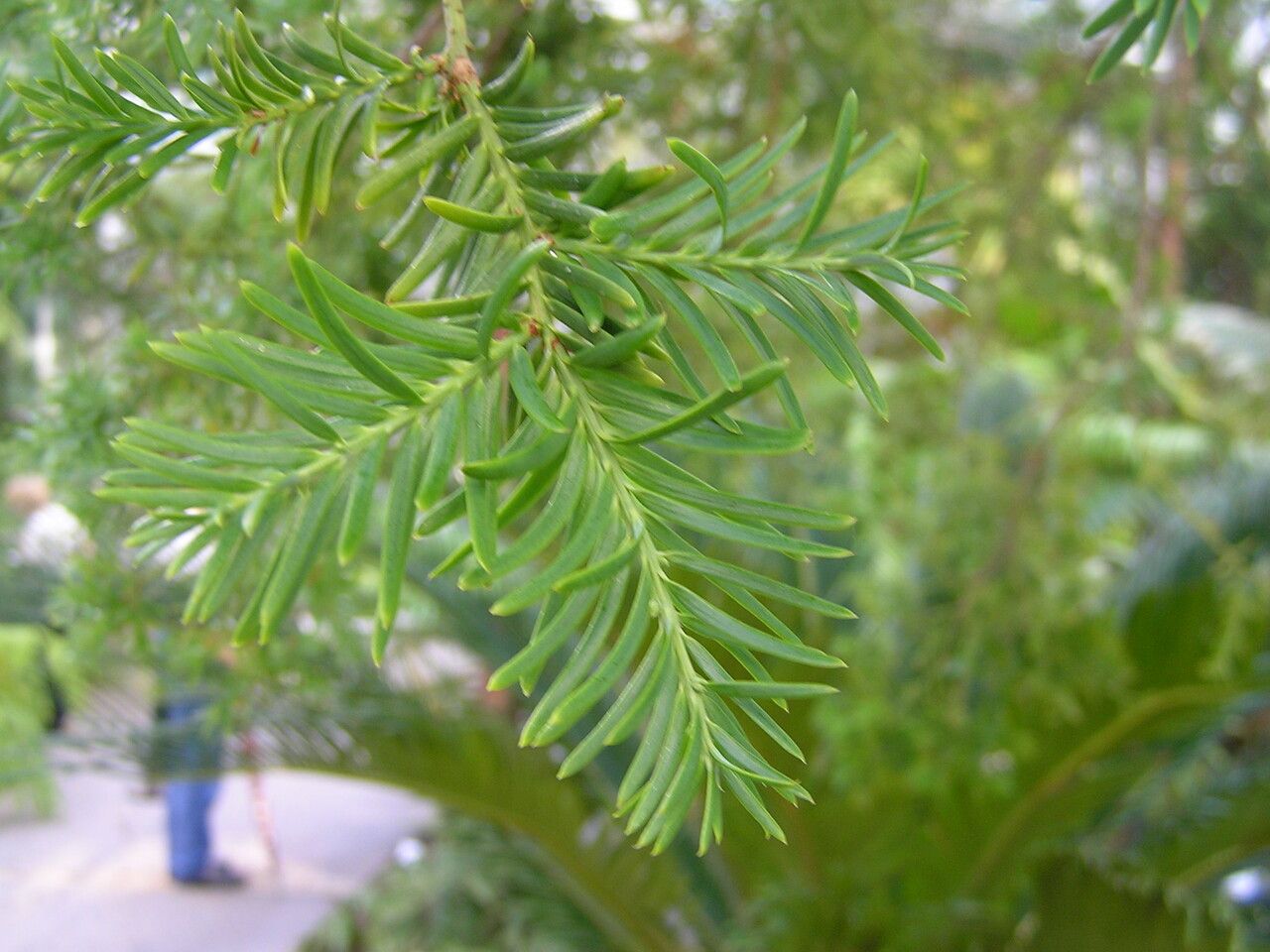
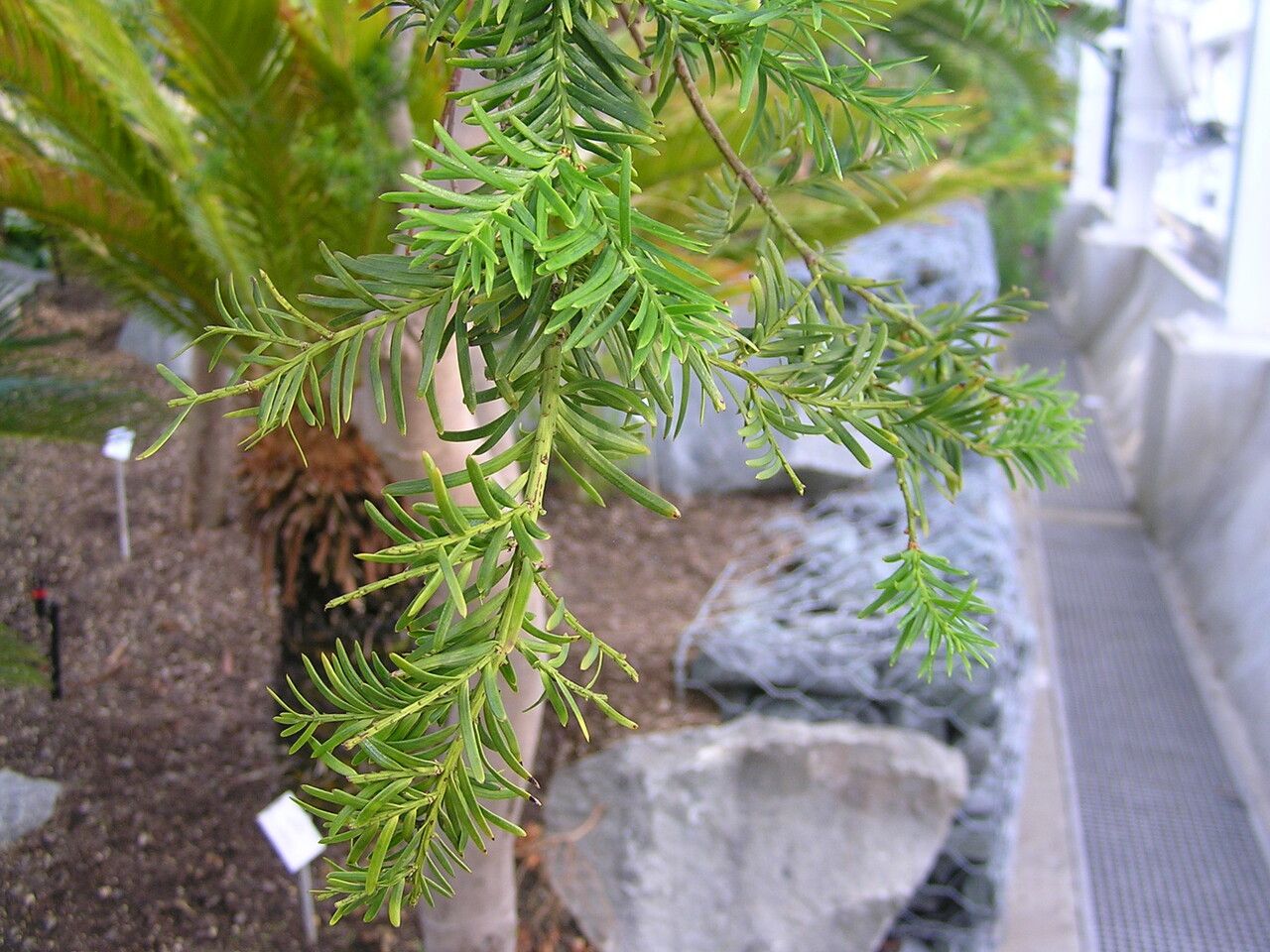
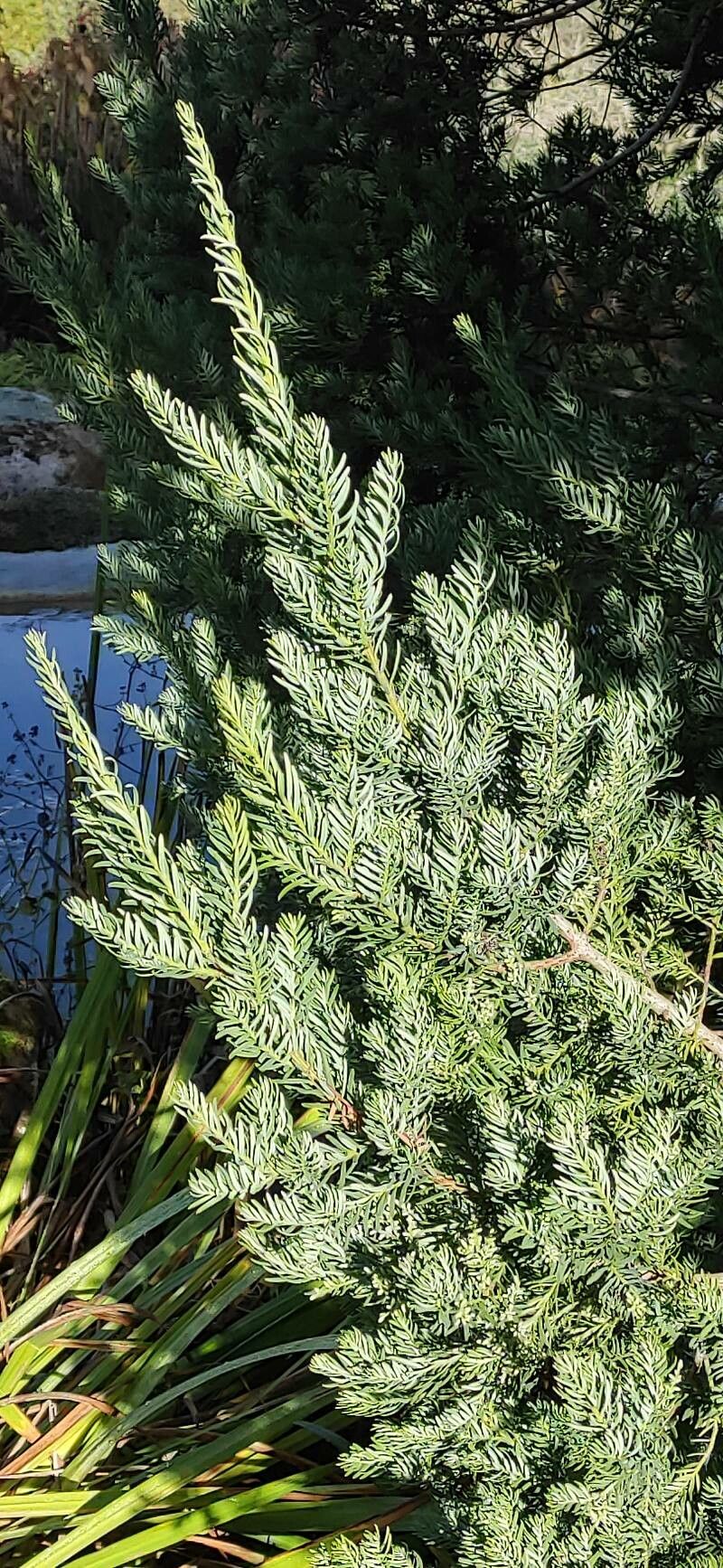
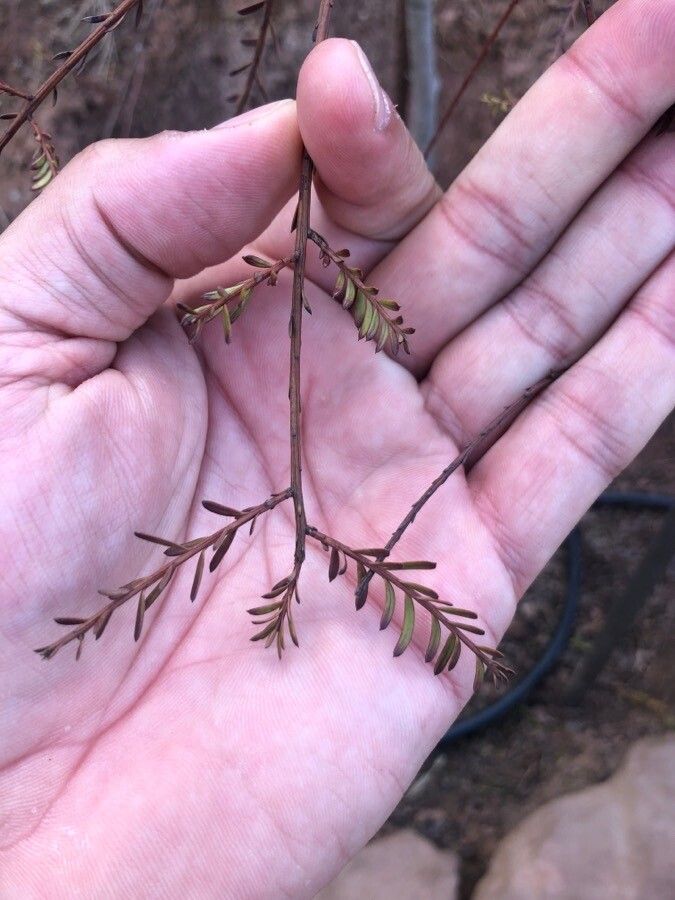
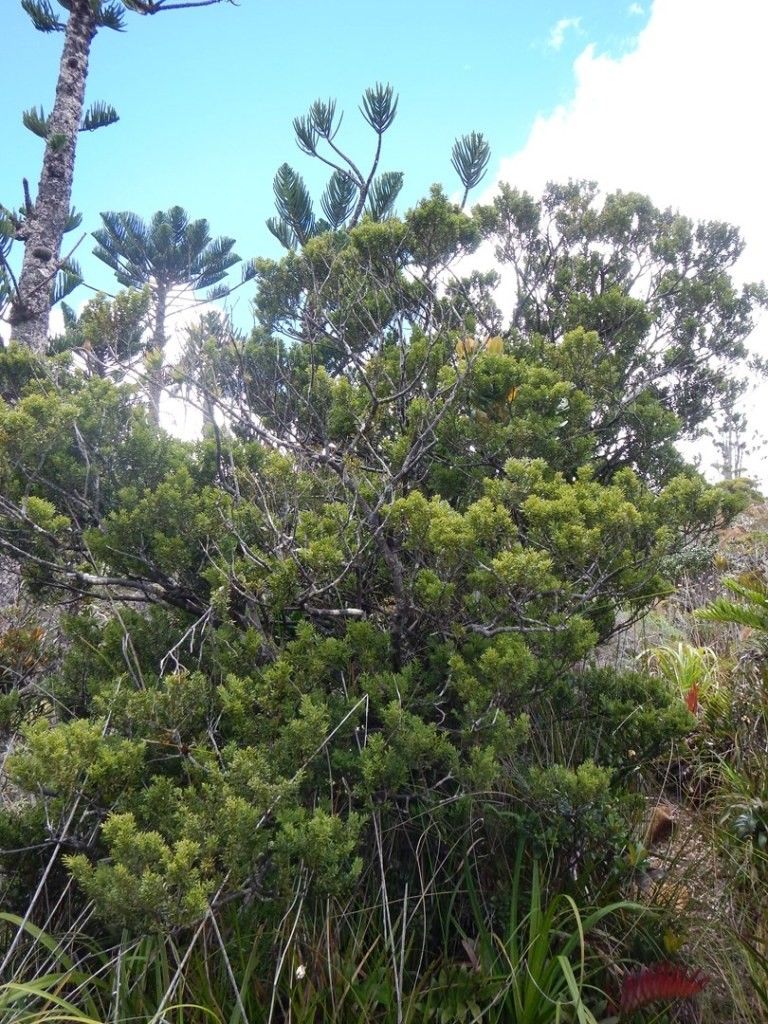
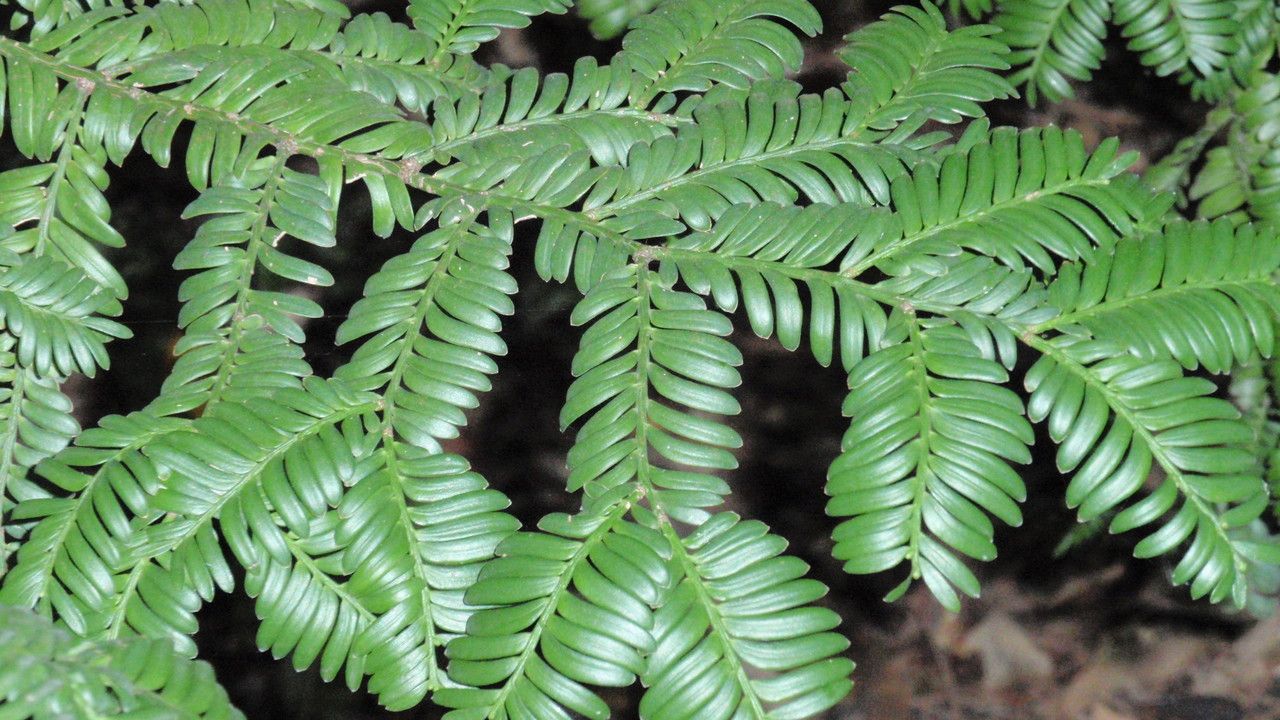
Prumnopitys taxifolia, the mataī (Māori: mataī) or black pine, is an endemic New Zealand coniferous tree that grows on the North Island and South Island. It also occurs on Stewart Island/Rakiura (47 °S) but is uncommon there.It grows up to 40 m high, with a trunk up to 2 m diameter. The leaves are linear to sickle-shaped, 10–15 mm long and 1.5–2 mm broad. The seed cones are highly modified, reduced to a central stem 3–4 cm long bearing 1-6 scales, each scale maturing berry-like, 10–15 mm long, violet-purple with a soft edible pulp covering the single seed. The seeds are dispersed by the New Zealand pigeon (kererū), which eats the 'berries' and passes the seeds in its droppings.
Black pine is resistant to disease and generally not susceptible to illnesses. In terms of care, this plant is fairly low maintenance. When grown outdoors it needs little watering, and larger specimens typically do not require pruning. However, smaller plants should be pruned after they have finished blooming. Black pine is suitable for anyone with outdoor space, such as a garden or a deck, and does not demand much prior care experience.
How to keep Prumnopitys Taxifolia.
Light
Black pine grows best in spots that get sunlight for most of the day. It tolerates dimmer locations to a degree, but too much shade can produce poor growth. Its native habitats were generally sunlit areas, showing a strong preference for light. Inadequate light can cause weakened health, while an excess may lead to stress and possible damage.
Water
Native to arid climates, black pine is moderately drought-tolerant. It thrives when watered every 2-3 weeks, allowing the soil to partially dry between waterings. As an evergreen, it needs consistent moisture to maintain its foliage throughout the year.
Temperature
Black pine originates from climates where temperatures generally range from 59 to 100.4 F (15 to 38 C). It does well in these moderate temperatures. Seasonal changes to care are usually not needed unless extreme weather occurs.
Fertilizer
Black pine has specific nutrient needs and does not require heavy fertilization. Spring is the best time to apply fertilizer for optimal growth. Supplying nutrients improves its health, raises its resistance to pests and diseases, and helps sustain its long lifespan.
Pruning
The black pine tree, known for its dense foliage and ability to thrive in shaded areas, benefits from careful pruning. It is best to prune these trees between early and late winter. During this time, remove any dead or overcrowded branches to maintain the tree's shape and improve airflow. Proper pruning not only enhances the tree's appearance but also promotes better light penetration and helps reduce the risk of fungal diseases. Always use sanitized tools to ensure clean and healthy cuts.
Botanical profile.
- Plant Type
- Tree
- Life Cycle
- Perennial
- Genus
- Prumnopitys
- Family
- Podocarpaceae
- Hardiness Zone
- 8-11
- Mature Height
- 39.93 m
- Mature Spread
- 6.1 m
- Leaf Color
- Dark Green
- Leaf Type
- Evergreen
- Flower Color
- Yellow, Green
- Flower Size
- 0.51 cm to 1.02 cm
- Bloom Time
- Early winter, Mid winter
- Planting Time
- Spring, Summer
- Harvest Time
- Mid spring, Late spring, Early summer
- Native Area
- New Zealand
Other names.
Reader questions.
What are the sunlight requirements for Black Pine?
Black Pine (Prumnopitys taxifolia) thrives best in full sun conditions, requiring more than 6 hours of sunlight daily. It can also grow in partial sun, with about 3-6 hours of sunlight. While it has a decent tolerance for less illuminated areas, excessive shade can lead to poor growth. Observing how sunlight moves through your garden helps in choosing spots that provide the perfect balance of light and shade, ensuring the plants' happiness.
What is the native climate for Black Pine?
Black pine is native to climates where temperatures typically range from 59 to 100.4 degrees Fahrenheit (15 to 38 degrees Celsius). It thrives best within these mid-range temperatures and generally does not require seasonally adjusted care, except in instances of extreme weather conditions.
How important is sunlight for Black Pine's growth?
Sunlight is crucial for the growth of Black Pine, as it thrives best in locations that receive sunlight for the majority of the day. Its ancestral habitats were typically sun-drenched landscapes, indicating a strong affinity for light. Insufficiently lit conditions can result in poor health, while too much direct sunlight may cause stress and potential damage to the plant.
How does Black Pine respond to cold temperatures?
Black pine has a moderate tolerance to cold and usually does not require special attention if the temperature remains above -5 degrees Celsius. For temperatures expected to drop below -5 degrees Celsius, temporary cold protection measures are necessary, such as wrapping the plant with plastic, fabric, or other materials. These protections should be removed once the weather warms up again.
Can artificial lighting be used for Black Pine indoors?
Yes, artificial lighting can be a vital solution for Black Pines grown indoors, especially in winter or less sunny spaces. Adequate lighting promotes faster, healthier growth. Opt for LED lights customized to provide specific wavelengths needed by your plants. Full sun plants need 30-50W/sq ft, partial sun plants require 20-30W/sq ft, and full shade plants need 10-20W/sq ft of artificial light. Position the light source 12-36 inches above the plant to mimic natural sunlight, ensuring it receives 8-12 hours of light per day.
What should you do if a Black Pine experiences temperatures below -10 degrees Celsius?
When the temperature falls below -10 degrees Celsius, the leaves of the Black pine may start to droop. Mildly affected trees can recover, but severely affected ones may see their leaves wilt and eventually fall off. To remedy this, trim off the frost-damaged parts. Before encountering such low temperatures again, it's advisable to wrap the plant with non-woven fabric or cloth, and construct a wind barrier to protect it from the cold wind.
What are some symptoms of insufficient sunlight in Black Pine?
Symptoms of insufficient sunlight in Black Pine include smaller new leaves, leggy or sparse growth, faster leaf drop, slower or halted growth, lighter-colored new leaves, and conditions such as chlorosis and sunscald. Chlorosis is when leaves lose their green color and turn yellow, while sunscald results from intense sunlight exposure causing damage to leaves or stems.
How does Black Pine handle high temperatures?
During the summer, it's important to ensure that the temperature around the Black pine does not exceed 38 degrees Celsius. At temperatures above 43 degrees Celsius, the leaves may start showing signs of stress such as lightening in color, drying and withering of leaf tips, curling of the leaves, and increased susceptibility to sunburn.
How can I address sunlight-related issues for Black Pine?
To address sunlight-related issues for Black Pine, gradually move plants to sunnier locations, ensuring they receive at least 6 hours of sunlight daily. For indoor plants, consider using artificial light if moving them isn't feasible, keeping lights on for at least 8 hours daily. For outdoor plants, avoid sudden changes in light intensity to prevent sunburn. Minimize obstructions by pruning trees or relocating plants to sunnier areas to ensure they receive ample sunlight and good drainage.
What are the solutions for Black Pine experiencing high temperatures?
For Black pines affected by high temperatures, trim away any sunburned or dried-up parts. Move the plant to a shady location, especially during the midday and afternoon sun, or use a shade cloth to provide necessary shade. Watering the plant in the morning and evening helps keep the soil moist and supports the plant's wellbeing in high heat.