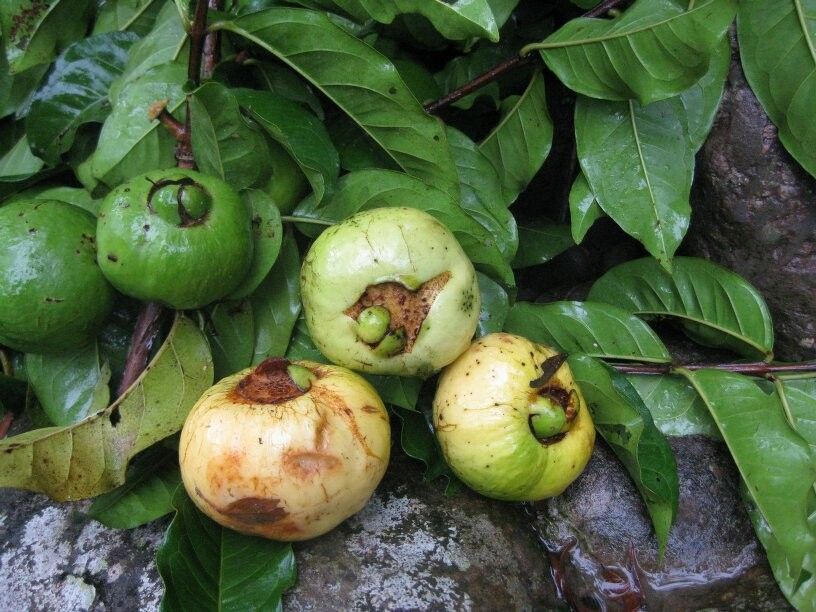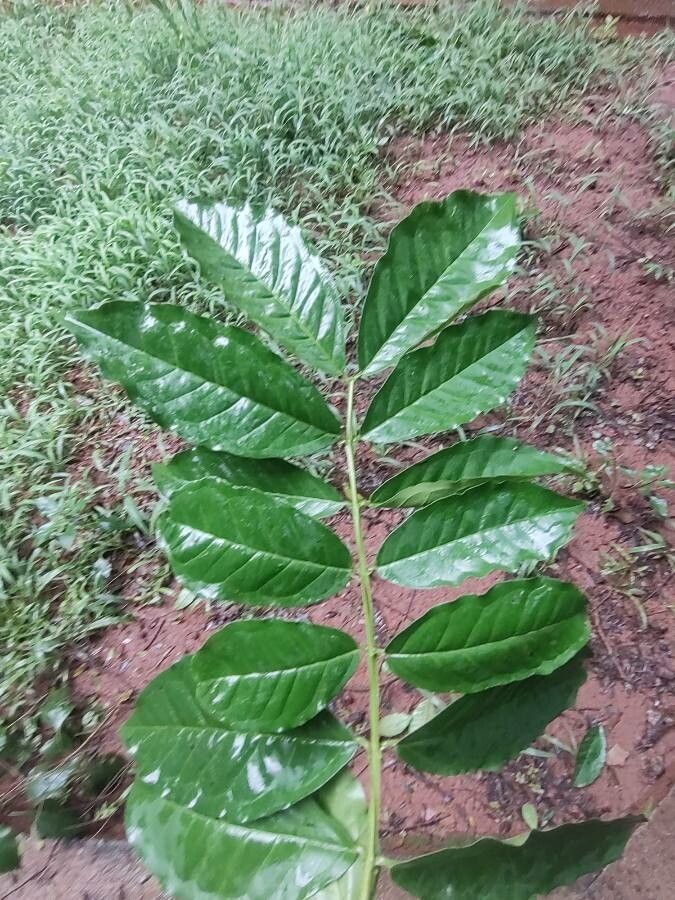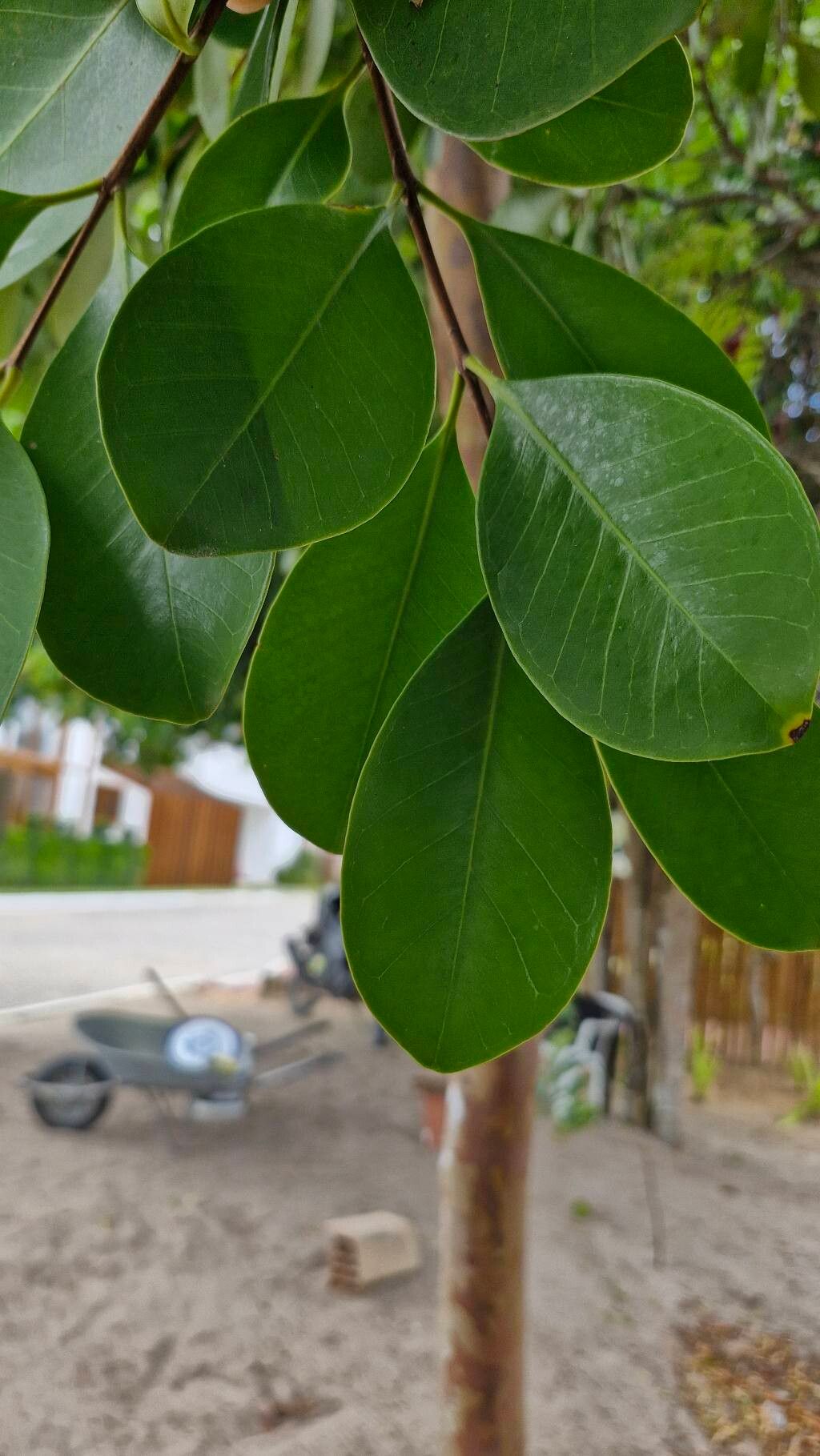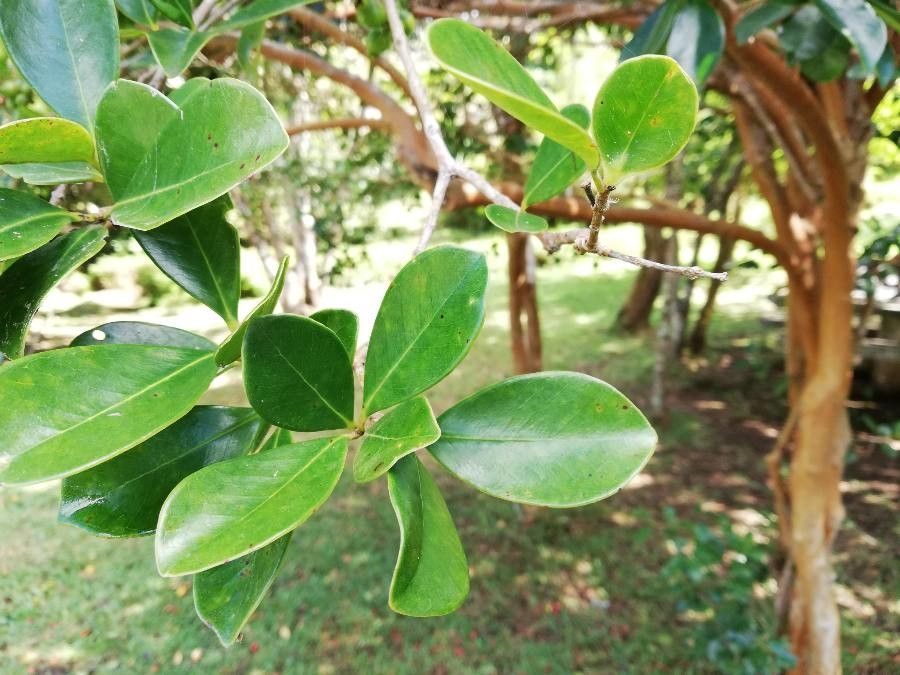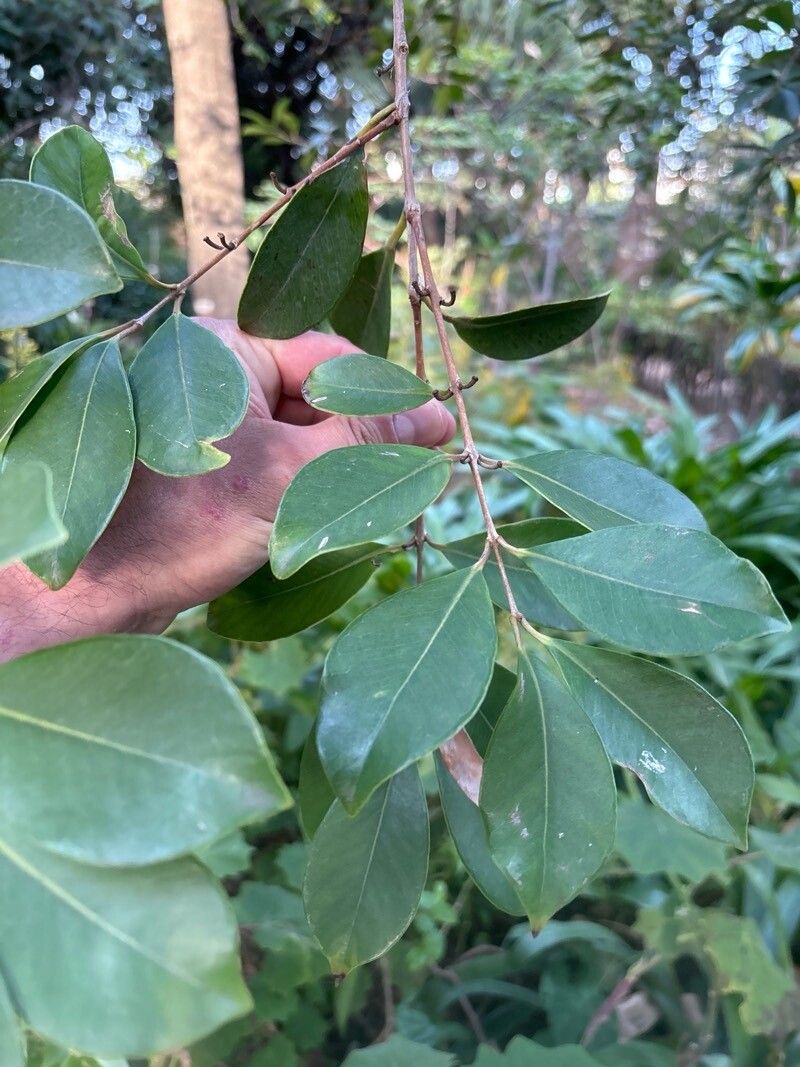
Psidium cattleyanum, commonly known as Cattley guava, strawberry guava or cherry guava, is a small tree in the Myrtaceae (myrtle) family. The species is named in honour of English horticulturist William Cattley. The red-fruited variety, P. cattleyanum var. cattleyanum, is commonly known as purple guava, red cattley guava, red strawberry guava and red cherry guava. The yellow-fruited variety, P. cattleyanum var. littorale is variously known as yellow cattley guava, yellow strawberry guava, yellow cherry guava, lemon guava and in Hawaii as waiawī.
Strawberry guava shows strong resistance to disease and is usually not susceptible to illnesses. Regarding maintenance, this plant is fairly low-maintenance. Outdoors it needs only light watering, and bigger specimens typically do not require pruning. Smaller specimens, however, should be trimmed after they finish blooming. Strawberry guavat is appropriate for anyone who has an outdoor area, like a garden or a deck, and it does not demand extensive gardening experience.
How to keep Psidium Littorale.
Light
The strawberry guava plant flourishes optimally when it receives plenty of sunlight, which is crucial for robust growth and healthy development. The vibrancy of the plant's fruit and leaf coloring is also augmented by sun exposure. However, too much or too little sunlight can cause a decrease in fruit production, a dulling of color or stunted growth. The native environment of the plant exhibits a need for lots of sunlight, reflecting its sunlight-demanding nature.
Temperature
Strawberry guava thrives naturally in a tropical environment where the temperature ranges between 68 and 100 °F (20 to 38 ℃). It adjusts to changes in seasonal temperatures, has a preference for hotter conditions, and may need extra warmth in the colder months.
Fertilizer
Opt for organic fertilizers like fish emulsion or compost instead of chemical ones for Strawberry guava. During spring, give young plants more nitrogen and phosphorus. Mix compost or fertilizer into the soil either before or after planting the tree. For full-grown plants, add either a balanced diet or fertilizers that address specific deficiencies in the spring. A lack of nutrients results in abnormally small leaves, dwarfed branches, leaves that turn yellow or bronze, overly sour fruits, fruits that drop prematurely, and fruits that split open.
Botanical profile.
- Plant Type
- Tree, Shrub
- Life Cycle
- Perennial
- Genus
- Psidium
- Family
- Myrtaceae
- Hardiness Zone
- 9-12
- Mature Height
- 2.13 m to 6.1 m
- Mature Spread
- 3.05 m to 7.62 m
- Leaf Color
- Green, Bronze
- Leaf Type
- Evergreen
- Flower Color
- White
- Flower Size
- 2.03 cm to 3.05 cm
- Bloom Time
- Late spring, Early summer, Mid summer
- Planting Time
- Spring, Autumn
- Harvest Time
- Mid summer, Late summer
- Native Area
- Brazil, Uruguay