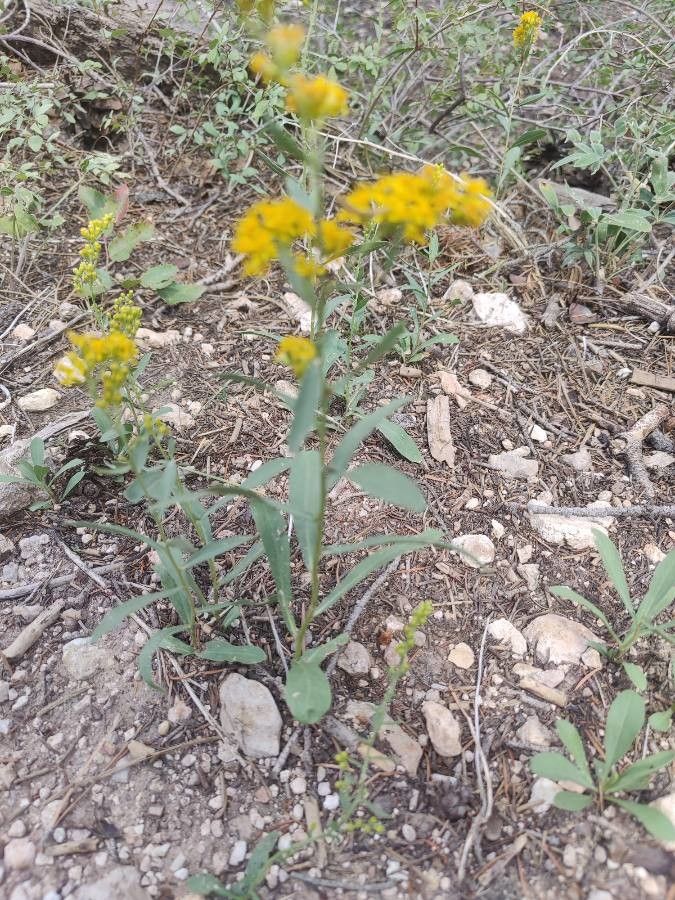
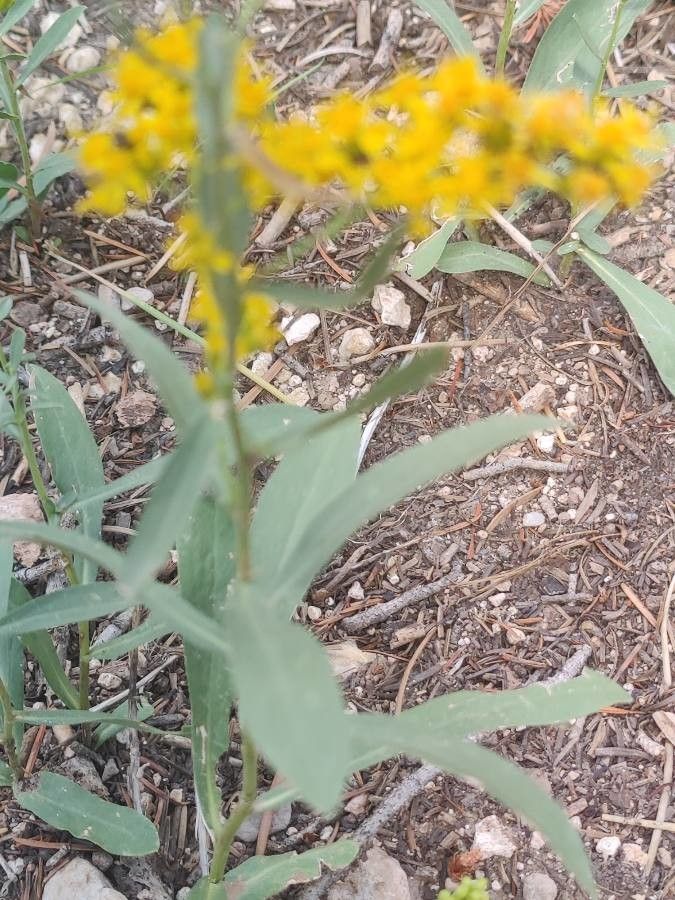
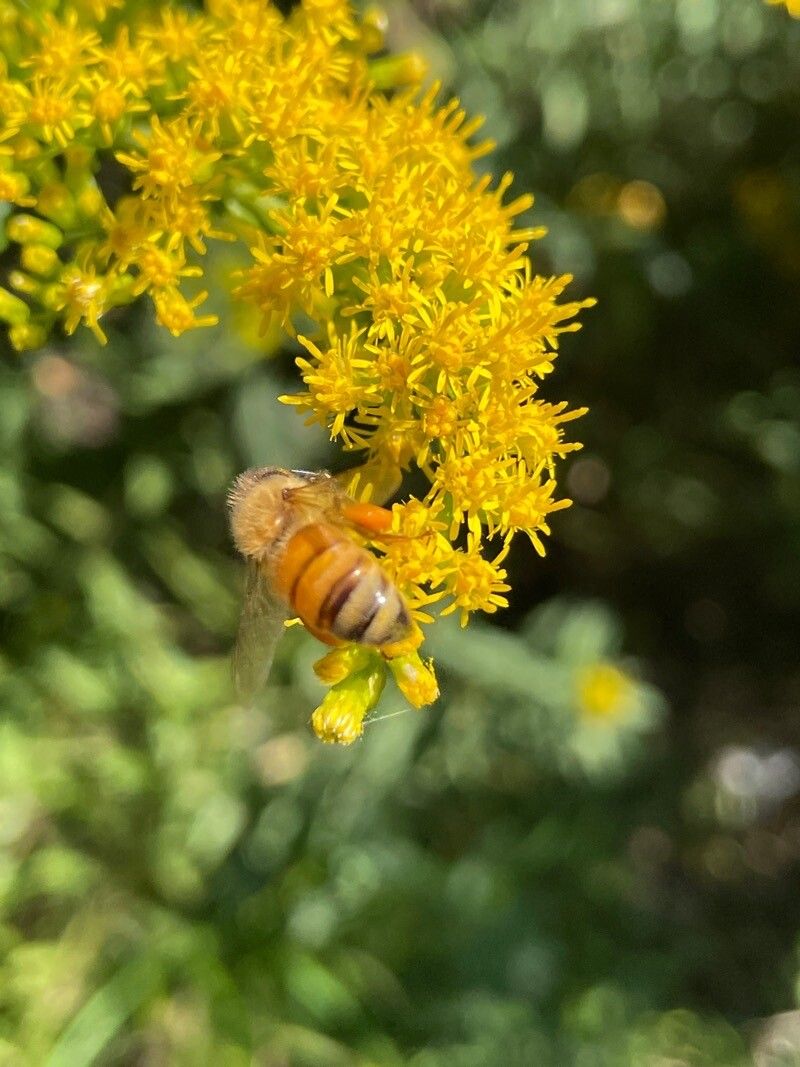
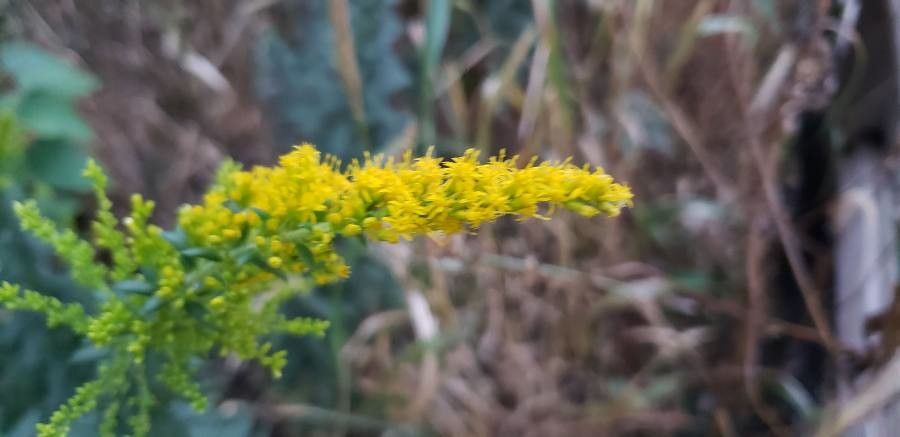
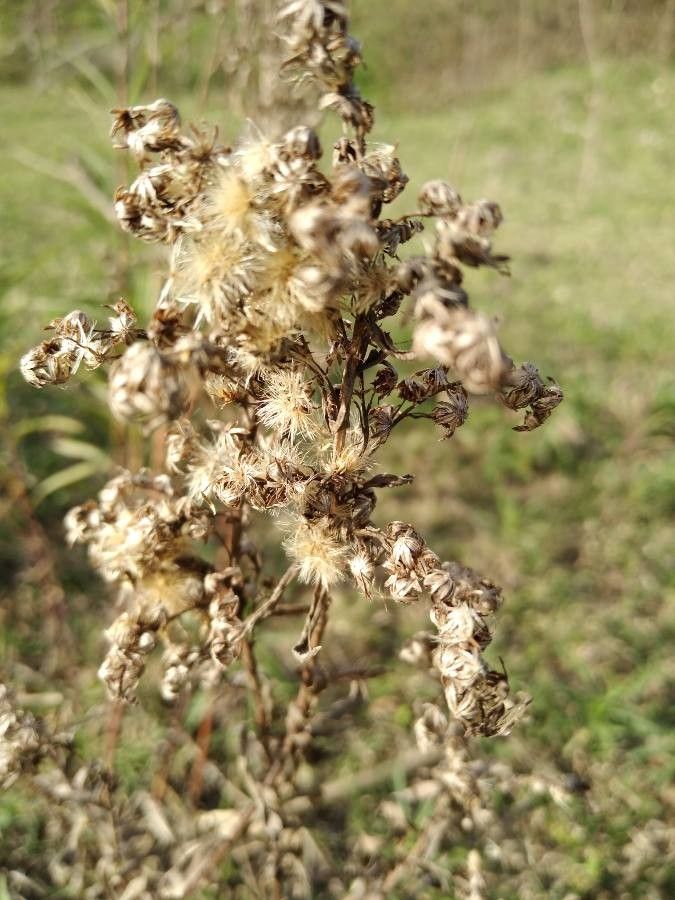
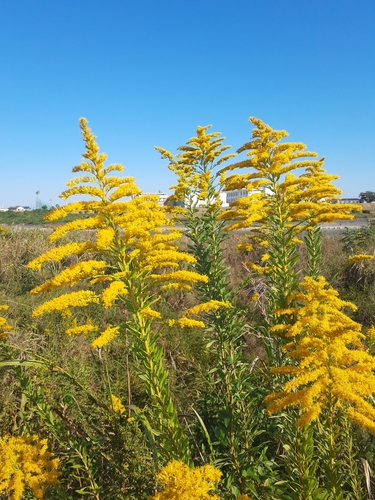
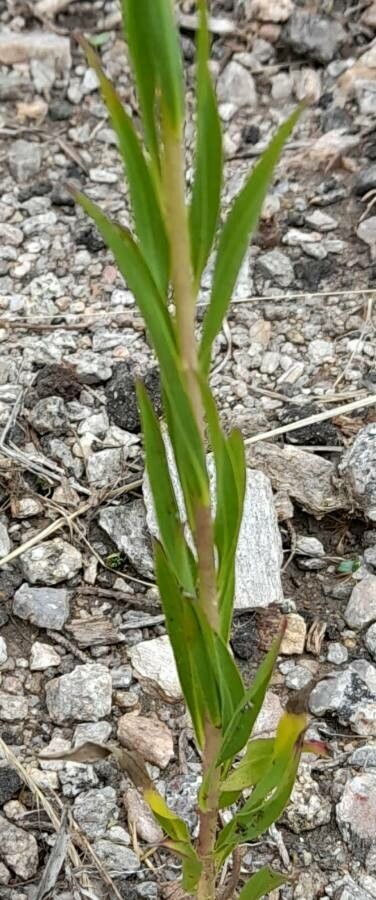
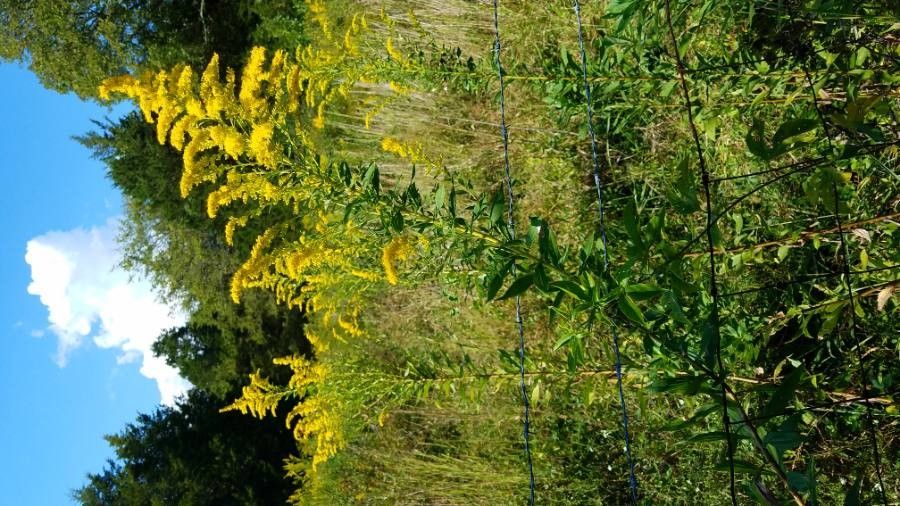
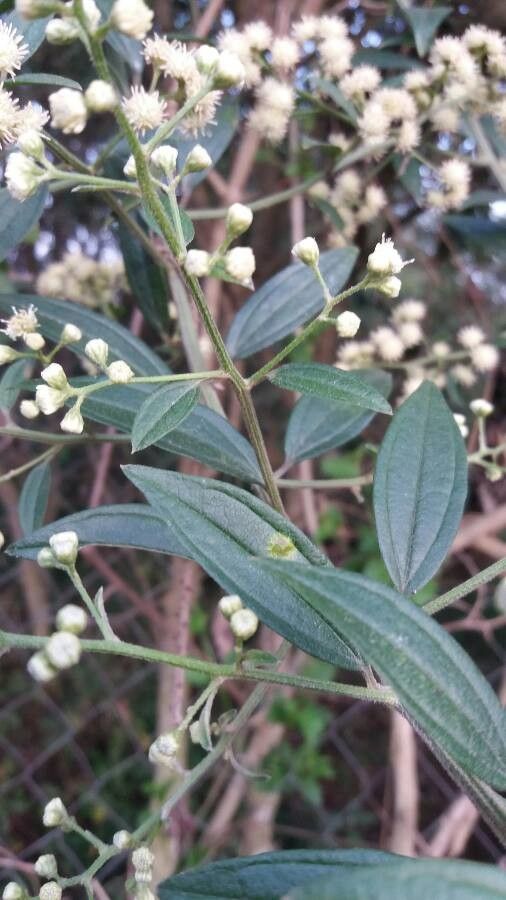
Solidago velutina, the threenerve goldenrod or velvety goldenrod, is a plant species native to Mexico and to the western United States. The species has been found in southwestern Oregon, east to the Black Hills of South Dakota, and as far south as México State in the central part of the Republic of México. It is classified as a member of Subsection Nemorales.Recent taxonomic treatments have expanded the concept of S. velutina to include S. californica and S. sparsiflora, long considered by many to be distinct species. These are now often treated as subspecies: Solidago velutina subsp. californica (Nutt.) Semple - California, Oregon Solidago velutina subsp. sparsiflora (A.Gray) SempleAnother infraspecific taxon is also recognized by some authors: Solidago velutina var. nevadensis (A. Gray) C.E.S. Taylor & R.J. Taylor
Three-nerve goldenrod has strong resistance to disease and is generally not prone to illness. Nevertheless, it can be affected by pests and diseases present in its environment. These infections are typically mild. Regarding care, the plant requires moderate maintenance. It should be pruned regularly to keep a good appearance and encourage healthy growth. Applying fertilizer can also help boost flowering. Three-nerve goldenrod is appropriate for anyone with outdoor space, like a garden or patio, and does not demand extensive care experience. It may need more attention when cultivated indoors.
How to keep Solidago Velutina.
Light
Three-nerve goldenrod is a sun-loving perennial herbaceous plant native to open habitats and commonly found in meadows and grasslands. It prefers full sun but can also tolerate partial sun.
Temperature
Three-nerve goldenrod can tolerate a wide range of temperatures, though its distribution may still be limited by specific combinations of moisture and heat. It grows best in warm summer climates with sufficient rainfall or watering. Long stretches of cloudy, rainy weather, as well as extended high temperatures, can raise the chance of Three-nerve goldenrod dying. In winter, adequate protection from cold can increase the plant’s survival rate.
Fertilizer
The best time to fertilize a Three-nerve goldenrod is in early spring, as it emerges from dormancy and begins active growth. Fertilizing supplies essential nutrients for healthy development. Although Three-nerve goldenrod has relatively low fertilizer needs, an annual application can improve its survival and encourage better, longer-lasting blooms.
Pruning
To encourage the growth and flowering of the three-nerve goldenrod, prune it in early spring. Cut the old stems down to the ground and remove any dead parts to improve air circulation. These practices help maintain plant health, reduce the risk of pests, and ensure a vibrant appearance.
Pot & Repot
Three-nerve goldenrod needs excellent drainage in pots to grow well. Good drainage helps with proper aeration and prevents root rot.
Botanical profile.
- Plant Type
- Herb
- Life Cycle
- Perennial
- Genus
- Solidago
- Family
- Asteraceae
- Hardiness Zone
- 4-9
- Mature Height
- 30 cm to 91 cm
- Mature Spread
- 30 cm to 61 cm
- Leaf Color
- Green, Dark Green
- Leaf Type
- Deciduous
- Flower Color
- Yellow, Gold
- Flower Size
- 0.51 cm to 1.02 cm
- Bloom Time
- Late summer, Early fall, Mid fall
- Planting Time
- Spring, Summer
- Harvest Time
- Fall
- Native Area
- Mexico
Other names.
Reader questions.
What are the sun requirements for Three-nerve goldenrod?
Three-nerve goldenrod (Solidago velutina) thrives best in specific sunlight conditions. For 'Full sun,' it requires above 6 hours of sunlight, ensuring it gets ample light for optimal growth. In 'Partial sun' conditions, about 3-6 hours of sunlight is ideal, accommodating spaces that receive moderate light. It's important to observe how sunlight moves through your garden, selecting locations that offer a well-balanced environment of light and shade to keep your plants healthy and happy.
What is the Three-nerve goldenrod?
The Three-nerve goldenrod, known botanically as Solidago velutina, is a plant species recognized for its unique characteristics and botanical significance. Unfortunately, the provided information does not include further details on its essentials, symptoms of its presence or effect, or additional insights.