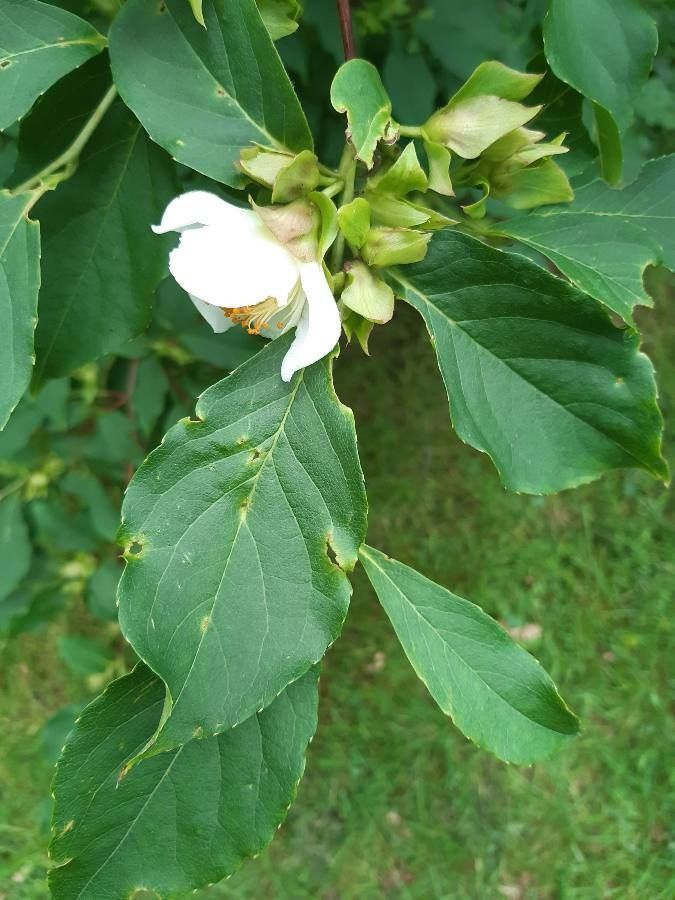
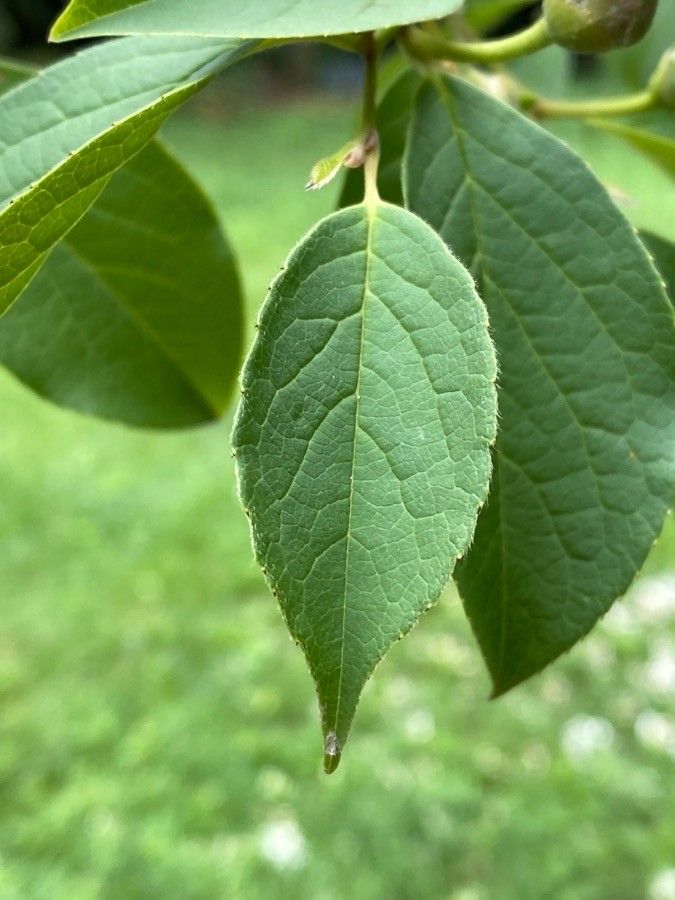
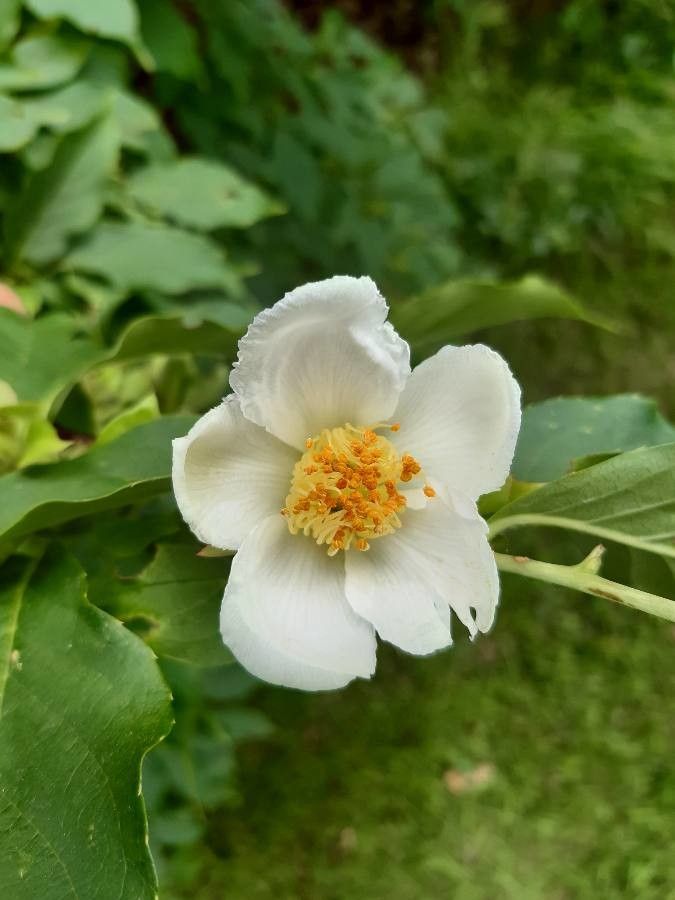
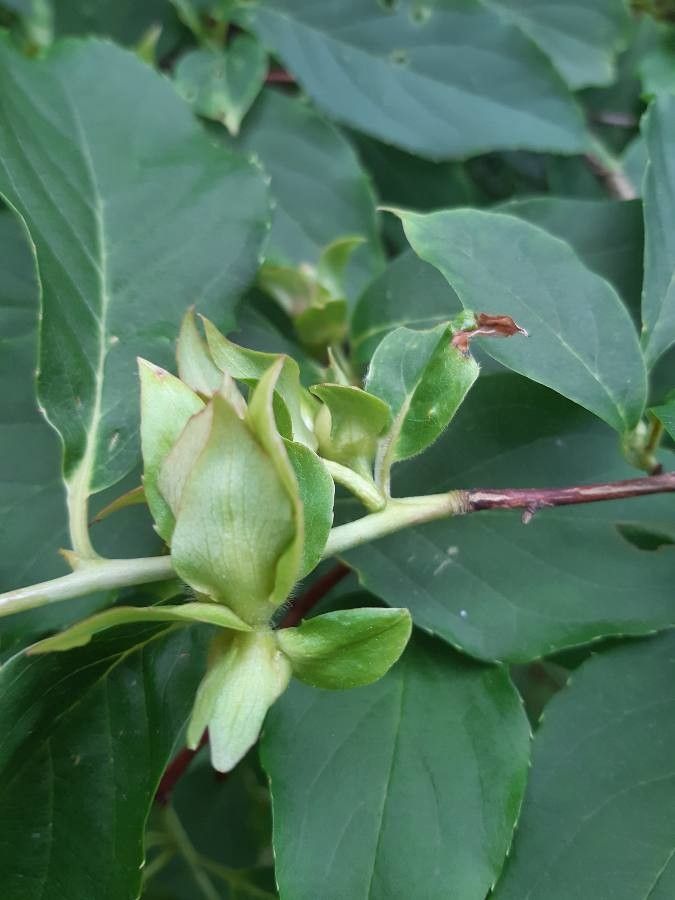
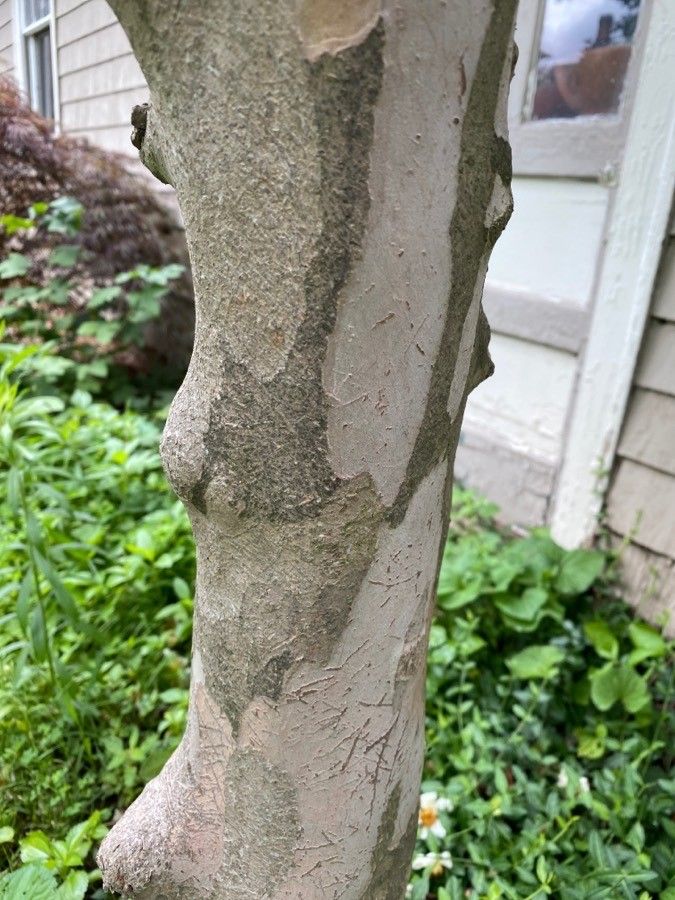
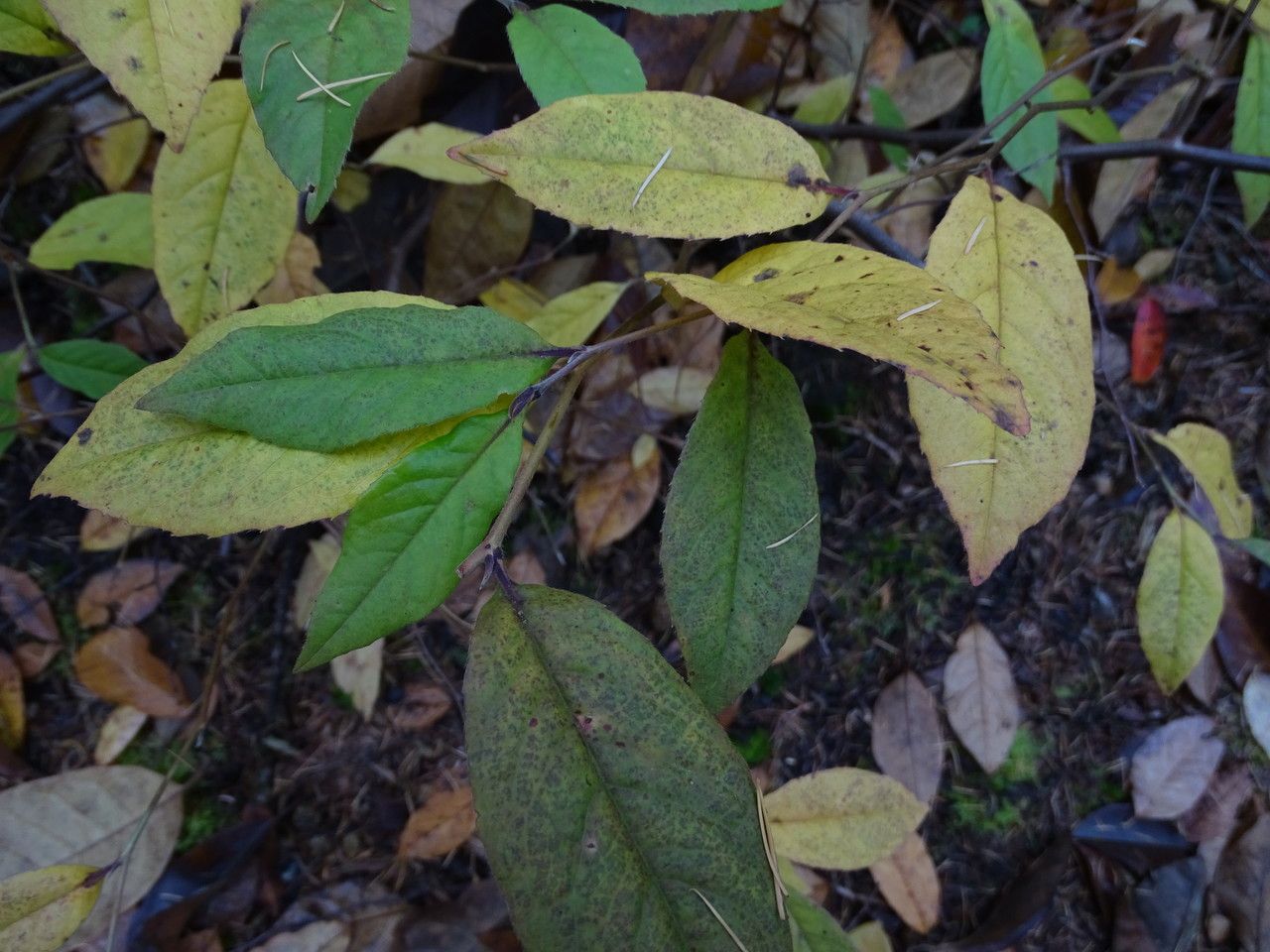
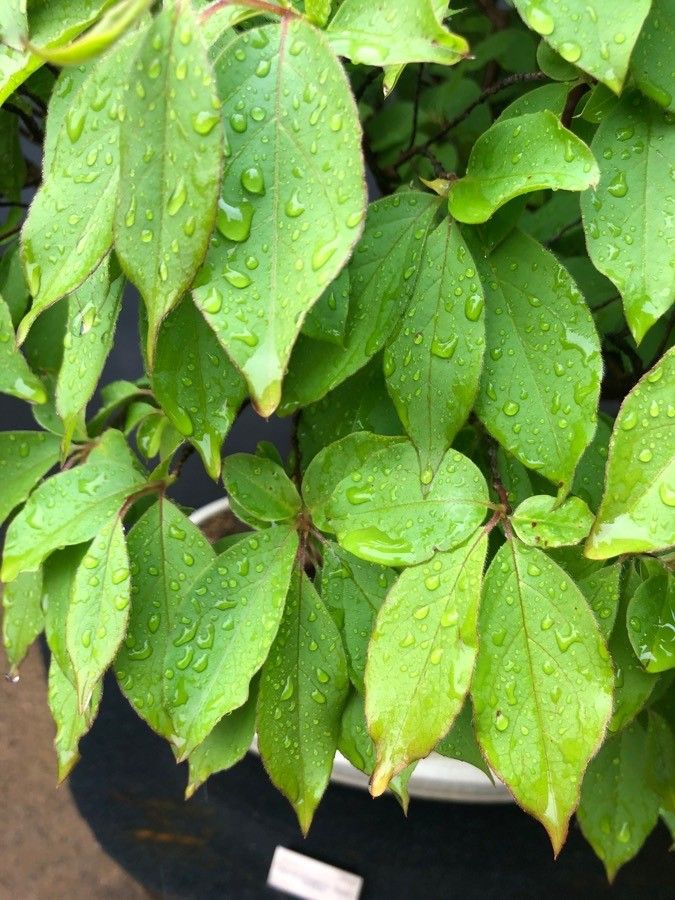
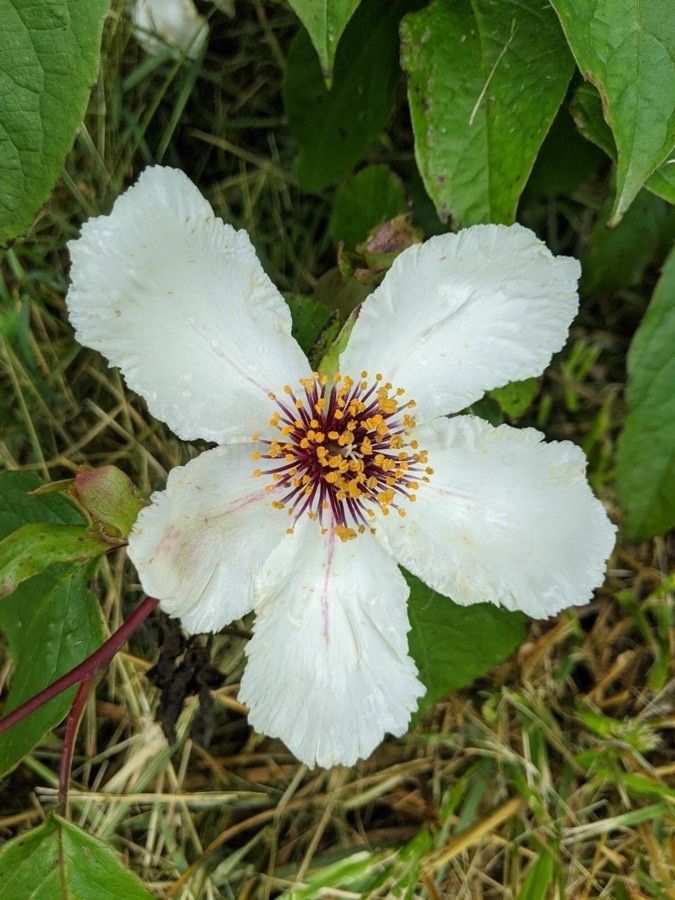
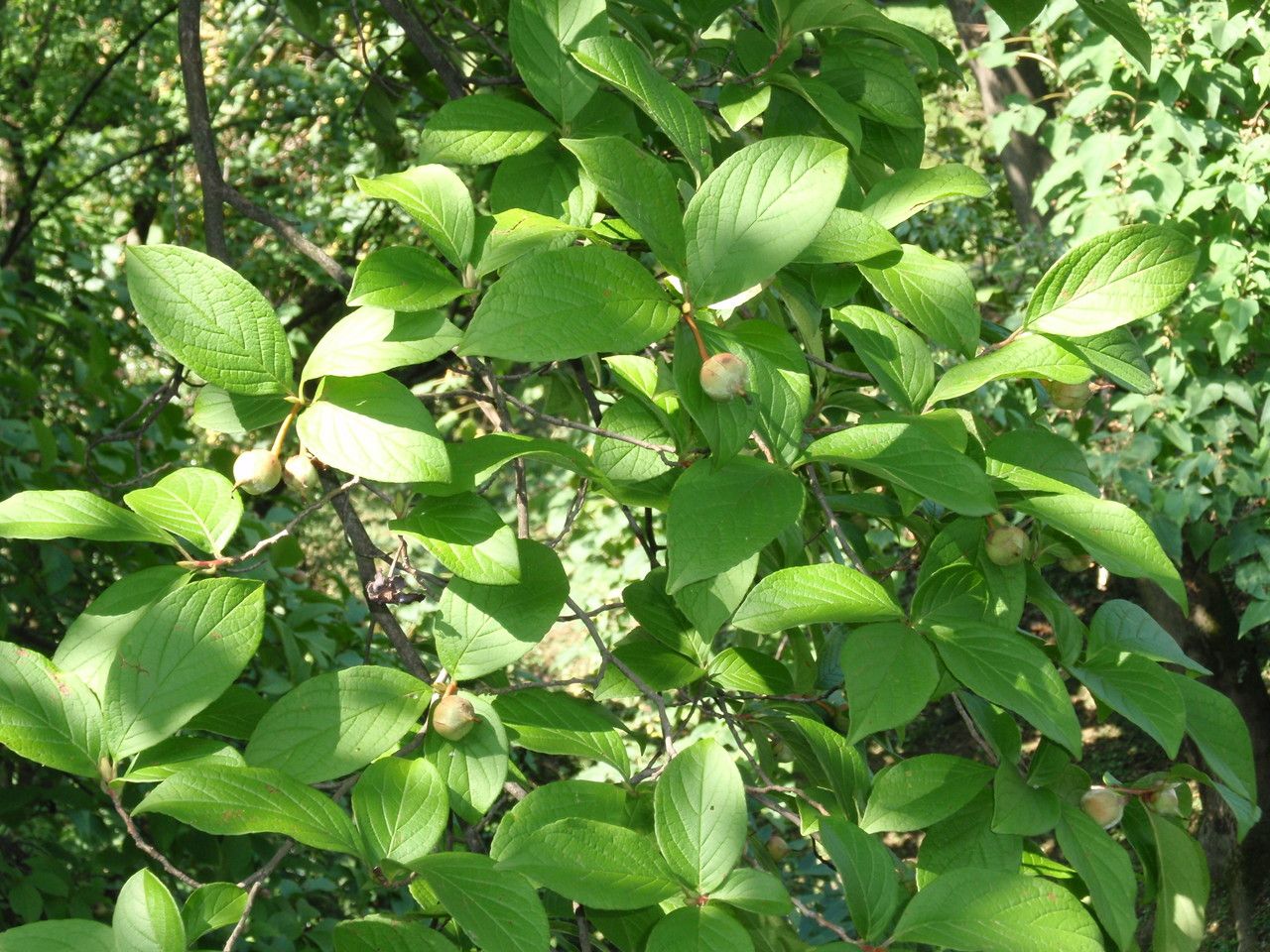
Stewartia sinensis, the Chinese stewartia, is a species of flowering plant in the camellia family Theaceae, native to central and eastern China. It is typically a small deciduous tree or large shrub, commonly growing to about 9 m (30 ft) tall. It is highly regarded horticulturally for the combination of its attractive, cinnamon-colored peeling bark, numerous cup-shaped, fragrant white flowers to 10 cm (4 in) in midsummer, and generally intensely red autumn (fall) foliage. The species also has an attractive multiple-branched growth habit and low maintenance requirements. In its native forests, S. sinensis has been known to achieve a maximum height of 20 m (66 ft) tall by 7 m (23 ft) broad but it generally does not achieve these proportions in cultivation, where competition for sunlight is less of a concern. This has led to its recommendation for use where larger trees are inadvisable, e.g. under power lines. When not grown in forested settings, S. sinensis generally takes the form of a multiply-branched, large shrub. Preferred growing conditions for S. sinensis are similar to those of the more commonly cultivated and closely related Japanese stewartia (S. pseudocamellia), though the latter is somewhat more cold-tolerant. Stewartia sinensis prefers full sun to part shade and moist, well-drained slightly acid soil in a protected location, but may be grown as a specimen tree in climates that do not test its cold-tolerance. It is hardy to USDA zone 5, but it has been suggested that young trees may be more susceptible to cold than older specimens, and should thus be protected during very cold temperatures until they reach mature sizes.In the UK Stewartia sinensis has gained the Royal Horticultural Society’s Award of Garden Merit.
The Chinese stewartia (Stewartia sinensis) was named in 1753 by Carl Linnaeus in honor of John Stuart, the 3rd Earl of Bute, who served as Prime Minister of Great Britain under King George III. It is thought that "stewartia" resulted from a transcription error and that it should have been spelled "stuartia," but the original spelling has been retained.
Chinese stewartia is resistant to disease and generally not susceptible to illnesses. As for care, this plant is fairly low maintenance. When grown outdoors it needs only occasional watering, and larger specimens typically do not require pruning. Smaller plants, however, should be trimmed after they finish blooming. Chinese stewartiat is appropriate for anyone with outdoor space, such as a garden or deck, and does not call for much care experience.
How to keep Stewartia Sinensis.
Light
Chinese stewartia can withstand full sun for a large part of the day, but it does best in locations with alternating periods of shade and sunlight. In the wild it grows beneath the canopy of taller trees, which creates this changing light. Still, too little light limits its growth and flowering, while too much light can scorch the leaves.
Water
The Chinese stewartia is well-suited to humid woodlands, as it prefers moderate moisture and can tolerate some drought. To care for it, water the plant every three weeks, ensuring that the soil remains slightly damp. Its watering needs correspond with its growth cycles, particularly requiring consistent moisture during the spring and summer to support the production of vibrant flowers.
Temperature
Chinese stewartia is indigenous to areas with moderate climates. It does best when temperatures range from 41 to 89.6°F (5 to 32°C). In colder seasons, giving it some additional warmth can help maintain its health. It is advisable to closely monitor conditions and adjust care to the local temperature.
Fertilizer
Timing is essential for fertilizing Chinese stewartia. Apply fertilizer in early spring and continue once a month until early summer. Fertilizer encourages attractive blooms and supplies energy during both dormant and active growth periods.
Pruning
The Chinese stewartia is admired for its beautiful white flowers and distinctive exfoliating bark. To keep it healthy and visually appealing, it's important to prune the tree in early spring. Start by removing any dead branches and thinning out crowded limbs to improve air circulation and light penetration. Pruning not only shapes the canopy and enhances its appearance but also promotes vigorous growth.
Botanical profile.
- Plant Type
- Tree, Shrub
- Life Cycle
- Perennial
- Genus
- Stewartia
- Family
- Theaceae
- Hardiness Zone
- 4-7
- Mature Height
- 9.14 m
- Mature Spread
- 7.01 m
- Leaf Color
- Green, Red
- Leaf Type
- Deciduous
- Flower Color
- White
- Flower Size
- 4.06 cm to 5.08 cm
- Bloom Time
- Early summer, Mid summer
- Planting Time
- Spring, Summer, Autumn
- Harvest Time
- Mid summer
- Native Area
- China
Other names.
Reader questions.
What are the sunlight requirements for growing Chinese stewartia?
Chinese stewartia needs a balance of sun and shade to thrive, tolerating full sun exposure for a significant part of the day but preferring areas with periods of both shade and sun. It naturally grows under the canopy of larger trees, benefiting from this mixed exposure. While too little sunlight can impede its growth and flowering, excessive sunlight may lead to leaf burn. For ideal growth, monitoring the sunlight's movement in your garden and choosing spots that offer a harmonious balance of light and shade is recommended to ensure your plants' wellbeing.
What is the native climate of Chinese stewartia?
Chinese stewartia is native to regions that experience moderate climates. It thrives in temperatures ranging between 41 to 89.6°F (5 to 32°C). To ensure its health during colder months, it's advisable to provide some warmth. However, it's also important to carefully monitor and adapt to local temperature conditions, as Chinese stewartia is highly cold-tolerant and does not necessitate additional frost protection. That said, to prevent drought and water scarcity during winter and early spring, it is recommended to water the plant generously before the first freeze in autumn, ensuring the soil is moist as it enters a frozen state.
How can artificial lighting support plant growth indoors?
When natural sunlight is insufficient, especially during winter or in spaces that receive less sunlight, artificial lighting can be a crucial support for plant growth, ensuring faster and healthier development. LED lights are a preferred option for indoor plants as they can be tailored to provide specific wavelengths of light needed by the plants. The requirements suggest full sun plants need 30-50W per square foot, partial sun plants need 20-30W per square foot, and full shade plants should have 10-20W per square foot of artificial light. Placing the light source 12-36 inches above the plant can mimic natural sunlight effectively, and maintaining a light duration that mimics the natural daylight hours, generally 8-12 hours per day, ensures optimal growth.
How does Chinese stewartia respond to low temperatures?
Chinese stewartia exhibits extreme cold tolerance, capable of withstanding winter temperatures above -30°C. Should temperatures fall below this threshold, it's unlikely to show immediate visible changes during the winter. However, as spring arrives, the branches may become brittle and dry, and the plant might not produce new shoots. To mitigate this, pruning away any dead branches that fail to produce new leaves in spring is recommended.
What are the symptoms of inadequate light exposure in Chinese stewartia, and how can it affect plant growth?
Insufficient light can lead to several symptoms in Chinese stewartia, including smaller new leaves, leggy or sparse growth, early leaf drop, slowed or halted new growth, paler new leaves, chlorosis (yellowing leaves due to chlorophyll breakdown), sunscald on leaves or stems, leaf curling as a defense against too much sunlight, wilting from excessive water loss, and leaf scorching from intense sunlight. These symptoms indicate the plant is not receiving optimal light conditions, affecting its health and ability to photosynthesize effectively.
What should be done if a Chinese stewartia experiences high temperatures?
Chinese stewartia struggles with high temperatures, specifically when they exceed 32°C. Under such conditions, the plant may shed its leaves significantly, or in severe cases, wither and die. To address this issue, any sunburned or dried parts of the plant should be trimmed away. If possible, relocate the plant to an area that provides shade during the peak midday and afternoon sun hours, or use a shade cloth to protect it. Also, it's beneficial to water the plant in the morning and evening to maintain soil moisture.
What are the solutions for managing light exposure for Chinese stewartia?
To manage light exposure for optimal growth of Chinese stewartia, gradually acclimate the plant to more sunlight by shifting it to sunnier spots each week, aiming for 3-6 hours of direct sunlight daily. If the plant is too large or difficult to move, supplement with artificial light, keeping a lamp on for at least 8 hours per day or using professional grow lights. Outdoors, move plants gradually to avoid sudden changes and potential sunburn. Observe the environment for obstructions blocking sunlight and consider pruning or transplanting during the plant's dormant period to locations with ample sunlight and good drainage. Remember, parts of the plant damaged by poor light may not recover, but new growth should be healthy with improved light conditions.