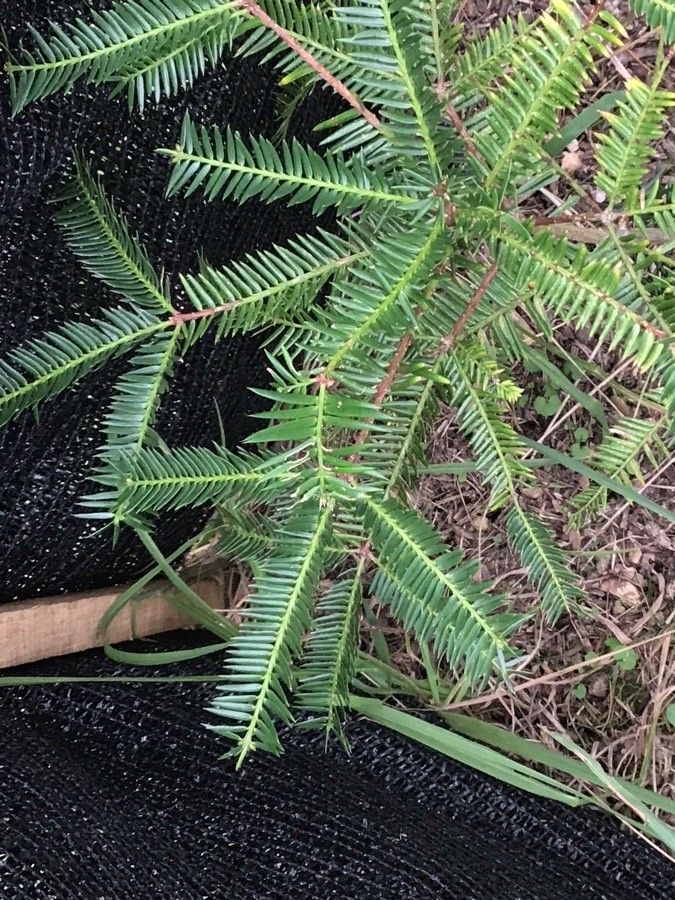
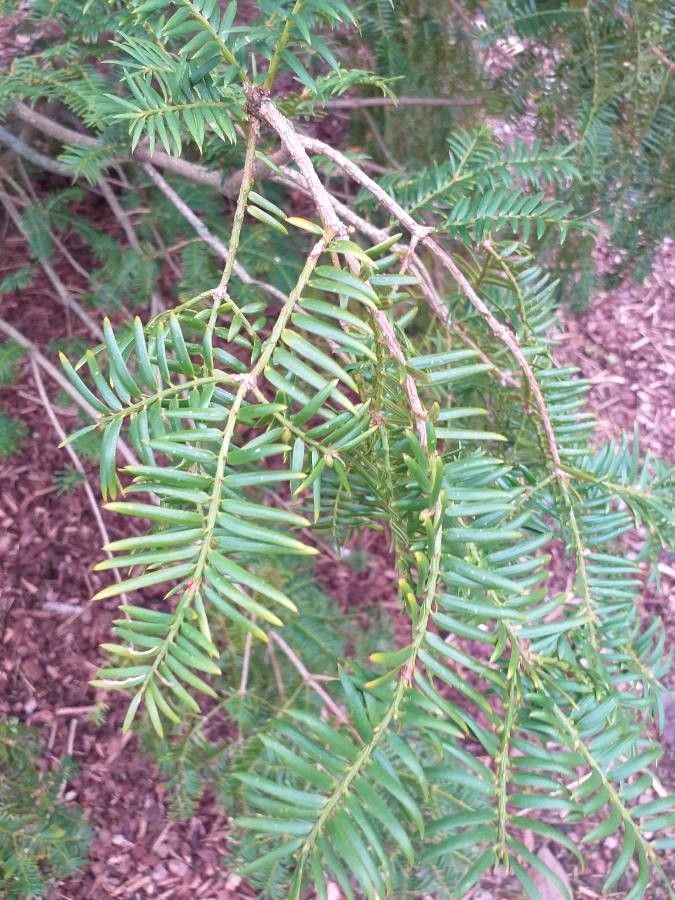
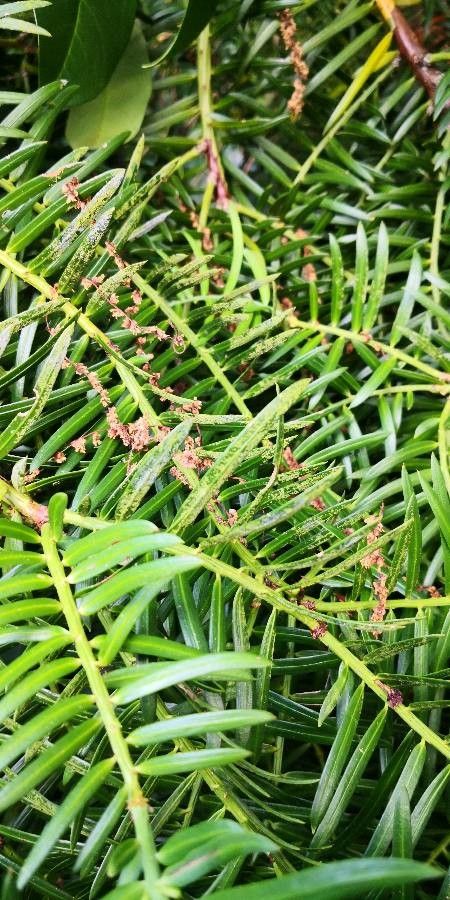
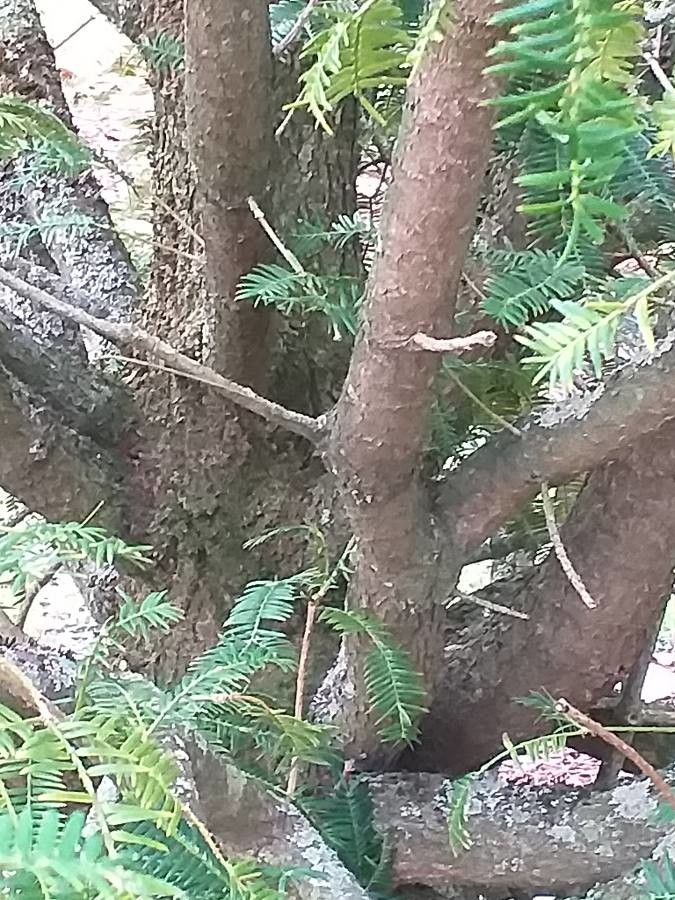
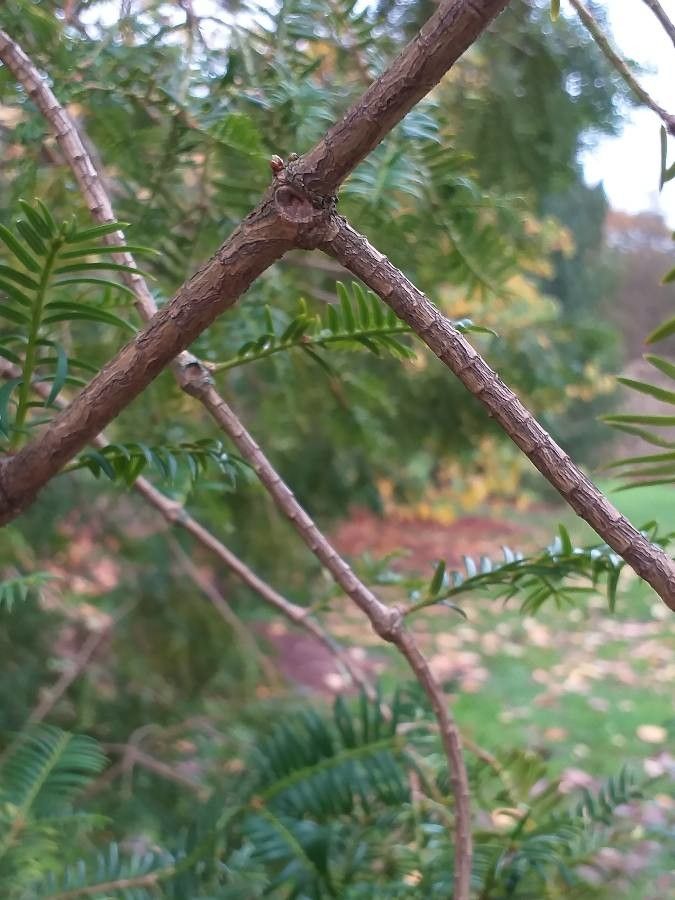
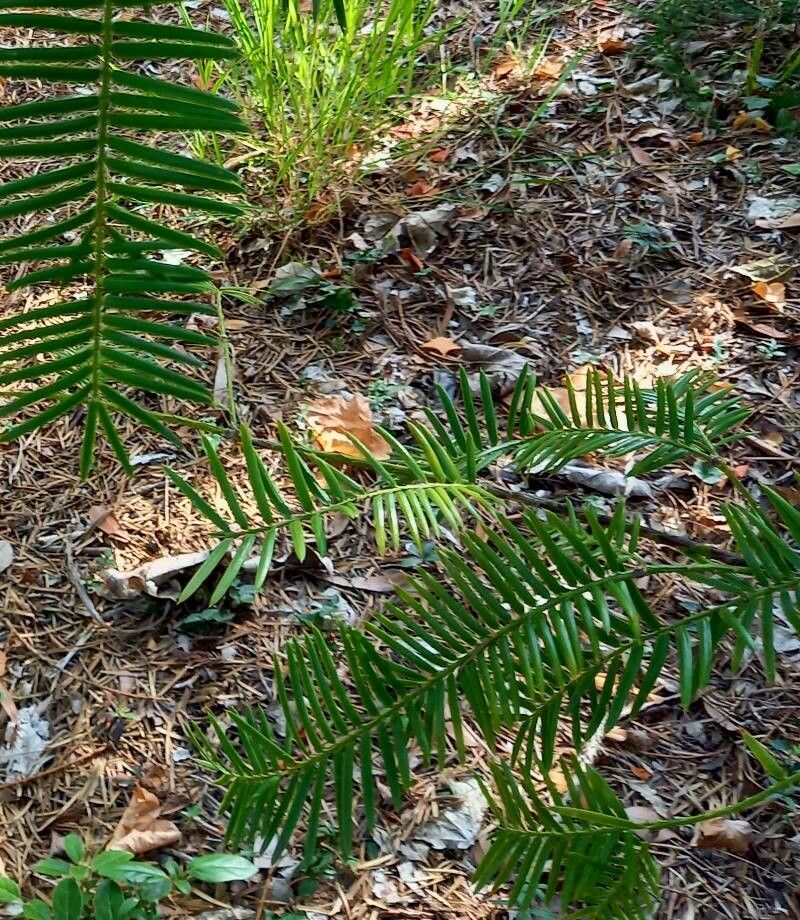
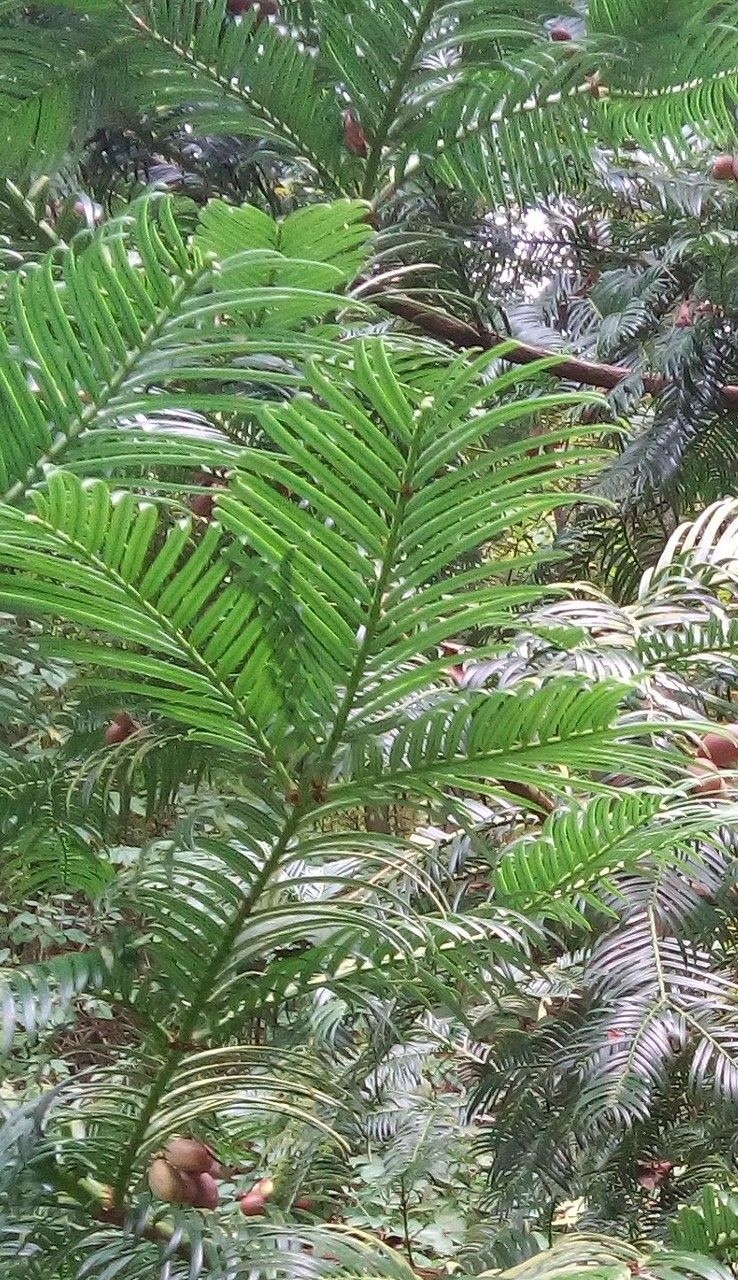
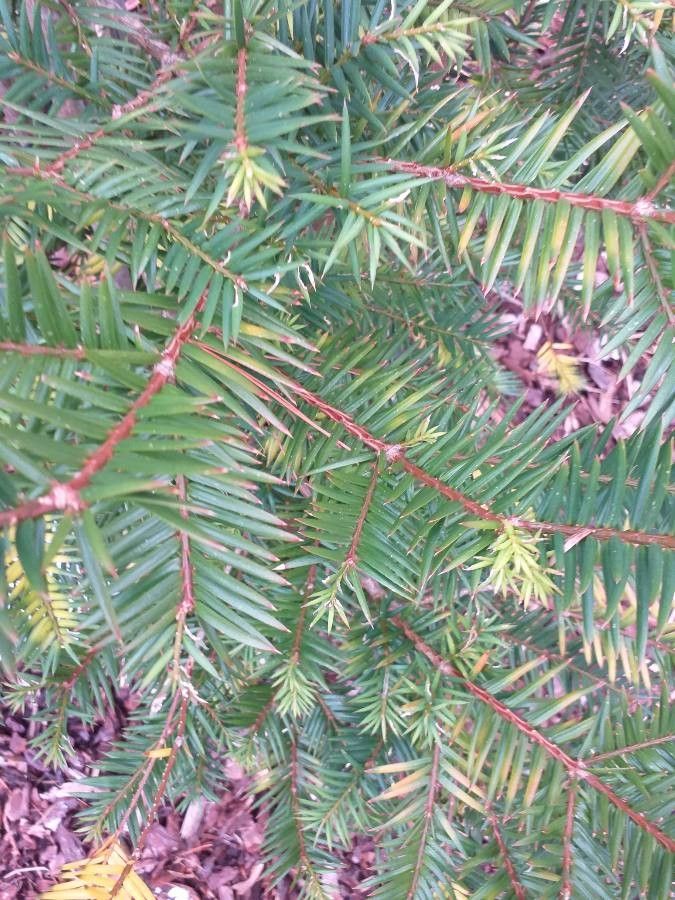
Torreya grandis (Chinese: 香榧(pinyin=Xiāngfěi) is a species of conifer in either the family Taxaceae, or Cephalotaxaceae. T. grandis is a large tree that can attain height of 25 metres (82 ft), and possibly as high as 39 metres (128 ft). T. grandis is endemic to eastern and south-eastern China; it is found in the coastal provinces Fujian, Zhejiang, and Jiangsu, as well as in Anhui, Guizhou, Hunan, and Jiangxi inland. Its natural habitat are mountains and open valleys, often by streams, between 200–1,400 metres (660–4,590 ft) ASL. One common name is Chinese nutmeg yew (although it is not related to nutmeg, nor the true yews belonging to the genus Taxus), which refers to its edible seeds that superficially resemble nutmeg (Chinese: 榧榧) and its yew-like foliage. The seeds can be pressed for oil. The wood is used in construction and furniture, as well as in the production of high-quality go boards. T. grandis is used as an ornamental tree in Europe and North America.Although known and utilized by the Chinese for centuries, the first European to discover Torreya grandis was Robert Fortune, who was hiking in the mountains of northeast Zhejiang in search of seeds, particularly those of "golden pine-tree" (Larix kaempferi). Encountering first two young cultivated trees, he managed to get guided to a valley with mature trees and purchased the seeds. The seeds brought to England could be grown successfully there.Torreya grandis cv. Merrillii is a cultivar with a history going back to Tang Dynasty. It is believed to originate from the mountains of NE Zhejiang.
The Chinese nutmeg yew is resistant to disease and typically not susceptible to illnesses. As for care, this plant is fairly low-maintenance. When grown outdoors it needs little watering, and larger specimens usually don't require pruning. Smaller plants, however, should be pruned after flowering. Chinese nutmeg yewt is suitable for anyone with an outdoor area, such as a garden or deck, and does not need extensive care experience.
How to keep Torreya Grandis.
Light
Chinese nutmeg yew is native to habitats like forest understories and rocky areas, where it grows under natural shade. It prefers partial sun but can tolerate full sun or full shade, showing its hardy and adaptable nature.
Water
The Chinese nutmeg yew thrives in high humidity and moist environments, although it can tolerate moderate drought. For optimal health, it should be watered every 2-3 weeks. As an evergreen, the Chinese nutmeg yew retains its leaves throughout the year, requiring consistent moisture levels to support continuous growth.
Temperature
Chinese nutmeg yew is highly adaptable to different climate conditions, whether in hot summers or cold winters. It nevertheless has a preferred temperature range for growth. When temperatures become too high, the plant can experience heat and humidity stress that may cause it to die. In locations where temperatures approach the lower limit of its cold tolerance, providing insulation to protect the plant is important.
Fertilizer
The Chinese nutmeg yew has particular nutrient needs and does not require heavy fertilization. Fertilizing in spring is best for promoting optimal growth. Supplying nutrients enhances its health, increases its resistance to pests and diseases, and helps sustain its long lifespan.
Pruning
The Chinese nutmeg yew is an evergreen conifer cherished for its attractive foliage. To maintain its health and appearance, prune in early to late winter by removing dead branches and thinning the canopy to improve air circulation. Avoid heavy pruning during the spring and summer. Using the right pruning techniques can enhance both the tree's beauty and growth. For optimal results, consult horticultural guides for best practices.
Botanical profile.
- Plant Type
- Tree
- Life Cycle
- Perennial
- Genus
- Torreya
- Family
- Taxaceae
- Hardiness Zone
- 7-10
- Mature Height
- 24.99 m to 39.01 m
- Mature Spread
- 7.62 m
- Leaf Color
- Dark Green
- Leaf Type
- Evergreen
- Flower Color
- White
- Bloom Time
- Mid spring, Late spring
- Planting Time
- Spring, Summer
- Harvest Time
- Fall
- Native Area
- China
Other names.
Reader questions.
What is the Chinese nutmeg yew?
The Chinese nutmeg yew, known botanically as Torreya grandis, is a plant species. Unfortunately, there are no essential information, symptoms related to the plant, or additional details provided in the given data.