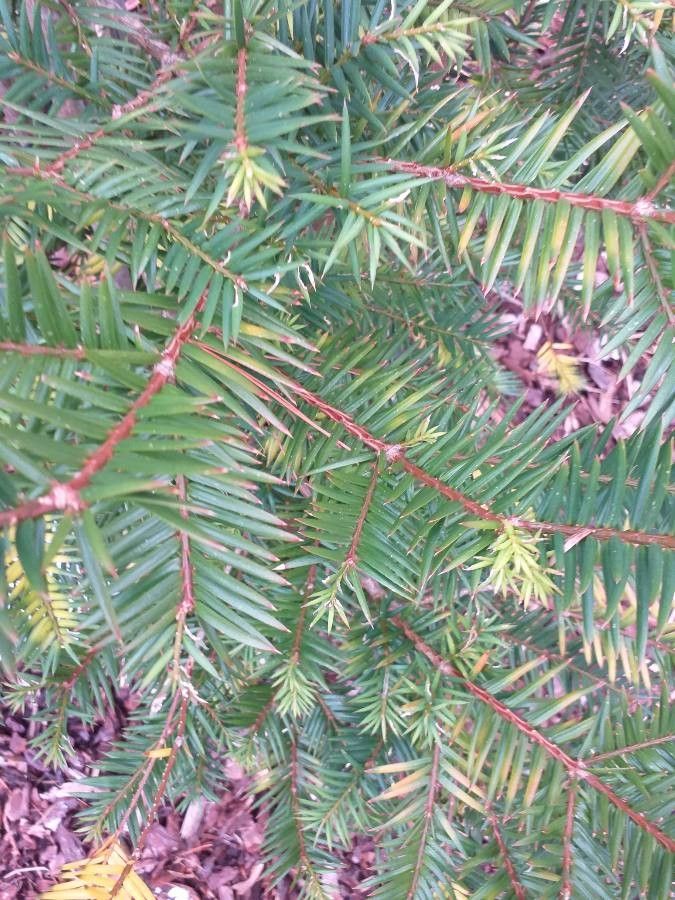
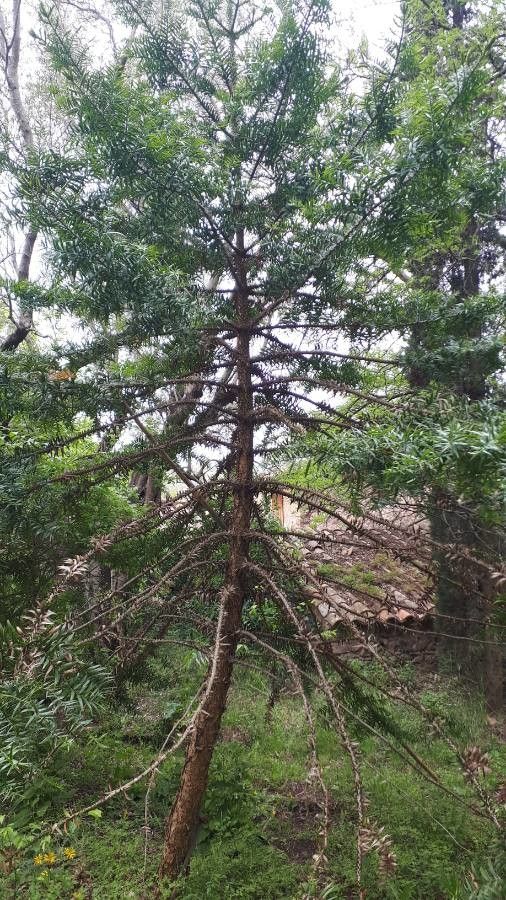
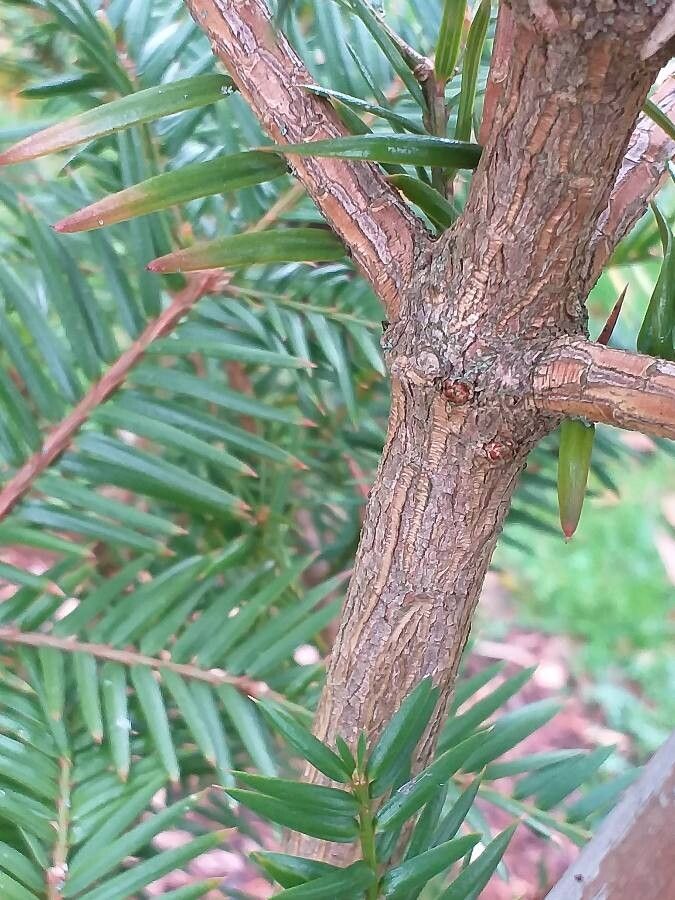
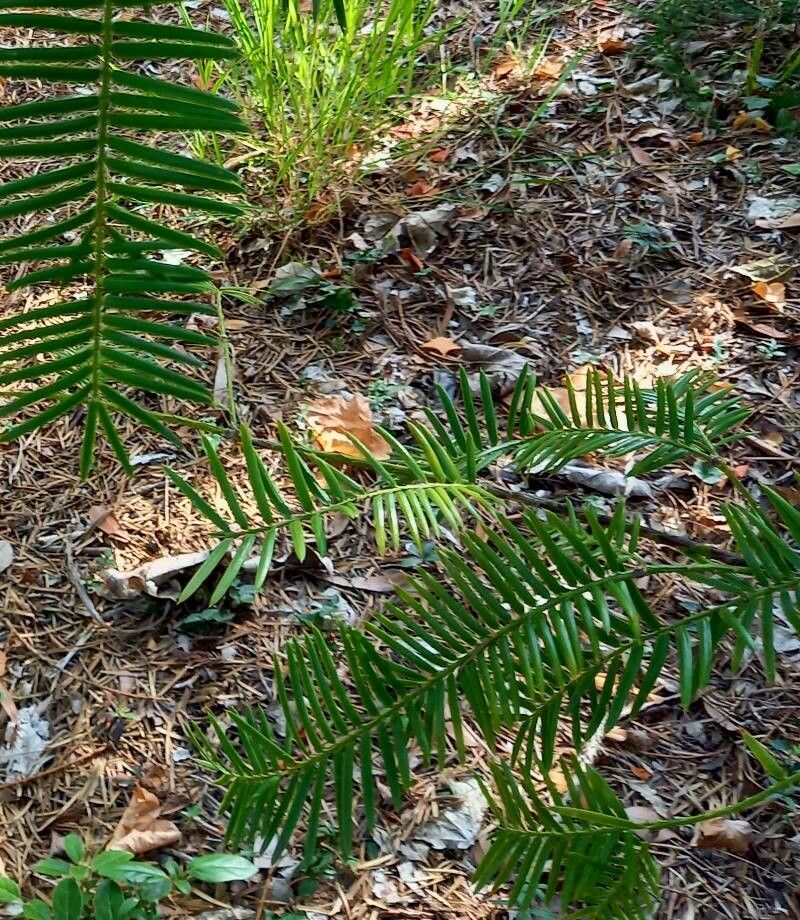
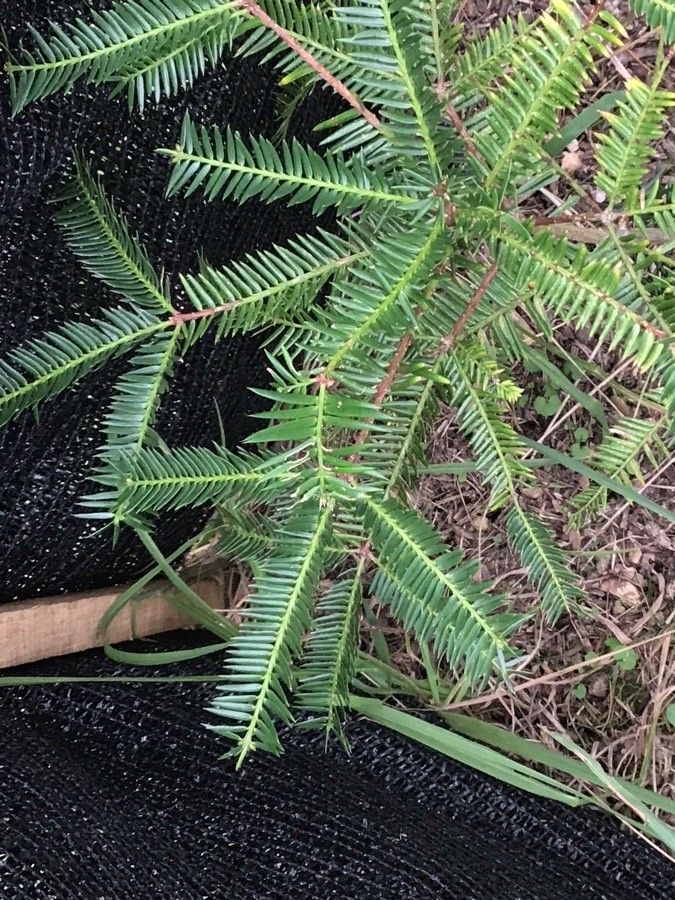
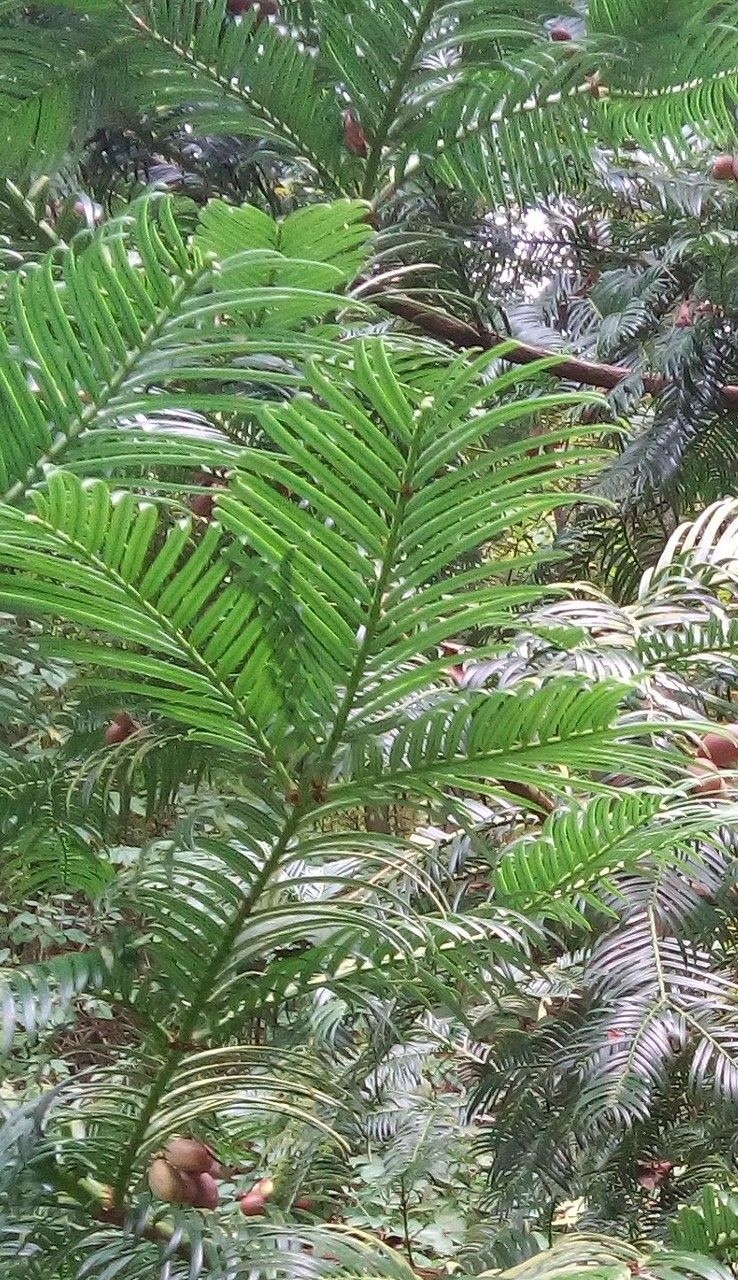
Torreya taxifolia, widely known as the Florida Torreya or gopher wood, is a rare and endangered conifer native to the southeastern United States. This species falls under the Taxaceae family and can reach heights of up to 50 feet, with a trunk diameter of up to 2 feet. The tree boasts a narrow crown and dense foliage composed of dark green needles about 1 inch long. The Florida Torreya is found in scattered populations in Georgia and Florida, mainly along riverbanks and the steep slopes of ravines. The species has suffered significantly due to habitat loss from logging, land development, fungal blight, climate change, and other factors. Historically, the tree's wood was highly valued for its durability. However, due to its endangered status, it is now legally protected. Conservation efforts, including propagation programs, are underway to increase the population through seed collection from the remaining trees. Overall, Torreya taxifolia plays an essential ecological role. It provides habitat for various wildlife species, such as birds and mammals, and contributes to maintaining healthy ecosystems through nutrient cycling processes.
Florida nutmeg is resistant to disease and, in general, does not tend to be affected by illnesses. With regard to care, this plant is fairly low-maintenance. When grown outdoors it needs only minimal watering, and larger plants usually do not require pruning. Smaller plants, however, should be pruned after they have finished blooming. Florida nutmeg is a good choice for anyone who has an outdoor area, such as a garden or deck, and it does not require extensive plant-care experience.
How to keep Torreya Taxifolia.
Light
Florida nutmeg naturally occurs in habitats such as forest understories or rocky sites, where it is subject to natural shade. It prefers partial sun but can tolerate both full sun and full shade, demonstrating its versatile and hardy nature.
Temperature
Florida nutmeg is highly adaptable to a range of climate conditions, whether facing very hot summers or cold winters. Still, it has an ideal temperature range for growth. If temperatures become too high, the plant is vulnerable to heat and humidity stress, which can cause it to die. In areas where temperatures approach the lower limit of its cold tolerance, it is important to provide insulation to protect the plant.
Fertilizer
Florida nutmeg has specific nutrient needs and does not require heavy fertilization. Spring is the best time to fertilize for optimum growth. Providing nutrients enhances its health, increases its resistance to pests and diseases, and supports a long lifespan.
Pruning
Florida nutmeg has needle-like leaves and grows slowly, necessitating careful pruning in early spring. Lightly remove any dead or crossing branches to minimize stress, improve air circulation, and maintain its natural shape for optimal health and appearance.
Botanical profile.
- Plant Type
- Tree
- Life Cycle
- Perennial
- Genus
- Torreya
- Family
- Taxaceae
- Hardiness Zone
- 6-9
- Mature Height
- 3.66 m to 10.97 m
- Mature Spread
- 3.05 m to 6.1 m
- Leaf Color
- Dark Green
- Leaf Type
- Evergreen
- Bloom Time
- Mid spring, Late spring
- Planting Time
- Spring, Summer, Autumn
- Harvest Time
- Late summer, Early fall, Mid fall
Other names.