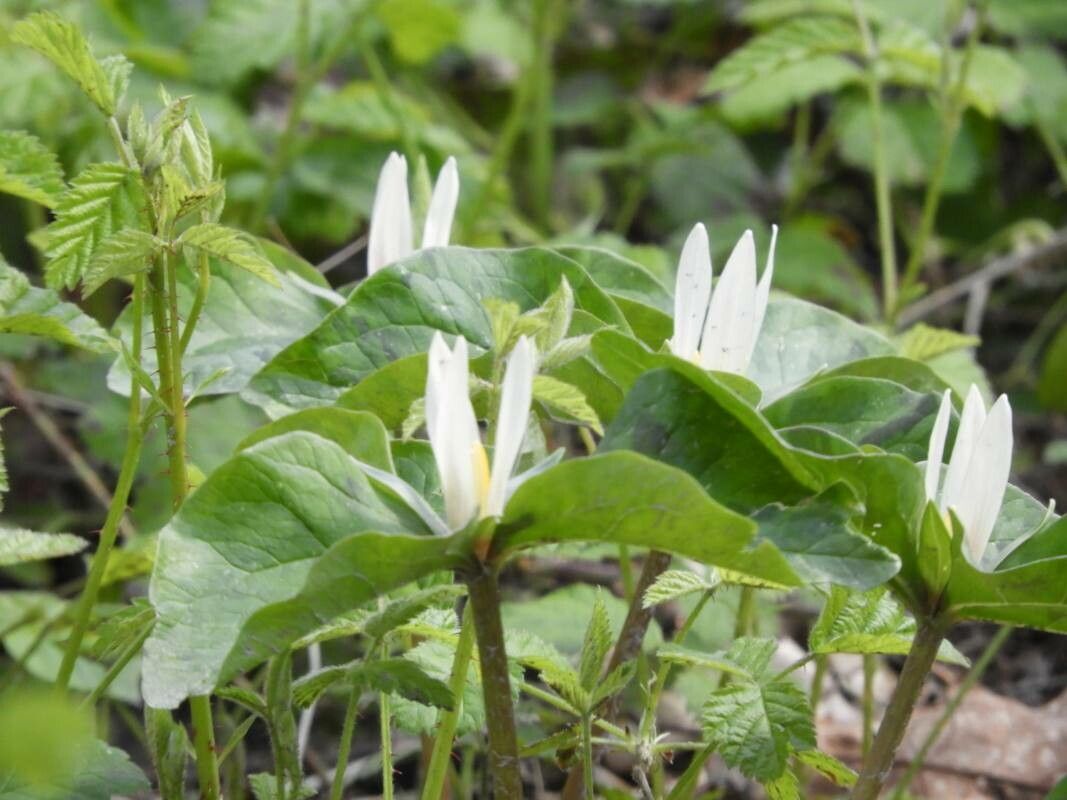
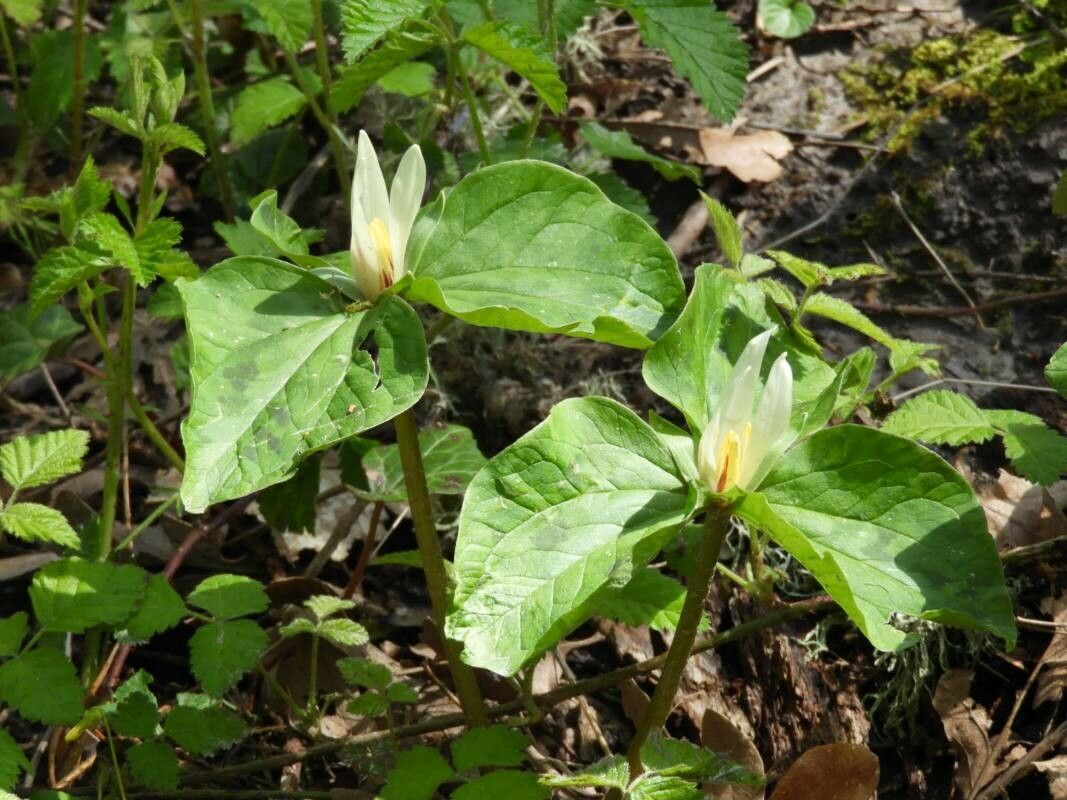
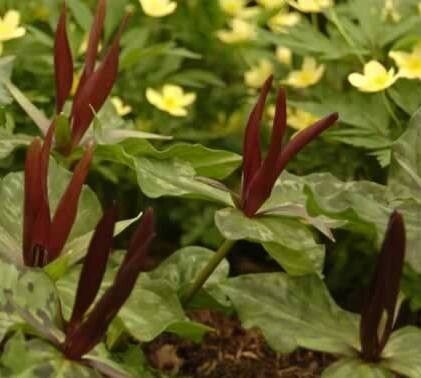
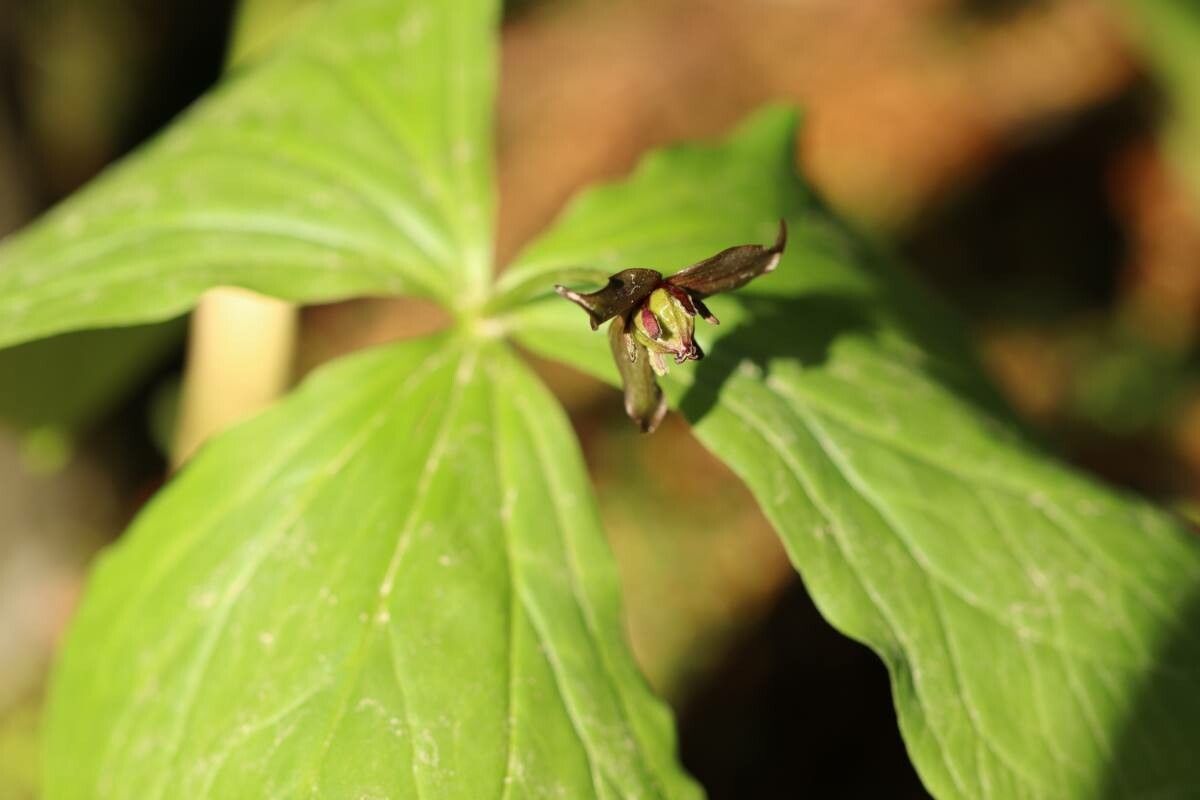
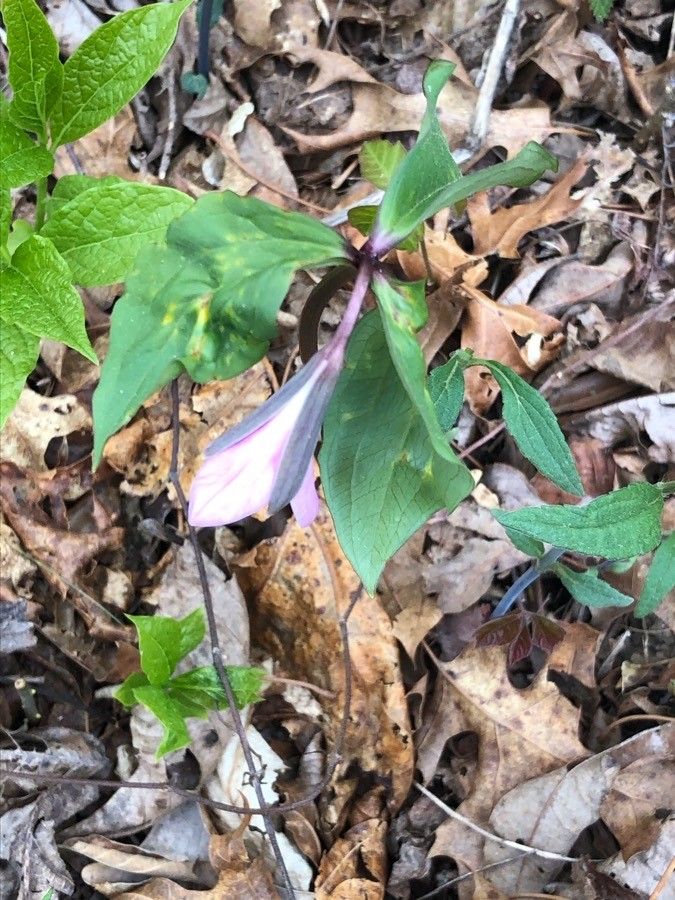
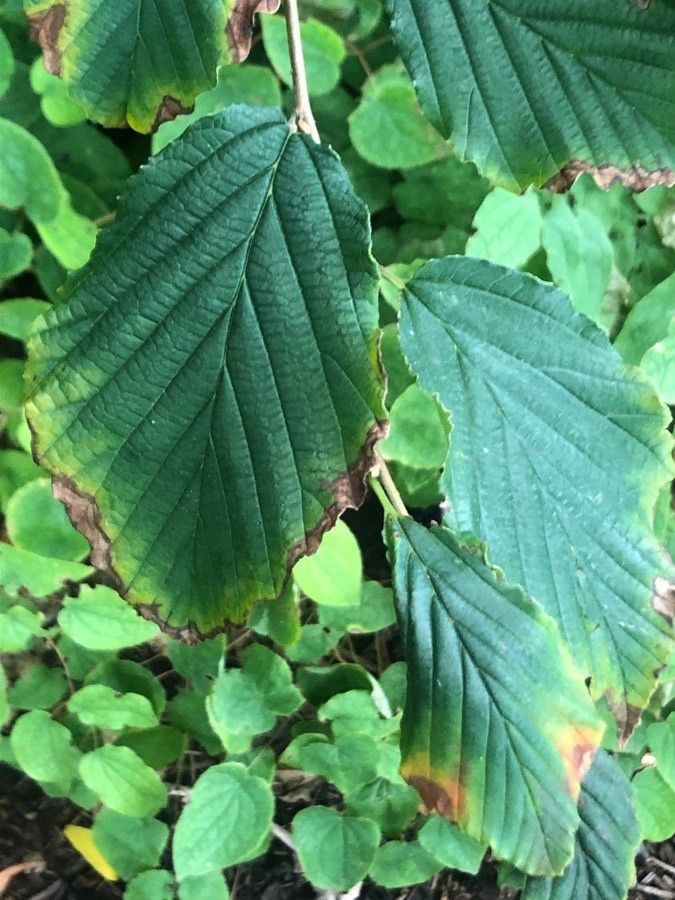
Trillium albidum, commonly known as the white trillium, is a perennial herbaceous plant belonging to the Melanthiaceae family. Native to eastern North America, it thrives in deciduous forests and woodlands. This plant reaches up to 30 cm in height and features a single stem topped with three large leaves arranged in a whorl.
The white trillium blooms from April to May, showcasing large, showy flowers that are pure white. Each flower consists of three petals and three sepals, which are similar in appearance, giving the flower a symmetrical look. At the center, six stamens with yellow anthers can be found.
Trillium albidum prefers moist soil but can tolerate some dryness once established. It is shade-tolerant but tends to bloom more profusely in partial shade or filtered sunlight.
Historically, Native Americans have used Trillium albidum for its anti-inflammatory properties and as an aid during childbirth. However, it's important to note that consuming any part of this plant can be toxic to both humans and animals.
Overall, Trillium albidum is an attractive woodland wildflower known for its striking beauty during the spring bloom season. It is popular among gardeners looking to incorporate native plants into their gardens or natural landscapes, providing habitat benefits for pollinators such as bees and butterflies.
Giant white wakerobin is fairly disease-resistant and generally not prone to illnesses. However, it can be vulnerable to pests and diseases present in its environment. These infections are generally mild. Regarding care, this plant requires moderate maintenance. It should be pruned regularly to keep a neat appearance and encourage healthy growth. Fertilizing can also help stimulate flowering. Giant white wakerobin is appropriate for anyone with outdoor space, such as a garden or patio, and does not demand extensive care experience. It may need more attention when grown indoors.
How to keep Trillium Albidum.
Light
In its native range, the giant white wakerobin is adapted to intermittent sunlight, taking up energy mainly during periods of low solar intensity. It thrives in these circumstances and has evolved to persist even in heavily shaded locations. Nevertheless, too much shade or too much exposure can impede its best growth.
Water
The giant white wakerobin is native to moist, shady woodlands and thrives in consistently damp soil. Once the plant is established, it can withstand some drought. However, it is important to water it weekly during its growing season to encourage strong growth and flowering, thereby replicating the moisture levels of its natural habitat.
Temperature
Giant white wakerobin is native to environments with controlled temperatures, preferring a range of 41 to 95 °F (5 to 35 ℃). It tolerates a wide variety of climates, so seasonal temperature adjustments are generally not required.
Fertilizer
The best time to fertilize a Giant white wakerobin is in early spring, as it comes out of dormancy and begins active growth. Fertilization supplies essential nutrients needed for healthy growth. Although Giant white wakerobin has fairly low fertilizer requirements, applying fertilizer annually can improve its survival and encourage better, longer-lasting flowers.
Pruning
The Giant White Wakerobin is known for its striking white flowers and distinctive three-leaved growth pattern. It is best to perform minimal pruning in early spring to remove any dead foliage. This enhances air circulation and promotes more vigorous blooms. Be careful not to cut any live stems. For detailed guidance specific to your climate, consult local resources.
Botanical profile.
- Plant Type
- Herb
- Life Cycle
- Perennial
- Genus
- Trillium
- Family
- Melanthiaceae
- Hardiness Zone
- 5-9
- Mature Height
- 20 cm to 76 cm
- Mature Spread
- 49 cm
- Leaf Color
- Green
- Leaf Type
- Deciduous
- Flower Color
- White
- Flower Size
- 4.06 cm to 7.62 cm
- Bloom Time
- Early spring, Mid spring
- Planting Time
- Spring, Summer, Autumn
- Harvest Time
- Early summer, Mid summer
Other names.
Reader questions.
What is the optimal environment for Giant white wakerobin?
Giant white wakerobin, scientifically known as Trillium albidum, is native to environments where temperature regulation is essential. It prefers temperature ranges between 41 to 95 °F (5 to 35 °C), indicating a broad climate tolerance. As it possesses strong resistance to cold, it ordinarily does not require special frost protection measures during the winter. However, in extremely cold conditions where temperatures might plummet below -25°C, precautions such as covering the plant with soil or straw are advisable. Additionally, it is beneficial to water the plant abundantly just before the onset of the first freeze in autumn to ensure the soil remains moist, thus helping the plant to avoid drought and water scarcity during the harsh winter and early spring months.
How does low temperature affect Giant white wakerobin and what should be done?
Giant white wakerobin thrives in temperatures above 5°C and exhibits strong cold tolerance. However, during winter, it's crucial to ensure the temperature remains above -20°C to avoid adverse effects. When temperatures drop below -25°C, the plant might not show immediate damage during the winter, but there could be a noticeable decrease in sprouting or even a lack of sprouting come spring. A solution for addressing this issue in spring is to remove any parts of the plant that have failed to sprout, allowing for healthier growth.
How does high temperature affect Giant white wakerobin and what is the remedy?
During the summer, it's important to ensure that the Giant white wakerobin isn't exposed to temperatures exceeding 35°C. Exposure to temperatures above 38°C can cause the leaves to lighten in color, become curled, and susceptible to sunburn. In severe cases, the plant might wilt and dry out entirely. To mitigate these effects, trimming away sunburned and dried parts is recommended. Moving the plant to a shaded location or utilizing a shade cloth to protect it from the midday and afternoon sun can be beneficial. Additionally, watering the plant during the cooler morning and evening hours helps to maintain soil moisture, which is crucial for the plant's health during hot periods.