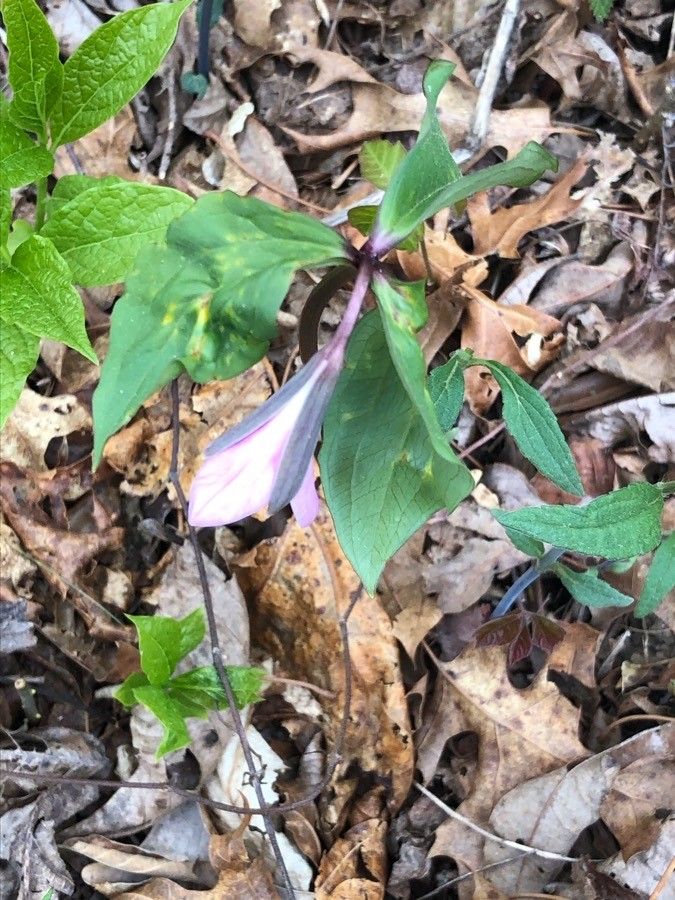
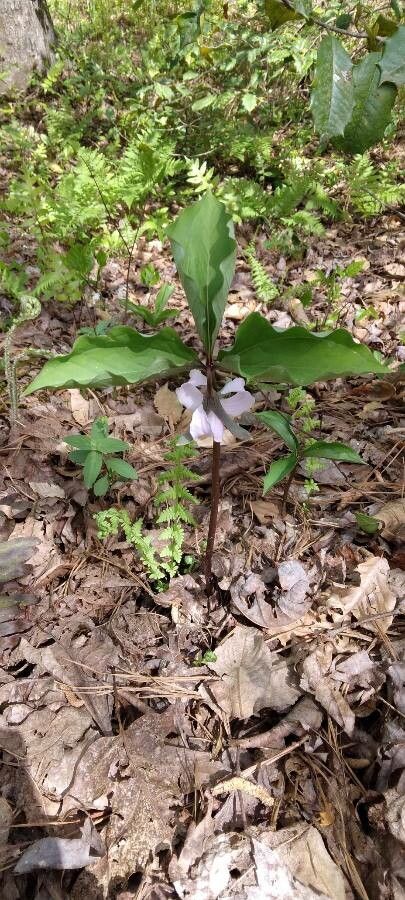
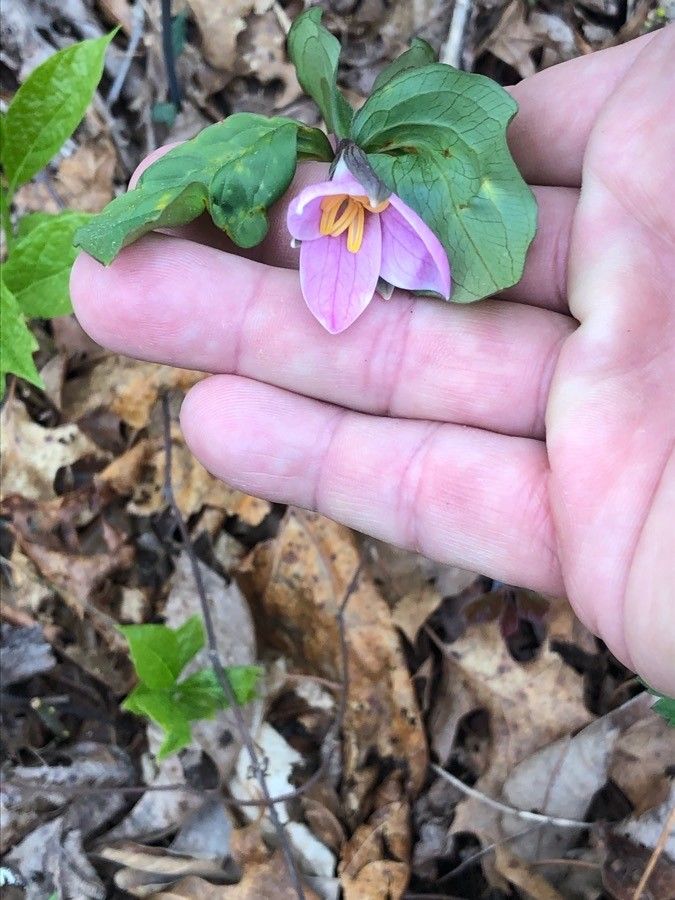
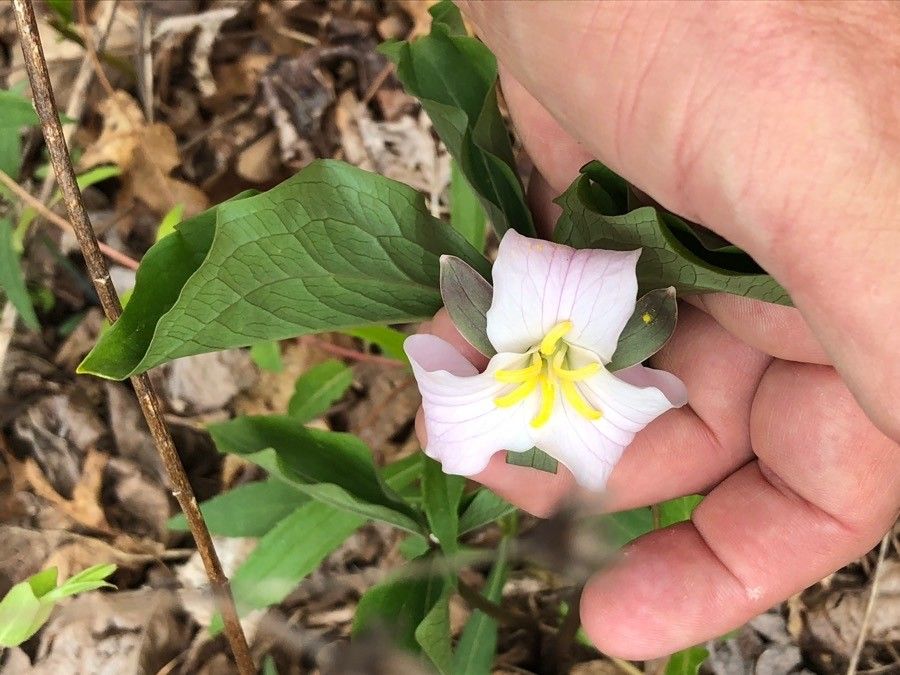
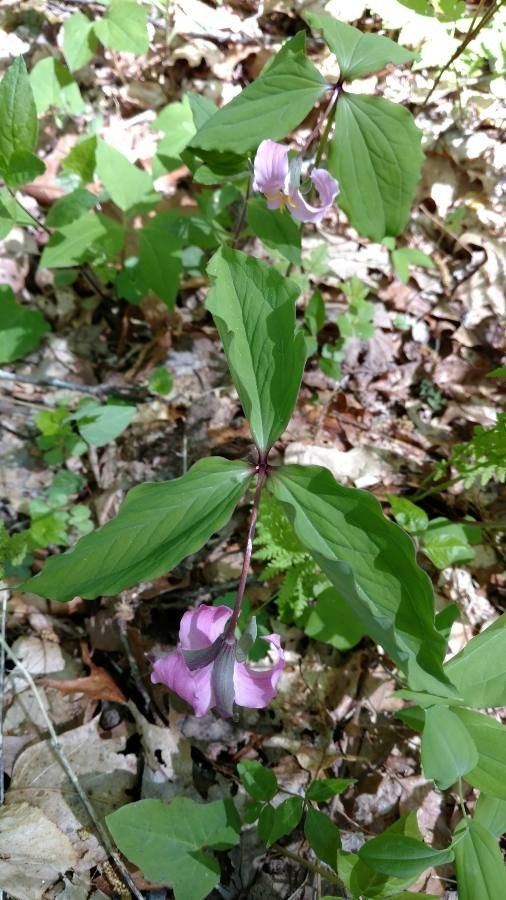
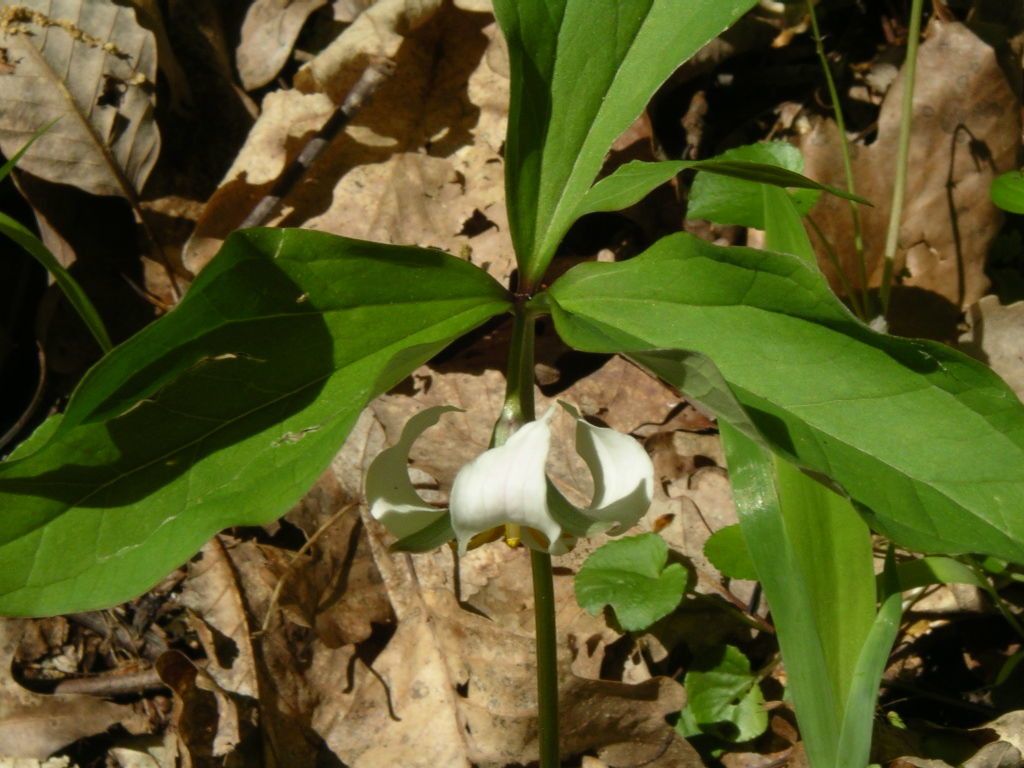
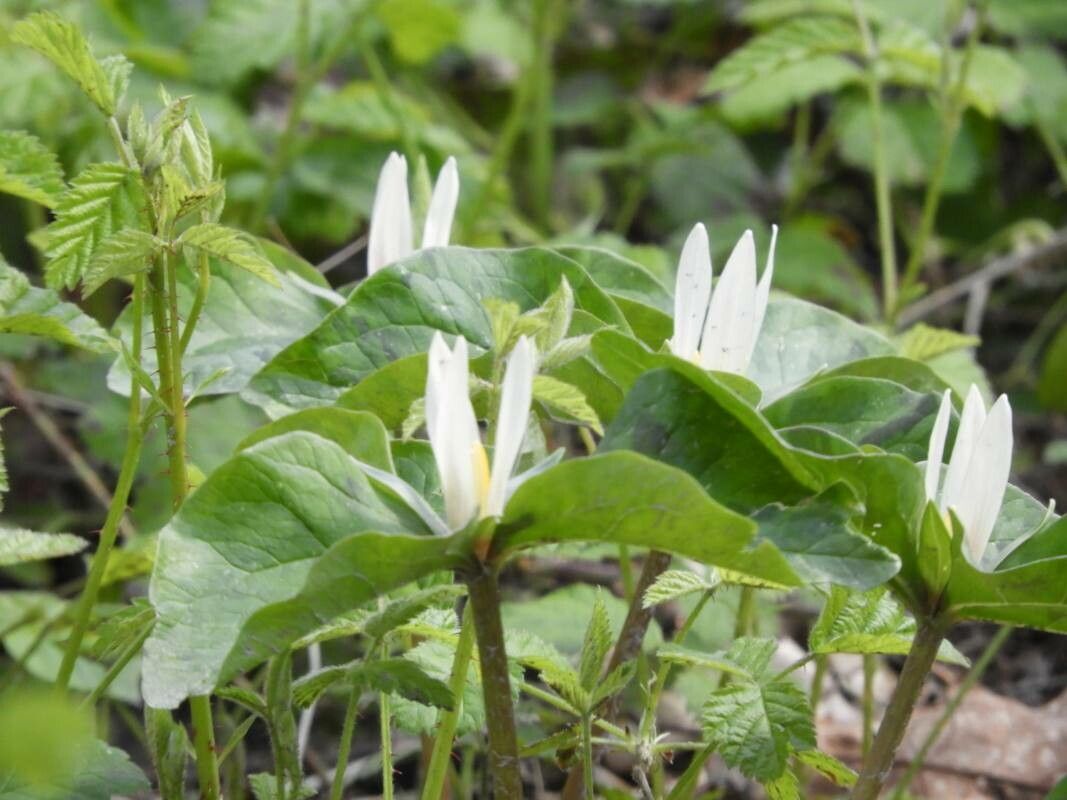
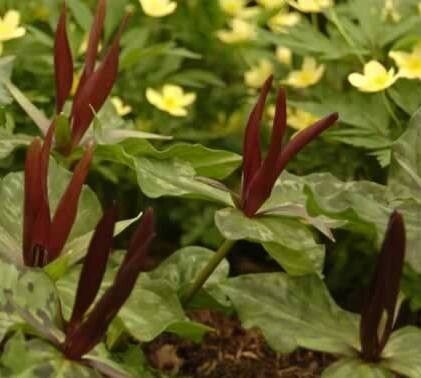
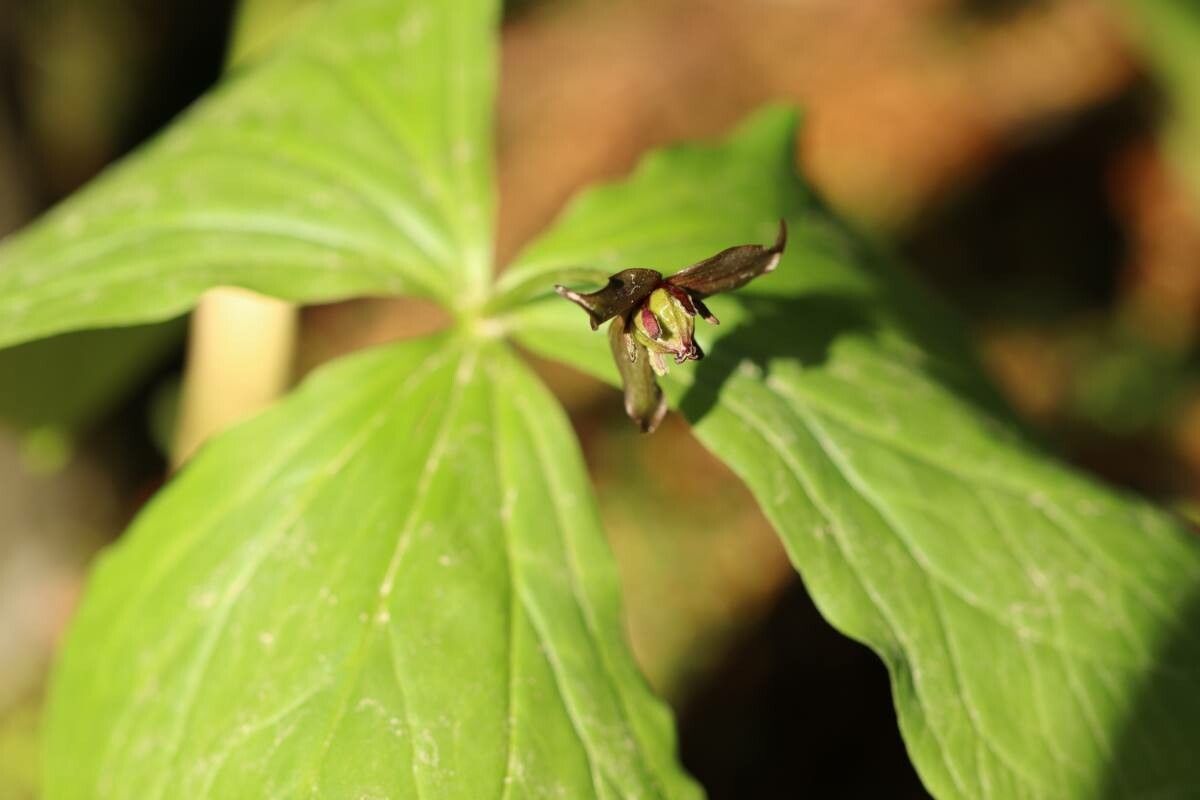
Trillium catesbaei, commonly known as Catesby's trillium, is a perennial herbaceous plant that belongs to the Melanthiaceae family. Native to the southeastern United States, it thrives in various habitats such as woodlands, slopes, and ravines.
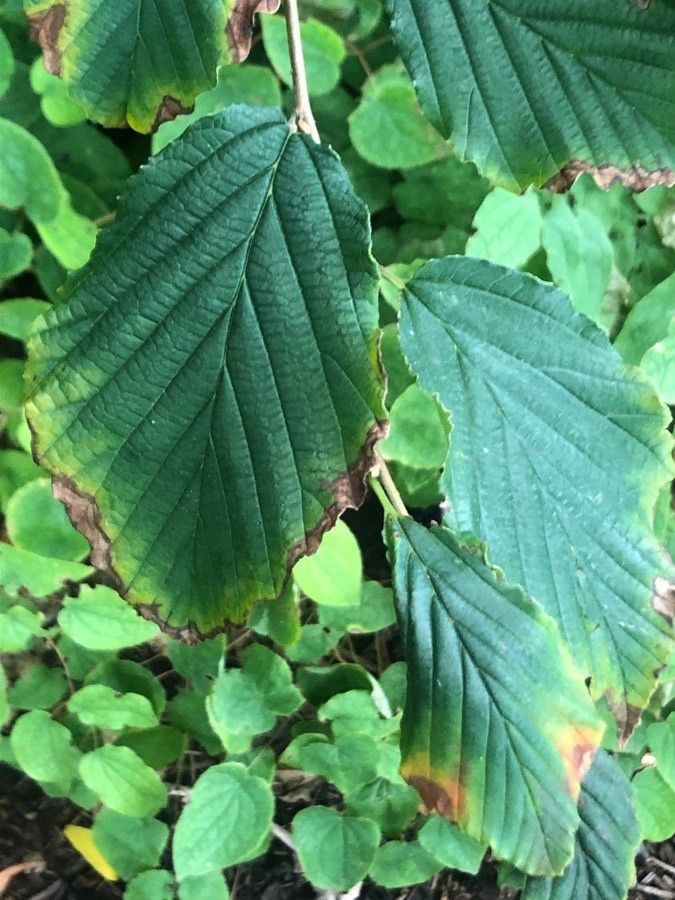
Typically, the plant grows up to 30 cm in height and features three large leaves arranged in a whorl at the top of the stem. These oval-shaped leaves have pointed tips and prominent veins running through them.
The flowers of Trillium catesbaei are distinctive, presenting three white petals that turn pinkish-purple with age. These petals surround a central yellow-green ovary that matures into an edible fruit.
Trillium catesbaei is crucial for conservation efforts due to its declining population, which is affected by habitat loss and over-collection for ornamental purposes. Additionally, it holds cultural significance among Native American tribes who have used it for medicinal purposes.
Overall, Trillium catesbaei is a fascinating plant species with unique characteristics, making it both ecologically important and culturally significant.
Bashful Wakerobin has strong disease resistance and is typically not prone to illnesses. Still, it can be vulnerable to pests and diseases found in its environment. Such infections are generally mild. Regarding care, this plant is moderately demanding. It should be pruned regularly to preserve a neat appearance and encourage healthy growth. Applying fertilizer can also help stimulate flowering. Bashful Wakerobin is appropriate for anyone with outdoor space, like a garden or patio, and does not demand extensive gardening experience. It may need extra attention when kept indoors.
How to keep Trillium Catesbaei.
Light
Bashful Wakerobin does best with moderate sun exposure but can also do well with only minimal light. Its original habitat consisted of places where filtered sunlight passed through the woodland canopy. Excessive light can be damaging, while too little light may impede its strong growth and flowering.
Water
The Bashful Wakerobin thrives in moist, shaded woodland environments. It prefers consistently moist soil but can tolerate short periods of dryness. To care for this plant, water it every two weeks and provide it with dappled sunlight when outdoors. This setup mimics its natural habitat, where humidity and rain help maintain the necessary moisture levels.
Temperature
Bashful Wakerobin comes from regions with temperate climates and does best in temperatures of 59 to 95 °F (15 to 35 ℃). Extreme cold or heat can hinder its growth. When temperatures are too high or too low, it is advisable to protect the plant to help it survive.
Fertilizer
For Bashful Wakerobin, the primary time to apply fertilizer is in early spring when the flowers are beginning to form. The proper fertilizer promotes improved blooms and helps Bashful Wakerobin produce attractive flowers. Fertilizing in early spring ensures excellent flowering during the season and supplies energy for dormant growth phases.
Pruning
The Bashful Wakerobin is known for its nodding pink flowers and whorled leaves. Light pruning in early spring can improve air circulation and promote growth, but be careful not to prune too heavily, as it may stress the plant. Regular maintenance is essential to prevent fungal issues and enhance blooming, which ultimately contributes to the plant's beauty and longevity.
Botanical profile.
- Plant Type
- Herb
- Life Cycle
- Perennial
- Genus
- Trillium
- Family
- Melanthiaceae
- Hardiness Zone
- 8-9
- Mature Height
- 20 cm to 46 cm
- Mature Spread
- 15 cm to 30 cm
- Leaf Color
- Green, Blue, Red
- Leaf Type
- Deciduous
- Flower Color
- Pink
- Flower Size
- 2.54 cm to 7.62 cm
- Bloom Time
- Early spring, Mid spring
- Planting Time
- Spring, Summer
- Harvest Time
- Early summer, Mid summer
Other names.
Reader questions.
How should I water my Bashful Wakerobin plant?
To properly care for the Bashful Wakerobin, it is recommended to use filtered water at room temperature. Tap water may contain harmful particles, so filtered water is preferable. The water should not be too cold, as the plant is accustomed to warmer climates and cold water can be a shock to its system. It is also advised to avoid overhead watering, as it can cause issues with the foliage. Instead, carefully water the soil with the filtered room temperature water until it is completely soaked. This method of watering helps to moisturize the roots and facilitate their growth and nutrient absorption.
Why should I put plant food on my Bashful Wakerobin?
The Bashful Wakerobin relies heavily on its leaves for structure, so fertilization is key to maintaining their appearance and function. By fertilizing properly, you can ensure consistent color and a healthy texture in the leaves. Fertilization also benefits the plant below the surface, promoting root growth and maintenance. This not only keeps the plant healthy in the present, but also improves its ability to absorb nutrients from the soil in the future.
What are the sunlight requirements for Bashful Wakerobin?
Bashful Wakerobin requires moderate exposure to sunlight but can also flourish in minimal illumination, thriving best with about 3-6 hours of sunlight for partial sun conditions and less than 3 hours for full shade. Its natural habitat favored filtered sunlight through woodland canopies. It's important to watch how sunlight moves through your garden to ensure the perfect balance of light and shade for the plant, as overexposure or underexposure could either harm the plant or hinder its growth and flowering.
What is the ideal temperature range for Bashful Wakerobin?
Bashful Wakerobin thrives in moderate climates, preferring temperatures between 59 to 95 °F (15 to 35 °C). It has a certain level of cold tolerance but may struggle and require protection in extreme cold or heat conditions. Ensuring the plant is kept within this temperature range can help maintain its health and growth.
What should I do if I give my Bashful Wakerobin too much or too little water?
Both overwatering and underwatering can harm your Bashful Wakerobin, but overwatering is more common. When this plant receives excess water, its stems and leaves wilt and turn yellow. Overwatering for a long time can cause diseases like root rot, mold, and mildew, which can be fatal. Underwatering is less likely but possible, resulting in brittle and brown leaves. It's important to recognize overwatering signs promptly. Some diseases from overwatering, such as root rot, may become irreversible if left untreated. Reduce watering immediately if you see early signs of overwatering. Check the soil quality; if it drains poorly, replace it with well-draining potting mix. If signs show your plant needs more water, increase the watering frequency until the signs subside.
When should I fertilize my Bashful Wakerobin?
If you grow Bashful Wakerobin outdoors, it will shoot out new growth in early spring. This indicates it's time to start fertilizing for the year. A single application of fertilizer in spring is usually enough for the plant to thrive. However, if you want to maximize its growth, you can fertilize it multiple times during spring and early summer. In this case, feed it roughly once every month to a month and a half.
How can artificial lighting benefit indoor plants like Bashful Wakerobin?
Indoor plants, including Bashful Wakerobin, require adequate lighting for optimal growth, particularly when natural sunlight is insufficient. Artificial lights, especially LED, are beneficial as they can be customized to provide specific wavelengths necessary for the plant's growth, mimicking natural sunlight. Full sun plants should have 30-50W/sq ft of artificial light, partial sun plants 20-30W/sq ft, and full shade plants 10-20W/sq ft. The light source should be placed 12-36 inches above the plant for 8-12 hours per day to promote healthier growth.
What should I do to protect Bashful Wakerobin in extreme temperatures?
For protection against extreme temperatures, it is advised to wrap the Bashful Wakerobin with materials such as plastic film, fabric, or other suitable materials when temperatures are expected to drop significantly. These protective measures should be removed once the weather warms up to avoid overheating the plant. Similarly, during excessively high temperatures, providing shade and keeping the soil moist by watering in the morning and evening can help manage the plant's stress.
How often do I need to water my Bashful Wakerobin?
If your Bashful Wakerobin plant is in a pot, you can determine if it needs water by checking the moisture level of the soil. Simply stick your finger into the soil and if the first two to three inches are dry, it's time to water. If you are growing your Bashful Wakerobin plant outdoors in the ground, you can use a similar method to test the soil. Once again, check if the first few inches of soil have dried out, indicating the need for watering. Typically, during the spring and early fall, you will need to water this plant about once a week using this method. However, during extremely hot weather, you may need to water it twice or more per week. It's worth noting that mature, well-established Bashful Wakerobin plants have a remarkable ability to withstand drought.
When is it not a good idea to use fertilizer on my Bashful Wakerobin?
During late fall and winter, your Bashful Wakerobin will become dormant and stop producing new growth. It's important to avoid fertilizing your Bashful Wakerobin during this time. In the spring and summer, if you still choose to fertilize, start reducing the amount as summer approaches since the growth rate of your Bashful Wakerobin will slow down. It's never a good idea to fertilize your Bashful Wakerobin when the weather is extremely hot or the soil is very dry. Fertilizing in these conditions can stress your Bashful Wakerobin and cause it to die prematurely.
What are the symptoms of light deficiency in Bashful Wakerobin?
Symptoms of light deficiency in Bashful Wakerobin include smaller new leaves, leggy or sparse growth, faster leaf drop, slower or no new growth, lighter-colored new leaves, and conditions like chlorosis (leaf yellowing), sunscald (damage from intense sunlight), leaf curling, wilting, and leaf scorching. These signs indicate the plant's struggle with its light environment, either through adaptation mechanisms or signs of stress from overexposure.
How does Bashful Wakerobin react to low temperatures?
Bashful Wakerobin has a moderate tolerance to low temperatures, performing best above its minimum tolerable growing temperature. If temperatures fall below this threshold, the plant's leaves may begin to droop, and in severe cases, wilt and fall off. To mitigate frost damage, trim off the frost-damaged parts and wrap the plant with non-woven fabric or cloth, and possibly construct a wind barrier to protect it from cold winds.