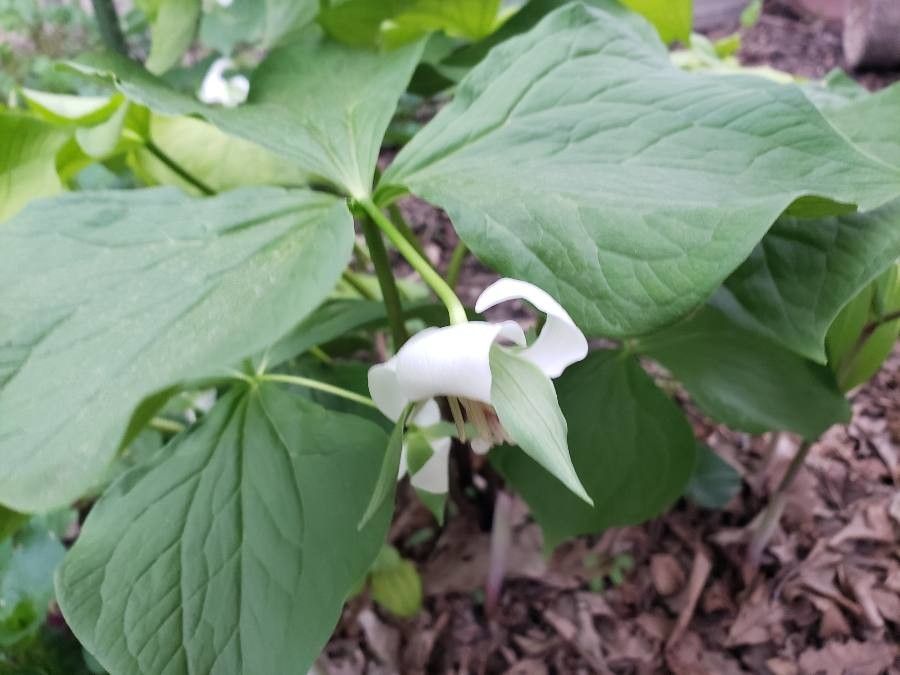
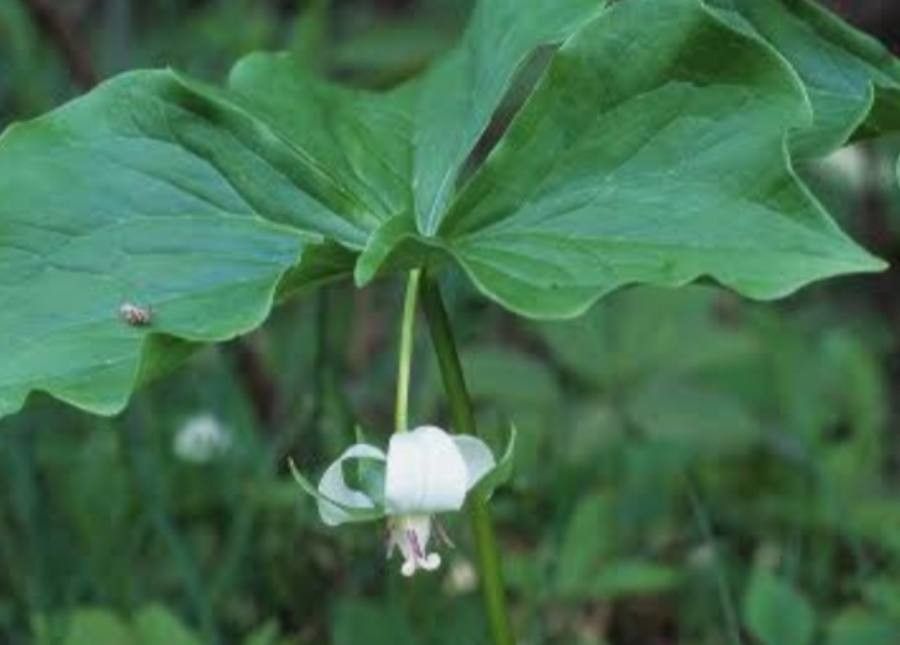
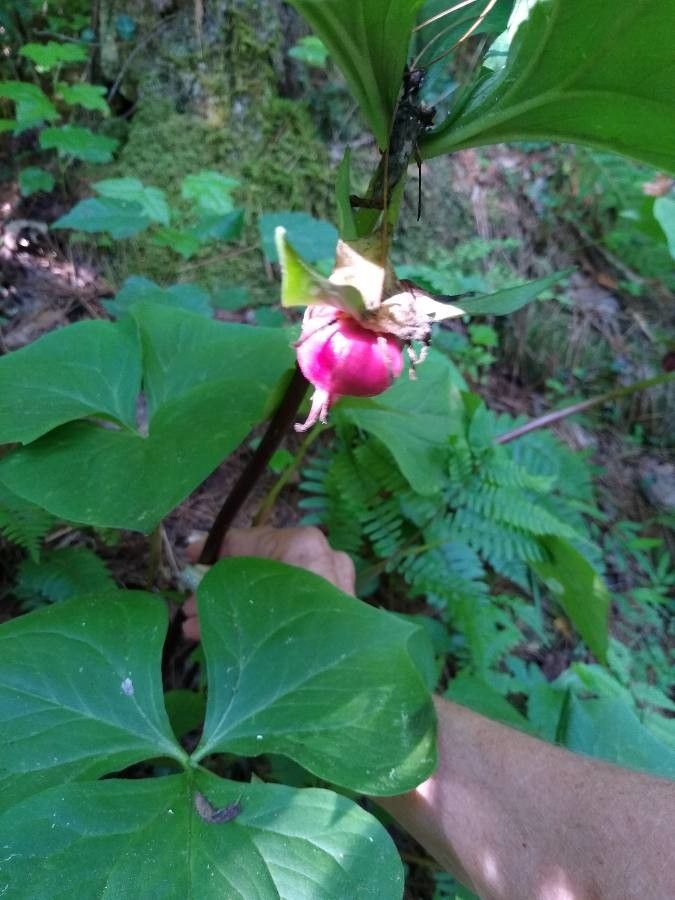
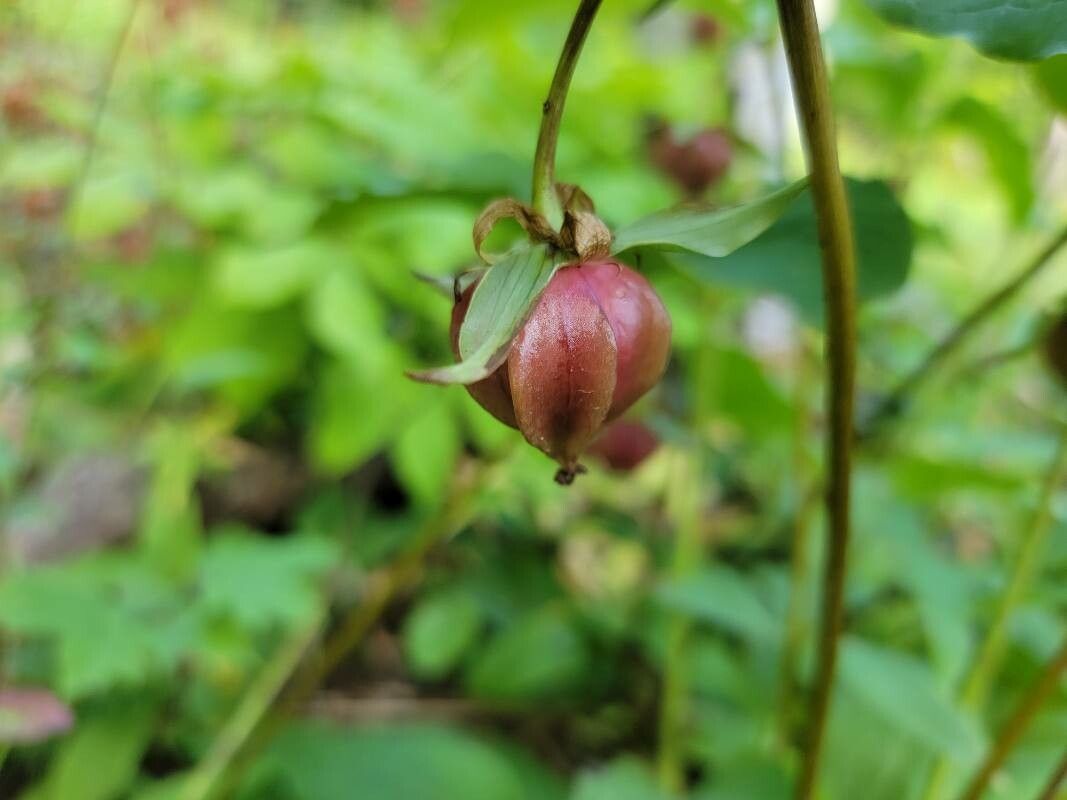
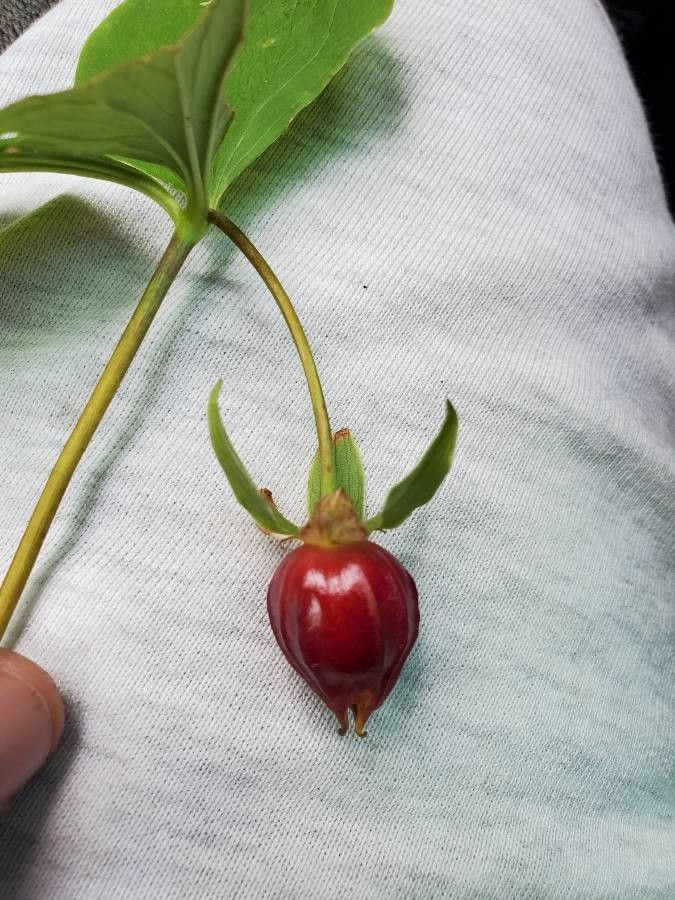
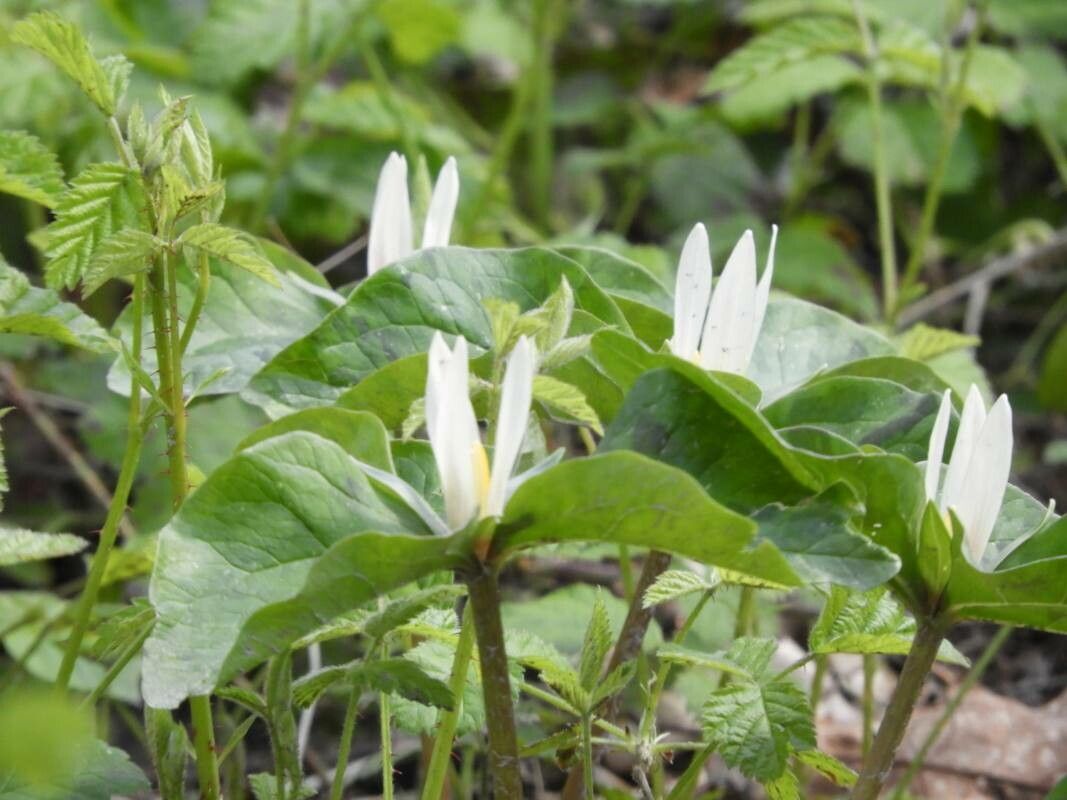
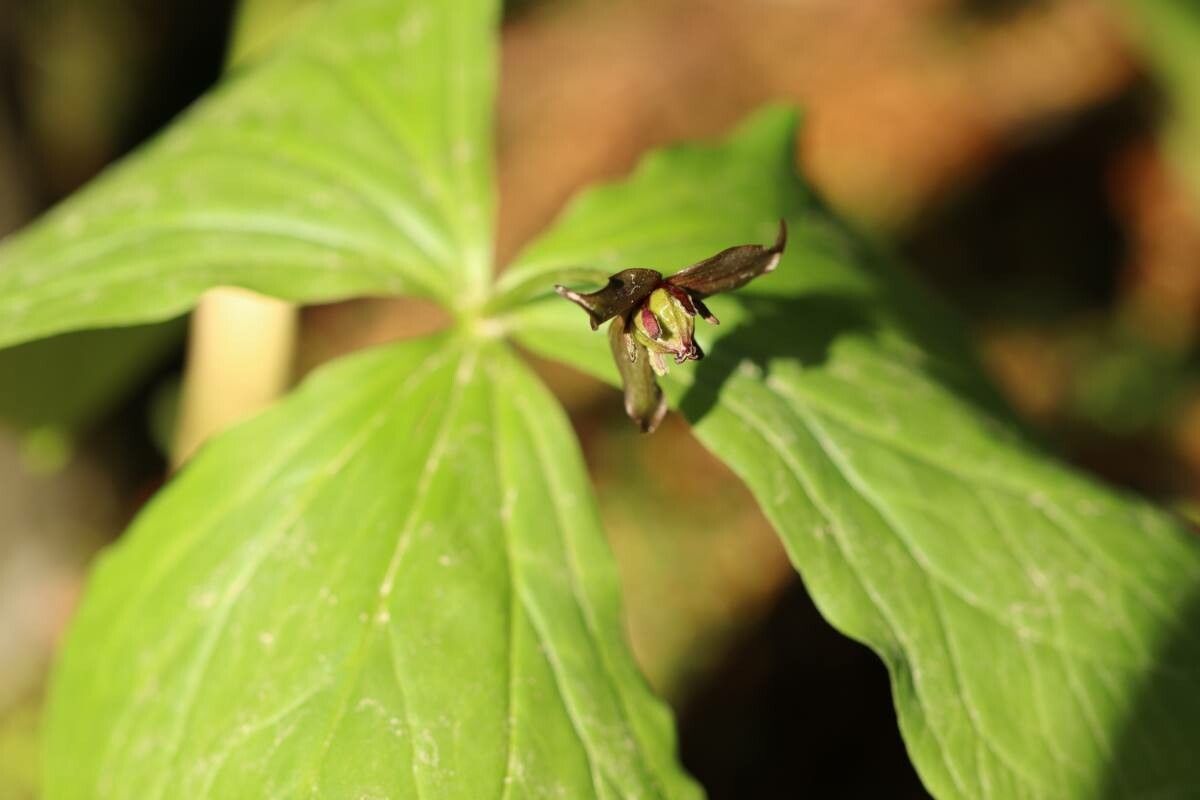
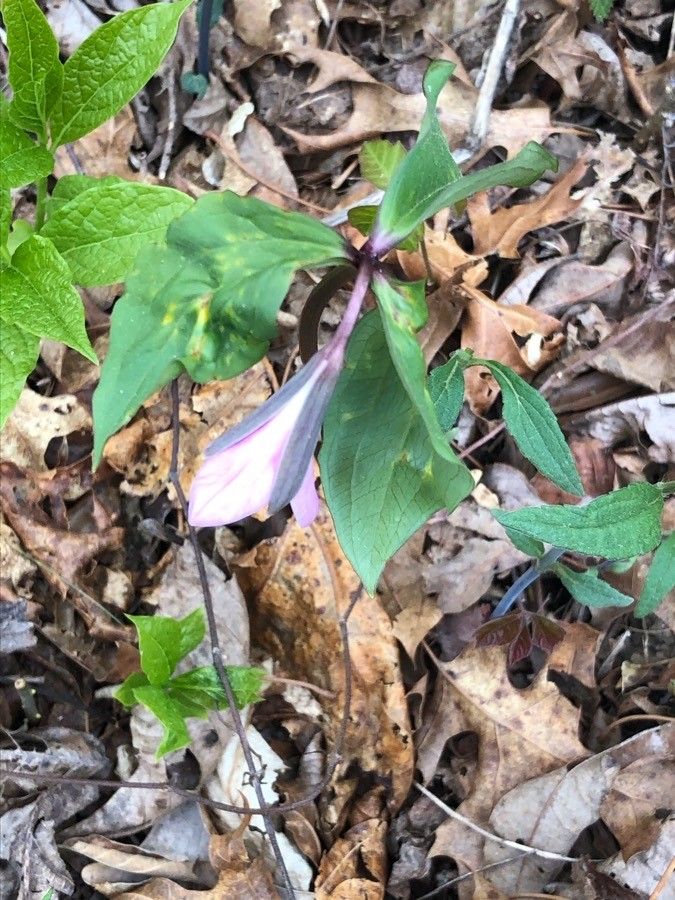
Trillium cernuum is a species of flowering plant in the bunchflower family Melanthiaceae. The specific epithet cernuum means "drooping, curving forwards, facing downwards", a distinctive habit of its flower. It is commonly called nodding trillium or nodding wakerobin (not to be confused with Trillium flexipes) since the flower is invariably found nodding beneath the leaves. It is sometimes referred to as the northern nodding trillium to distinguish from Trillium rugelii, a similar nodding species native to the southern Appalachian Mountains. It is also called the whip-poor-will flower since presumably its bloom coincides with the spring arrival of the migrating bird with the same name.Trillium cernuum was thought to be one of three species of Trillium described by Swedish botanist Carl Linnaeus in 1753 (the other two being Trillium erectum and Trillium sessile). The specimen examined by Linnaeus was actually Trillium catesbaei, a nodding species native to the southern Appalachian Mountains where Trillium cernuum does not occur. This oversight led to much confusion, some of which continues to this day. Within its natural range, Trillium cernuum is often confused with two closely related Trillium species, Trillium erectum and Trillium flexipes. The three species are known to interbreed with one another, which adds to the confusion. The nodding trillium is the most northerly Trillium species in North America, occurring as far north as Hudson Bay and as far south as northern Virginia. (Reports south of Virginia are most likely other species such as Trillium rugelii, Trillium catesbaei, or Trillium flexipes.) Trillium cernuum is found on rich, moist soils in both broadleaf and coniferous woodlands.
Nodding trillium is fairly disease-resistant and typically not very susceptible to illnesses. Still, it can be affected by pests and diseases present in its environment. Such infections are generally mild. Care-wise, this plant needs moderate maintenance. It should be trimmed on a regular basis to preserve an attractive appearance and vigorous growth. Applying fertilizer can also encourage flowering. Nodding trillium is appropriate for anyone with outdoor space, like a garden or patio, and does not demand extensive plant-care experience. It may need extra attention when cultivated indoors.
How to keep Trillium Cernuum.
Light
Nodding trillium grows best in moderate light but can tolerate spots with limited illumination. It comes from habitats where taller vegetation often filters incoming sunlight. For that reason, too much unfiltered sun can suppress nodding trillium's growth, while a shortage of light generally does not greatly restrict the plant's development.
Water
Nodding trillium flourishes in moist, deciduous forests, where it prefers moderate humidity and can tolerate brief dry spells. To keep the soil adequately hydrated without waterlogging, water the plant weekly. Being an understory plant, nodding trillium benefits from dappled light, which helps retain moisture and prevents excessive evaporation.
Temperature
Nodding trillium is native to temperate regions and does well in temperatures between 41 and 89.6 °F (5 to 32 ℃). Acclimating it to new conditions requires careful management of temperatures across different seasons.
Fertilizer
For Nodding trillium, the primary time to apply fertilizer is early spring while the flowers are forming. The appropriate fertilizer promotes better blooms and helps Nodding trillium produce attractive flowers. Fertilizing in early spring ensures excellent flowers throughout the season and supplies energy for dormant growth phases.
Pruning
Nodding trillium requires only minimal pruning. To keep your plant healthy and attractive, prune it from early to late spring, right after it has finished flowering. This allows you to remove any dead foliage and promote new growth. Be careful not to prune too heavily, as this could impact the blooms of the following season. Light pruning is sufficient to preserve the plant's vigor and appearance. For detailed care instructions, refer to trusted gardening resources.
Botanical profile.
- Plant Type
- Herb
- Life Cycle
- Perennial
- Genus
- Trillium
- Family
- Melanthiaceae
- Hardiness Zone
- 5-8
- Mature Height
- 20 cm to 52 cm
- Mature Spread
- 15 cm to 30 cm
- Leaf Color
- Green, Red
- Leaf Type
- Deciduous
- Flower Color
- White
- Flower Size
- 2.54 cm to 5.08 cm
- Bloom Time
- Early spring, Mid spring
- Planting Time
- Spring, Summer
- Harvest Time
- Early summer, Mid summer
Other names.
Reader questions.
How should I water my Nodding trillium plant?
To properly water the Nodding trillium, it is recommended to use filtered water at room temperature or slightly warm. This is because tap water may contain harmful particles. The Nodding trillium is accustomed to warm environments, and cold water can be a shock to its system. To avoid any foliage issues, avoid watering the plant from above. Instead, gently pour filtered room temperature water onto the soil until it is fully soaked. This helps to moisten the roots and allows them to spread through the soil to absorb necessary nutrients.
Why is it necessary to add fertilizer to my Nodding trillium plant?
Fertilization is important for the Nodding trillium because it provides essential nutrients for the plant's growth. While the fertilization needs for this plant are relatively low and it can sometimes survive without fertilization, annual fertilization has many benefits. It helps the Nodding trillium stay alive and promotes the development of better and longer-lasting flowers. Therefore, those who want their Nodding trillium to thrive should consider annual fertilization.
What are the sunlight requirements for Nodding Trillium?
Nodding Trillium thrives in partial sun, approximately 3-6 hours of sunlight daily, but it can also grow in full shade areas, which receive less than 3 hours of sunlight. It's important to monitor the movement of sunlight through your garden to ensure that your plants are placed in locations that offer a suitable balance of light and shade, optimizing their growth and well-being.
What is Nodding trillium and where is it indigenous to?
Nodding trillium, also known by its botanical name Trillium cernuum, is indigenous to temperate environments. It thrives in temperatures ranging from 41 to 89.6 °F (5 to 32 °C), adapting well to various conditions with careful temperature management during different seasons.
What should I do if I give my Nodding trillium plant too much or too little water?
Overwatering is a common issue for Nodding trillium plants, and it can lead to wilting, yellowing leaves, and diseases like root rot, mold, and mildew. Underwatering is less common, but it can cause brittle, brown leaves. It's important to recognize the signs of overwatering early to prevent irreversible damage. If you notice these signs, reduce your watering schedule and consider improving the soil's drainage. If you see signs of underwatering, simply water more regularly until the signs improve.
When should I fertilize my Nodding trillium plant?
The best time to fertilize a Nodding trillium is in late winter to early spring when it is transitioning from dormancy to active growth. Fertilizing during this time promotes healthy growth and sets the plant up for a successful season. While early spring is the most beneficial, fertilizing in the fall is also acceptable. It is not recommended to fertilize the trillium in the summer or winter.
What are the essential care tips for Nodding Trillium?
Nodding Trillium best adapts to moderate sunlight but can survive in less sunny conditions, mirroring its natural habitat where sunlight is filtered through taller trees. Excessive direct sunlight may hinder its growth, whereas a lack of sunlight won't dramatically affect its development. For indoor plants, if natural light is insufficient, artificial lighting can be a significant aid, promoting healthier growth. It's advisable to choose the proper type of artificial light, like LED, and adjust it based on the plant's needs, ensuring 8-12 hours of light per day at the correct intensity and distance.
Does Nodding trillium require frost protection during winter?
Nodding trillium exhibits strong cold resistance and usually does not require special frost protection measures during winter. However, in conditions where winter temperatures are expected to drop below -25°C, it is important to provide cold protection by covering the plant with materials such as soil or straw. Additionally, it is recommended to water the plant abundantly before the first freeze in autumn to keep the soil moist and prevent drought and water scarcity during winter and early spring.
How frequently do I need to water my Nodding trillium?
If your Nodding trillium is potted, the best way to determine if it needs water is by checking the soil. Stick your finger into the soil and if the top two to three inches are dry, it's time to water it. For Nodding trillium grown outdoors in the ground, you can use a similar method to test the soil. When the top few inches of soil are dry, it's time to water. Typically, during the spring and early fall, watering once a week is sufficient. However, in very hot weather, you may need to water twice or more per week. It's important to note that mature, well-established Nodding trilliums can tolerate dry conditions quite well.
When should I not put fertilizer on my Nodding trillium?
To properly care for your Nodding trillium, it is best to only fertilize it during late winter and early spring. This plant has low fertilizer needs, so a single annual feeding will be sufficient. It is important to avoid fertilizing during spring, summer, and fall, as this can lead to overfertilization and its associated problems. However, if you missed fertilizing in the spring, it is acceptable to feed the plant in the fall. Additionally, there is no need to fertilize the Nodding trillium during the winter, as it goes into a dormant growth phase and does not produce new growth during this time. Therefore, it is not recommended to fertilize during most of the winter.
What symptoms indicate insufficient or excessive sunlight in Nodding Trillium?
When Nodding Trillium receives inadequate light, it may exhibit symptoms like smaller new leaves, leggy or sparse growth, early leaf drop, slowed or halted growth, and pale new leaves. Conversely, excessive sunlight can cause chlorosis, sunscald, leaf curling, wilting, and leaf scorching. These symptoms highlight the plant's distress and the need for immediate care adjustments to prevent further damage.
How does low temperature affect Nodding trillium and what are the solutions?
Nodding trillium is cold-tolerant and thrives best when the temperature is above 5°C. During winter, it should be kept above -20°C. If the temperature falls below -25°C, there might not be any noticeable changes during winter; however, there may be a decrease in sprouting or even no sprouting during springtime. The solution for this issue is to remove any parts of the plant that have failed to sprout in the spring.