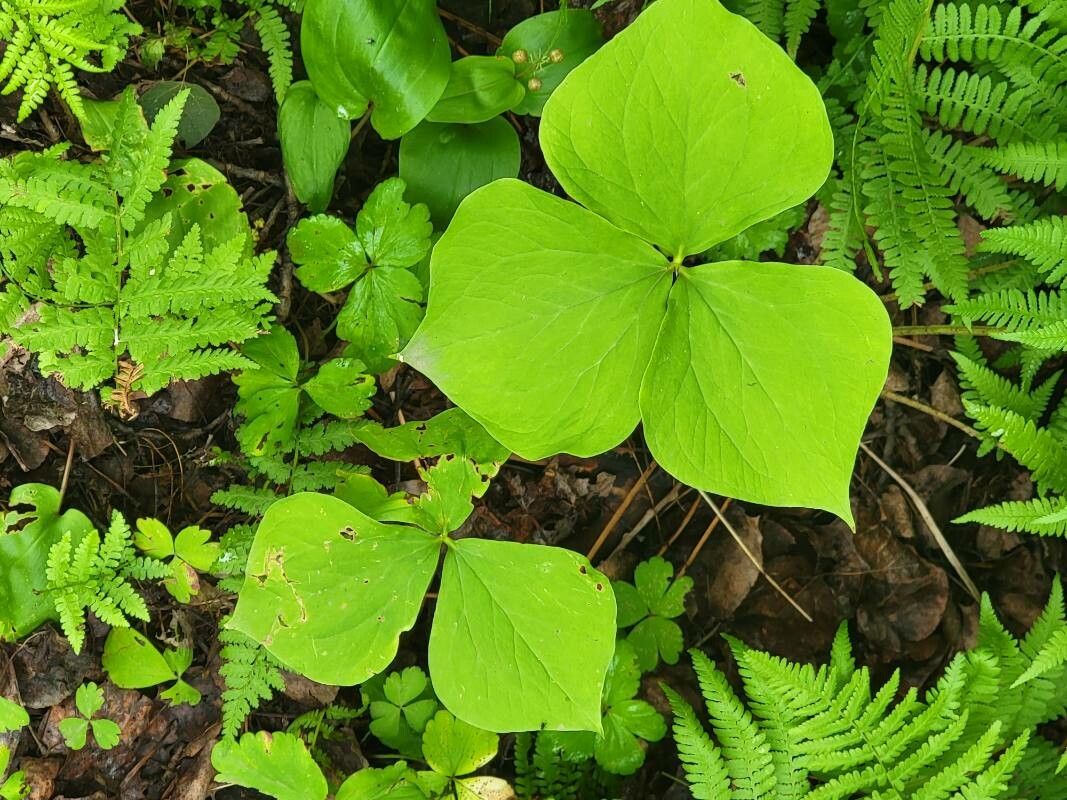
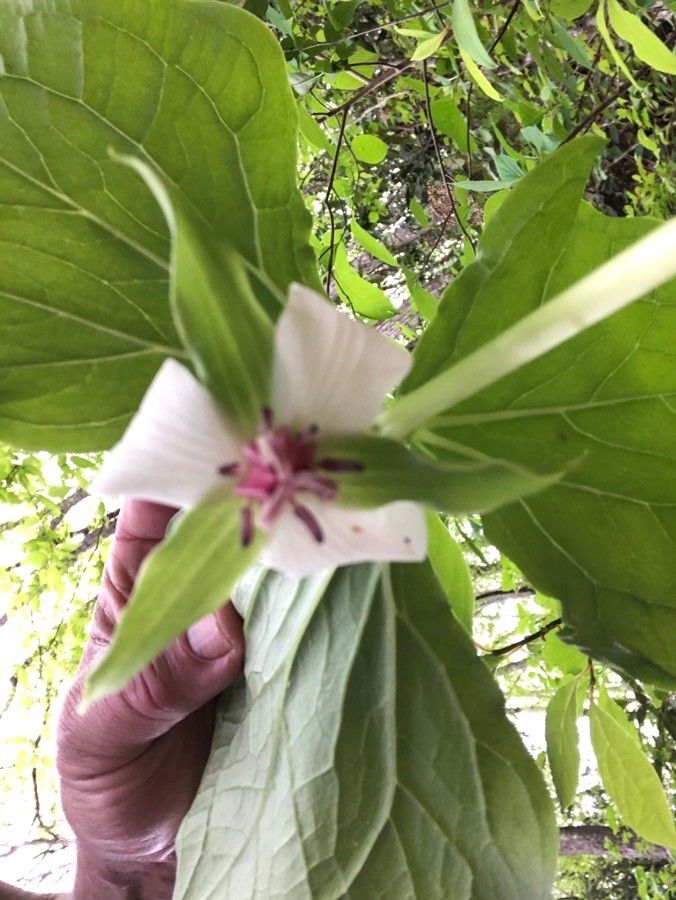
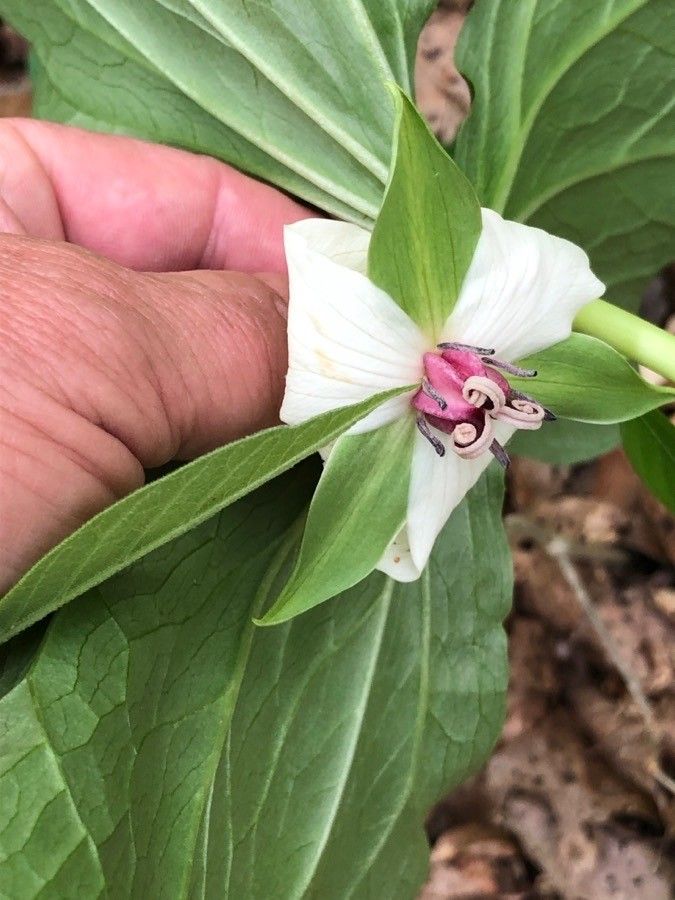
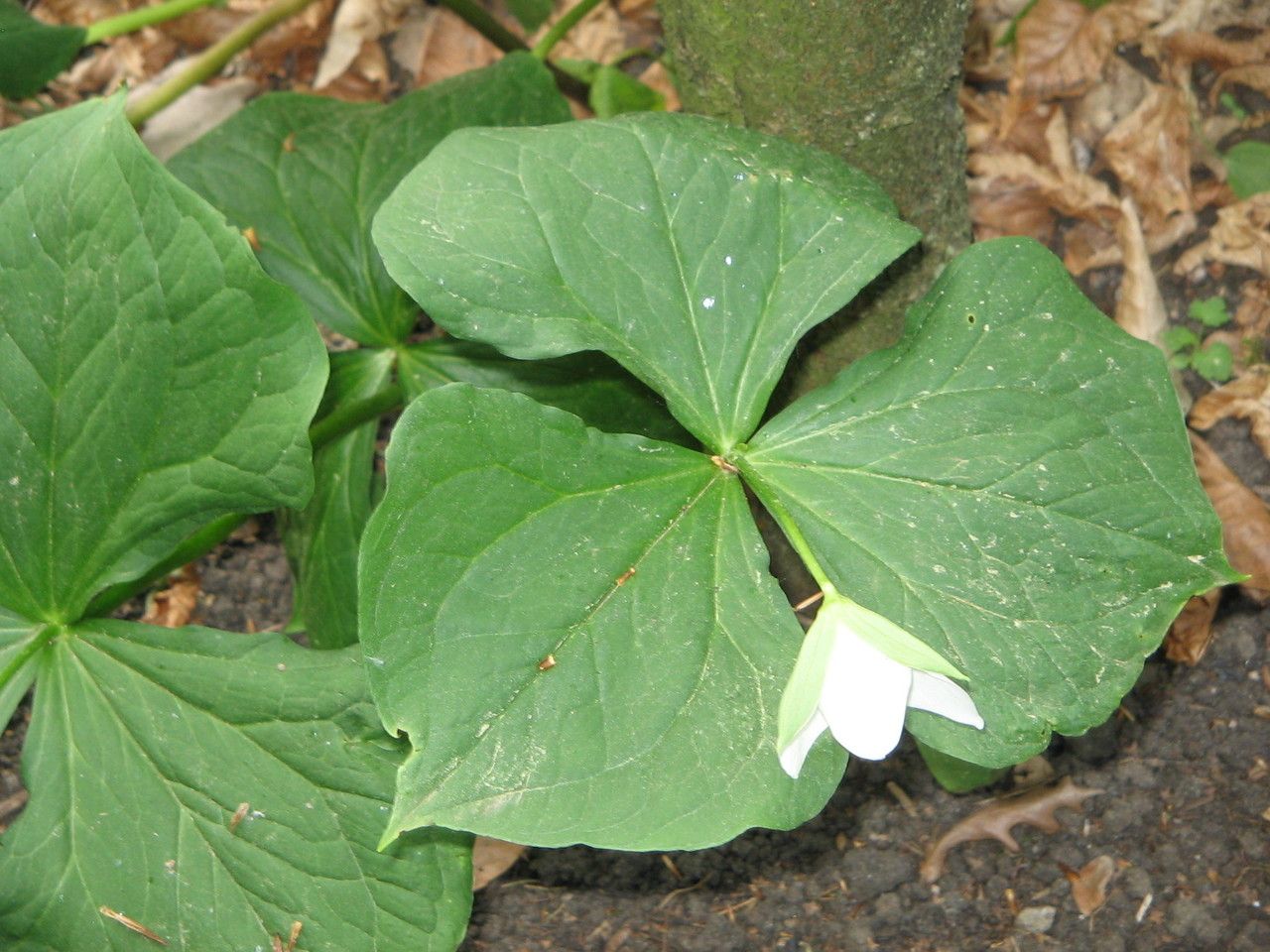
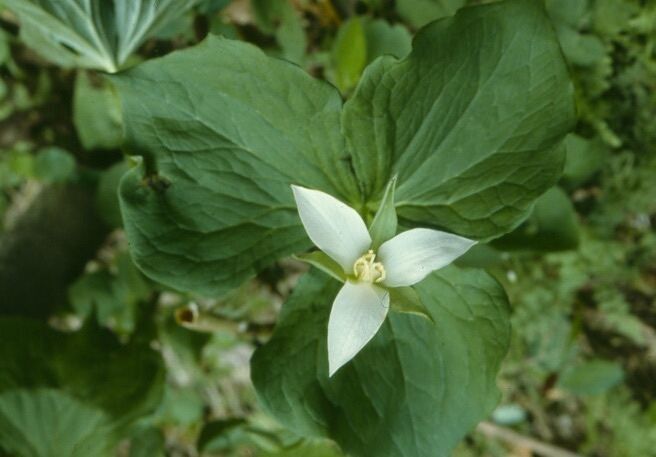
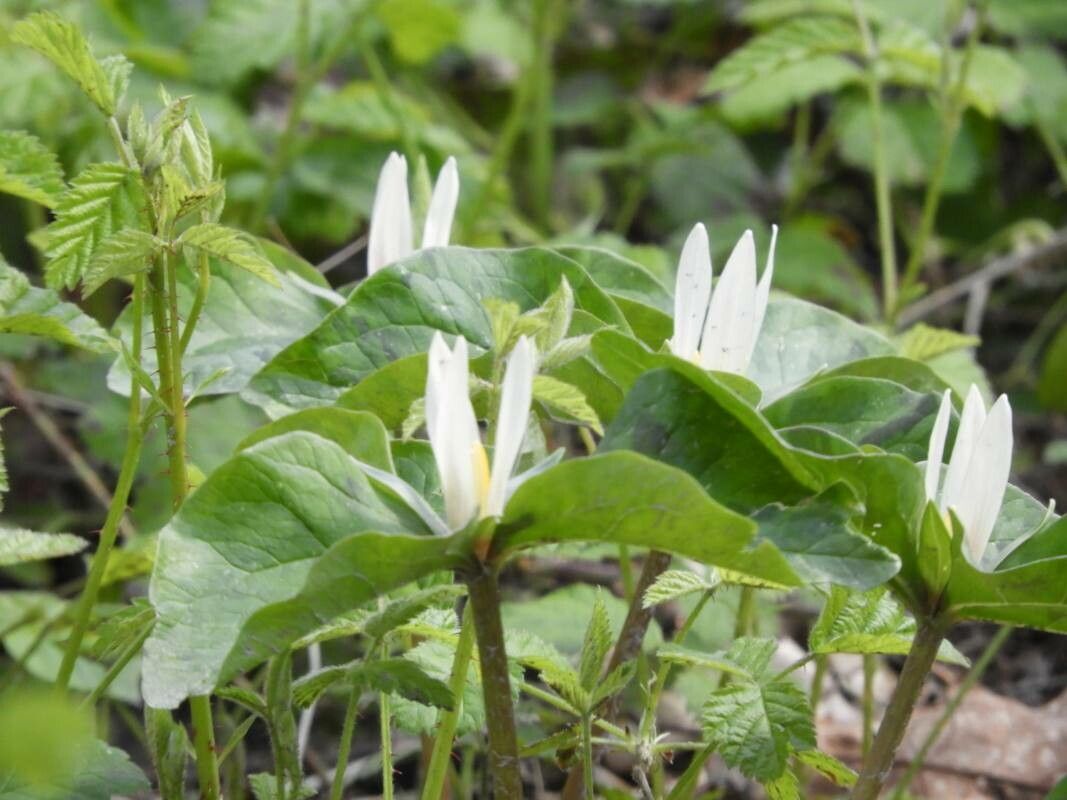
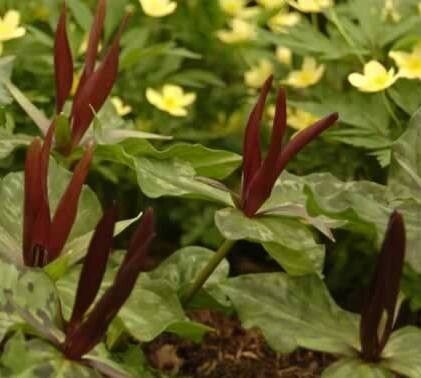
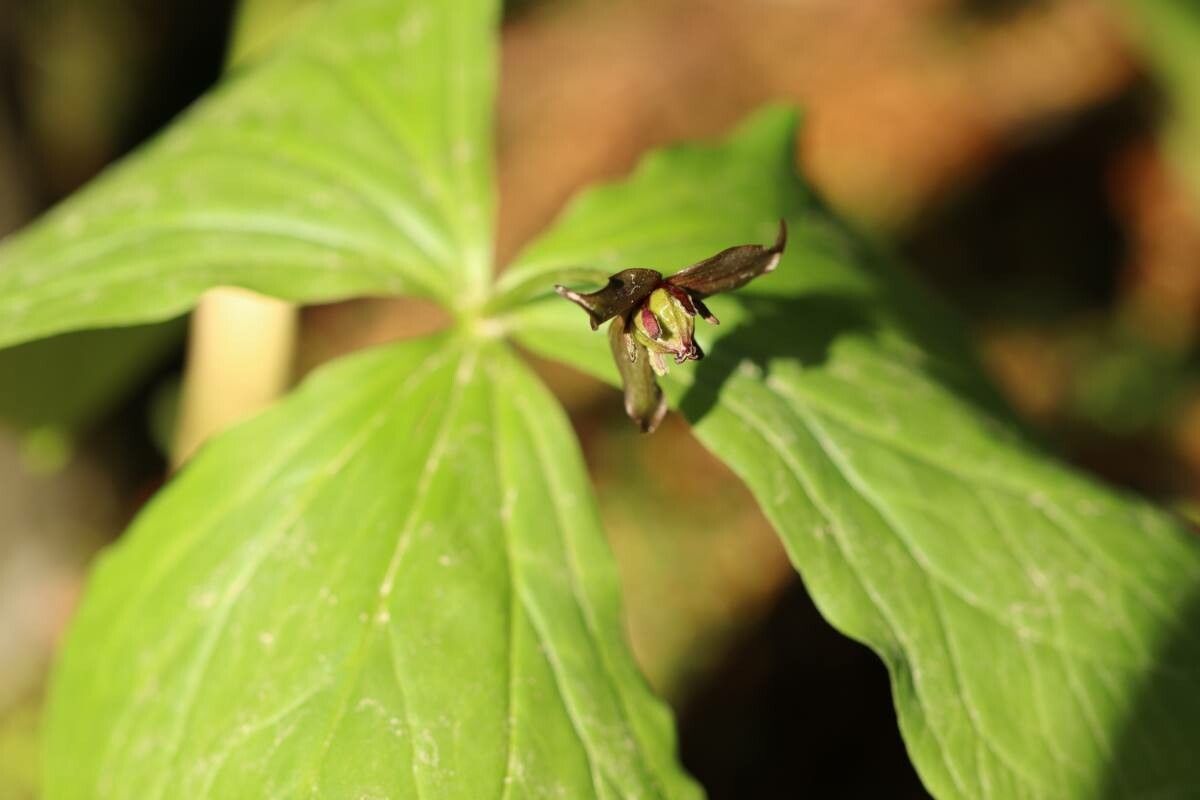
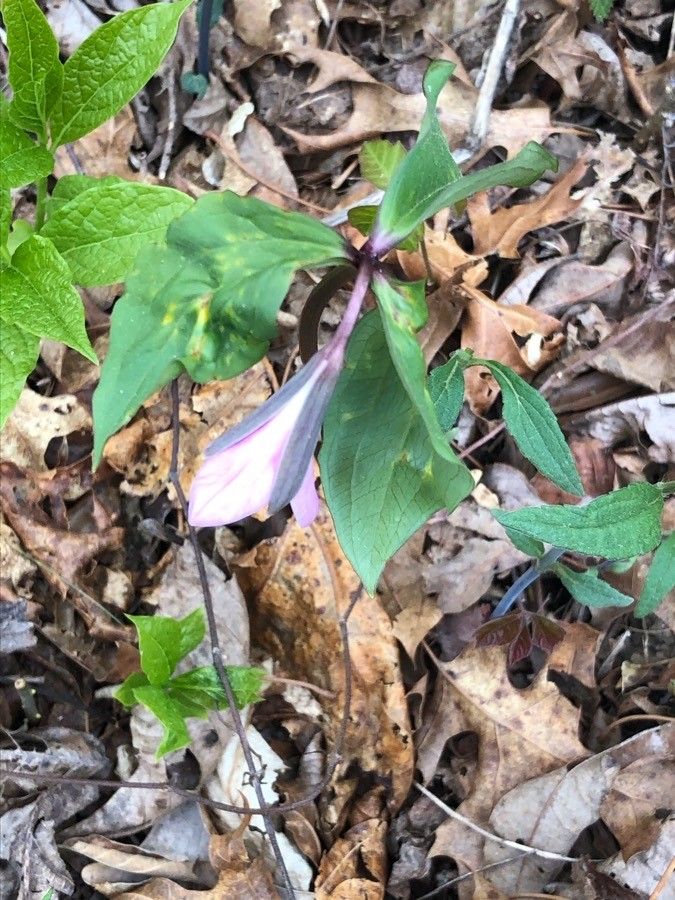
Trillium flexipes, commonly known as nodding trillium or drooping trillium, is a perennial herbaceous plant native to eastern North America. This species belongs to the Melanthiaceae family and is distinguished by its three large leaves and a solitary flower that droops downward. The flower, which blooms in the spring from April to May, features three white petals often tinged with pink or purple and a central yellow-green ovary. It thrives in moist woodland areas with rich soil.
The plant typically grows up to 18 inches tall and spreads slowly through underground rhizomes. Historically, Native Americans have used Trillium flexipes for medicinal purposes, treating ailments such as menstrual cramps, headaches, and infections. However, it is essential to note that the plant is protected in some states due to over-harvesting for its medicinal properties or ornamental value in gardens.
Nodding wakerobin has strong resistance to disease and is generally unlikely to suffer from illnesses. Nevertheless, it can be vulnerable to pests and diseases present in its environment. Such infections are typically mild. Regarding care, this plant is moderately demanding. It should be pruned on a regular basis to preserve a neat appearance and healthy growth. Applying fertilizer can also encourage flowering. Nodding wakerobin is appropriate for anyone with outdoor areas like a garden or patio and does not need extensive gardening experience. It may need extra attention if kept indoors.
How to keep Trillium Flexipes.
Light
The nodding wakerobin favors moderate sunlight and can tolerate deep shade. Native to forested habitats, it does best in filtered light and may be harmed by excessively bright conditions. Both too little and too much sun can impair its healthy growth.
Water
Nodding wakerobin thrives in consistently damp soil conditions, which are typical of temperate forests, and it requires watering twice a week. While it has moderate drought tolerance, the plant is most vibrant during rainy seasons when moisture is abundant. This reflects its reliance on water availability as an herbaceous perennial.
Temperature
Nodding wakerobin flourishes in its native habitat at temperatures between 32 and 95 °F (0 to 35 °C). The plant prefers cooler conditions, so the ambient temperature may need to be adjusted during periods of extreme heat or cold.
Fertilizer
The best time to fertilize a Nodding wakerobin is in early spring, as it breaks dormancy and begins active growth. Fertilizer supplies the essential nutrients needed for healthy growth. Although Nodding wakerobin has fairly low fertilizer requirements, giving it fertilizer once a year can improve its survival and promote better, longer-lasting flowers.
Pruning
The Nodding Wakerobin is a woodland plant known for its pendulous blooms. For optimal growth and to prevent disease, prune the plant in early spring, removing up to one-third of its structure. Use clean, sharp tools to maintain the plant's health and shape, which will also help enhance flower production.
Botanical profile.
- Plant Type
- Herb
- Life Cycle
- Perennial
- Genus
- Trillium
- Family
- Melanthiaceae
- Hardiness Zone
- 3-9
- Mature Height
- 30 cm to 61 cm
- Mature Spread
- 30 cm to 46 cm
- Leaf Color
- Green
- Leaf Type
- Deciduous
- Flower Color
- White
- Flower Size
- 5.08 cm
- Bloom Time
- Early spring, Mid spring
- Planting Time
- Spring, Autumn
- Harvest Time
- Early summer, Mid summer
Other names.
Reader questions.
How should I water my Nodding wakerobin plant to keep it healthy?
When watering the Nodding wakerobin plant, it is recommended to use filtered water at room temperature. Tap water may have harmful particles that can affect the plant's health. It is important to avoid using cold water as it may be a shock to the plant since it is used to warm environments. Instead of overhead watering, it is best to apply the filtered room temperature water directly to the soil until it is fully soaked. This helps to moisten the roots and allows them to spread through the soil to absorb necessary nutrients.
Why do I have to add fertilizer to my Nodding wakerobin?
The leaves of the Nodding wakerobin are a major part of its structure. Fertilization is a powerful way to ensure that these leaves look great and function effectively. By fertilizing properly, you can help your Nodding wakerobin maintain consistent color and a healthy texture in its leaves. Fertilization also has benefits below the soil. It promotes the growth of new roots and maintains the existing ones in the root system. This means that fertilization not only keeps your plant healthy in the present, but also improves its ability to absorb soil nutrients in the future.
What type of sunlight does the Nodding wakerobin require?
The Nodding wakerobin prefers moderate sunlight exposure and can thrive in deeply shaded locations, reminiscent of its origins in forested areas where it benefits from filtered sunlight. However, it is important to note that both lack and excess of sunlight can adversely affect its growth, indicating that finding a balance in light exposure is crucial for its health.
What are the ideal temperature conditions for Nodding wakerobin?
Nodding wakerobin, known scientifically as Trillium flexipes, thrives in its natural habitat within a temperature range of 32 to 95°F (0 to 35°C). This plant is well-suited for cooler climates and might require temperature adjustments during periods of extreme heat or cold. It has significant cold resistance, and special frost protection is generally not necessary. However, if temperatures are expected to drop below -35°C, it's crucial to provide cold protection by covering the plant with soil or straw. To prepare for winter, watering the plant abundantly before the first freeze, ensuring the soil is moist as it freezes, is recommended. This preparation helps prevent drought and water scarcity for the plant during the winter and early spring period.
What should I do if I give my Nodding wakerobin plant too much or too little water?
Overwatering is a more common issue than underwatering for the Nodding wakerobin. When this plant gets too much water, its stems and leaves wilt and turn yellow. Long-term overwatering can also cause diseases like root rot, mold, and mildew, which can be fatal. Underwatering is less common, but if it happens, the leaves become brittle and brown. It's important to spot and address signs of overwatering quickly. Some diseases caused by overwatering, such as root rot, may not be fixable if you wait too long. If you see early signs of overwatering, reduce watering immediately. Check if the soil drains poorly and replace it with a loose, well-draining potting mix if needed. If your Nodding wakerobin appears to be lacking water, simply increase your watering frequency until the signs improve.
When should I fertilize my Nodding wakerobin?
If you choose to grow your Nodding wakerobin outdoors, it will start new growth in early spring. This is your cue to start fertilizing. Generally, one round of fertilizer is enough for the Nodding wakerobin to thrive. However, if you want to encourage maximum growth, you can fertilize multiple times in the spring and early summer. In this case, feed the Nodding wakerobin about once every month to a month and a half.
How can artificial lighting support indoor plant growth?
Indoor plants, including those requiring conditions similar to the Nodding wakerobin, can greatly benefit from artificial lighting, especially when natural sunlight is insufficient. LED lights are recommended for their ability to provide specific wavelengths needed by plants. The intensity of light required varies: full sun plants need 30-50W/sq ft, partial sun plants require 20-30W/sq ft, and full shade plants need 10-20W/sq ft. The light source should be placed 12-36 inches above the plant and be on for 8-12 hours per day to mimic natural sunlight effectively.
How does Nodding wakerobin react to low temperatures?
Nodding wakerobin exhibits strong tolerance to cold and performs best when temperatures remain above 0°C. Despite this, it's advised that during winter, temperatures should not fall below -30°C. Exposure to temperatures below -35°C might not result in noticeable changes during the winter, but there could be a reduced sprouting rate or a complete lack of sprouting in the spring. In the event of reduced or failed sprouting, it's suggested to remove any parts of the plant that have not sprouted as a solution.
How often should I water my Nodding wakerobin plant?
If your Nodding wakerobin is in a potted plant, you can accurately determine if it needs water by feeling the soil with your finger. If the top two to three inches of soil are dry, it's time to water. The same method can be used if you have your Nodding wakerobin planted in the ground outdoors. Again, when the top few inches of soil are dry, it's time to water. Typically, during spring and early fall, you'll need to water once a week using this method. However, during very hot weather, you may need to water twice or more per week. It's worth noting that mature, well-established Nodding wakerobin plants are quite resilient to drought.
When is it not a good idea to fertilize my Nodding wakerobin plant?
During the late fall and winter, your Nodding wakerobin will go into a dormant phase and stop growing. It is important to avoid fertilizing your Nodding wakerobin during this period. In the spring and summer, if you choose to fertilize, gradually reduce the amount as summer approaches, as the growth rate of your Nodding wakerobin will also slow down. It is never a good idea to fertilize your Nodding wakerobin when the weather is excessively hot or the soil is exceptionally dry, as this can cause stress and premature death.
What are some symptoms of insufficient light in Nodding wakerobins?
When Nodding wakerobins are grown indoors and receive insufficient light, several symptoms may manifest, including smaller new leaves, leggy or sparse growth, faster leaf drop, slower or no new growth, lighter-colored new leaves, chlorosis (leaves turning yellow), sunscald, leaf curling, wilting, and leaf scorching. These symptoms highlight the plant's struggle to adapt to suboptimal light conditions and the need for intervention to ensure its health.
How should Nodding wakerobin be cared for during high temperatures?
In the summer, it's important to ensure that Nodding wakerobin is not exposed to temperatures exceeding 35°C. High temperatures beyond 38°C may cause the plant's leaves to lighten in color, curl, become susceptible to sunburn, and in severe cases, cause the plant to wilt and dry out. To mitigate these effects, sunburned and dried parts of the plant should be trimmed away. Relocating the plant to an area with more shade, especially from the midday and afternoon sun, or utilizing a shade cloth, can provide necessary protection. Additionally, watering the plant in the morning and evening to maintain soil moisture is crucial for its well-being during periods of high heat.