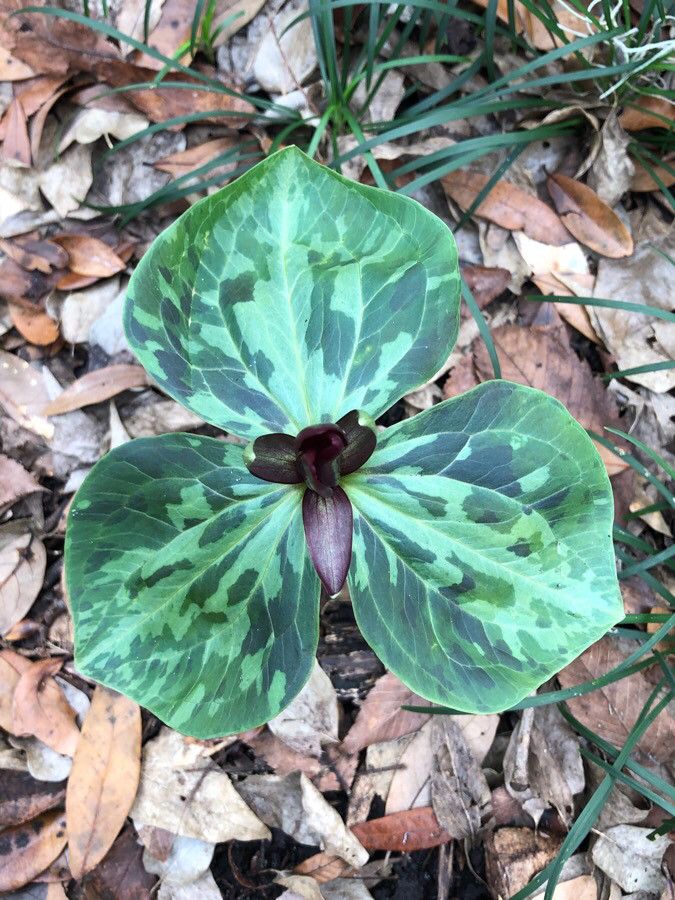
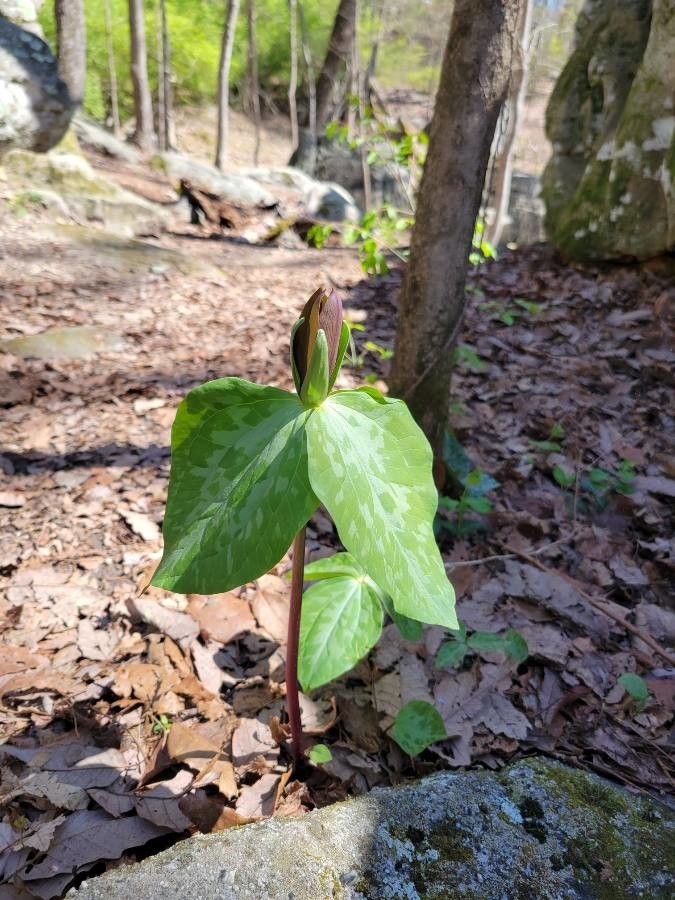
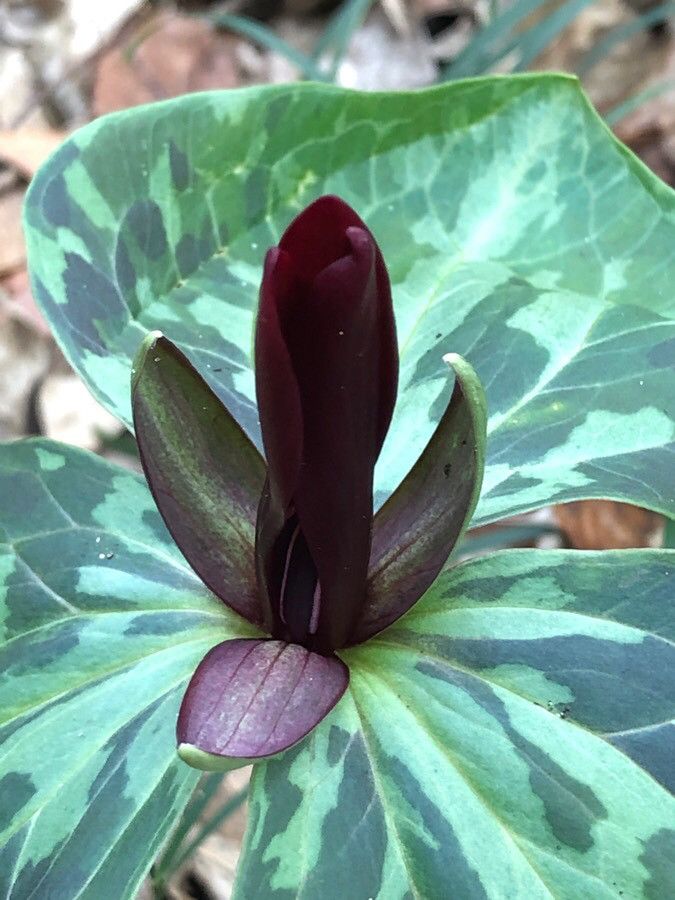
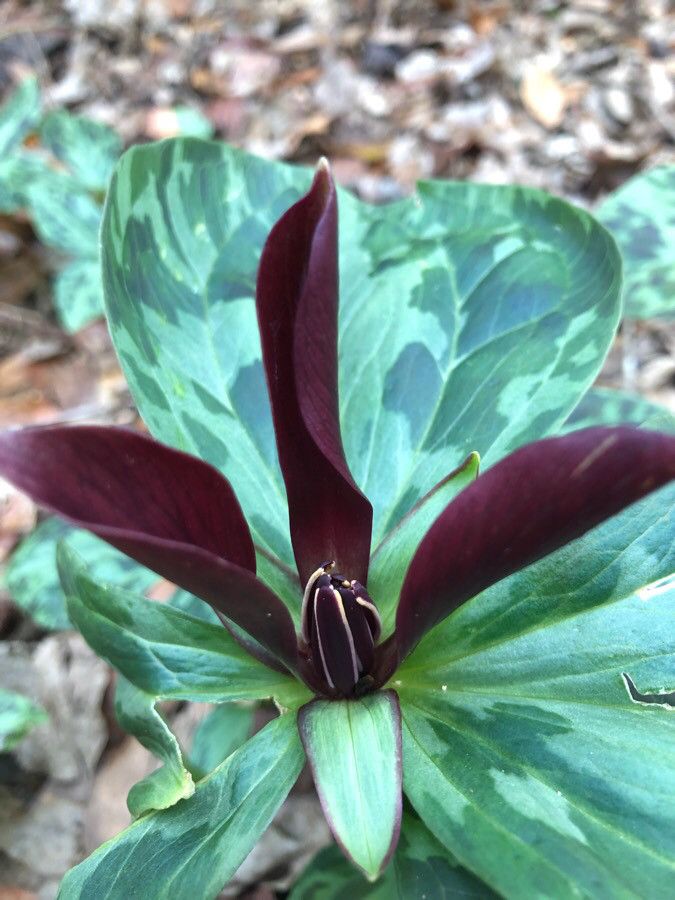
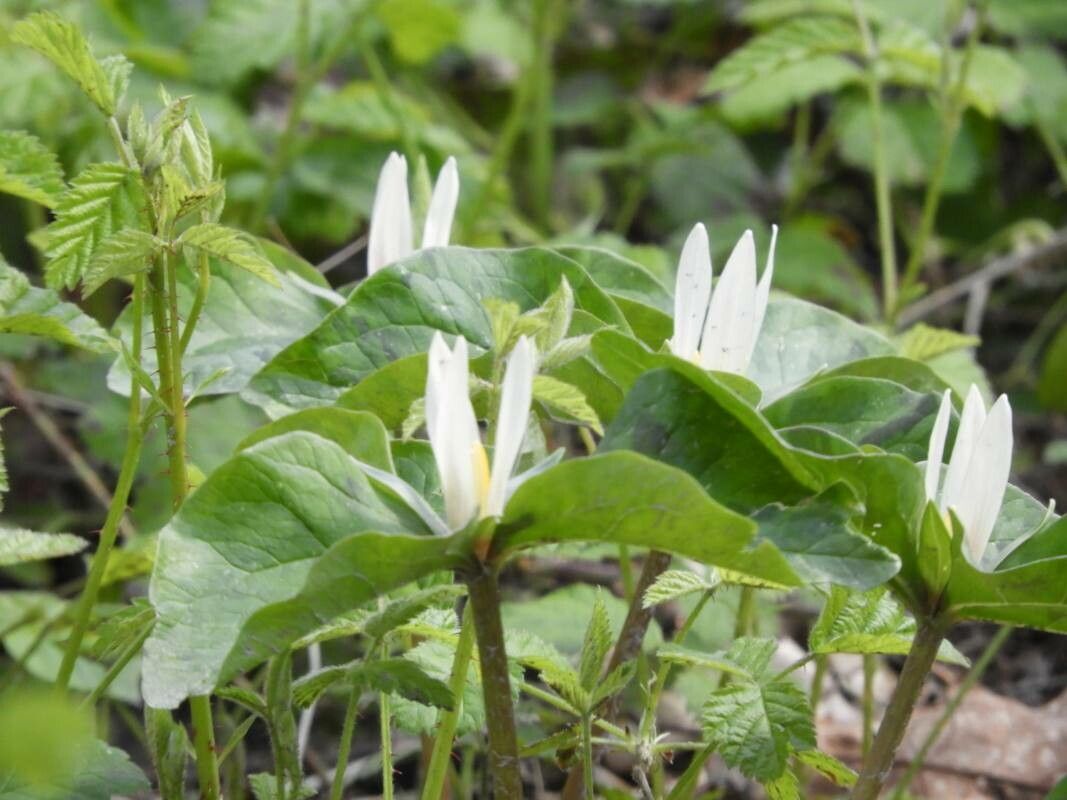
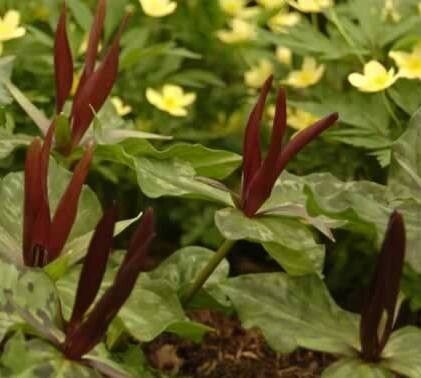
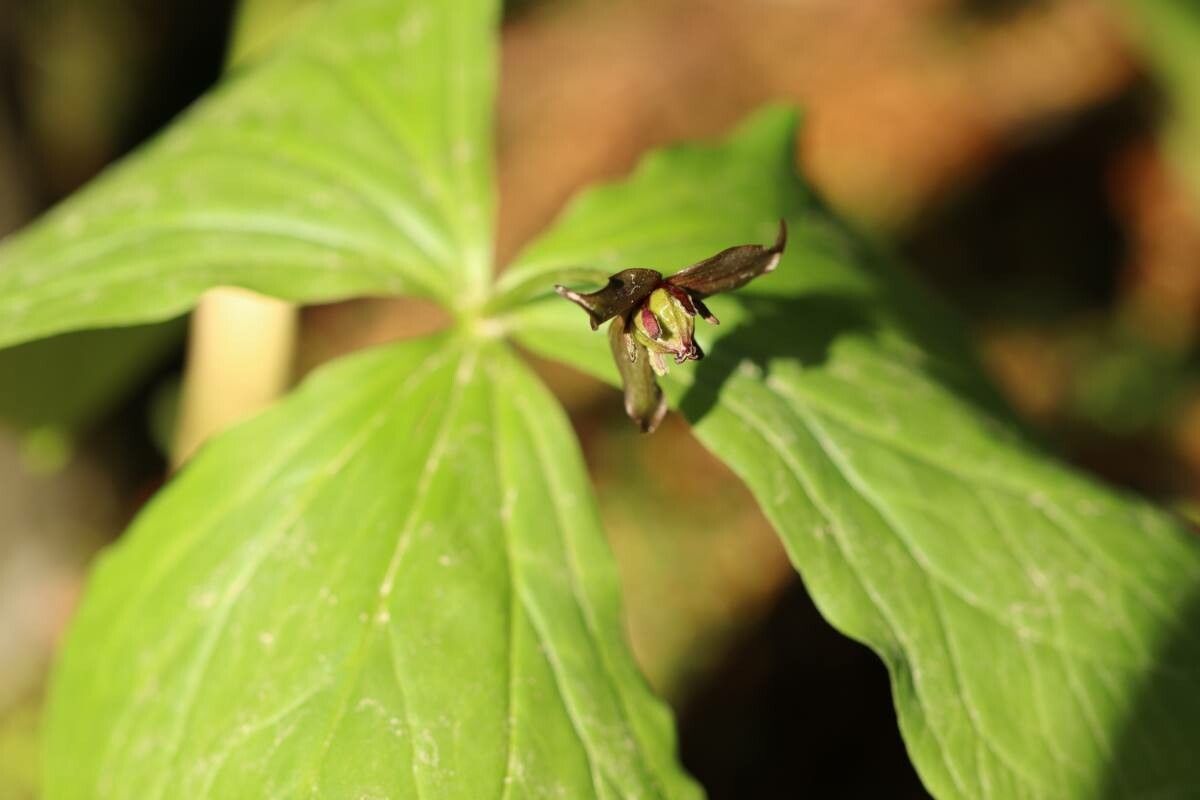
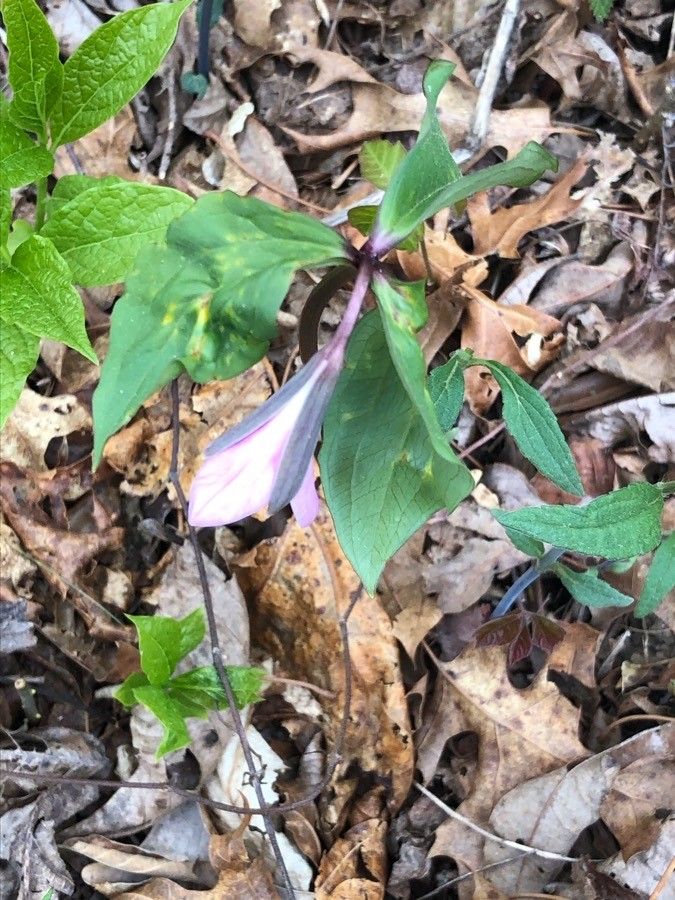
Trillium maculatum, commonly known as the spotted trillium or wood lily, is a perennial herbaceous plant native to eastern North America. A member of the Trilliaceae family, it typically reaches a height of 12-18 inches. The plant features three leaves arranged in a whorl at the top of its stem and produces a single flower that blooms in early spring.
The flower of Trillium maculatum is remarkable, having three petals and three sepals, all similar in appearance and color. The petals are usually maroon or reddish-purple with white markings near their base. The plant's fruit is an edible berry that matures from green to red.
Trillium maculatum thrives in moist, well-drained soils with partial shade or filtered sunlight. It is commonly found in deciduous forests, along stream banks, and on rocky slopes throughout its native range.
Native American tribes have used the spotted trillium for centuries due to its anti-inflammatory properties. However, it is important to note that all parts of the plant are toxic if ingested by humans or animals.
Overall, Trillium maculatum is an attractive woodland wildflower with unique characteristics that make it an interesting addition to any garden. Ecologically and medicinally significant within its natural habitat, it plays important roles in both settings.
Spotted wakerobin is fairly resistant to disease and is generally not easily affected by illnesses. However, it can be vulnerable to pests and diseases that exist in its environment. Such infections are generally mild. In terms of care, this plant needs moderate maintenance. It should be pruned regularly to retain a tidy appearance and encourage healthy growth. Fertilizing can also help stimulate flowering. Spotted wakerobin is well suited for anyone with outdoor space, such as a garden or patio, and does not demand extensive plant-care experience. It may need more attention when grown indoors.
How to keep Trillium Maculatum.
Light
The spotted wakerobin is native to habitats like forest understories and rocky areas, where it grows in natural shade. It prefers partial sun but can tolerate full sun or full shade, reflecting its versatile and hardy nature.
Water
The newly planted spotted wakerobin needs frequent watering at first to prevent the soil from drying out until it has adjusted to its new environment. Once it has adapted, you can reduce the watering frequency. However, make sure to keep the soil moist and avoid waterlogging.
Temperature
Spotted wakerobin can tolerate a broad range of temperatures, but its distribution may still be restricted by particular combinations of moisture and heat. It does best in warm summer climates with sufficient rainfall or watering. Long stretches of cloudy, rainy weather or extended high temperatures can raise the chance of the Spotted wakerobin dying. In winter, adequate protection from cold can increase the plant's survival.
Fertilizer
One fertilizer application in spring is generally enough for Spotted wakerobin, though repeated feedings can maximize growth. Feed every month to month and a half. Fertilization improves the leaves' appearance and function, supporting even color and a healthy texture. It also encourages root development and increases nutrient uptake for long-term plant health.
Pruning
The spotted wakerobin is a perennial plant characterized by its unique three-leaf pattern and spotted appearance. To promote healthy growth, prune the plant in early spring to remove any dead leaves. Be cautious not to prune too heavily, as the plant grows slowly. Proper pruning enhances air circulation, reduces the risk of disease, and helps maintain the plant's overall health. Always use sterilized tools for pruning.
Botanical profile.
- Plant Type
- Herb
- Life Cycle
- Perennial
- Genus
- Trillium
- Family
- Melanthiaceae
- Hardiness Zone
- 5-9
- Mature Height
- 30 cm
- Mature Spread
- 30 cm
- Leaf Color
- Green, Dark Green
- Leaf Type
- Deciduous
- Flower Size
- 5.08 cm to 6.35 cm
- Bloom Time
- Early spring, Mid spring
- Planting Time
- Spring, Summer
- Harvest Time
- Early summer, Mid summer
Other names.
Reader questions.
What are the sunlight requirements for Spotted wakerobin (Trillium maculatum)?
Spotted wakerobin (Trillium maculatum) requires specific amounts of sunlight to thrive. For partial sun, it should receive about 3-6 hours of sunlight. If the plant is in full shade, it should get less than 3 hours of sunlight. It's important to observe how sunlight moves through your garden throughout the day. This observation will help you choose the best spots that offer an ideal balance of light and shade, ensuring your plants grow happily and healthily.
What is the botanic name of Spotted wakerobin?
The botanic name of Spotted wakerobin is Trillium maculatum.