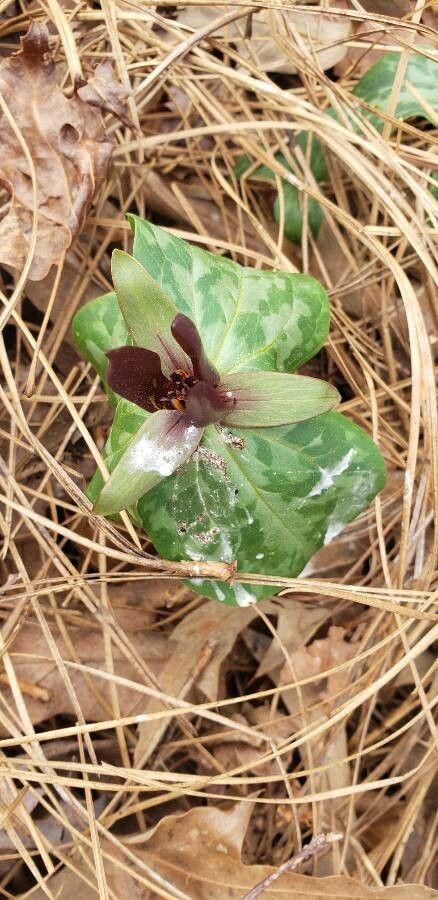
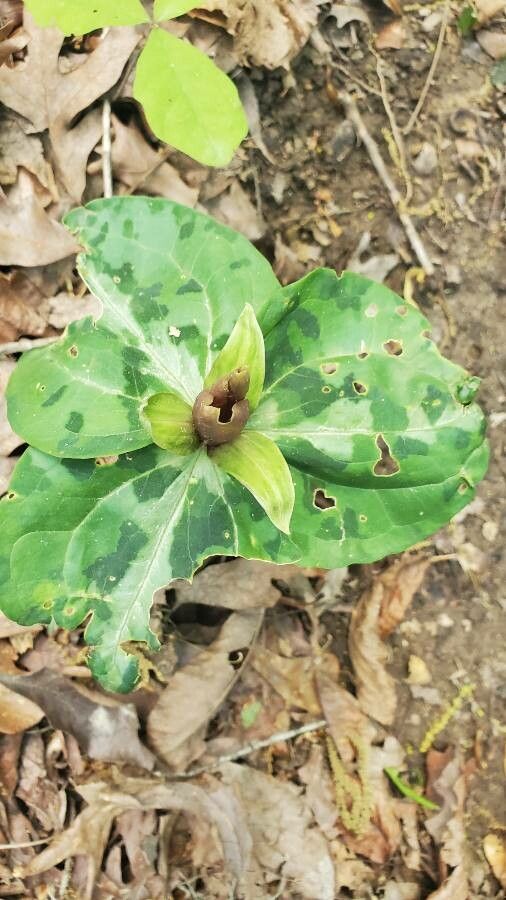
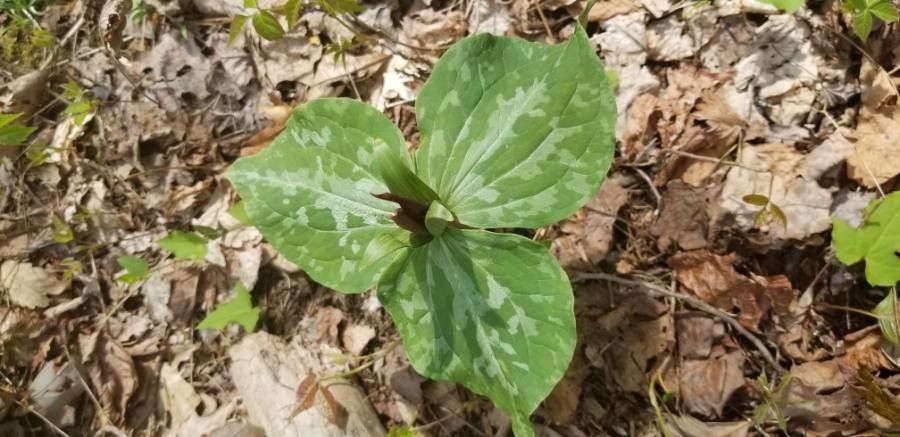
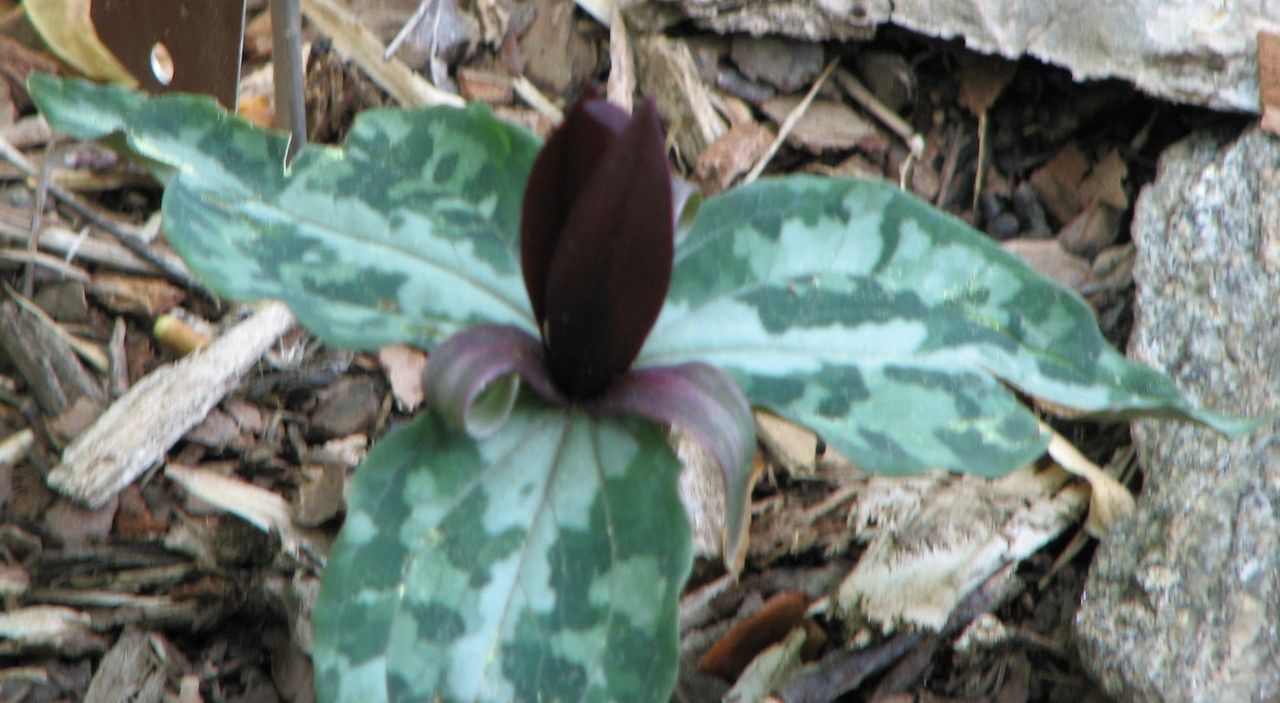
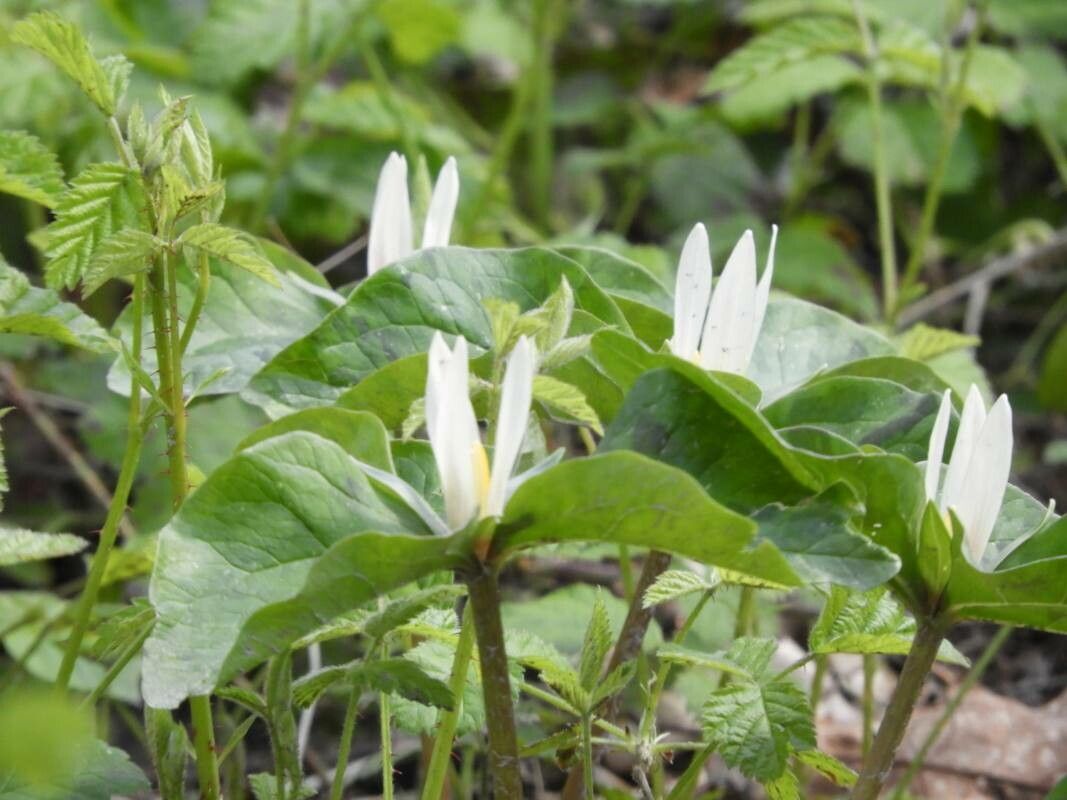
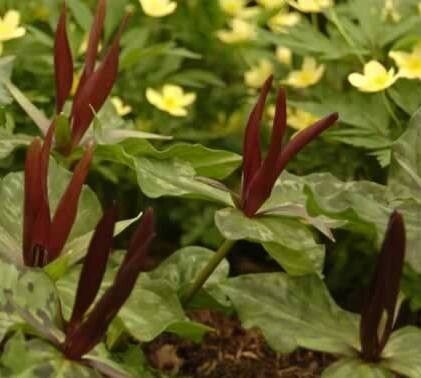
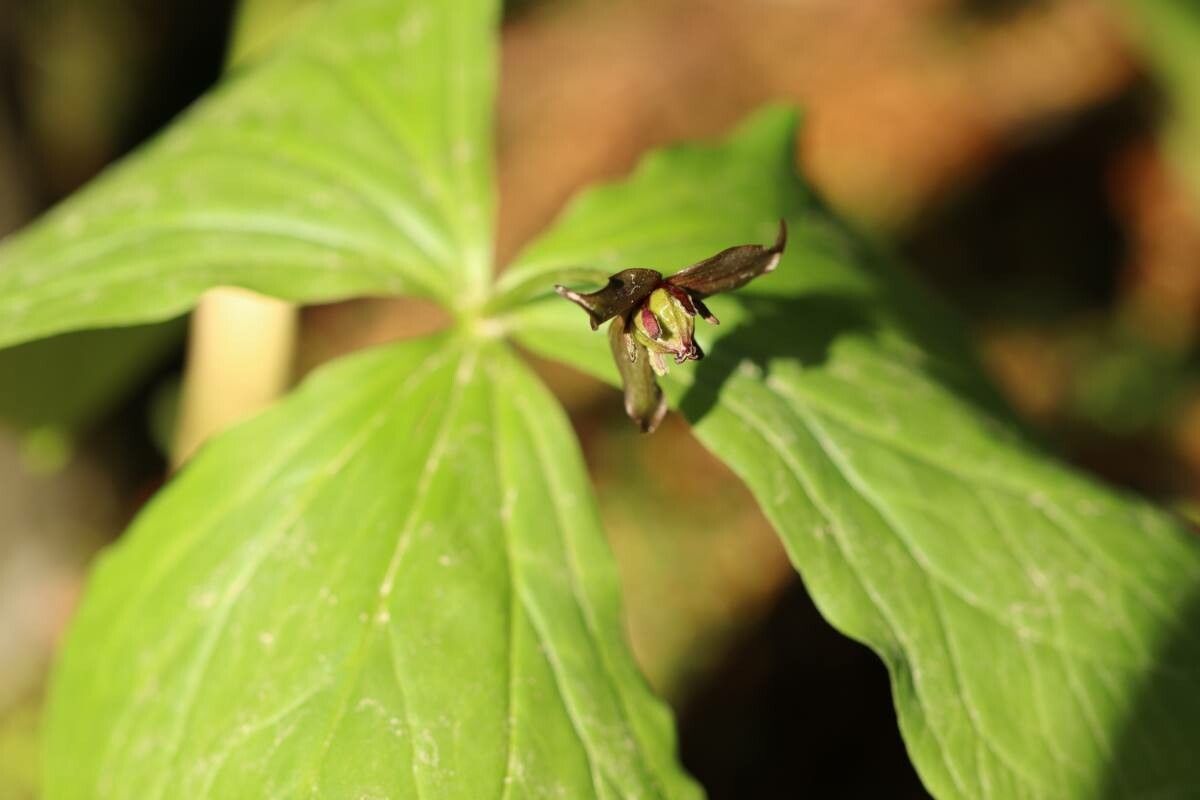
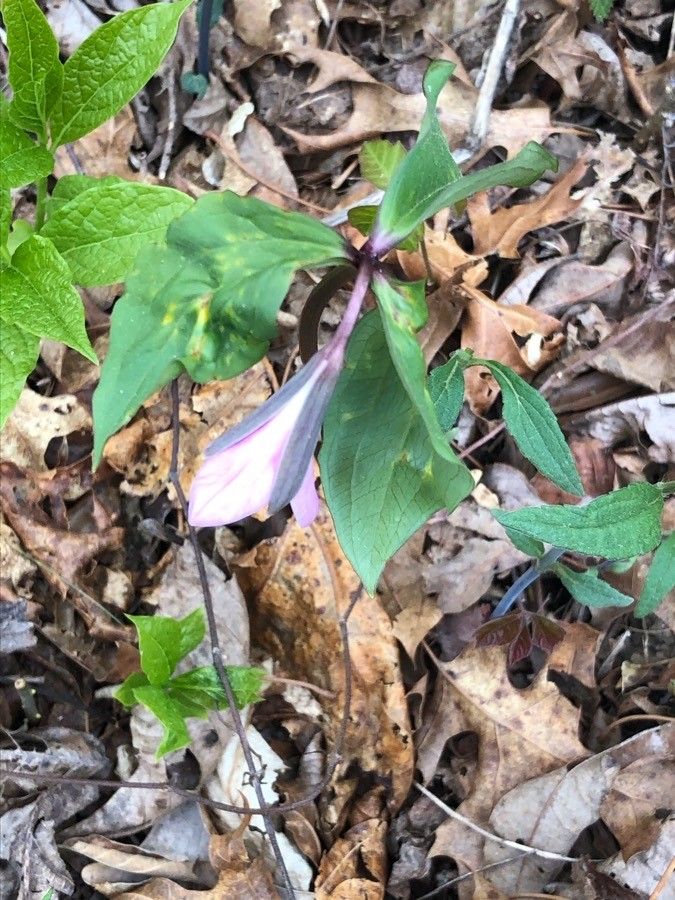
Trillium underwoodii, commonly known as Underwood's trillium, is a perennial herbaceous plant belonging to the family Melanthiaceae. Native to the southeastern United States, this plant thrives in deciduous forests and woodlands.
Typically, Trillium underwoodii grows up to 30 cm in height and features a single stem with three large, oval leaves arranged in a whorl at the top. These leaves, characterized by their pointed tips and prominent veins, enhance the plant's distinctive appearance.
In the spring, Underwood's trillium produces a solitary flower that sits atop the three-leaved whorl. The flower boasts three white petals, each tinged with pink or purple at the base, adding to its visual appeal.
This species plays a crucial role in forest ecosystems, contributing to nutrient cycling by decomposing leaf litter on the forest floor. Additionally, it provides habitat for various wildlife species, including insects, birds, and small mammals.
However, Trillium underwoodii, like many other trillium species across North America, faces threats from habitat loss due to deforestation and land development. These activities can lead to the decline or extinction of the species if not managed properly. Conservation efforts, such as habitat restoration programs and the designation of protected areas, are essential for ensuring the survival of Trillium underwoodii within its natural range.
How to keep Trillium Underwoodii.
Water
Newly planted longbract wakerobin needs frequent watering to prevent the soil from drying out during its initial adjustment period. Once the plant is established, you can reduce the watering frequency. The goal is to keep the soil moist without causing waterlogging.
Fertilizer
Longbract wakerobin needs very little fertilization. To support its growth, apply organic fertilizers when planting. In addition, each spring after the frost, add a small amount of manure compost. To improve blooming, you can use a low-nitrogen fertilizer, such as one with an NPK ratio of 5-10-10. However, be careful to avoid letting the fertilizer come into contact with the flowers or leaves.
Pruning
The longbract wakerobin showcases eye-catching blooms and distinctive foliage in the spring. To maintain its health, prune it only lightly in early spring by removing any dead leaves. Avoid heavy pruning, as this can stress the plant and reduce its ability to bloom. Regularly removing spent flowers encourages vigorous growth and enhances its ornamental appeal for the following season.
Botanical profile.
- Life Cycle
- Perennial
- Genus
- Trillium
- Family
- Melanthiaceae
- Mature Height
- 20 cm
- Mature Spread
- 30 cm
Other names.
Reader questions.
What are the sunlight requirements for Longbract wakerobin?
Longbract wakerobin (Trillium underwoodii) thrives in different lighting conditions depending on the type you have. For plants that require partial sun, they should receive about 3-6 hours of sunlight daily. If the plant is best suited for full shade, it needs less than 3 hours of sunlight each day. It's important to observe how sunlight moves through your garden throughout the day. This observation will help you pick locations that offer an optimal balance of light and shade, ensuring your Longbract wakerobin plants are healthy and happy.
What is the botanical name of Longbract wakerobin?
The botanical name of Longbract wakerobin is Trillium underwoodii.