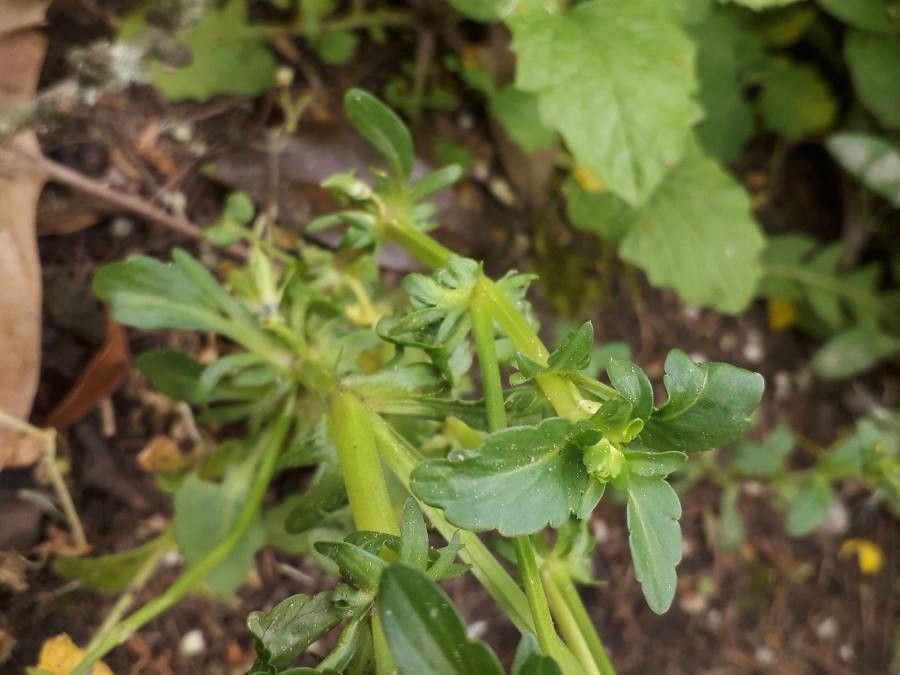
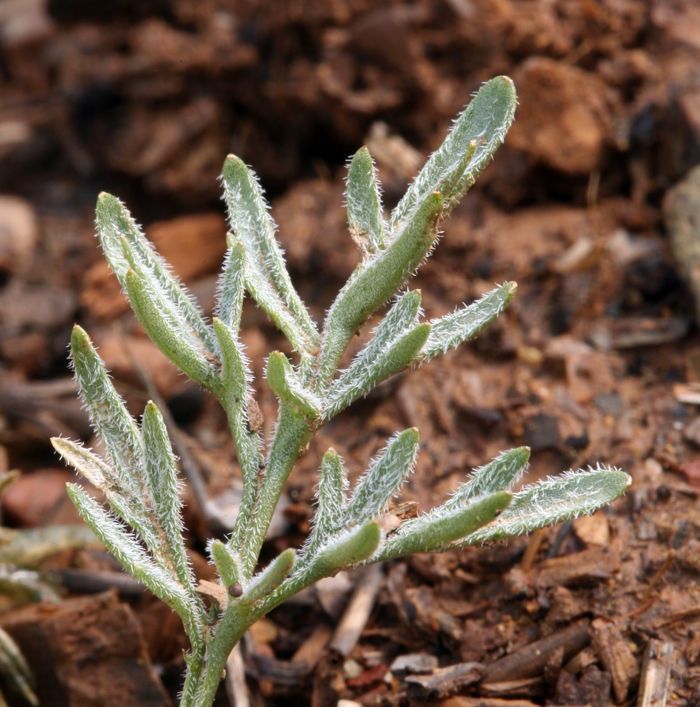
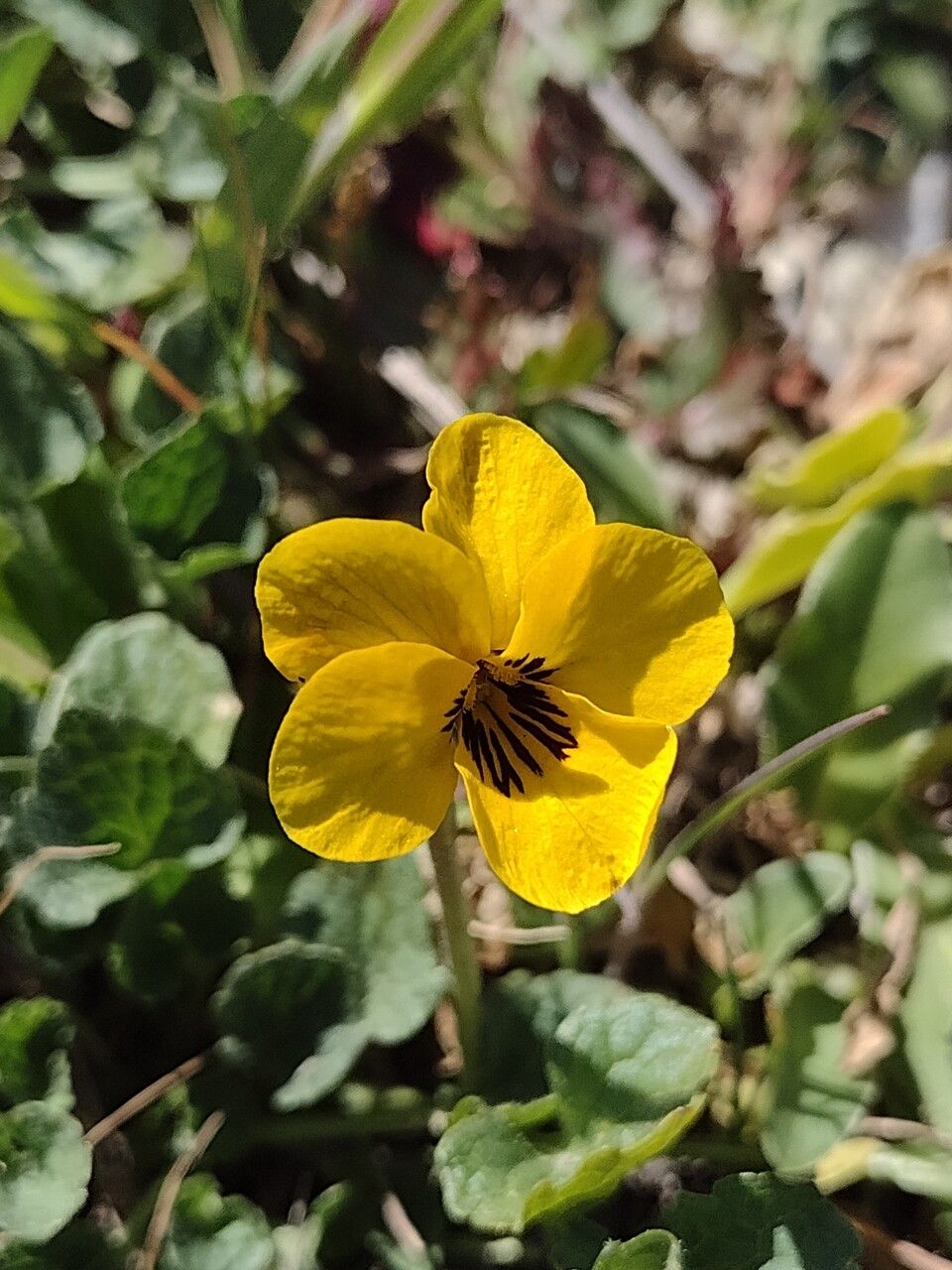
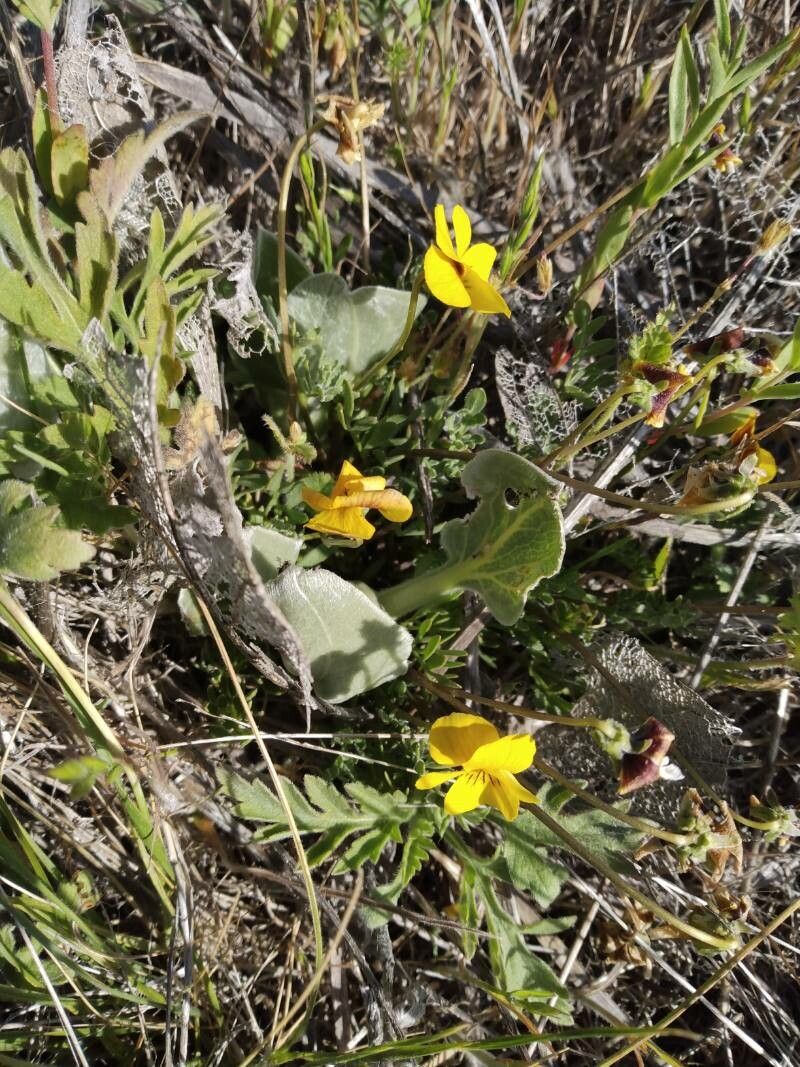
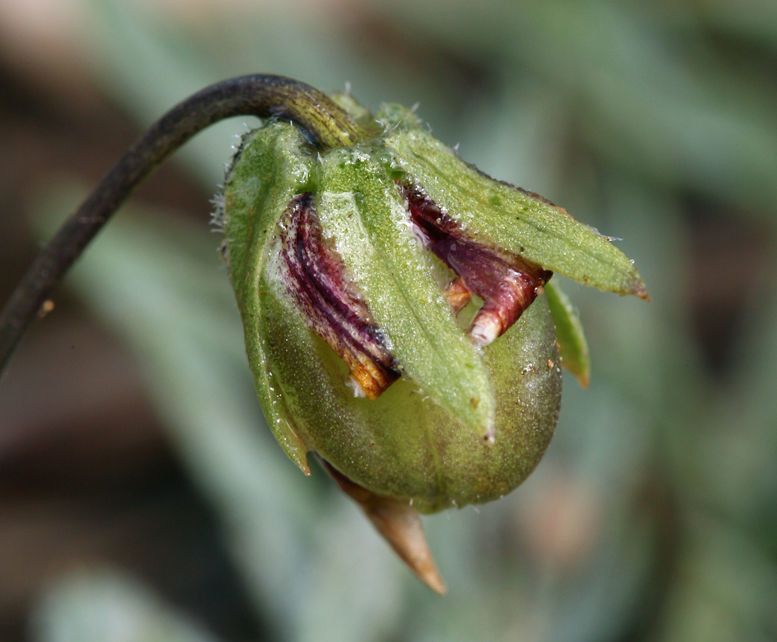
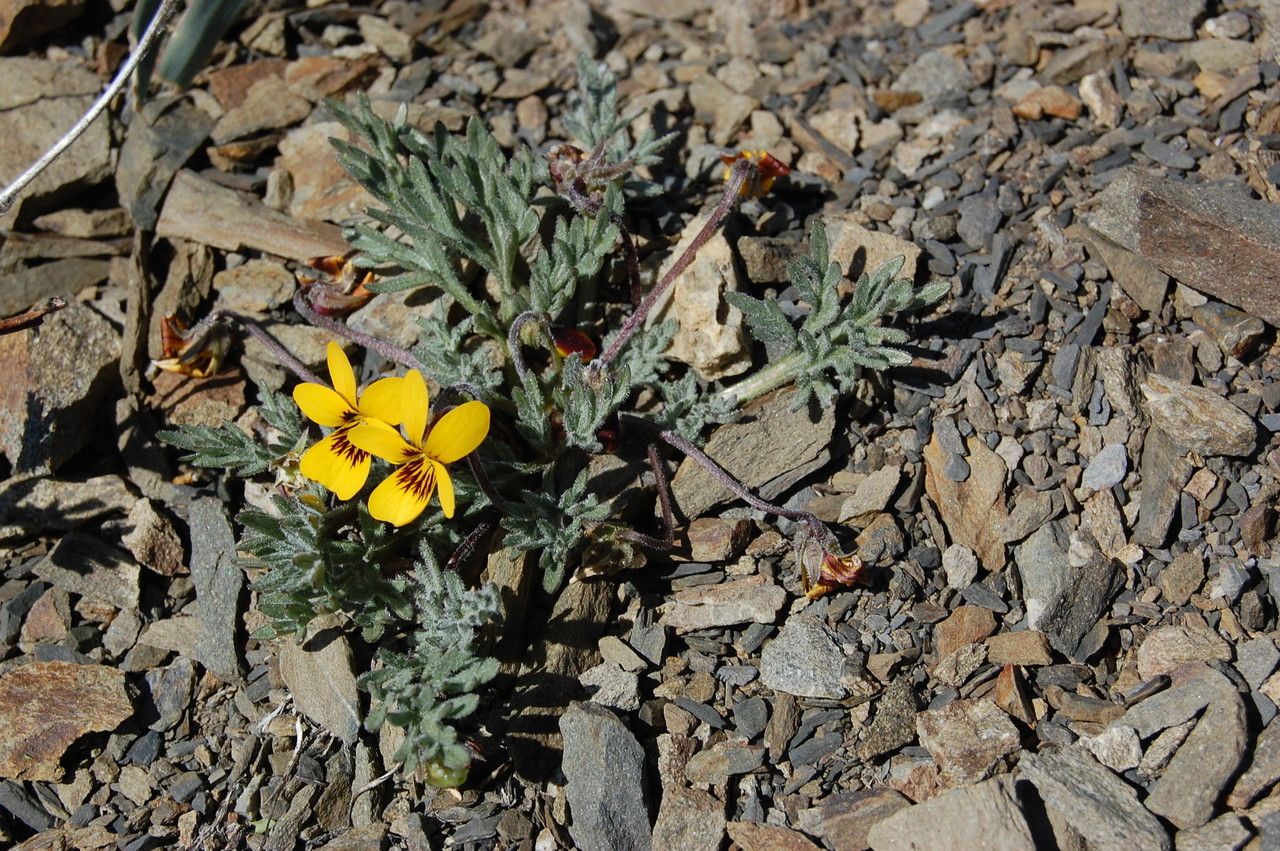
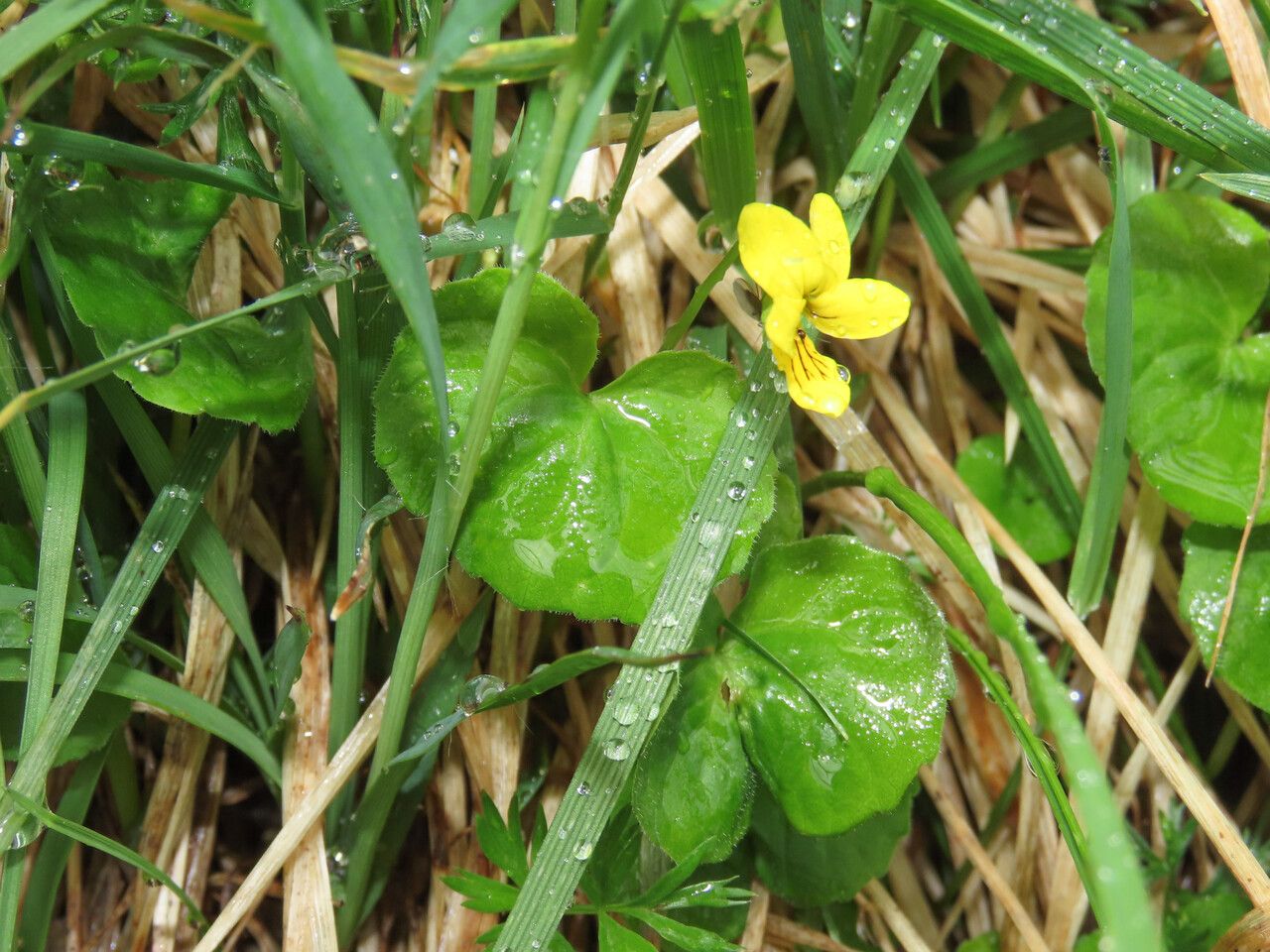
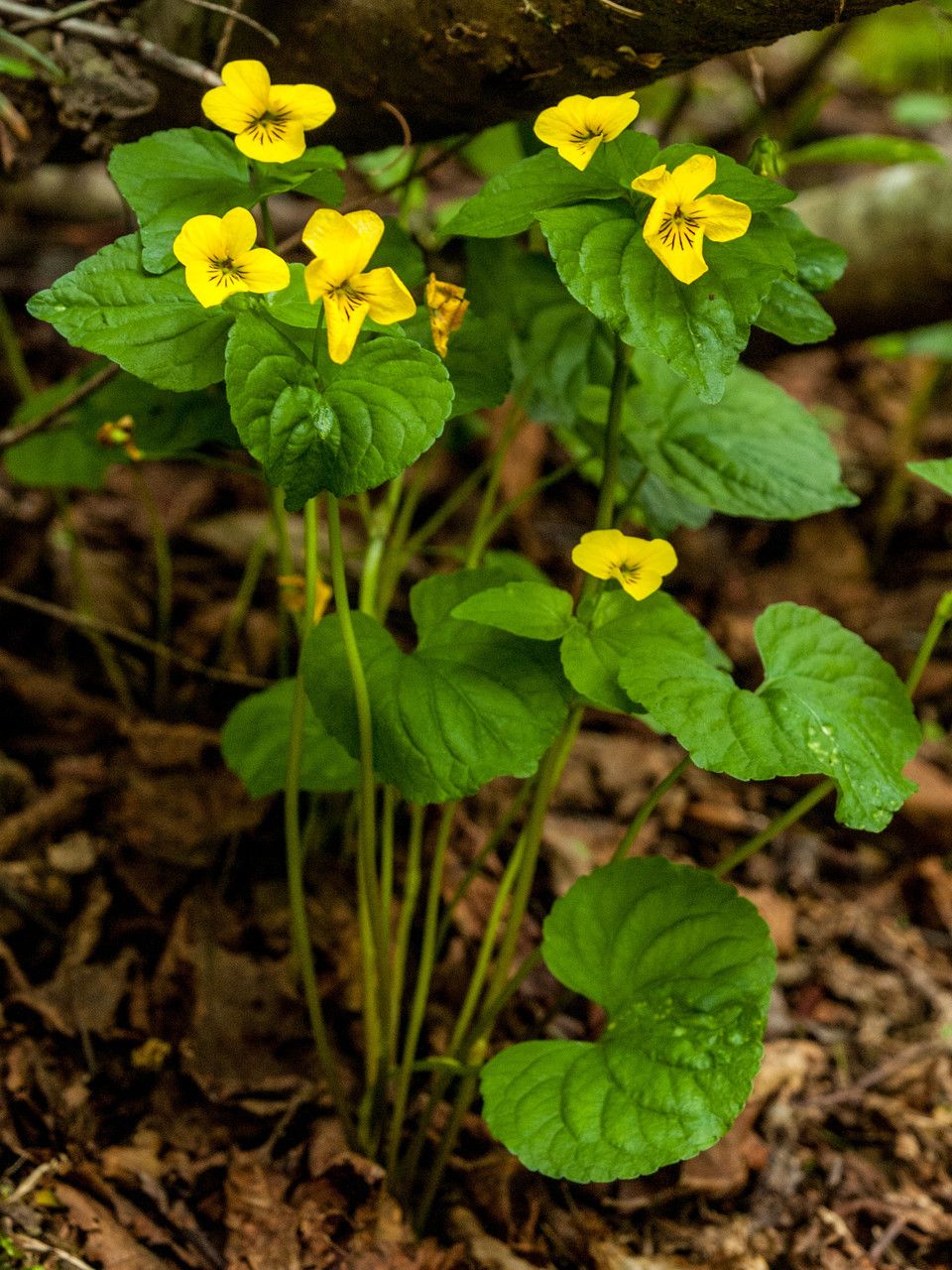
Viola douglasii is a species of violet known by the common name Douglas' violet, or Douglas' golden violet. It is native to western North America from Oregon through California and into Baja California, where it grows in seasonally moist habitat, often on serpentine soils. This rhizomatous herb produces a cluster of erect stems just a few centimeters in length to about 20 centimeters in maximum height. The leaf blades are deeply dissected into several narrow lobes or compound, made up of leaflets, and borne on long petioles. They are hairless to softly hairy in texture. A solitary flower is borne on a long, upright stem. It has five bright or deep yellow petals with brown veining and brown outer surfaces. The largest lowest petal may be over 2 centimeters in length.
Douglas' golden violet is quite resistant to disease and is generally not susceptible to illnesses. However, it can be vulnerable to pests and diseases found in its surroundings. These outbreaks are typically not serious. For care, the plant requires a moderate level of maintenance. It needs regular pruning to keep a good appearance and support healthy growth. Fertilizing can also help encourage flowering. Douglas' golden violet is suitable for anyone with outdoor space, such as a garden or patio, and does not demand extensive care experience. It may need additional attention if grown indoors.
How to keep Viola Douglasii.
Water
Douglas' golden violet thrives in humid, mountainous environments and does not tolerate drought well. To prevent decay, avoid overwatering. In gardens, adjust watering based on the weather to avoid excessive dryness. When grown in pots, water thoroughly whenever the soil surface feels dry.
Fertilizer
A single fertilizer application in spring is typically adequate for Douglas' golden violet, though repeated feedings can enhance growth. Feed every month to a month and a half. Fertilization improves the leaves' appearance and function, helping maintain even color and a healthy texture. It also encourages root development and nutrient uptake for long-term plant health.
Pruning
Douglas' golden violet is a perennial herb known for its vibrant golden-yellow flowers. For optimal blooming, prune it in early spring by removing dead stems and spent flowers. To promote healthy growth and enhance its aesthetic appeal, ensure there is adequate airflow around the plant, which helps prevent disease and pests.
Botanical profile.
Other names.
Reader questions.
What are the sunlight requirements for Douglas' golden violet?
Douglas' golden violet, botanically known as Viola douglasii, thrives under specific sunlight conditions to ensure its health and happiness. The plant requires 'full sun', meaning it should receive above 6 hours of direct sunlight daily, or 'partial sun', which entails about 3-6 hours of sunlight. It's crucial to observe how sunlight moves through your garden throughout the day to find spots that offer an ideal balance of light and shade suitable for your Douglas' golden violet.
What is Douglas' golden violet?
Douglas' golden violet is a plant known scientifically as Viola douglasii. Although the provided information doesn't include details on its essentials or symptoms, it is indicated by its name and botanical identification.
Is there any special warning regarding sunlight for Douglas' golden violet?
Yes, there is a special warning regarding sunlight for Douglas' golden violet (Viola douglasii). When planning where to plant it in your garden, it's important to watch how sunlight gracefully moves throughout the area during the day. Selecting the right spots that provide the perfect balance of light and shade is crucial for ensuring the plant's happiness and optimal growth.