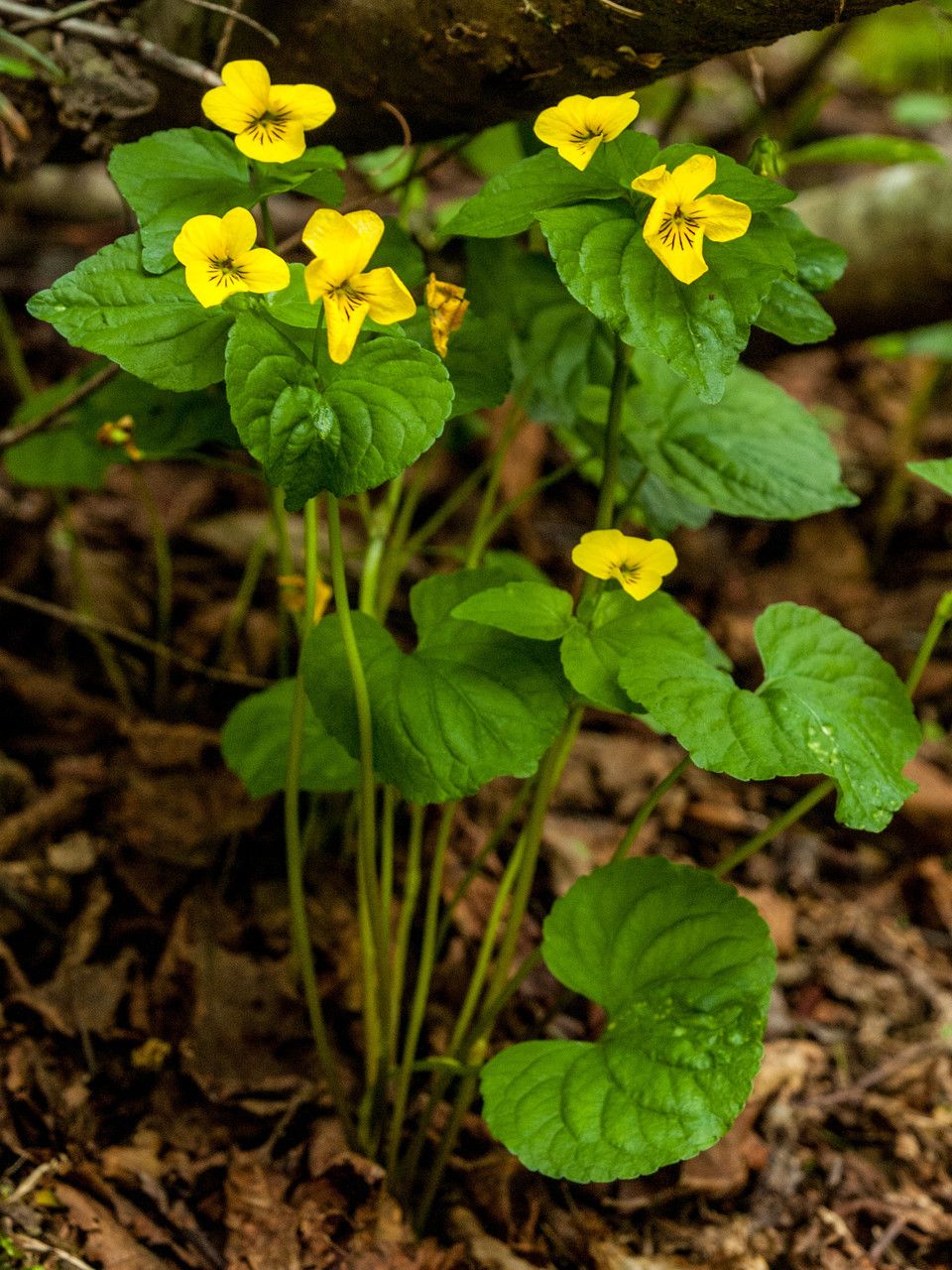
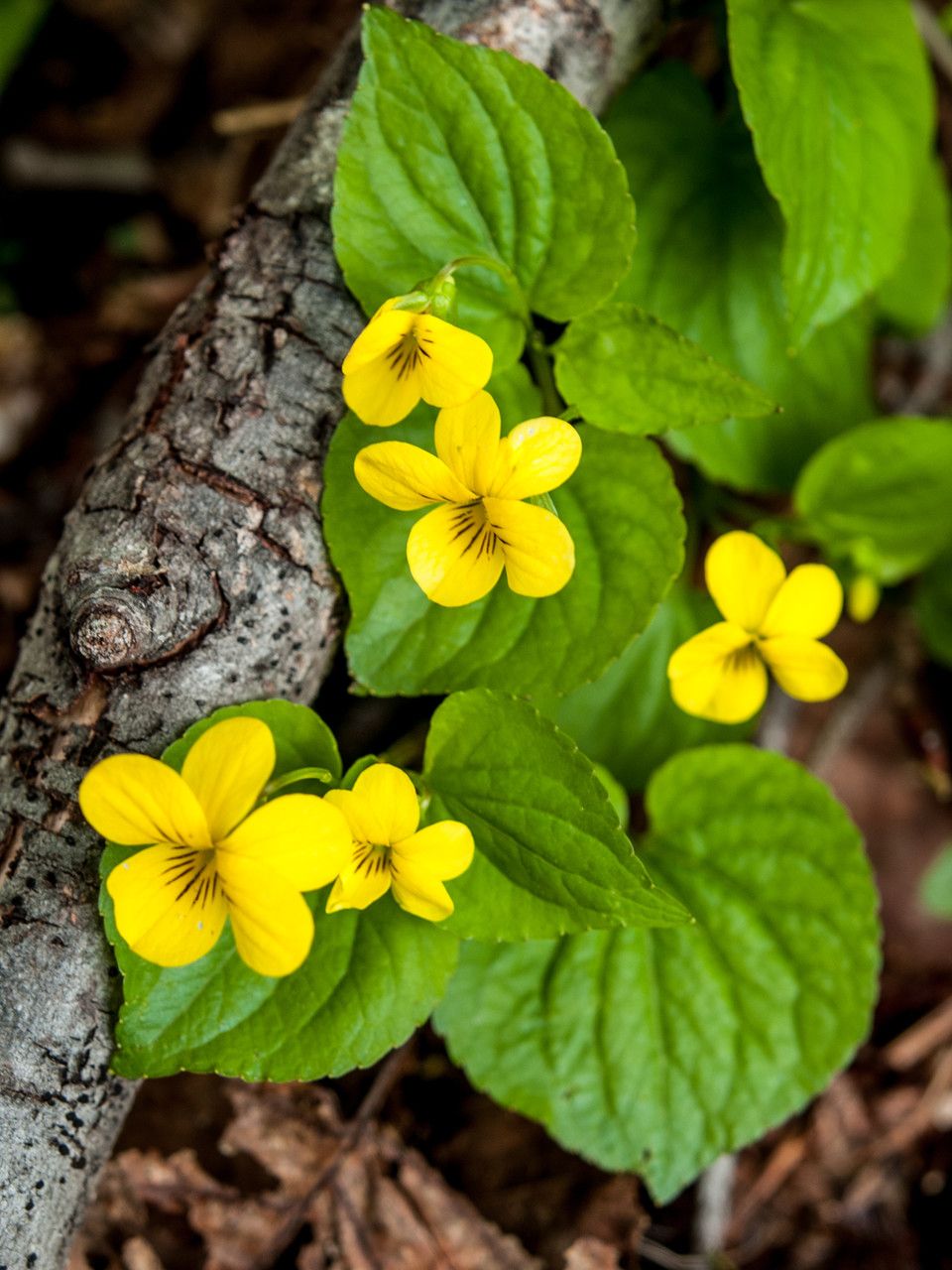
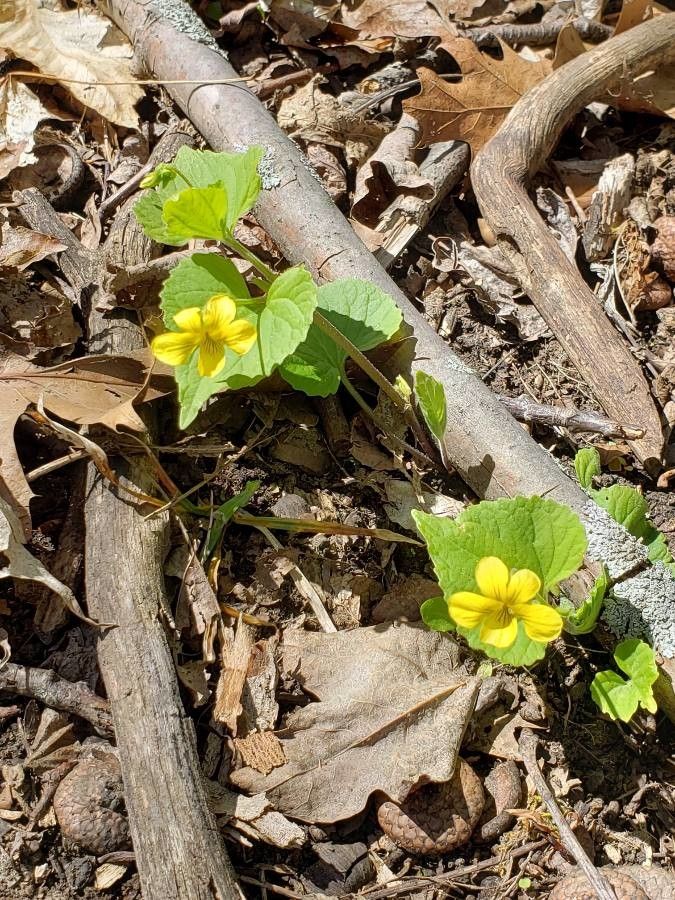
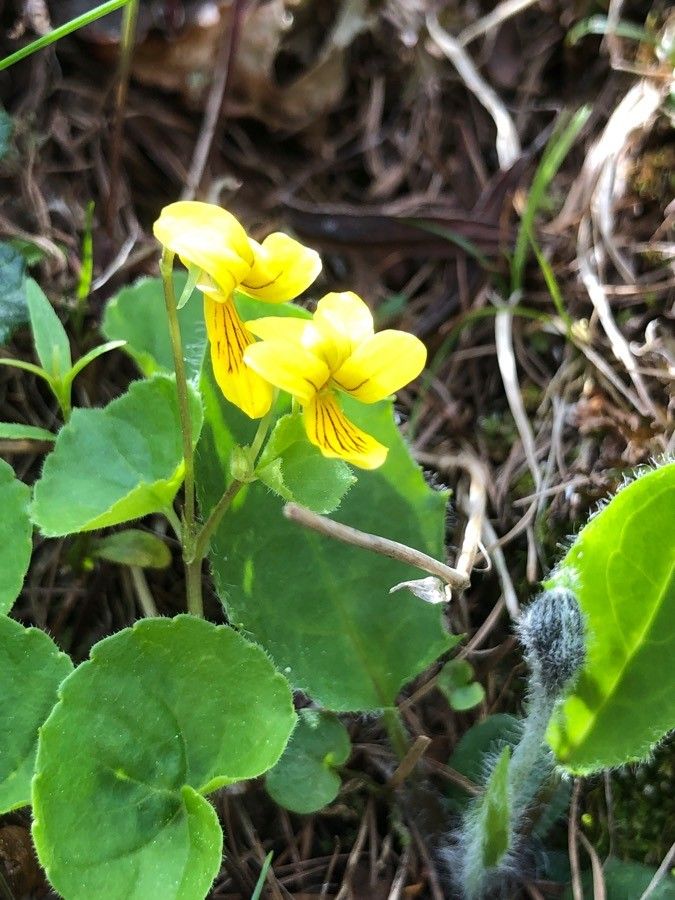
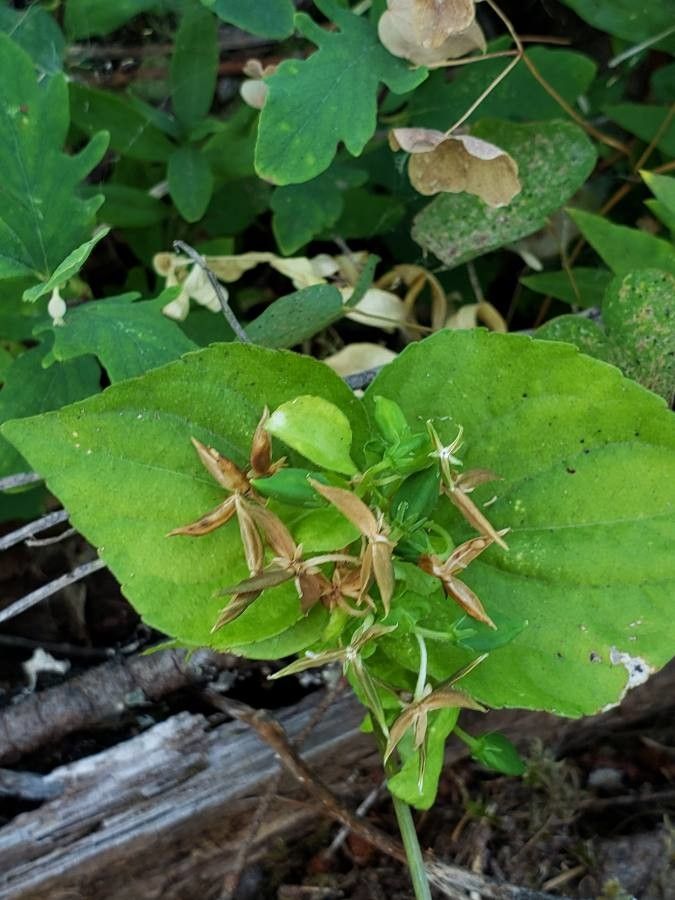
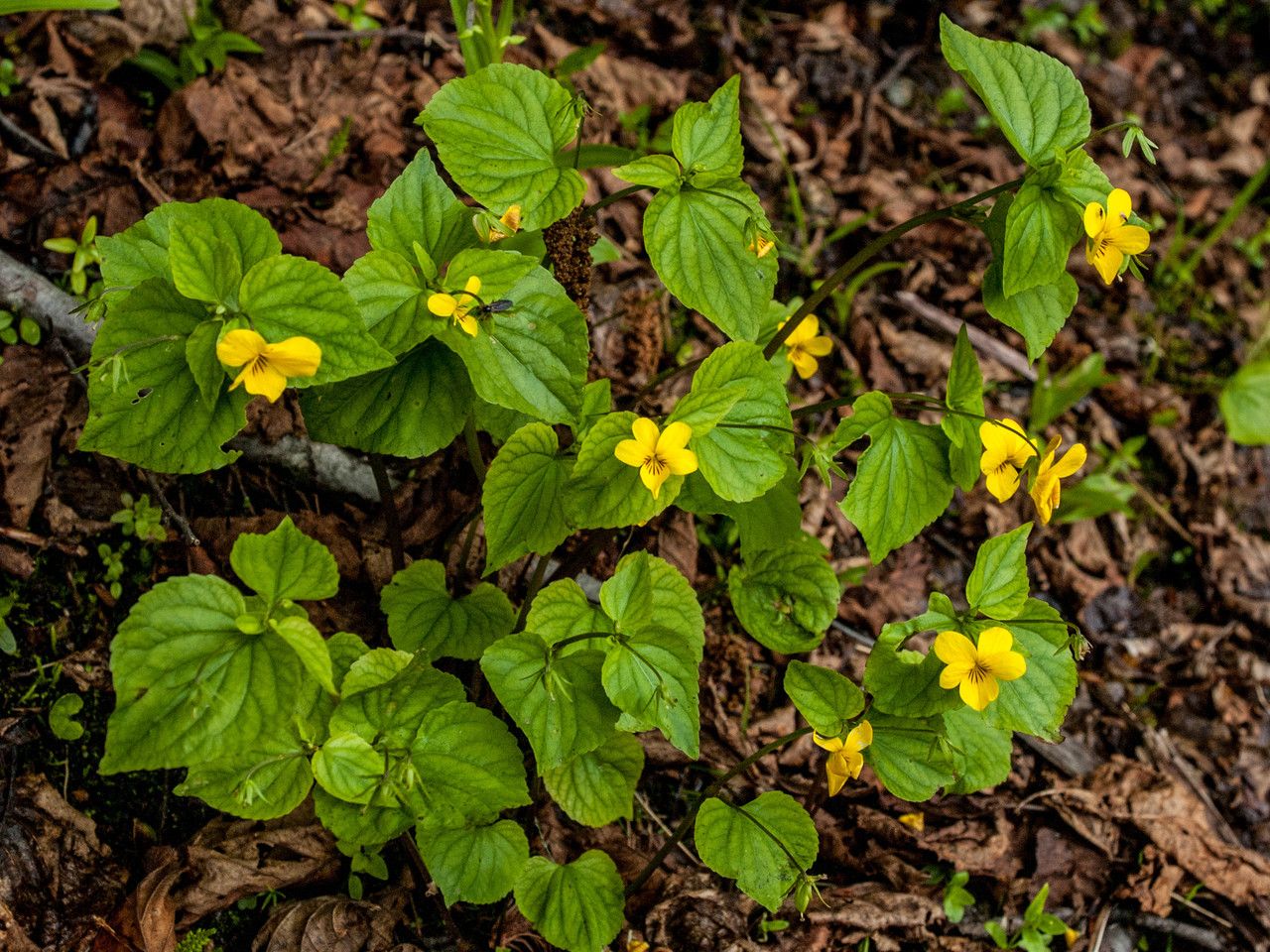
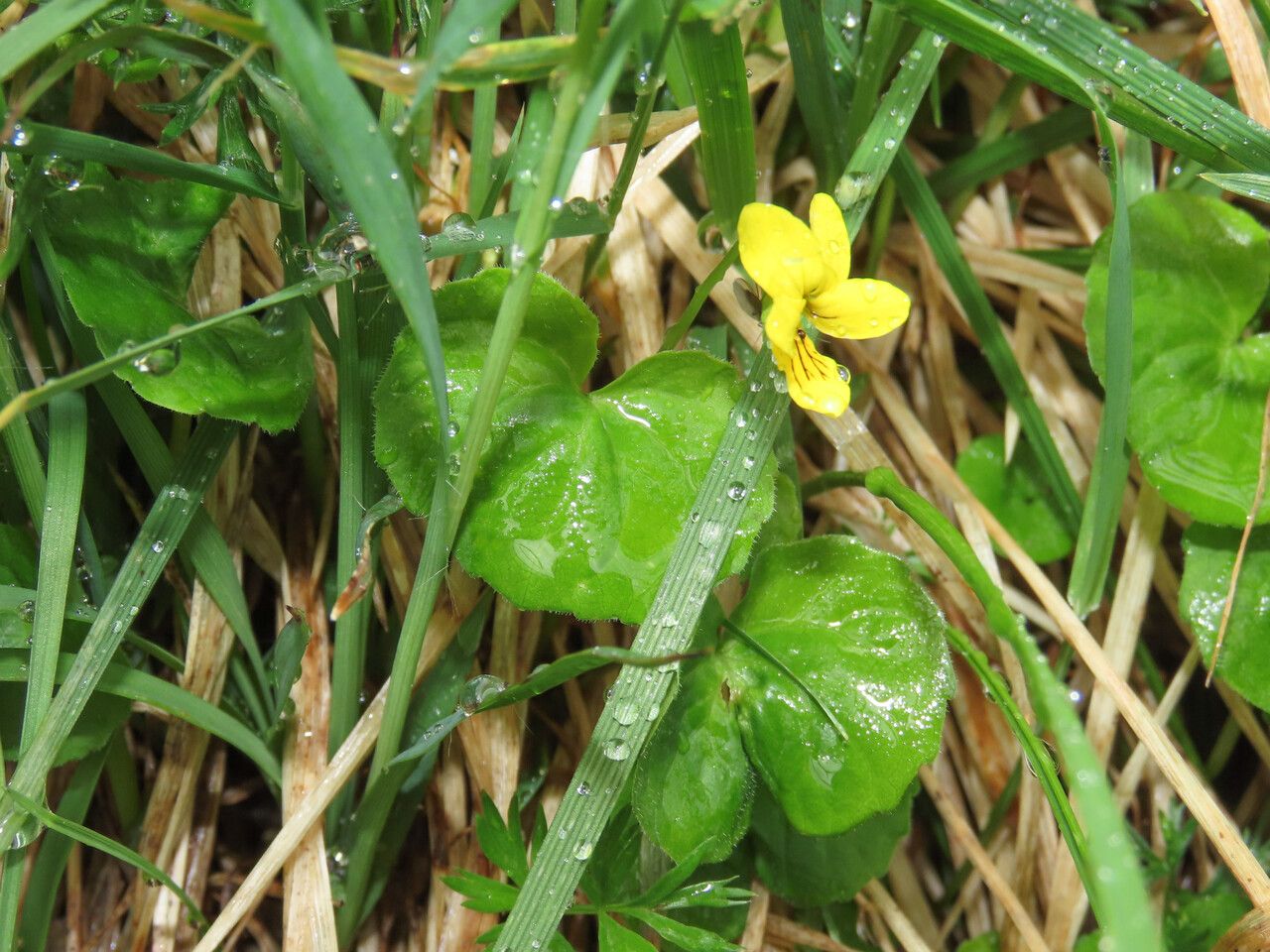
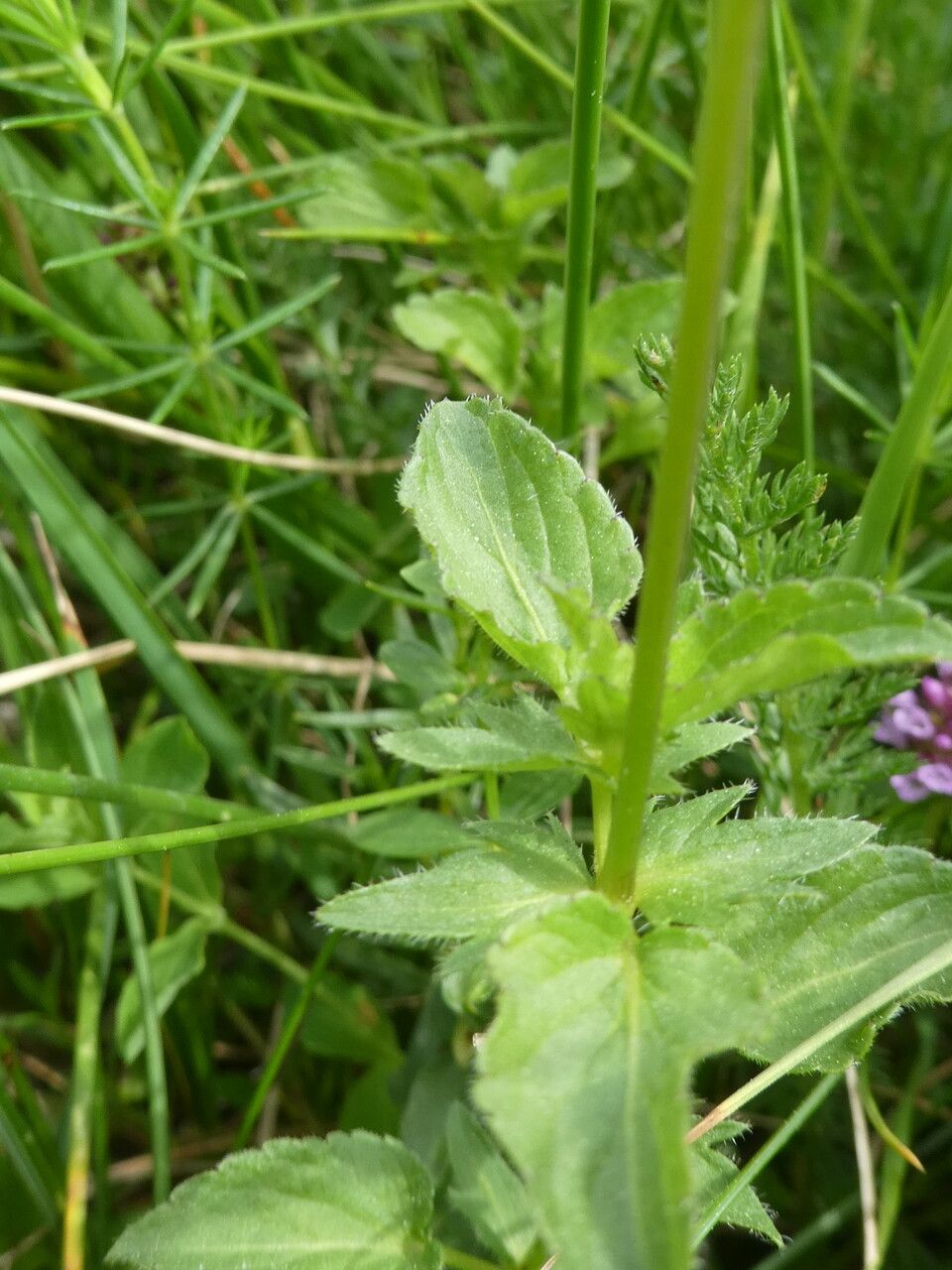
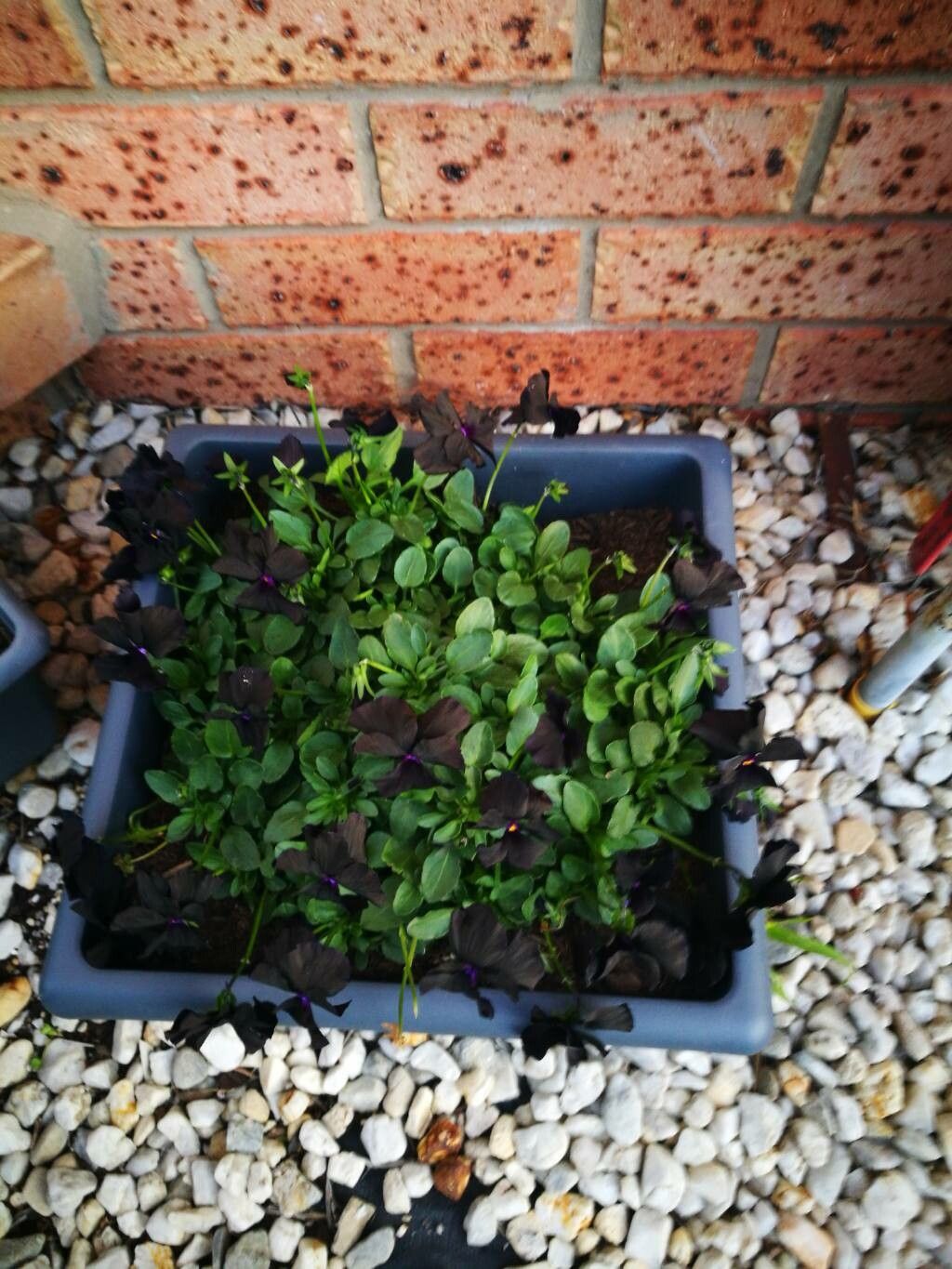
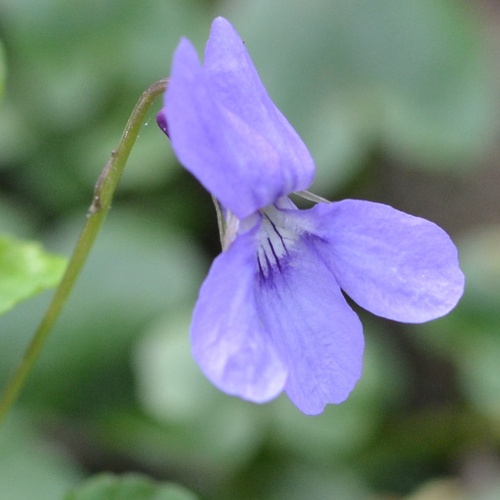
Viola glabella, commonly known as stream violet or pioneer violet, is a perennial herbaceous plant belonging to the Violaceae family. Native to North America, it thrives in wet meadows, stream banks, and other moist habitats. This low-growing plant features heart-shaped, dark green leaves with toothed margins. Its small flowers, which bloom from April to June, have five petals that range in color from white to pale lavender or blue-violet. These blooms attract pollinators such as bees and butterflies.
Historically, Native American tribes have utilized Viola glabella for its medicinal properties. It was used to treat headaches, coughs, colds, sore throats, and skin irritations such as eczema and psoriasis.
In addition to its medicinal benefits, Viola glabella is valued for its ornamental appeal. Its charming flowers make it a popular choice for gardeners who cultivate it in moist areas of their gardens.
Overall, Viola glabella is a fascinating plant with both medicinal and ornamental significance. It plays an essential role in its ecosystem while also being beneficial for human use.
Stream Violet shows strong resistance to disease and is usually not prone to illnesses. However, it can be affected by pests and diseases present in its environment. These outbreaks are typically mild. For care, this plant requires moderate maintenance. It should be pruned regularly to keep a neat appearance and healthy growth. Fertilizing can also aid in encouraging blooms. Stream Violet is well suited to anyone with an outdoor area, such as a garden or patio, and does not demand extensive care experience. It may need more attentive care when kept indoors.
How to keep Viola Glabella.
Light
The stream Violet requires a moderate amount of sunlight for best growth. Native to particular habitats, it tolerates a range of light conditions, though excessive exposure can cause leaf scorching. Insufficient sunlight can lead to slower growth and paler foliage. During its various growth stages the sun's effect changes but remains essential.
Water
The Stream Violet thrives in moist environments with high humidity, making it well-suited to life under forest canopies. To keep it optimally hydrated, it should be watered once a week. Although often grown outdoors, the plant greatly benefits from natural rainfall, which supports lush foliage during the growing season.
Humidity
This plant needs special care because it loves high humidity levels of 60-80% or more. The best way to achieve this is by placing a humidifier near the plant. Daily misting is also essential! Make sure the room has good ventilation.
Temperature
Stream Violet is native to habitats with moderate temperature fluctuations from 41 to 89.6 °F (5 to 32 ℃). It favors the cooler end of that range. Appropriate seasonal adjustments include giving extra shade during hotter periods.
Fertilizer
For Stream Violet, the optimal time to apply fertilizer is in early spring as the flowers begin to form. The proper fertilizer promotes better blooms and helps Stream Violet produce attractive flowers. Fertilizing in early spring ensures excellent flowering during the season and supplies energy for dormant growth phases.
Pruning
The Stream Violet flourishes in moist, shaded environments, displaying heart-shaped leaves and vibrant yellow flowers. To encourage growth, prune it from early to late spring, concentrating on thinning out dense sections to improve air circulation. Be careful to avoid heavy pruning to prevent plant stress and to maintain its overall health and visual appeal.
Botanical profile.
Other names.
Reader questions.
How should I water my Stream Violet plant?
To properly care for the Stream Violet plant, it is important to follow a few guidelines. Firstly, using filtered water is recommended, as tap water may contain harmful particles. Secondly, it is best to use water that is at room temperature or slightly warmer, as this plant is accustomed to a warm environment and cold water can be damaging. Additionally, it is advised to refrain from overhead watering, as it can lead to issues with the foliage. Instead, the water should be applied directly to the soil until it is fully soaked. This method is beneficial as it ensures that the roots are adequately moisturized and enables them to collect the necessary nutrients from the soil.
Why should I put fertilizer on my Stream Violet?
The Stream Violet's leaves are essential to its overall structure. To keep them looking vibrant and fulfilling their purpose, fertilization is key. Proper fertilization will enhance the color and texture of the leaves, ensuring they remain healthy. Additionally, fertilization plays a role beneath the ground's surface by promoting root growth and the maintenance of existing roots. By fertilizing your Stream Violet, you're not only keeping it healthy in the present but also improving its ability to absorb nutrients from the soil in the long run.
What are the sunlight requirements for Stream Violet?
Stream Violet needs about 3-6 hours of sunlight daily to thrive optimally, making it suitable for areas with partial sun exposure. It is important to observe how sunlight moves through your garden to find spots that offer a balance of light and shade, ensuring the plants' wellbeing. The plant, Viola glabella, shows resilience to various light conditions, but excessive sunlight can cause leaf scorching, while too little light might result in slower growth and pale foliage. During different growth stages, the sunlight requirement remains crucial though it may vary slightly.
What are the optimal temperature conditions for Stream Violet?
Stream Violet thrives in environments with moderate temperature variations, specifically between 41 to 89.6 °F (5 to 32 °C), favoring the cooler temperatures within this range. The plant is quite resistant to cold and special frost protection measures are usually not required. However, should winter temperatures plummet below -30°C, it's crucial to provide cold protection by covering the plant with soil or straw. Additionally, watering the plant abundantly before the first freeze of autumn to ensure the soil remains moist can help prevent drought and water scarcity during winter and early spring.
What should I do if I give too much or too little water to my Stream Violet plant?
Overwatering your Stream Violet is a more common issue and can be harmful to its health. When this plant gets too much water, it may wilt, turn yellow, and even develop diseases like root rot, mold, and mildew, which can be fatal. On the other hand, underwatering is less common for the Stream Violet because it can tolerate drought. However, if underwatering does happen, the leaves will become brittle and brown. It's important to notice the signs of overwatering early to prevent irreversible damage. If you see these signs, reduce your watering immediately. Also, check the soil drainage and replace it with a well-draining mix if necessary. If signs of underwatering appear, simply water the plant more regularly until the signs go away.
When should I fertilize my Stream Violet plant?
If you grow your Stream Violet outdoors, it will start growing new leaves in early spring. This is a sign to start fertilizing it for the year. A single application of fertilizer is usually enough, but if you want to maximize growth, you can fertilize it more often. Feed your Stream Violet about once every month to a month and a half.
How can artificial lighting be used for Stream Violet?
When natural sunlight is insufficient, especially in winter or in areas within homes that receive less sunlight, artificial lighting becomes essential for Stream Violet's growth. LED lights, recommended for their ability to provide specific light wavelengths, should be chosen carefully. The amount of artificial light required varies: full sun plants need 30-50W/sq ft, partial sun plants 20-30W/sq ft, and full shade plants 10-20W/sq ft. The light source should be placed 12-36 inches above the plant to mimic natural sunlight, and most plants generally need 8-12 hours of light per day.
What should I do if the Stream Violet experiences very low temperatures?
Stream Violet is notably cold-tolerant, thriving best when temperatures remain above 5°C. However, during winters with temperatures dropping below -25°C, and especially below -30°C, you may notice a decrease in sprouting or even a complete lack of sprouting in the spring. Should this occur, it's advised that in spring, any parts of the plant that have failed to sprout should be removed to encourage new growth.
How frequently should I water my Stream Violet plant?
If your plant is in a pot, the most precise way to check if it needs water is by sticking your finger into the soil. If the top two to three inches of soil are dry, it's time to water it. The same goes for growing the plant outdoors in the ground. When the top few inches of soil are dry, it's time to water it. Typically, during spring and early fall, watering once a week is sufficient. However, in extremely hot weather, you may need to water it twice or more per week. However, it's worth noting that mature, well-established Stream Violets can handle drought quite well.
When is not a good time to fertilize my Stream Violet?
During the late fall and winter, your Stream Violet will go into a dormant phase and stop producing new growth. It is important to avoid fertilizing your Stream Violet at this time. As spring and summer approach, if you choose to fertilize, start reducing the amount of fertilizer as the growth rate of your Stream Violet will slow down. It is always best to refrain from fertilizing during abnormally hot weather or when the soil is extremely dry, as fertilizing in these conditions can cause stress and premature death of your Stream Violet.
What are the symptoms of insufficient light in Stream Violet?
When Stream Violet receives insufficient light, various symptoms can manifest, including smaller new leaves, leggy or sparse growth, premature leaf drop, slowed or ceased growth, and leaves becoming lighter in color or exhibiting chlorosis (turning yellow). Excessive sunlight can lead to sunscald, leaf curling, wilting due to increased water loss, and leaf scorching, marked by brown, dry, and crispy leaf edges. These symptoms indicate a need for adjusting the plant's light exposure to ensure its health and vitality.
How does Stream Violet react to high temperatures and what are the solutions?
During summer, it's important to keep Stream Violet's environment below 32°C. Temperatures above 35°C may cause the plant's leaves to lighten in color, become prone to curling, suffer from sunburn, or, in severe cases, cause the entire plant to wilt and dry out. To counteract these effects, trim away the sunburned and dried-up parts, move the plant to a shaded location away from midday and afternoon sun, or utilize a shade cloth. Ensuring the soil remains moist by watering the plant in the morning and evening is also beneficial.