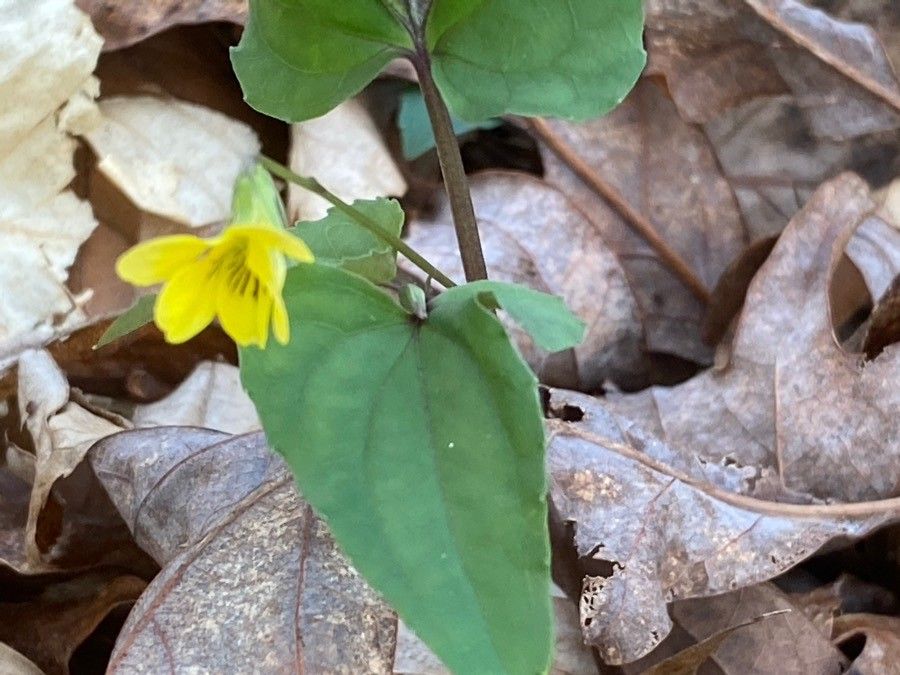
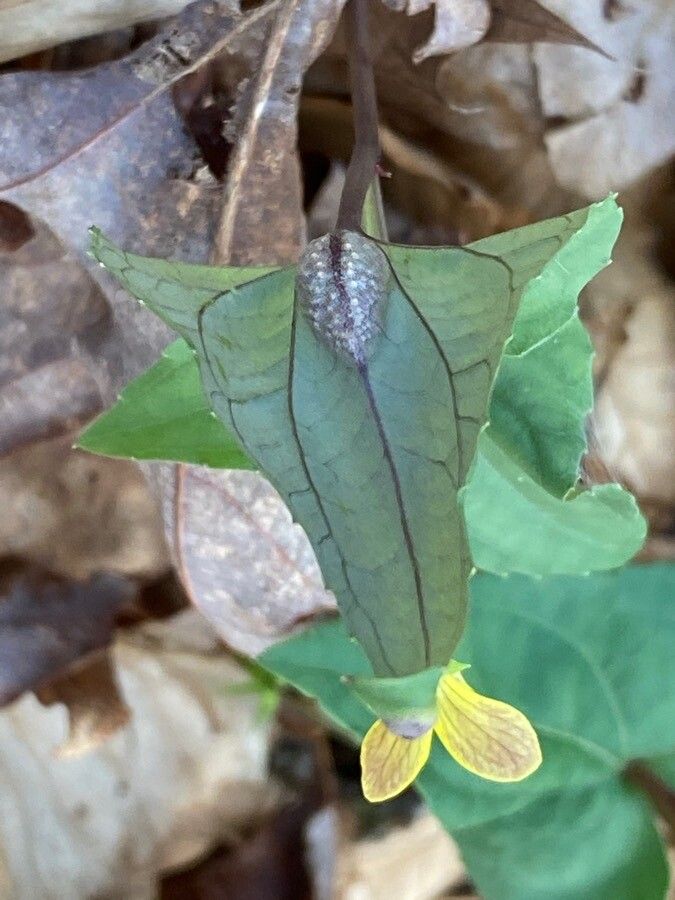
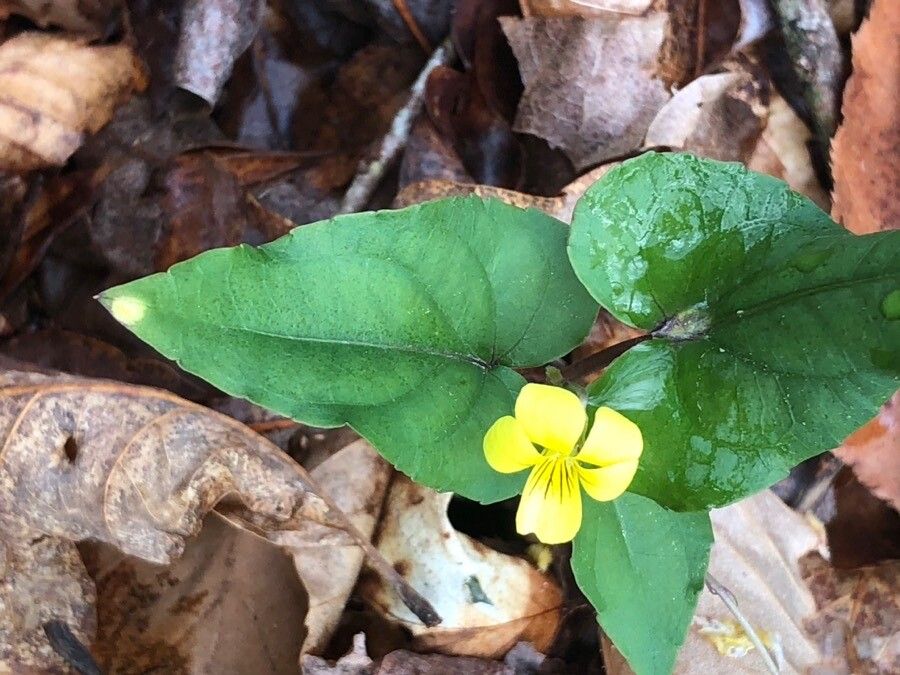
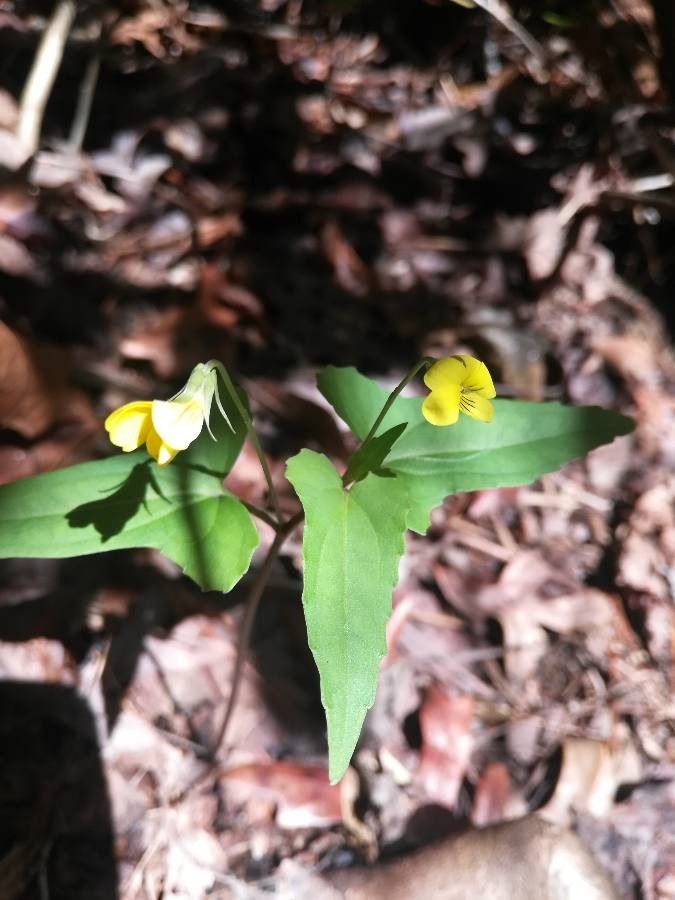
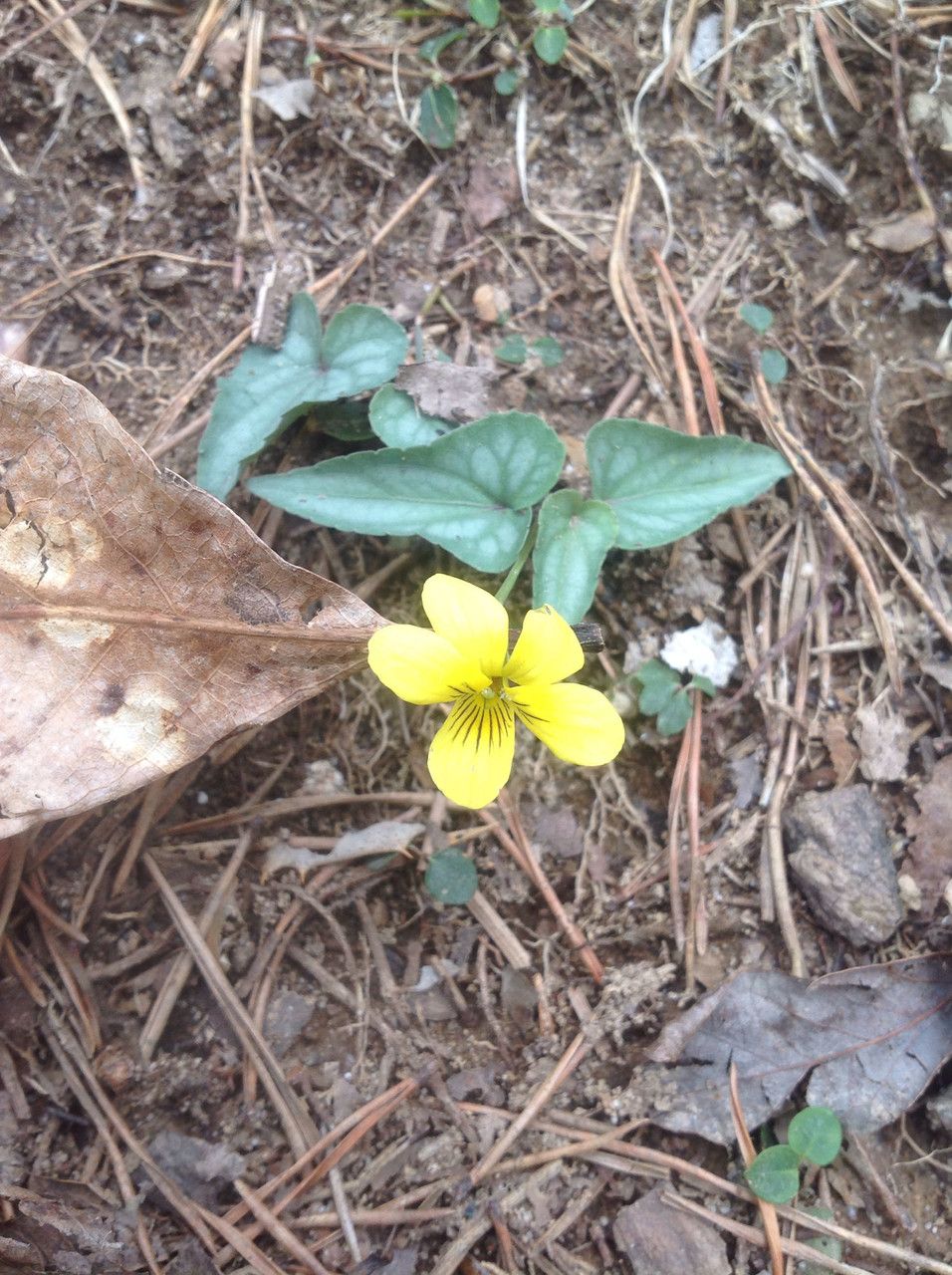
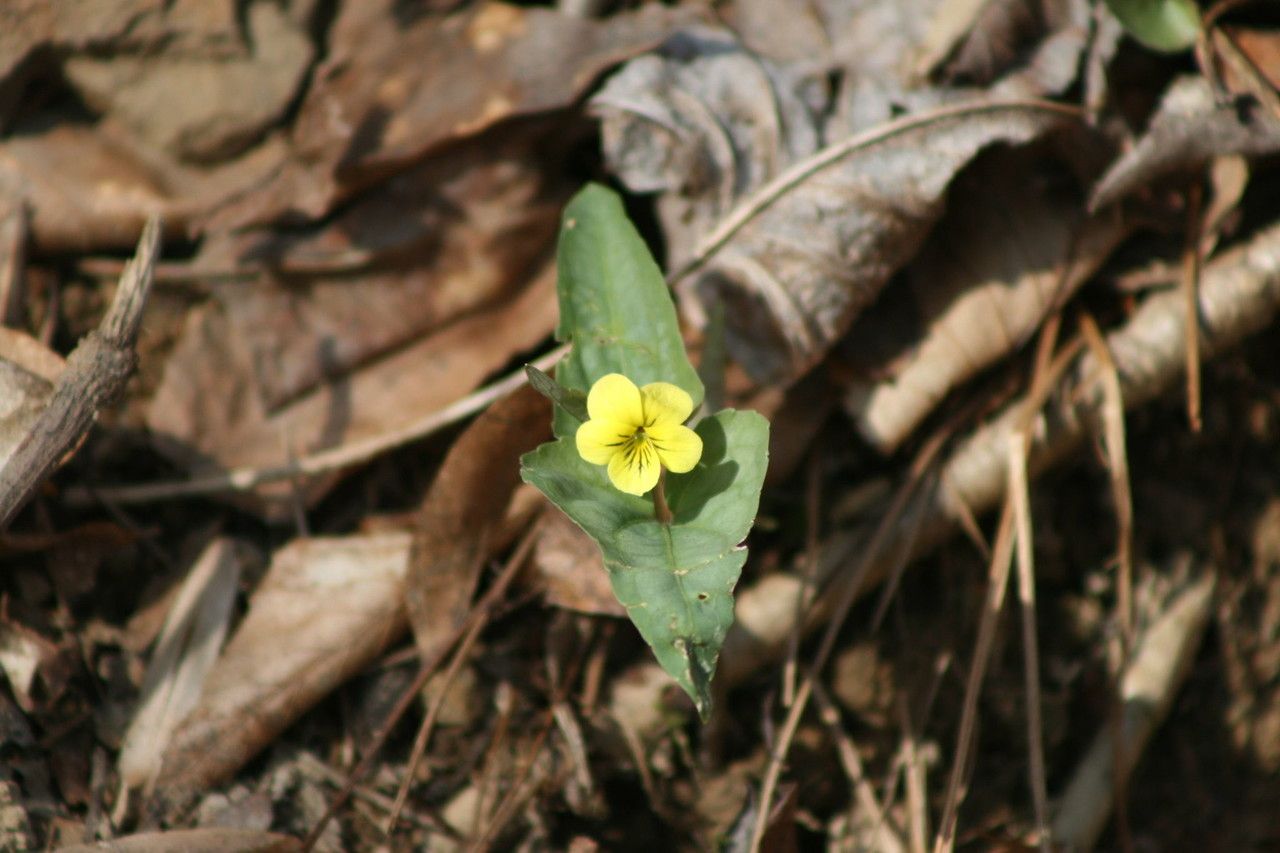
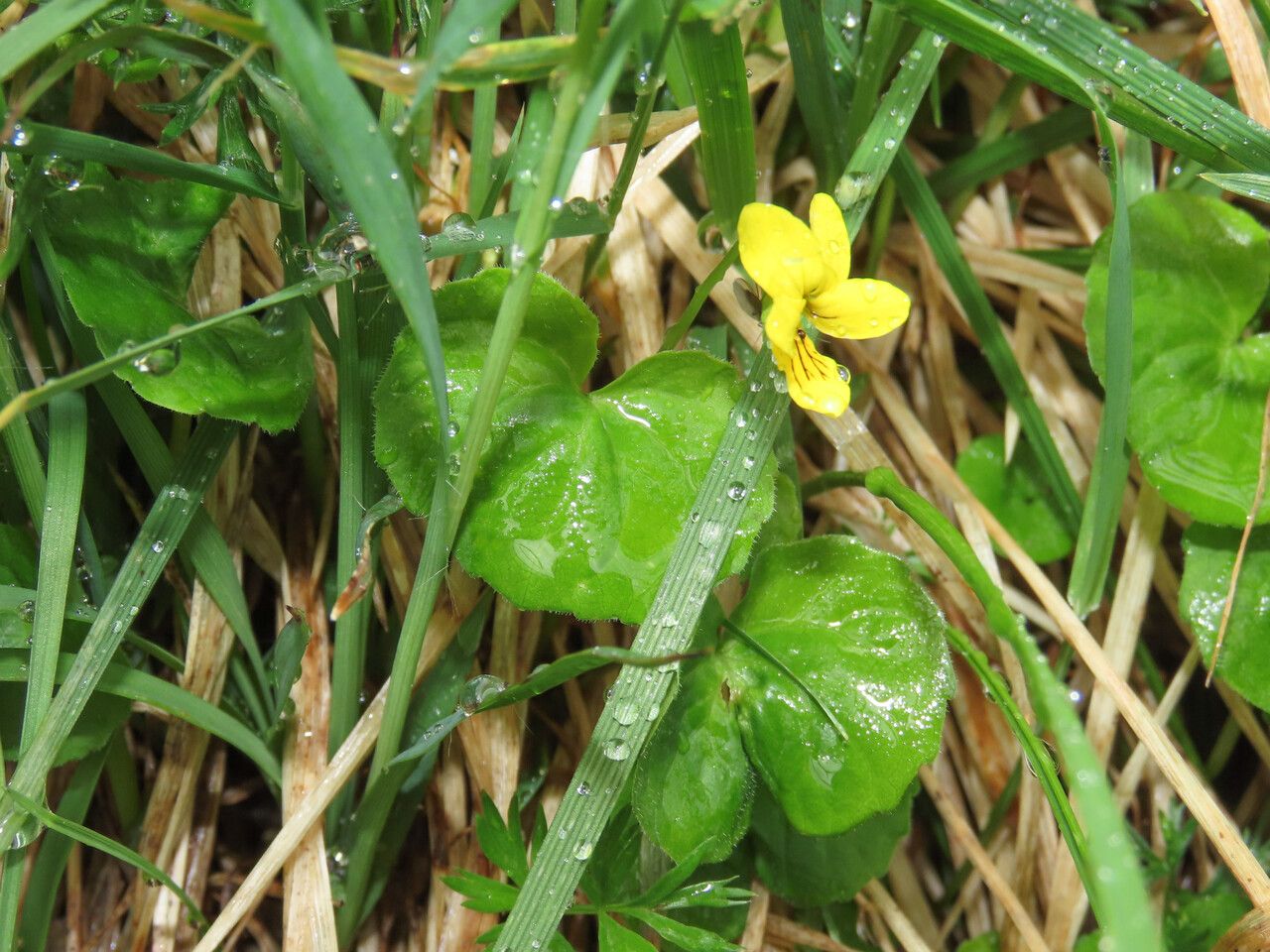
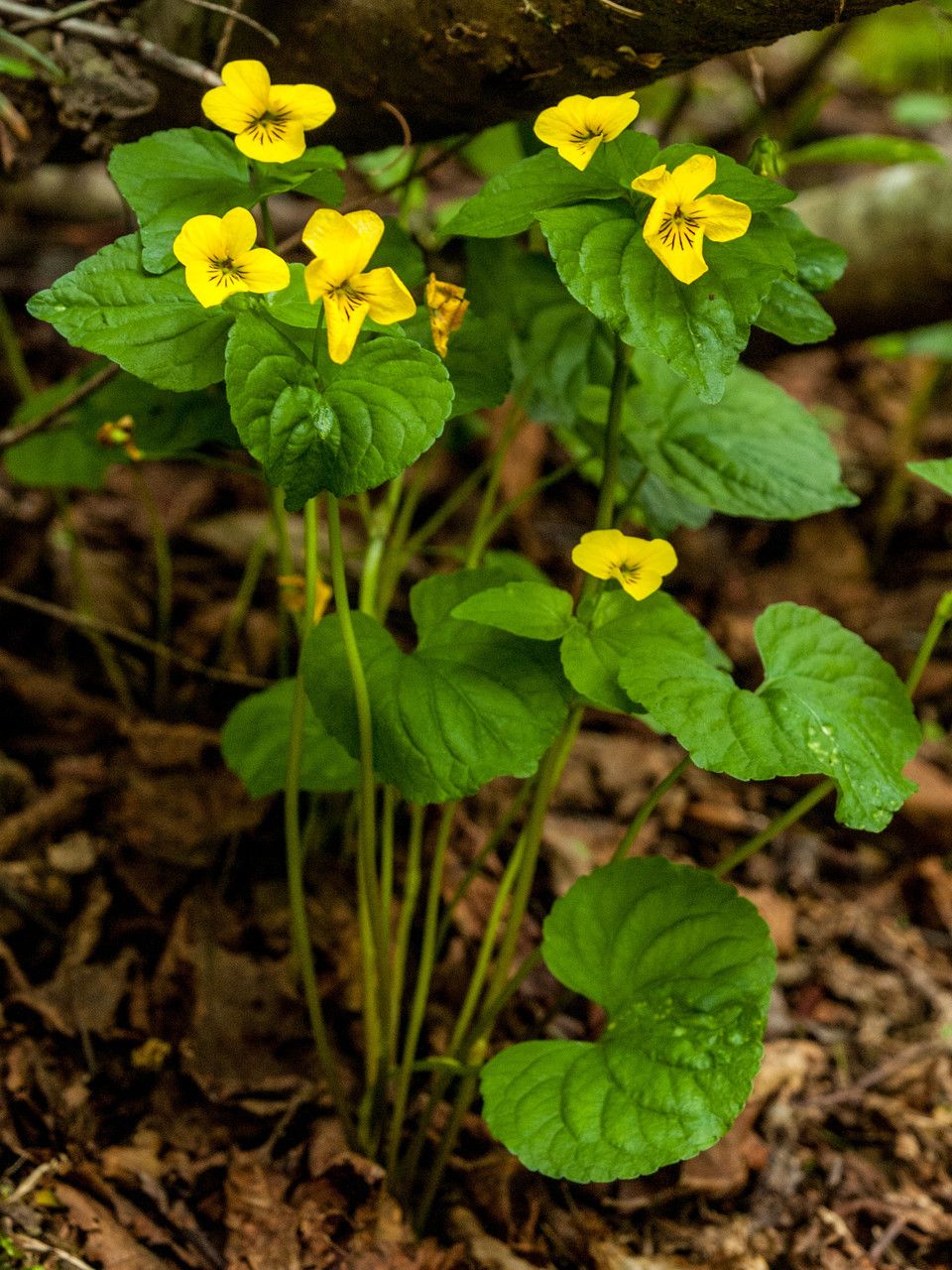
Viola hastata, commonly known as the halberd-leaved yellow violet, is a perennial herbaceous plant belonging to the Violaceae family. Native to North America, this plant thrives in diverse habitats such as wetlands, meadows, and forests. It can grow up to 30 cm tall and features heart-shaped leaves with pointed tips that resemble a halberd or spearhead. These leaves are arranged in a basal rosette, each held aloft by long petioles.
The flowers of Viola hastata are bright yellow and consist of five petals forming an irregular shape. They bloom from April to June, rising on long stalks above the foliage. The plant produces small fruits called capsules, which contain numerous seeds.
Native Americans have used Viola hastata for medicinal purposes, treating various ailments such as headaches, coughs, and colds. Additionally, the plant serves as an important food source for wildlife, including deer and rabbits.
Overall, Viola hastata is an attractive wildflower that adds vibrant color to natural landscapes while providing ecological benefits by supporting wildlife populations.
Halberd-leaf Yellow Violet has strong resistance to disease and is generally not prone to illnesses. Still, it can be affected by pests and diseases present in its surroundings. Such infections are typically minor. Regarding care, this plant needs moderate maintenance. It should be pruned regularly to preserve a neat appearance and healthy growth. Applying fertilizer can also aid in encouraging blooms. Halberd-leaf Yellow Violet is appropriate for anyone with outdoor space, like a garden or patio, and does not demand extensive plant-care experience. It may need more attention when grown indoors.
How to keep Viola Hastata.
Light
Halberd-leaf Yellow Violet does best in locations with moderate sun exposure but can also adjust to shaded areas. Its native habitat exposed it to a range of light conditions, so it can stay healthy even with less sunlight. However, excessive sun may stunt Halberd-leaf Yellow Violet's growth, while too little light can slow its development.
Water
The halberd-leaf yellow violet, which originates from moist woodlands, thrives when it receives consistent moisture. Although it is moderately drought-tolerant, it prefers weekly watering to maintain lush foliage. Usually grown outdoors, this plant benefits from mulching to help retain soil moisture, mimicking the conditions of its native habitat.
Temperature
Halberd-leaf Yellow Violet is indigenous to regions where temperatures fall between 32 and 77 °F (0 to 25 °C). The plant favors cooler conditions and may need protection or to be moved during warmer seasons.
Fertilizer
The best time to fertilize a Halberd-leaf Yellow Violet is in early spring, as it emerges from dormancy and starts active growth. Fertilization supplies essential nutrients for healthy development. Although the Halberd-leaf Yellow Violet has relatively low fertilizer requirements, applying fertilizer annually can improve its survival and encourage healthier, longer-lasting flowers.
Pruning
The Halberd-leaf Yellow Violet is characterized by its halberd-shaped leaves and vibrant yellow flowers. To ensure the plant remains healthy and visually appealing, prune it from early to late spring. This not only helps shape the plant but also encourages robust growth and increased flower production. Additionally, remove any dead stems and excessive growth to prevent disease and pests, keeping the plant thriving and attractive.
Botanical profile.
- Plant Type
- Herb
- Life Cycle
- Perennial
- Genus
- Viola
- Family
- Violaceae
- Hardiness Zone
- 3-5
- Mature Height
- 20 cm
- Mature Spread
- 15 cm
- Leaf Color
- Green, Variegated
- Leaf Type
- Deciduous
- Flower Color
- Yellow
- Flower Size
- 2.54 cm
- Bloom Time
- Early spring, Mid spring
- Planting Time
- Spring, Autumn
- Harvest Time
- Late spring, Early summer
Other names.
Reader questions.
How should I water my Halberd-leaf Yellow Violet in the best way?
To best care for the Halberd-leaf Yellow Violet, remember these steps: 1. Use filtered water at room temperature: Tap water can harm the plant due to particles it may contain. 2. Keep the water at room temperature or slightly warmer: This plant is accustomed to warmth, and cold water can be a shock. 3. Avoid overhead watering: It may cause complications with the plant's foliage. 4. Instead, apply filtered room temperature water directly to the soil until it is fully soaked: This helps moisten the roots and support their spread through the soil to collect necessary nutrients.
What are the sunlight requirements for Halberd-leaf Yellow Violet?
Halberd-leaf Yellow Violet requires moderate sunlight exposure but can also grow in areas with shade, thanks to its native habitat conditions that have exposed it to varying light. It thrives best with about 3-6 hours of sunlight (partial sun) but will survive with less than 3 hours of sunlight (full shade). Nonetheless, it's crucial to observe your garden's sun patterns, as too much direct sunlight may stunt the plant's growth, while insufficient light could slow its development.
What is the native climate for Halberd-leaf Yellow Violet?
Halberd-leaf Yellow Violet, with its botanic name Viola hastata, thrives in climates where the temperatures range between 32 to 77 °F (0 to 25 °C). The plant is adapted to cooler environments and may need to be protected or relocated during warmer seasons to ensure it remains in its ideal temperature range.
What do I do if I give my Halberd-leaf Yellow Violet too much or too little water?
Overwatering is a more common issue than underwatering for the Halberd-leaf Yellow Violet. When this plant receives too much water, its stems and leaves wilt and turn yellow. Overwatering over a long time can lead to diseases such as root rot, mold, and mildew, which can kill the plant. The Halberd-leaf Yellow Violet is decently tolerant to drought, so underwatering is less likely. However, if it happens, the leaves become brittle and brown. It's crucial to notice signs of overwatering early because some diseases like root rot may not be fixable if you wait too long. Reduce watering immediately if you see signs of overwatering and replace poorly draining soil with well-draining potting mix. If the plant shows signs of not getting enough water, water it more regularly until the signs disappear.
How do I use artificial lighting for Halberd-leaf Yellow Violet indoors?
Indoor Halberd-leaf Yellow Violets may require artificial lighting to thrive, especially in conditions of inadequate natural sunlight. LED lights are a preferred option as they can provide specific wavelengths needed by the plant. For full sun plants, 30-50W/sq ft is advised; for partial sun plants, 20-30W/sq ft; and for full shade plants, 10-20W/sq ft. Place the lights 12-36 inches above the plant to mimic natural sunlight. Most plants will benefit from 8-12 hours of artificial light per day to promote healthier growth.
Does Halberd-leaf Yellow Violet require frost protection measures?
The Halberd-leaf Yellow Violet is highly cold-tolerant and doesn't require additional frost protection measures during the winter months. To prepare it for winter, it's advisable to water the plant generously before the first freeze of autumn. This ensures the soil is moist when it freezes, which helps prevent drought and water scarcity for the plant during the colder winter and early spring periods.
How often do I need to water my Halberd-leaf Yellow Violet plant?
If your Halberd-leaf Yellow Violet is in a pot, the best way to check if it needs watering is to stick your finger into the soil. If the top two to three inches of soil are dry, it's time to water it. For Halberd-leaf Yellow Violets grown outdoors in the ground, you can use the same method. When the top few inches of soil have dried out, it's time to water. Generally, during the spring and early fall, watering once a week is sufficient. However, in extremely hot weather, you may need to increase watering to twice or more per week. It's worth noting that mature, well-established Halberd-leaf Yellow Violets can tolerate drought well.
What are the signs of insufficient lighting in Halberd-leaf Yellow Violet?
When Halberd-leaf Yellow Violet experiences insufficient light, especially indoors, several symptoms may manifest. These include smaller new leaves, leggy or sparse growth, faster leaf drop, slowed or halted growth, lighter-colored or irregular new leaf colors, indicating a lack of chlorophyll and essential nutrients. Chlorosis or yellowing leaves, sunscald, leaf curling, wilting, and leaf scorching are other signs of adverse light conditions or excessive sunlight exposure.
What should I do if the winter temperature drops below -35°C for my Halberd-leaf Yellow Violet?
Halberd-leaf Yellow Violet demonstrates extreme cold tolerance, but it's crucial to keep winter temperatures above -35°C. If the temperature falls below this level, you might not notice any changes during the winter. However, there could be a decrease in sprouting or no sprouting at all come springtime. If this occurs, it's recommended to remove any parts of the plant that have failed to sprout in the spring.
How much water does my Halberd-leaf Yellow Violet plant need?
When watering your Halberd-leaf Yellow Violet, don't hold back on the amount of water you give. Wait until the first two to three inches of soil are dry, then give the plant a thorough watering that entirely soaks the soil. Make sure to add enough water that it flows through the drainage holes at the bottom of the pot. If you don't see excess water draining, it's likely that you didn't give enough water. Avoid letting water accumulate inside the soil, as this can harm the plant. On the other hand, if water doesn't drain well from the pot, it could indicate poorly draining soil, which is bad for the plant's health. If the plant is outside, 1 inch of rain per week is sufficient.
How can I address the lighting needs of Halberd-leaf Yellow Violet?
To optimize Halberd-leaf Yellow Violet's growth, gradually adapt it to the desired light conditions. For indoor plants, increase exposure to sunlight each week or use artificial lighting, like a desk lamp or professional plant grow lights, for at least 8 hours a day. For outdoor plants, similarly adapt them to sunnier spots progressively to avoid sunburn. If sunlight is obstructed, consider pruning nearby trees or transplanting the plant to a brighter location with ample sunlight and good drainage. Note that while parts of the plant affected by inadequate light may not recover, new growth should be healthy with improved light conditions.
How can I protect my Halberd-leaf Yellow Violet from high temperatures?
The Halberd-leaf Yellow Violet is sensitive to high temperatures, particularly those exceeding 25°C, at which point its growth can halt, and the plant becomes more susceptible to rot. To protect your plant, trim away any sunburned and dried-up parts. Move it to a location that's shaded during the midday and afternoon sun or use a shade cloth to provide necessary shade. Also, ensure to water the plant in the morning and evening to keep the soil sufficiently moist.