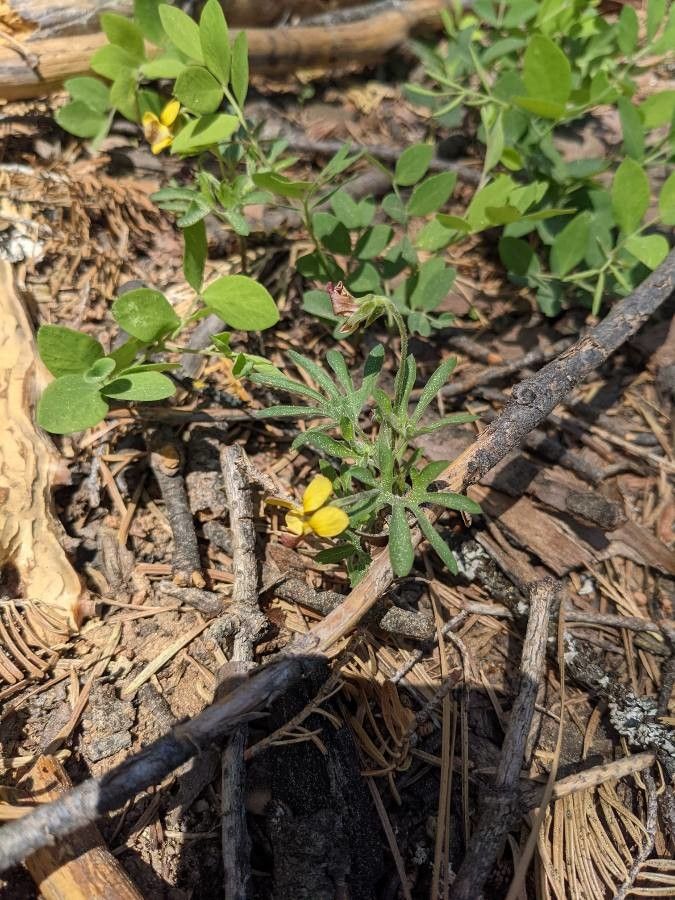
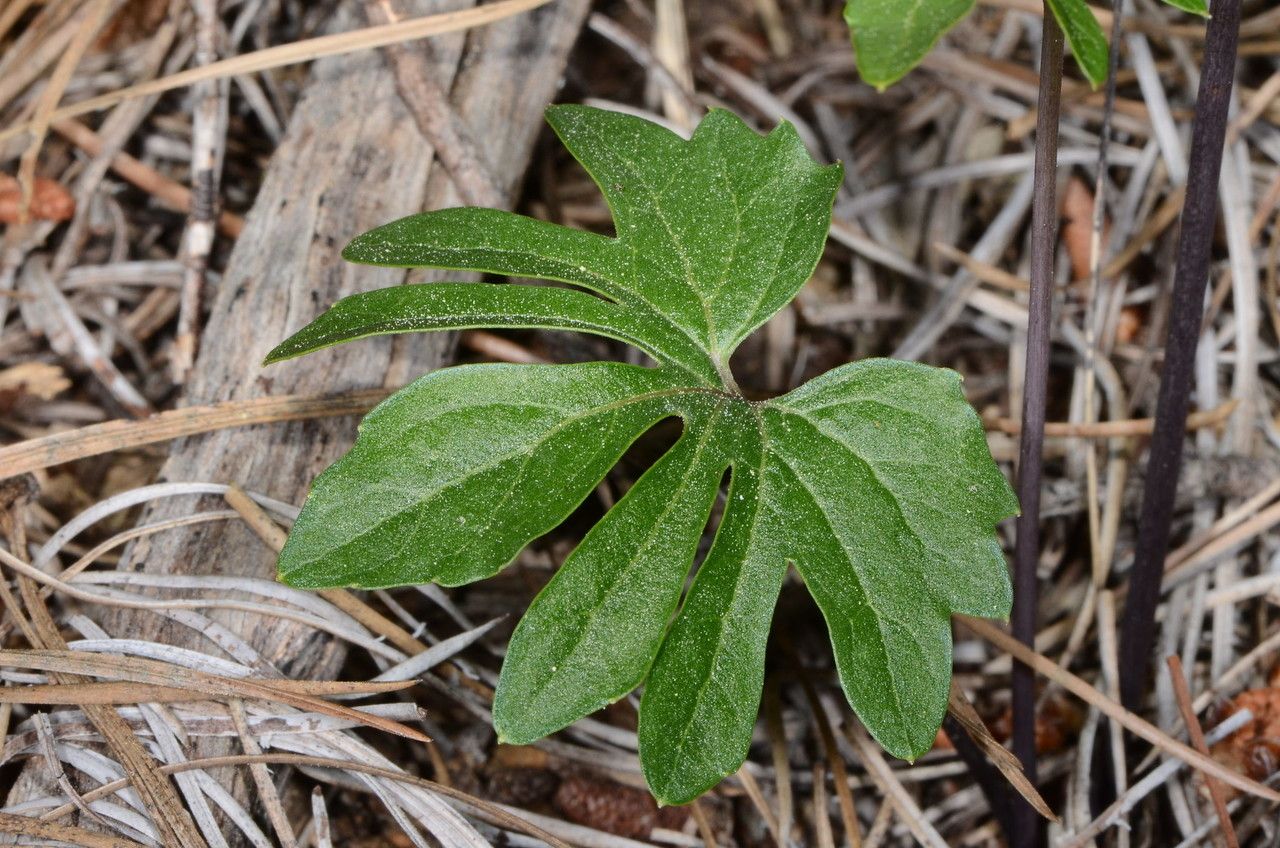
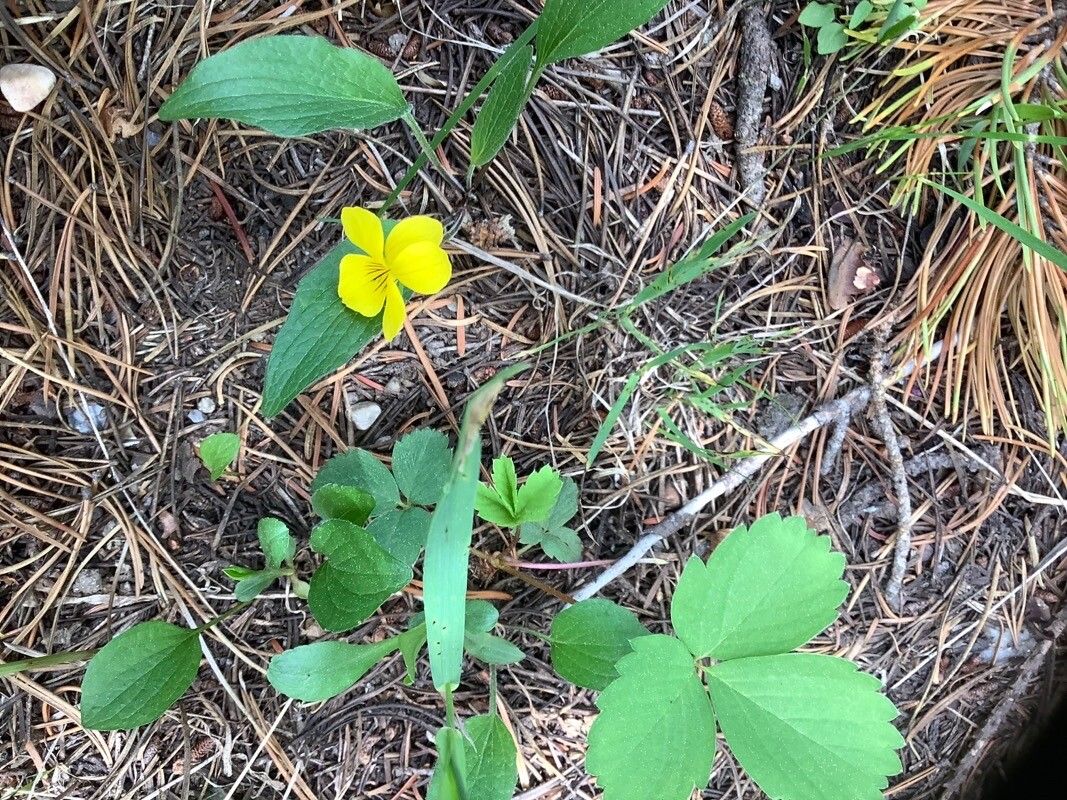
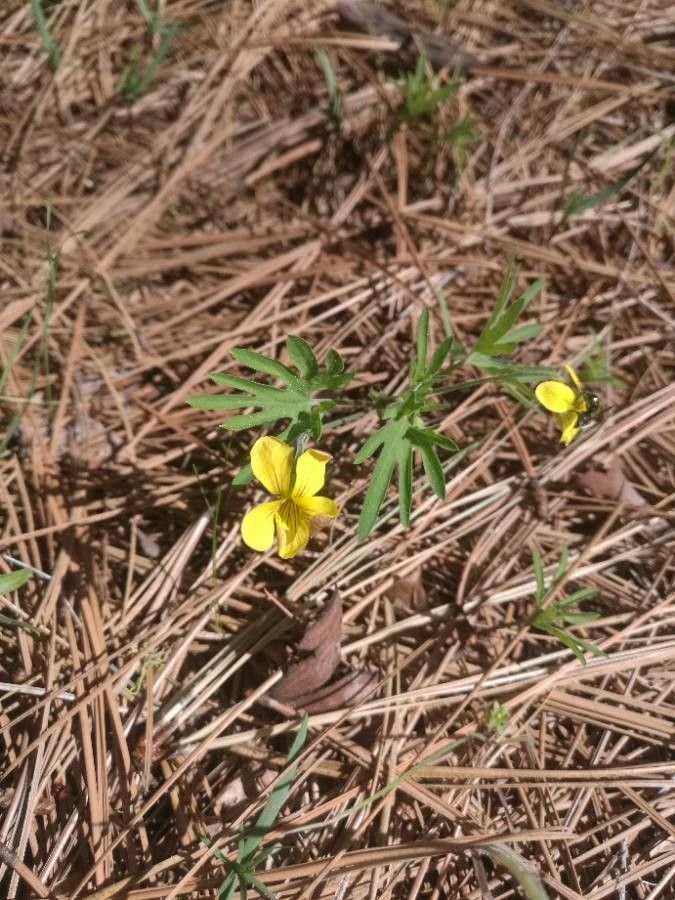
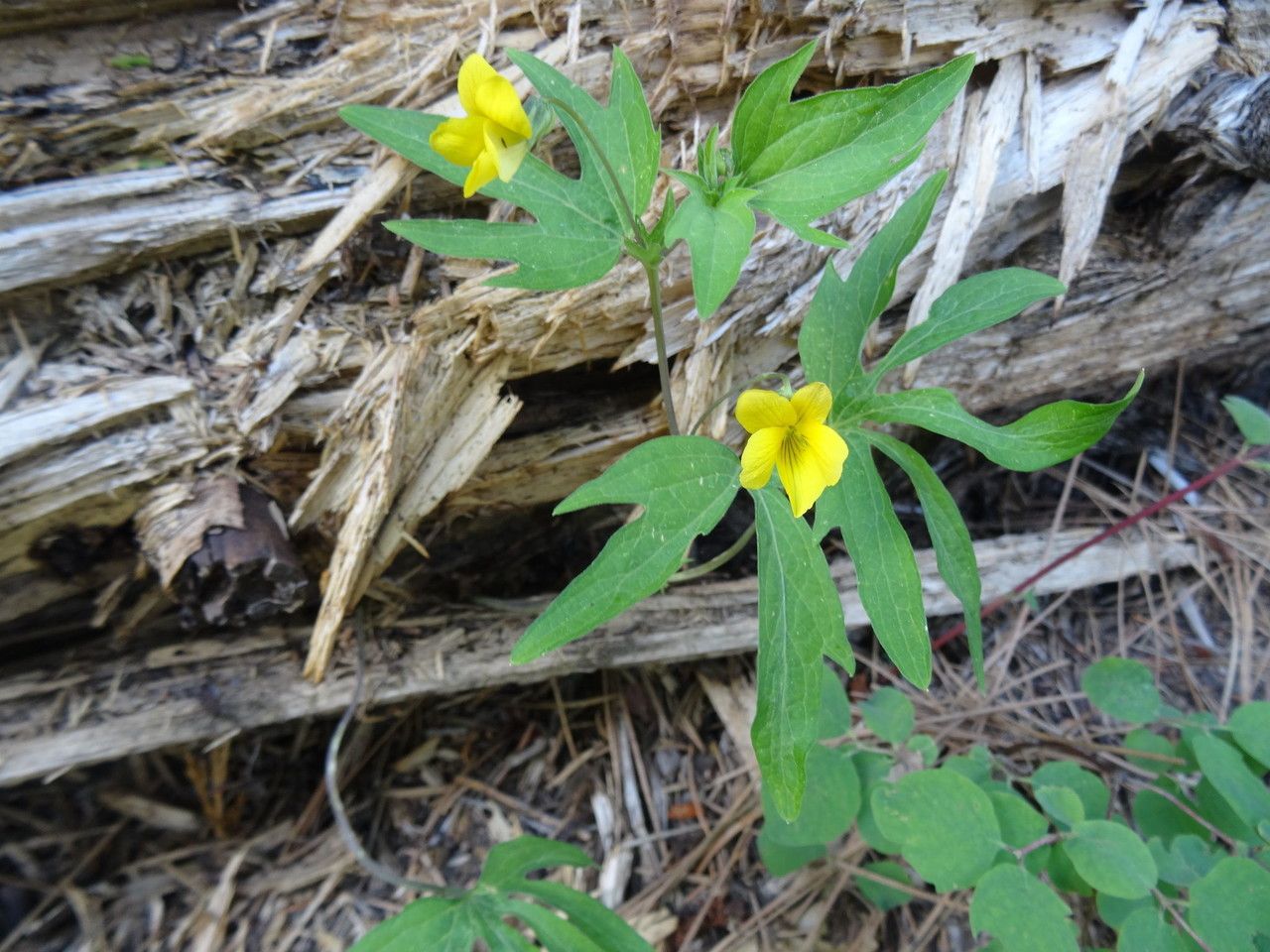
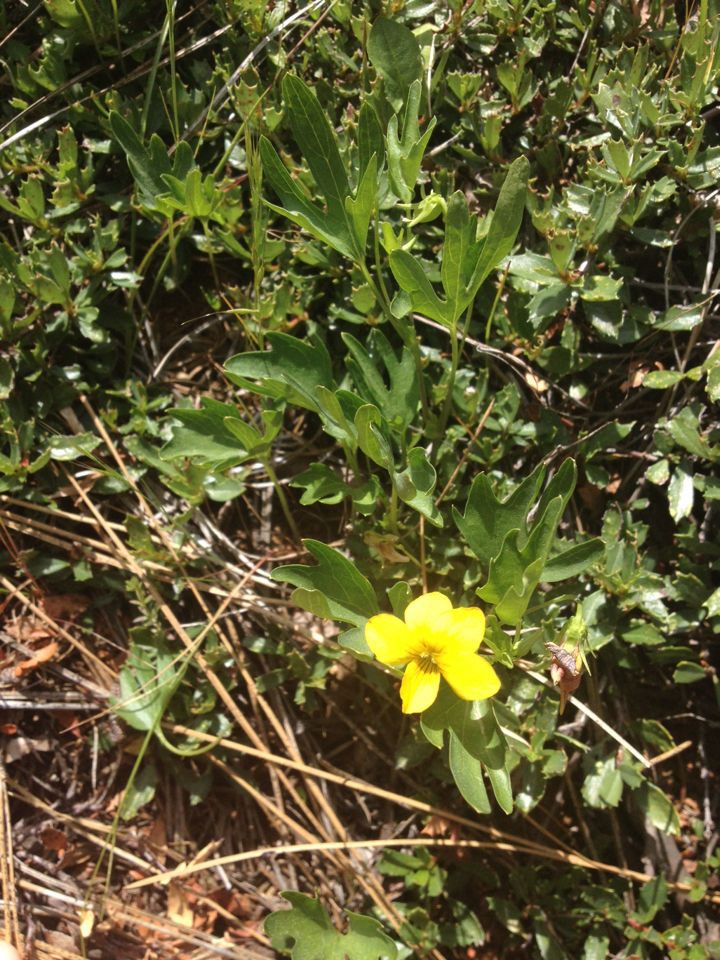
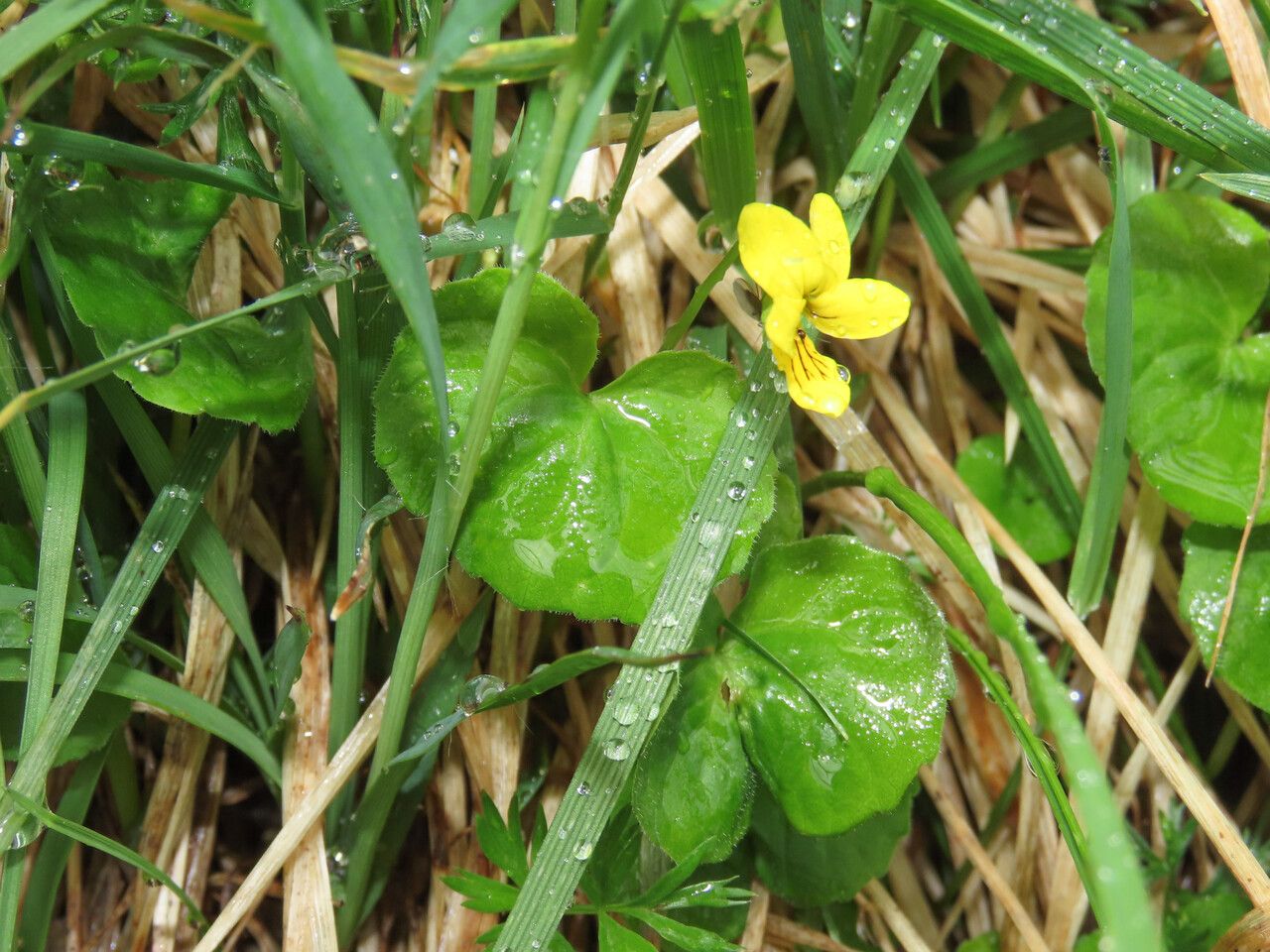
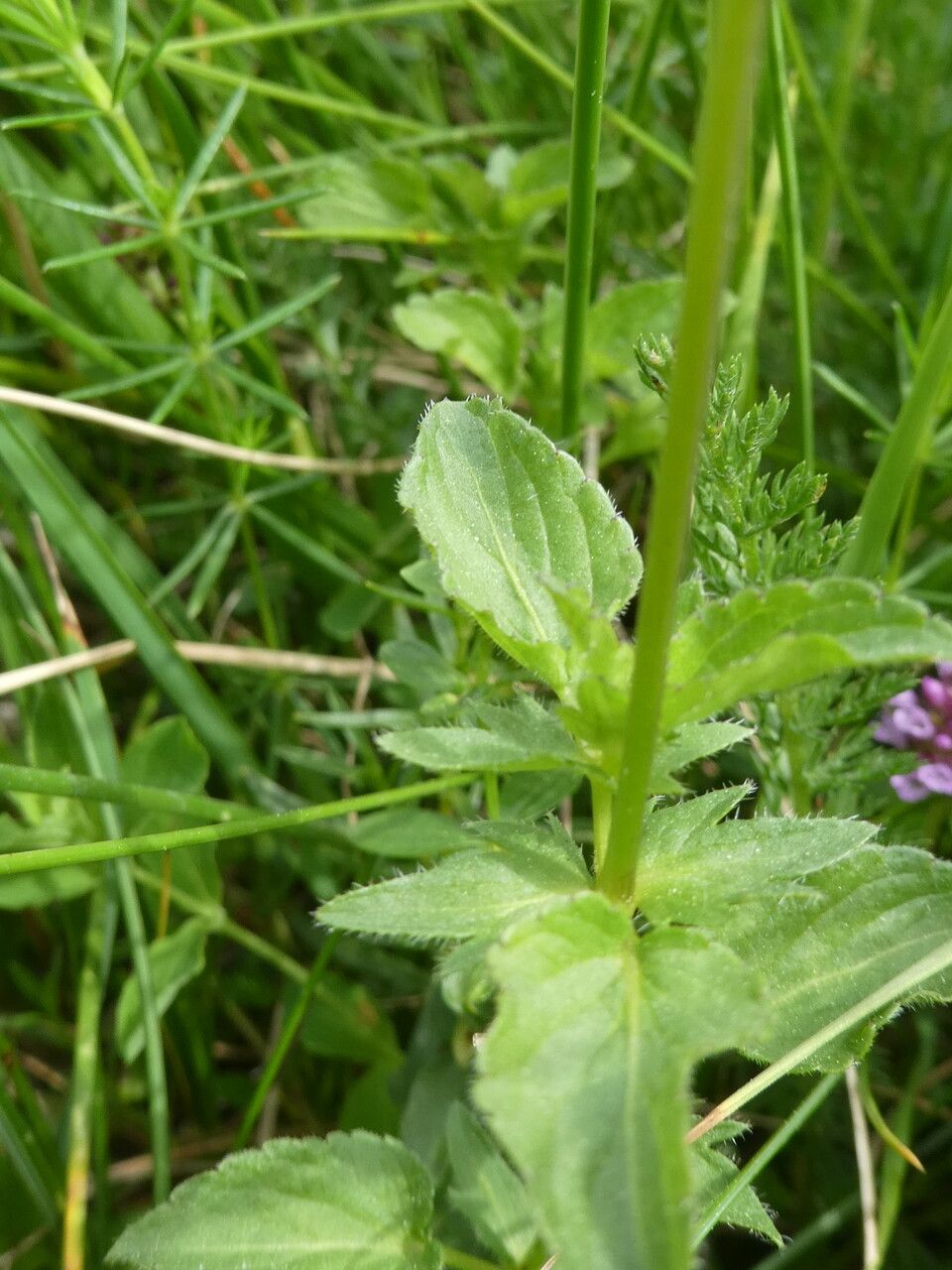
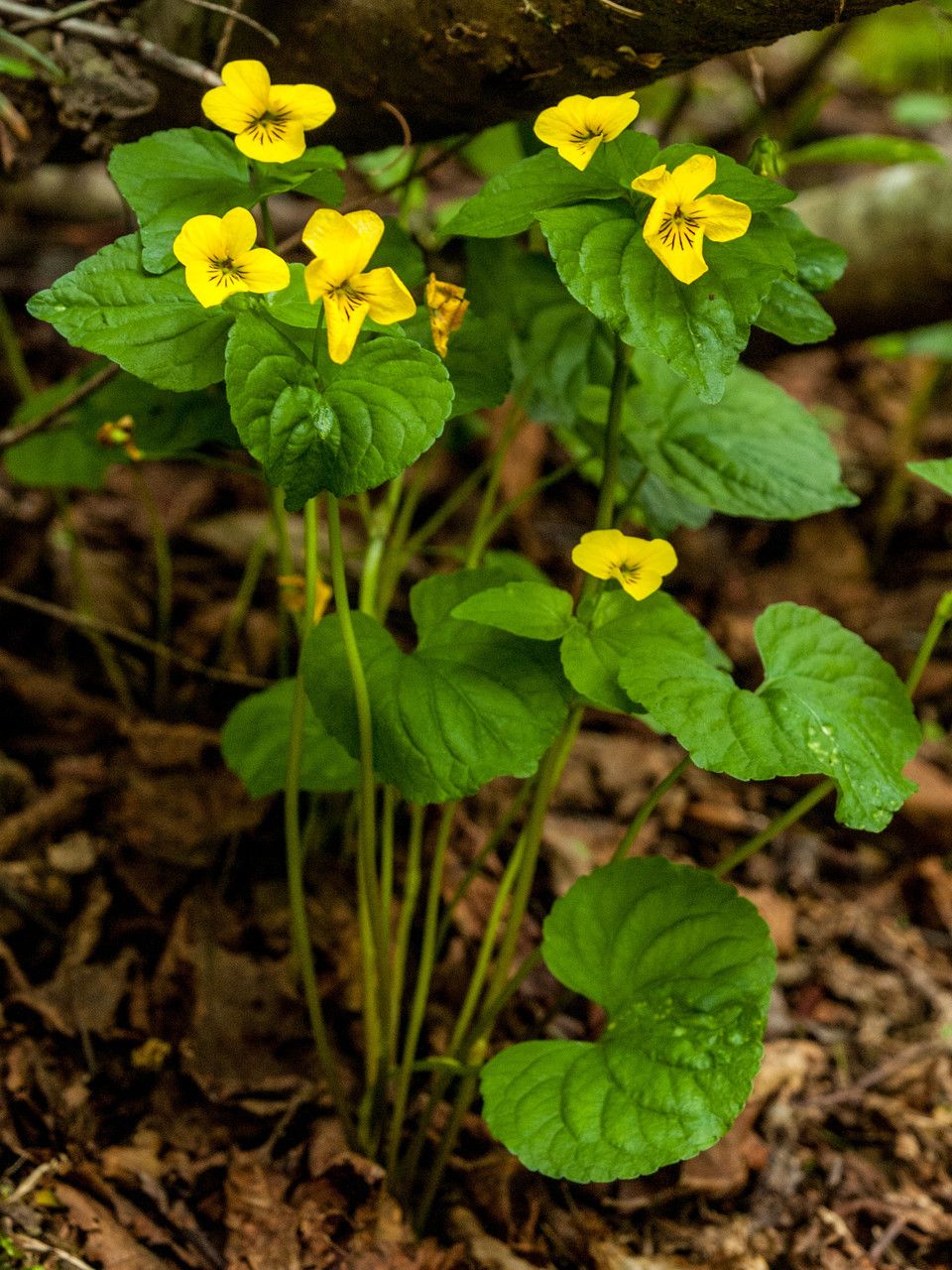
Viola lobata is a species of violet known by the common name pine violet. It is native to western North America from southern Oregon through California and into northern Baja California, where it occurs in mountain ranges and foothills. It grows in woodlands and other habitat. This rhizomatous herb produces an erect stem a few centimeters tall or growing to nearly half a meter in maximum height. The leaves have variously shaped blades borne on long petioles. The blades are 5 to 15 centimeters wide and may be hairless, hairy, or waxy in texture. The leaf blades are often divided into narrow lobes or dissected into small segments. The shape of the leaf blade differentiates the two subspecies; ssp. lobata has dissected leaves and ssp. integrifolia has entire or toothed blades. A solitary flower is borne on a long, upright stem. It has five yellow petals, all five or just the lower three with purple or brown veining and the upper two stained with purple or brown on the outer surfaces.
Pine violet is fairly disease-resistant and usually not prone to illnesses. Nonetheless, it can be affected by pests and diseases present in its environment. These problems are generally mild. In terms of care, the plant needs moderate maintenance. It should be pruned regularly to keep a neat appearance and support healthy growth. Fertilizing can also aid in encouraging flowering. Pine violet is well suited for anyone with outdoor space, such as a garden or patio, and does not require extensive gardening experience. It may demand more attention when grown indoors.
How to keep Viola Lobata.
Light
Pine violet is native to habitats like forest understories and rocky areas, where it grows in natural shade. Its preferred light condition is partial sun, but it can adapt to full sun or full shade, demonstrating its versatile and hardy nature.
Water
The pine violet flourishes in humid environments and does not tolerate drought well. Be careful not to overwater, as this can lead to decay. In gardens, adjust the watering schedule according to the weather to ensure the soil stays adequately moist. For potted plants, water them thoroughly only when the soil surface feels dry to the touch.
Temperature
Pine violet can tolerate a wide range of temperatures, but its distribution may still be constrained by different combinations of moisture and heat. It performs best in warm summer conditions with adequate rainfall or watering. Extended periods of cloudy, rainy weather or prolonged high temperatures can increase the chance of Pine violet dying. In winter, protecting the plant from cold can raise its survival rate.
Fertilizer
Applying fertilizer once in spring is typically enough for Pine violet, though repeated feedings can boost growth to its maximum. Feed about every month to every month and a half. Fertilization improves the leaves' appearance and function, helping them maintain even color and a healthy texture. It also promotes root development and nutrient uptake for the plant’s long-term health.
Pruning
To help pine violets thrive, prune them in the spring by removing dead stems and old flowers. This encourages new growth. Be careful not to over-prune, as maintaining their natural shape is important. Always use clean, sharp tools, and aim to complete the pruning before new growth begins for optimal results.
Botanical profile.
- Plant Type
- Herb
- Life Cycle
- Perennial
- Genus
- Viola
- Family
- Violaceae
- Hardiness Zone
- 6-9
- Mature Height
- 10 cm to 30 cm
- Mature Spread
- 15 cm to 25 cm
- Leaf Color
- Green
- Leaf Type
- Deciduous
- Flower Color
- Yellow
- Flower Size
- 1.02 cm to 2.03 cm
- Bloom Time
- Mid spring, Late spring, Early summer
- Planting Time
- Spring, Summer
- Harvest Time
- Summer
- Native Area
- Mexico
Other names.
Reader questions.
How much sunlight does a Pine violet (Viola lobata) need?
Pine violet, also known as Viola lobata, requires different amounts of sunlight depending on the specific need. For full sun exposure, it needs above 6 hours of sunlight daily. If it's placed in partial sun, about 3-6 hours of sunlight is sufficient. It's important to observe how sunlight moves through your garden to find spots that offer the perfect balance of light and shade, ensuring the plants thrive.