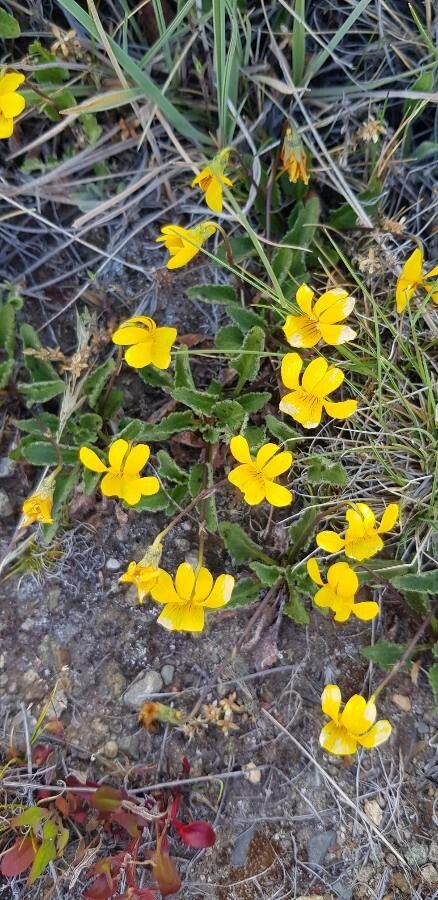
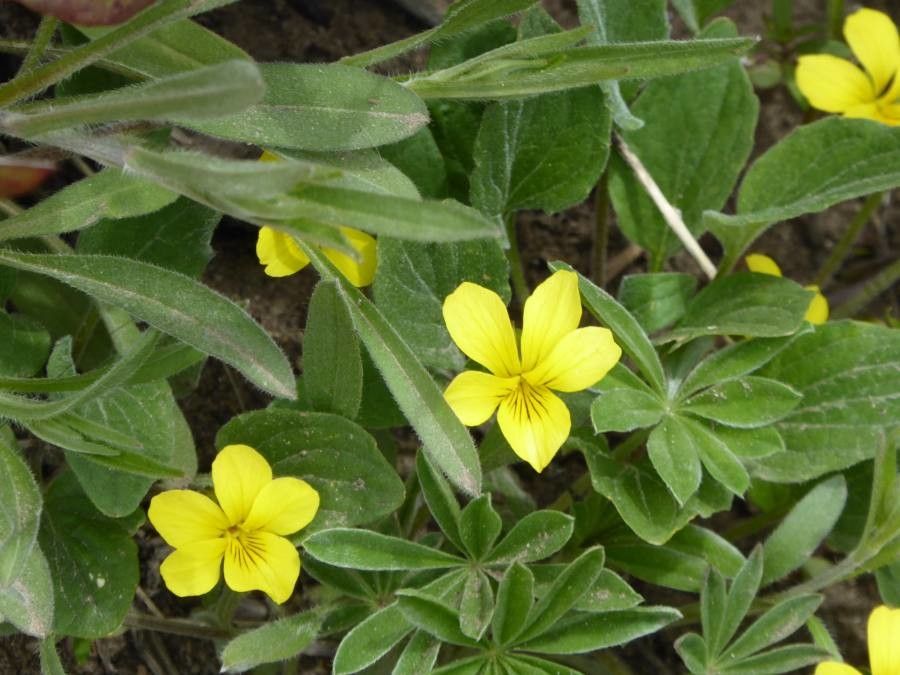
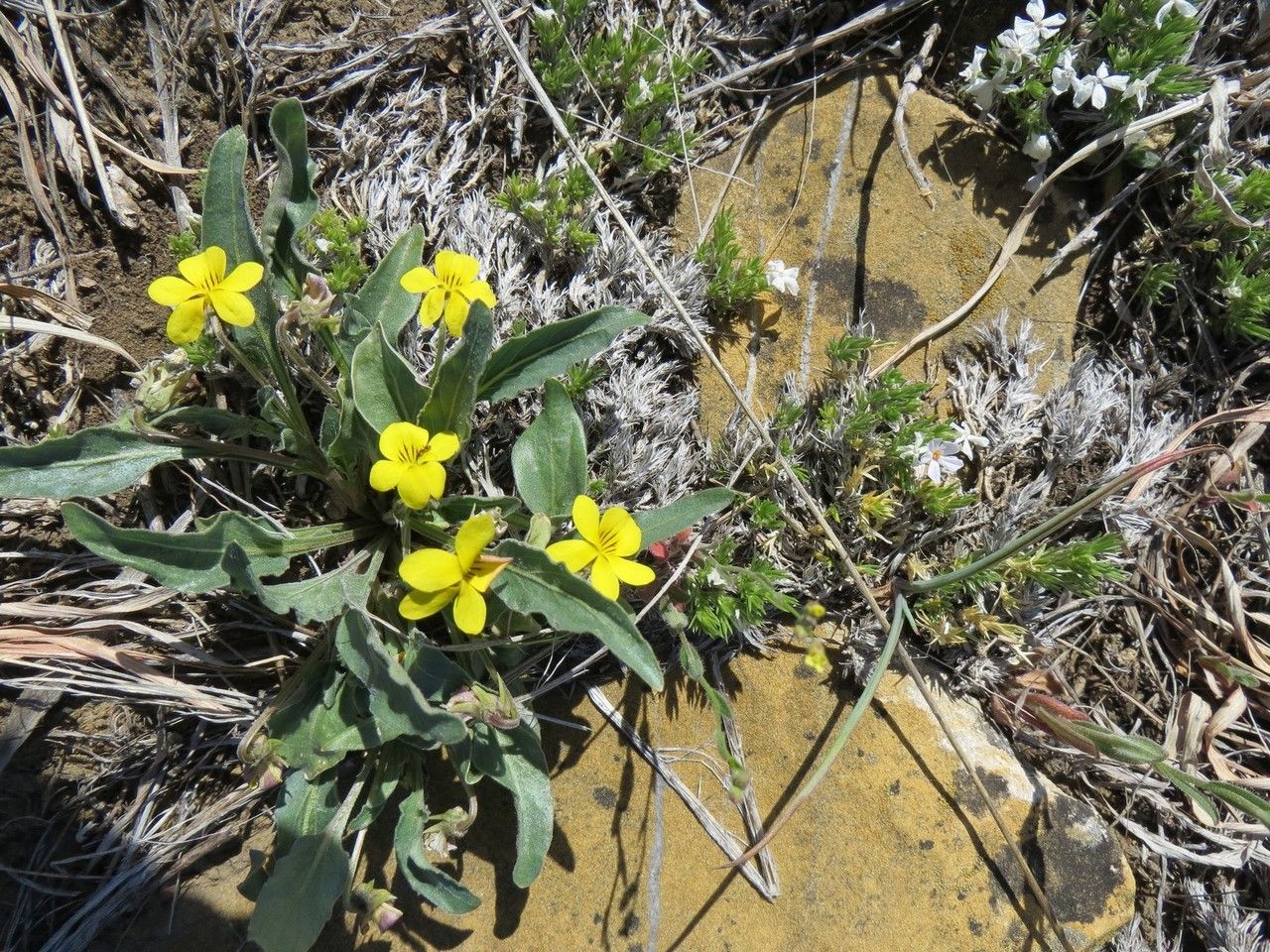
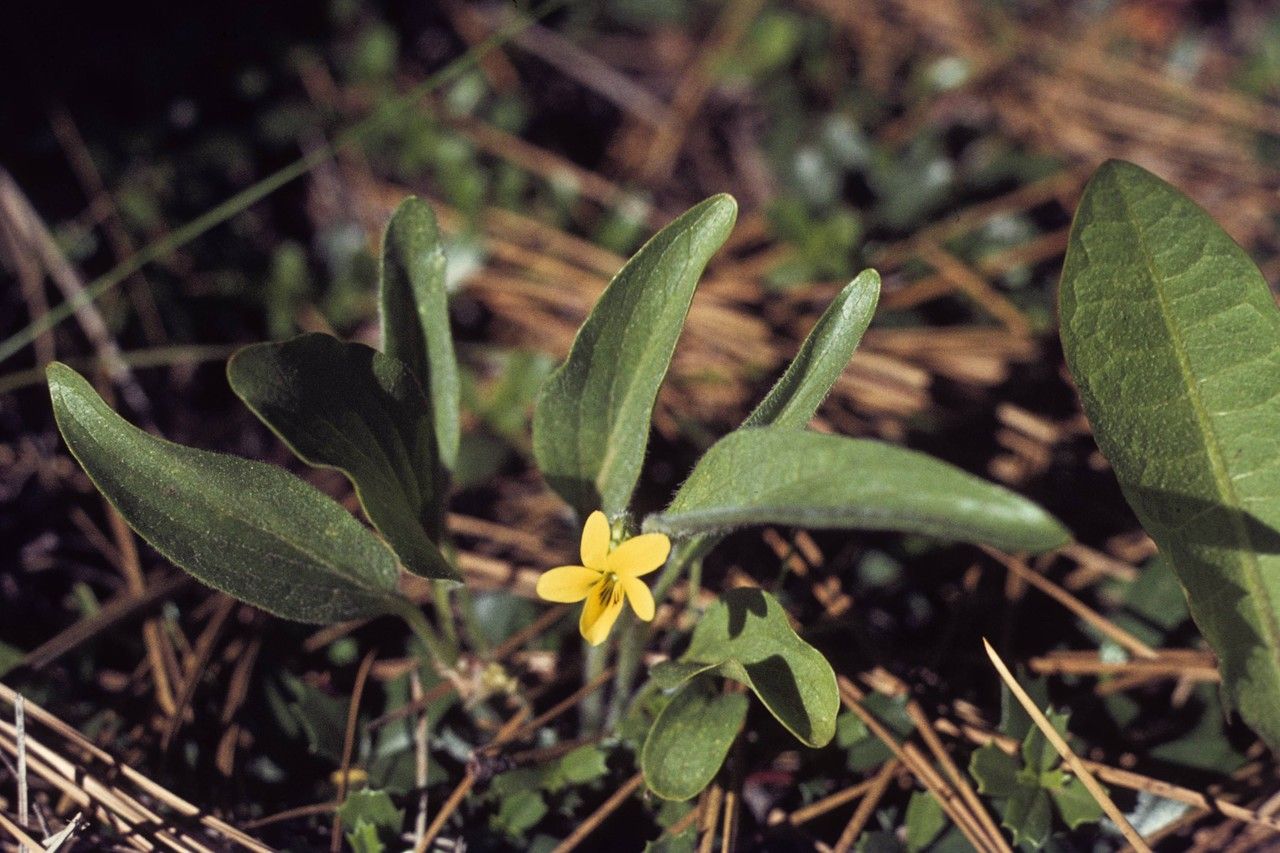
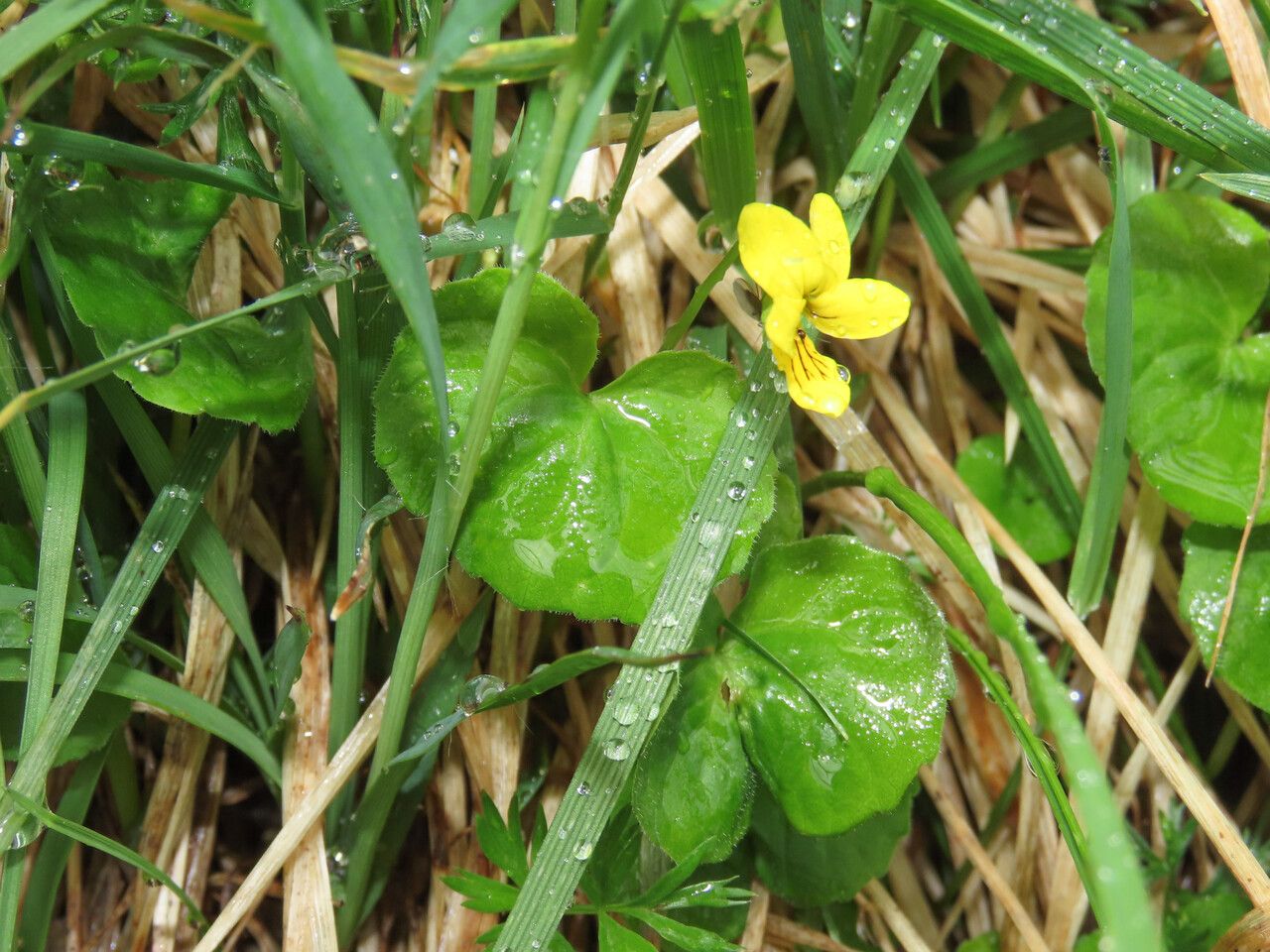
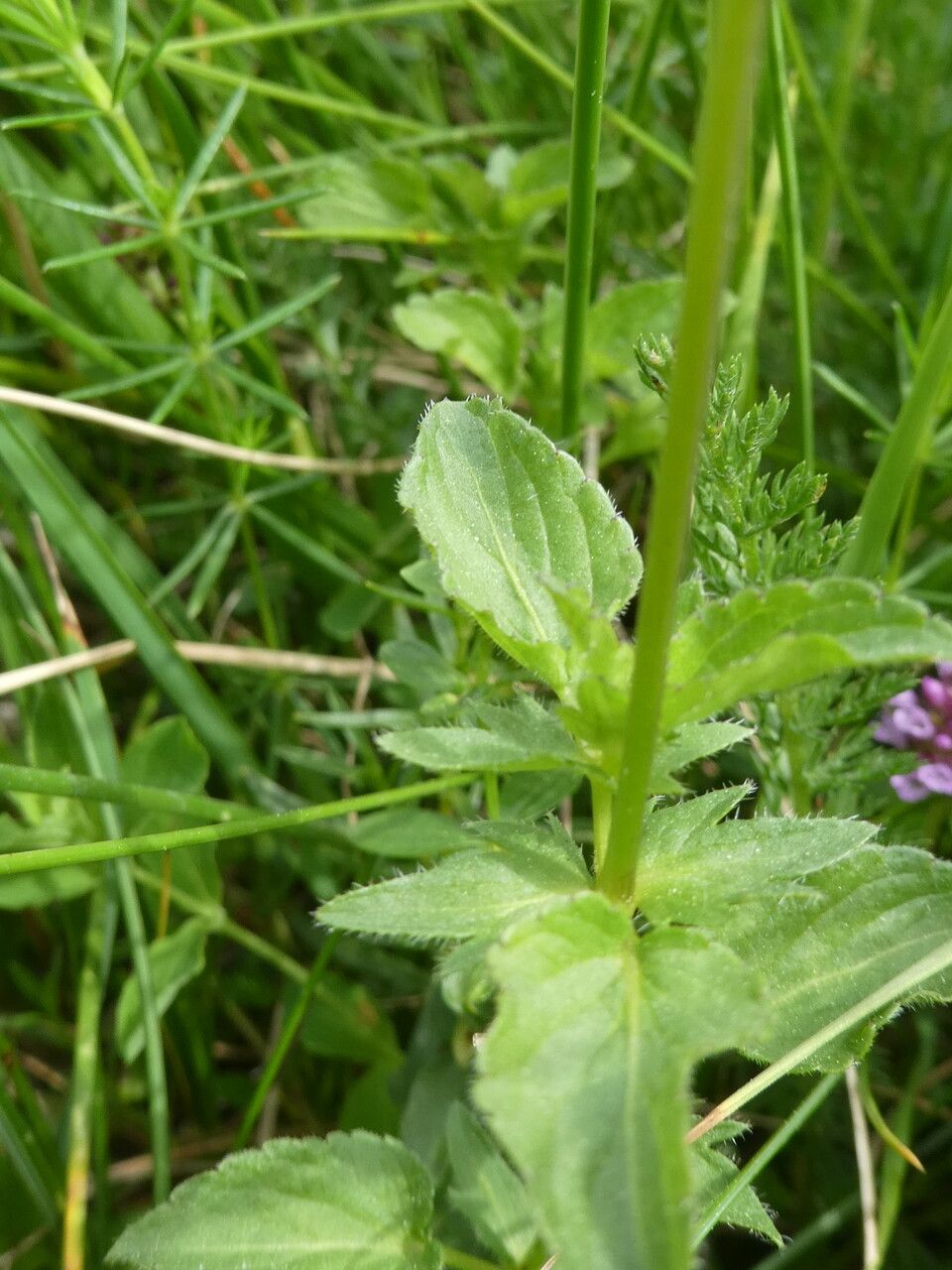
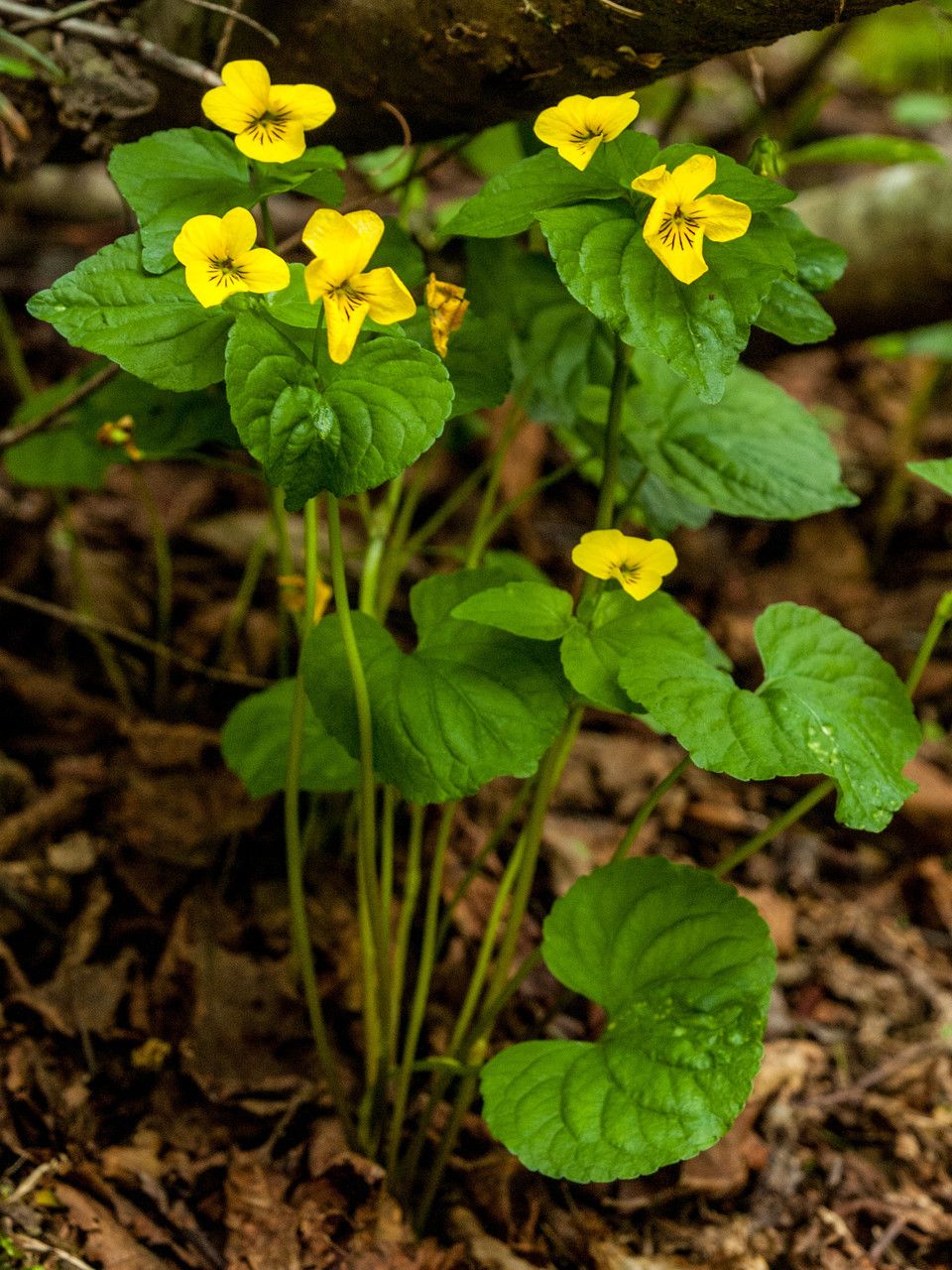
Viola nuttallii (Nuttall's violet or yellow prairie violet) is a perennial herbaceous plant in the violet family (Violaceae), and is one of the few violet species with lanceolate leaves. It is native to the western Canada and the north-central and western United States, appearing in upper steppe lands, forests, and alpine ridges.The genus name Viola means violet in Latin. For Nuttall's violet the only purple coloring is the nectar guides in the throat of the flower. The species name is given in honor of noted botanist Thomas Nuttall.The plant is highly variable, usually with bright yellow petals. The veined, elliptical leaves are 2.5–10 centimeters (1–4 in) long.The species serves as a larval host for the Coronis fritillary butterfly.
Goosefoot violet has good disease resistance and is generally not susceptible to illnesses. However, it can be affected by pests and diseases present in its environment. Such infections are typically mild. In terms of care, this plant needs moderate maintenance. Regular pruning is necessary to keep it looking good and to encourage healthy growth. Fertilizing can also help stimulate flowering. Goosefoot violet is suitable for anyone with outdoor space, such as a garden or patio, and does not require extensive gardening experience. It may need more care when cultivated indoors.
How to keep Viola Nuttallii.
Light
Goosefoot violet grows best in locations flooded with plentiful sunlight, though it can adjust to spots with reduced but adequate light. In its native habitat, full sun is typical. Both insufficient and excessive light can inhibit growth, leading to poor development and potential decline.
Water
The yellow prairie violet flourishes in humid forests and mountainous areas, but it is sensitive to drought. However, overwatering can lead to decay. In gardens, adjust your watering schedule based on the weather to avoid excessive dryness. For potted plants, water thoroughly when the soil surface feels dry.
Temperature
Preferring cooler climates, goosefoot violet does best at temperatures of 41 to 77 °F (5 to 25 °C). Natively grown in these conditions, they may need extra shade during extreme heat to remain within their preferred range.
Fertilizer
The best time to fertilize a Goosefoot violet is in early spring, as it emerges from dormancy and starts active growth. Fertilization supplies essential nutrients for healthy development. Although Goosefoot violet has relatively low fertilizer requirements, applying fertilizer annually can improve its survival and encourage better, longer-lasting flowers.
Pruning
The yellow prairie violet is known for its vibrant flowers and resilience. To keep the plant healthy and encourage it to bloom, prune it in early spring. This involves removing dead stems to improve air circulation and prevent overcrowding. These practices help maintain the overall health of the plant.
Botanical profile.
- Plant Type
- Herb
- Life Cycle
- Perennial
- Genus
- Viola
- Family
- Violaceae
- Hardiness Zone
- 5
- Mature Height
- 1 cm to 10 cm
- Mature Spread
- 30 cm
- Leaf Color
- Green, Dark Green
- Leaf Type
- Semi-evergreen
- Flower Color
- Purple, Violet
- Flower Size
- 1.02 cm to 2.03 cm
- Bloom Time
- Spring
- Planting Time
- Spring, Summer, Autumn
- Harvest Time
- Summer
Other names.
Reader questions.
What are the sunlight requirements for Yellow Prairie Violet (Viola nuttallii)?
Yellow Prairie Violet (Viola nuttallii) thrives in various sunlight conditions, requiring 'Full sun' for optimal growth, which entails more than 6 hours of sunlight daily. It can also flourish under 'Partial sun,' necessitating about 3-6 hours of sunlight. When selecting a planting spot, it's important to observe how sunlight moves through your garden throughout the day. This observation will help you find spots that maintain the perfect balance between light and shade, thereby ensuring the well-being of your plants.
What is the Yellow prairie violet?
The Yellow prairie violet, also known by its botanical name Viola nuttallii, is a species of violet. Unfortunately, detailed information regarding its essentials, characteristics, and symptoms of interest was not provided.