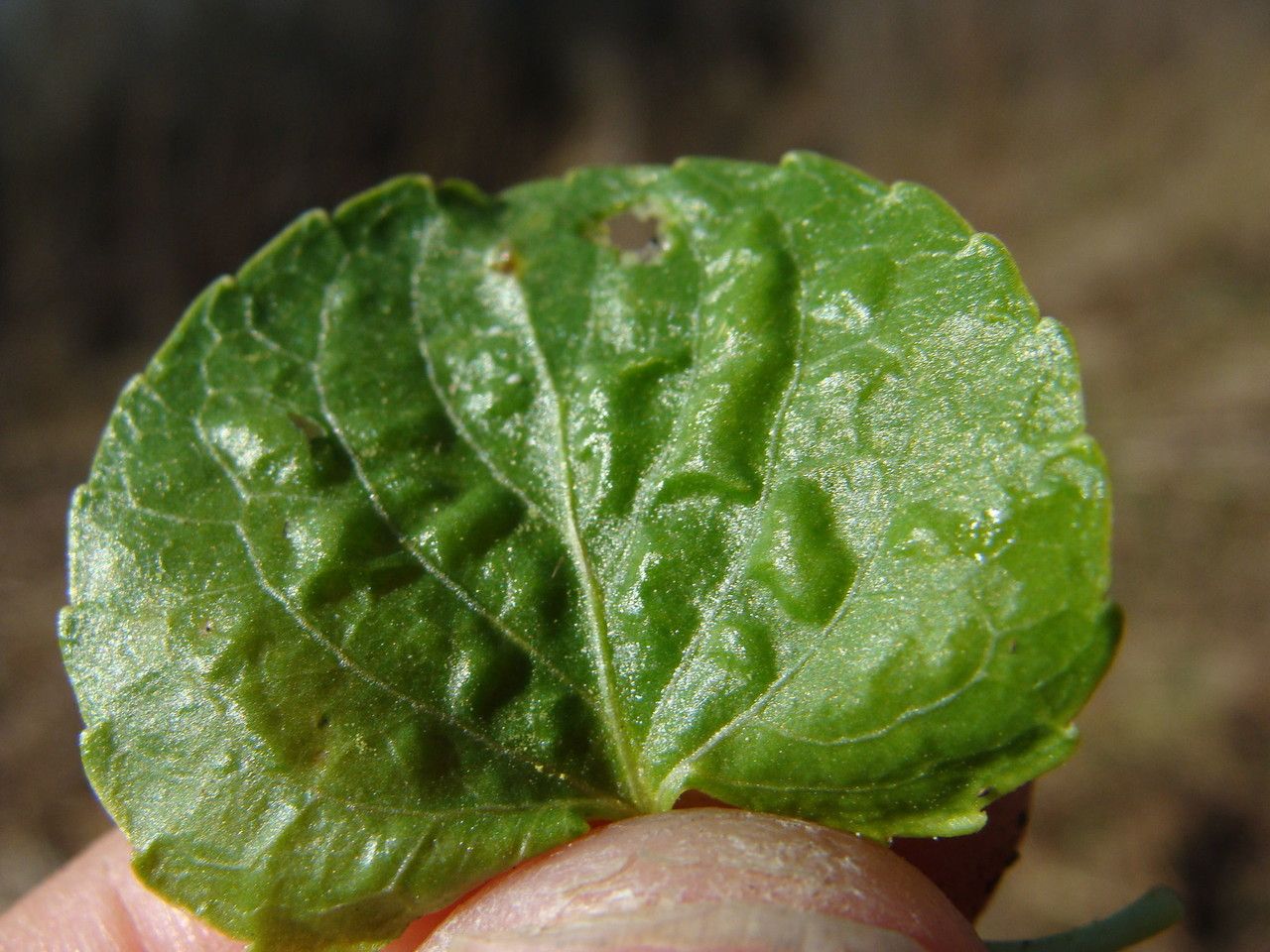
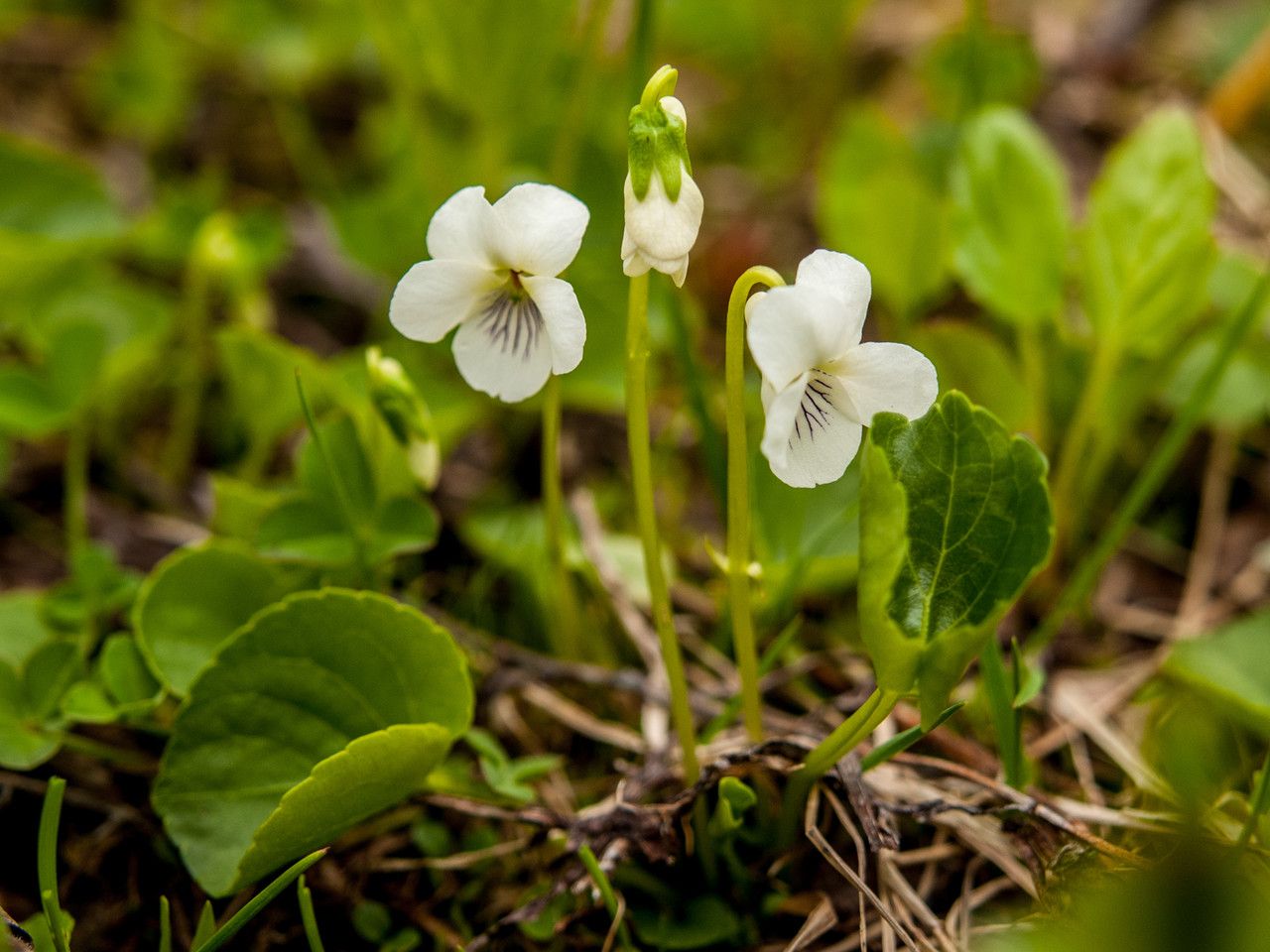
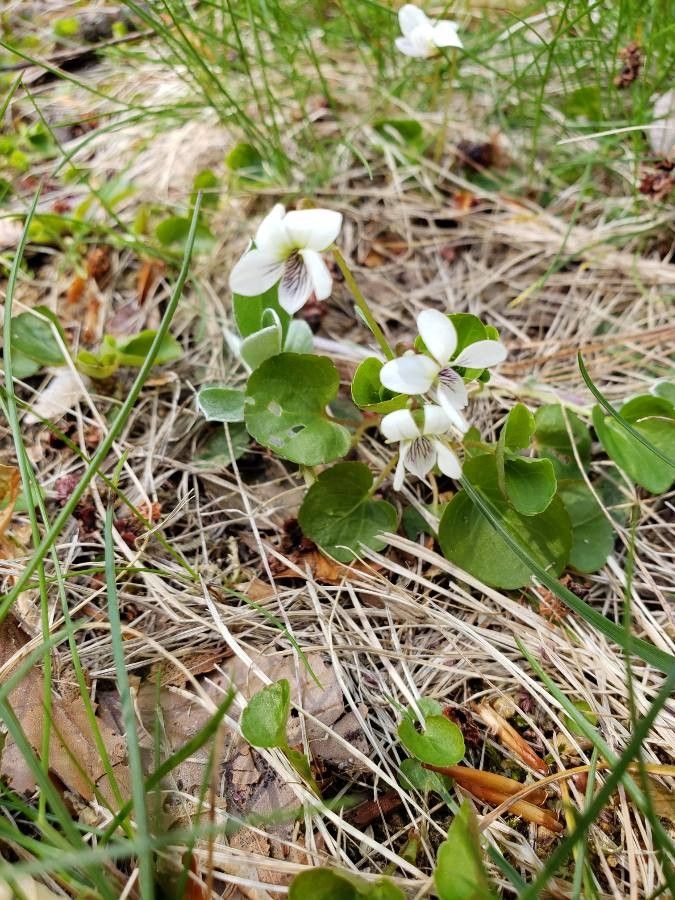
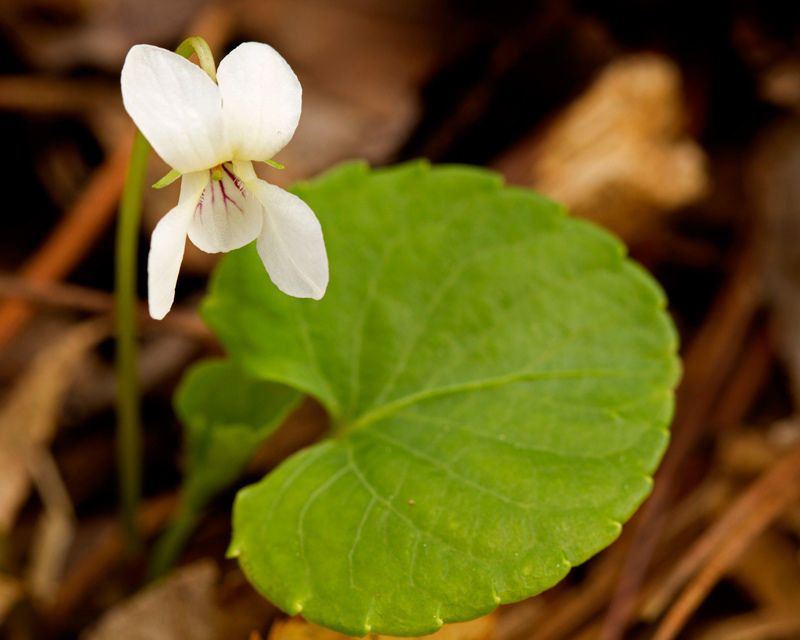
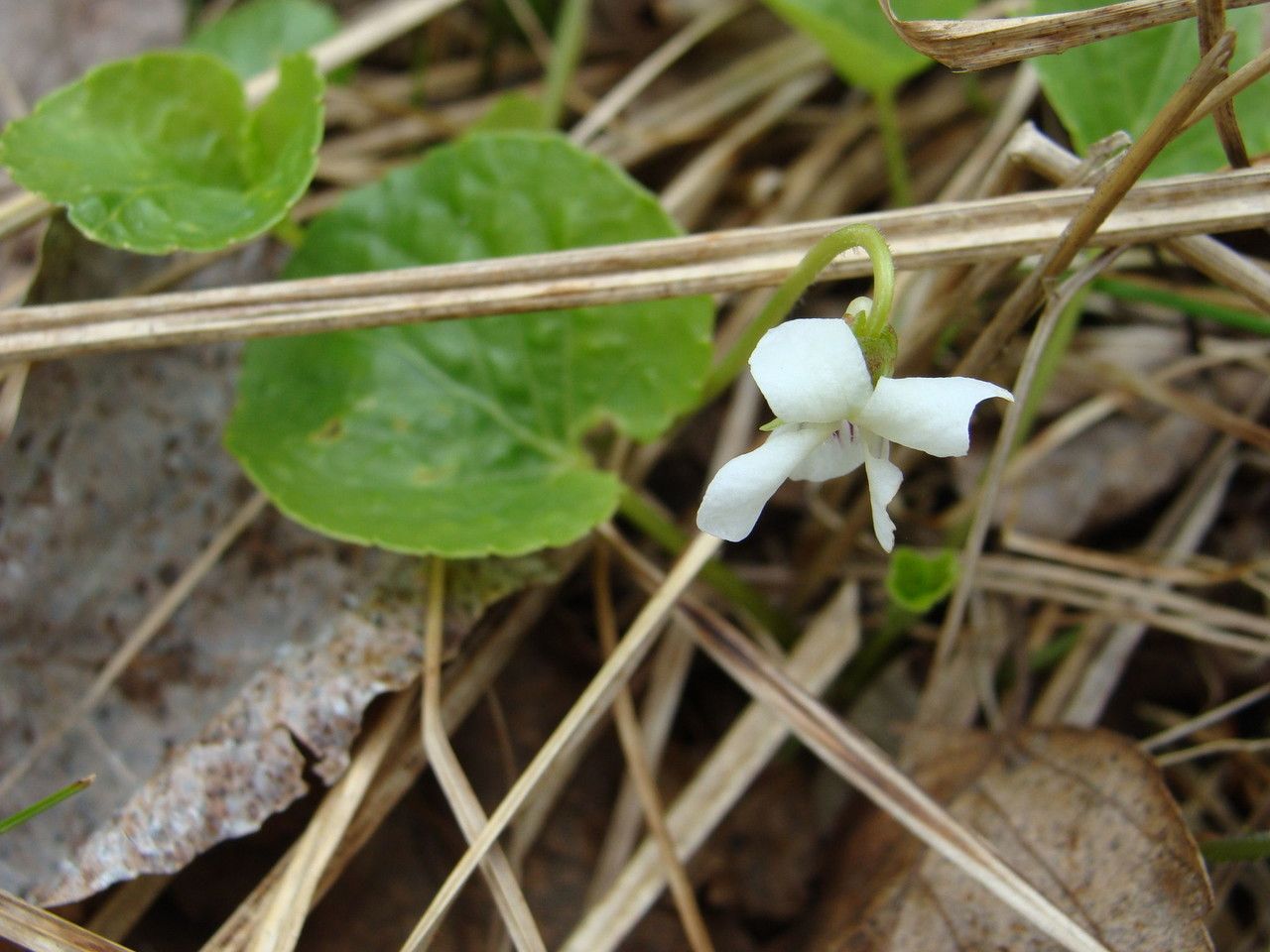
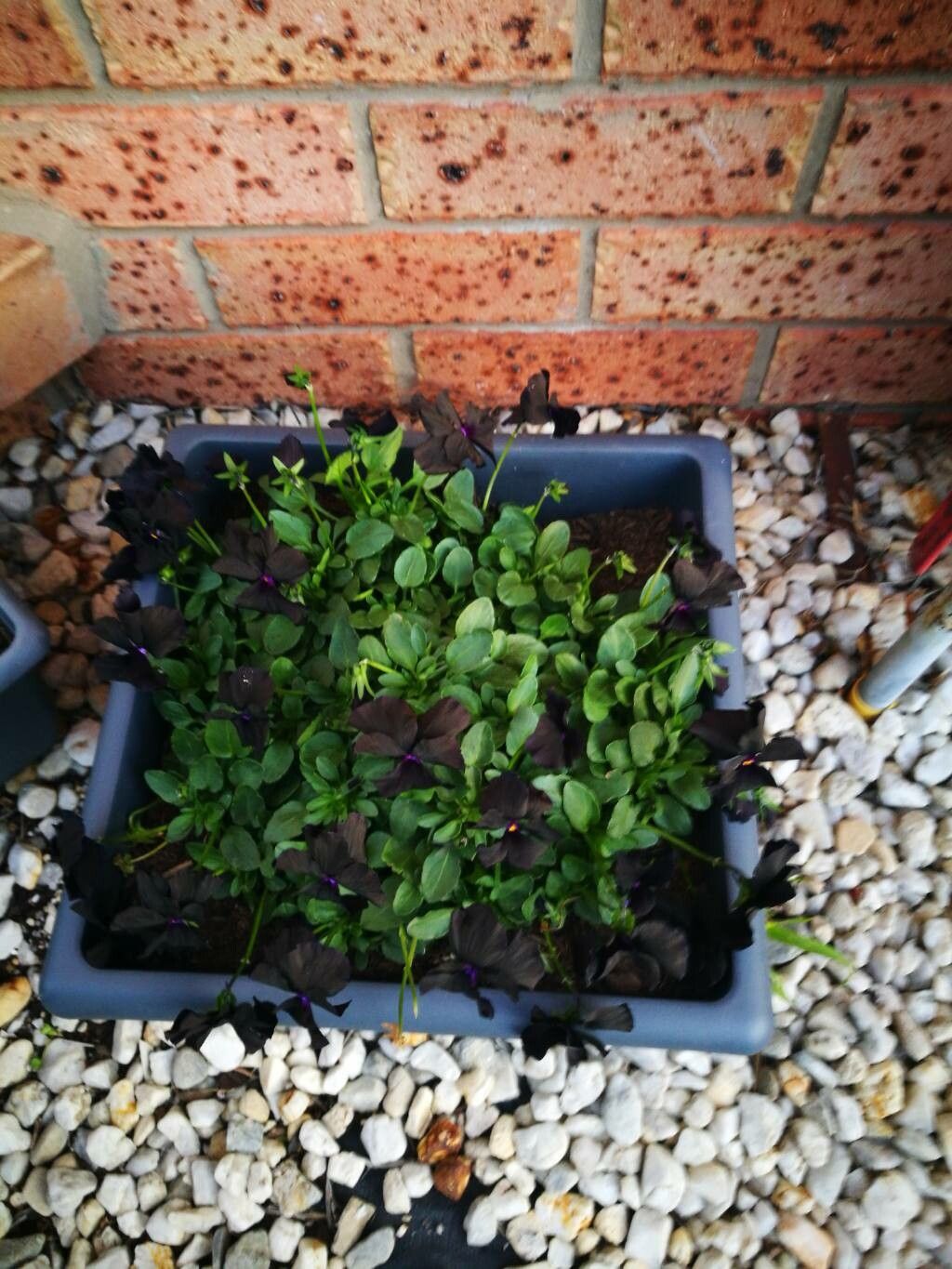
Viola renifolia is a species of violet known by the common names white violet and kidneyleaf violet. It is native to northern North America, where it has a widespread distribution across Canada and the northern United States as far south as Washington, Colorado, and New York.Kidneyleaf violet is a perennial herb growing up to 10 centimeters tall. It does not have stems, rhizomes, or stolons. The kidney-shaped leaf blades are 3 to 6 centimeters long and are borne on petioles up to 15 centimeters long. The flower is 1 to 1.5 centimeters long and white in color with purple lines on the lower three petals. The fruit is a purplish capsule.This violet grows in white spruce and black spruce forests, and temperate coniferous forests. Near the Great Lakes it grows in swamps and wooded areas.
The white violet is fairly disease-resistant and is usually not prone to illnesses. However, it can be affected by pests and diseases present in its surroundings. These problems are typically minor. In terms of care, this plant requires moderate maintenance. Regular pruning is needed to keep a neat appearance and support healthy growth. Fertilizing can also help encourage flowering. The white violet is suitable for anyone with outdoor space, such as a garden or patio, and does not demand extensive gardening experience. It may need extra attention if grown indoors.
How to keep Viola Renifolia.
Light
The white violet is native to habitats like forest understories and rocky areas, where it grows in natural shade. It prefers partial sun but can tolerate full sun or full shade, illustrating its adaptable and hardy nature.
Temperature
White violet can tolerate a wide range of temperatures, but its distribution may still be restricted by particular combinations of moisture and heat. It performs best in warm summer climates with sufficient rainfall or watering. Extended periods of cloudy, rainy weather or continued high temperatures can increase the chance of White violet dying. In winter, protecting it from cold can raise the plant's survival rate.
Fertilizer
One fertilizer application in spring is typically enough for White violet, though several feedings can optimize growth. Feed every month to six weeks. Fertilization improves the leaves' appearance and function, encouraging even color and a healthy texture. It also promotes root development and nutrient uptake, supporting long-term plant health.
Pruning
The white violet is a graceful plant with delicate white flowers and heart-shaped leaves. For optimal growth, it's best to lightly prune the plant from early to late spring. Regularly removing spent flowers, a process known as deadheading, encourages the plant to bloom for a longer period. Trimming away any damaged leaves helps maintain the plant's health. By keeping pruning to a minimum, you can ensure the white violet maintains a neat appearance, making it a low-maintenance choice for any garden.
Botanical profile.
- Plant Type
- Herb
- Life Cycle
- Perennial
- Genus
- Viola
- Family
- Violaceae
- Hardiness Zone
- 3-5
- Mature Height
- 5 cm to 10 cm
- Mature Spread
- 10 cm to 20 cm
- Leaf Color
- Dark Green, Forest Green
- Leaf Type
- Deciduous
- Flower Color
- White
- Flower Size
- 2.54 cm
- Bloom Time
- Early spring, Mid spring
- Planting Time
- Spring
- Harvest Time
- Late spring, Early summer
Other names.
Reader questions.
What are the sunlight requirements for White Violet?
White Violet requires partial sun, meaning it should receive about 3-6 hours of sunlight. It's crucial to observe how sunlight moves through your garden to pick spots that offer a balance of light and shade, ensuring the plant's well-being. Additionally, White Violet can also tolerate full shade, making it a flexible option for various garden locations.
What are the essential care tips for White Violet?
White Violet, known botanically as Viola renifolia, thrives best in cold regions and high altitudes. It prefers cool temperatures, good ventilation, and a moist environment. During hot summer months, it's crucial to implement cooling measures due to its susceptibility to heat, which can lead to the plant's death. Dry environments are also not suitable for White Violet. In winter, the plant is highly cold-tolerant and doesn't require specific measures for frost protection, but maintaining soil moisture is important. Before the onset of winter's first freeze, it's recommended to water the plant generously to ensure the soil remains moist and enters the winter in a frozen state, which helps prevent drought and water scarcity during winter and early spring.
How important is artificial lighting for indoor plants?
Artificial lighting is vital for indoor plants, especially when natural sunlight is not sufficient, such as in winter or less sunny spots. LED lights, in particular, are recommended because they can provide specific wavelengths needed by the plants. Full sun plants require 30-50W/sq ft of artificial light, partial sun plants need 20-30W/sq ft, and full shade plants should have 10-20W/sq ft. The light source should be placed 12-36 inches above the plant, and plants generally need 8-12 hours of light per day.
How does White Violet react to low temperatures?
White Violet is notably cold-tolerant and can handle winter temperatures down to -35°C. If temperatures drop below this level, you might not notice any immediate damage during winter. However, there could be a reduction in sprouting or a complete lack of sprouting in the following spring. To mitigate this effect, remove any parts of the plant that have failed to sprout in the spring.
What symptoms indicate light deficiency in White Violet plants?
Symptoms of light deficiency in White Violet include smaller new leaves, leggy or sparse growth, faster leaf drop, delayed or halted growth, lighter-colored or irregularly patterned new leaves, chlorosis (leaves turning yellow), sunscald, leaf curling, wilting, and leaf scorching. These symptoms signal that the plant is not receiving adequate light.
How should I care for White Violet in high temperatures?
White Violet struggles in high temperatures, particularly when the temperature exceeds 25°C. At higher temperatures, the plant's growth will halt, and it becomes significantly more susceptible to rot. To protect the plant from high heat, you should trim away any sunburned or dried-up parts. It's also beneficial to move the plant to a shaded location, especially away from midday and afternoon sun, or use a shade cloth for protection. Watering in the morning and evening can help keep the soil moist and provide some relief from the heat.
How can I address light deficiency in White Violet plants?
To address light deficiency in White Violet plants, gradually shift them to sunnier spots each week to receive 3-6 hours of direct sunlight daily. This helps them adapt to changing light conditions. For indoor or non-movable plants, use desk, ceiling, or professional grow lights for at least 8 hours daily. Outdoors, move plants to sunnier locations gradually to prevent sunburn. If sunlight is blocked by obstructions like trees, consider pruning or transplanting the plant to a brighter location. Note that parts of the plant affected by insufficient light may not recover, but new growth should be healthy with improved light conditions.