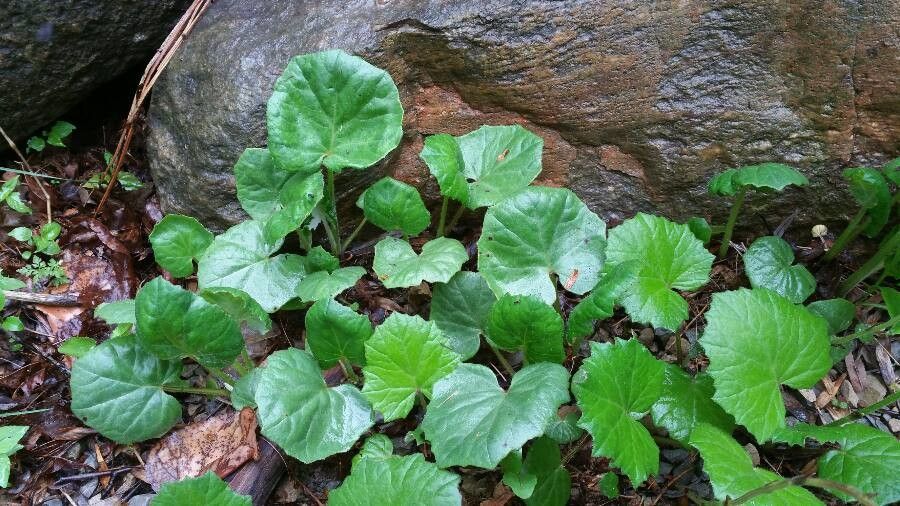
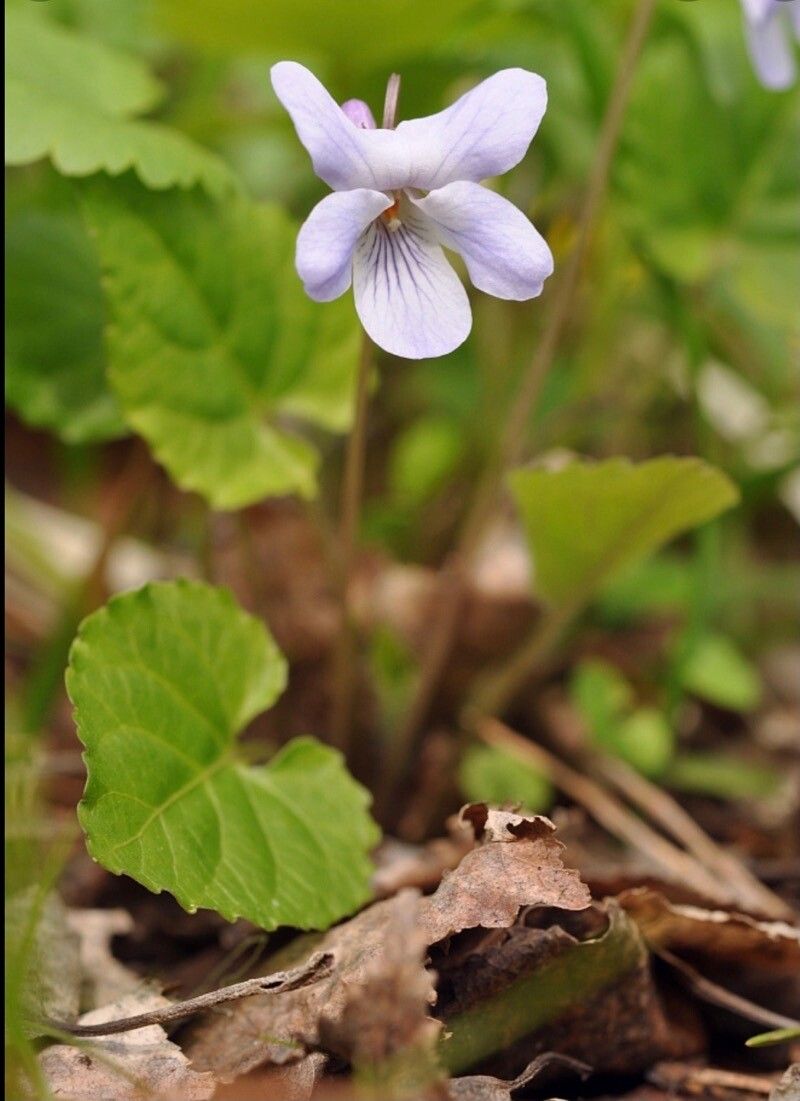
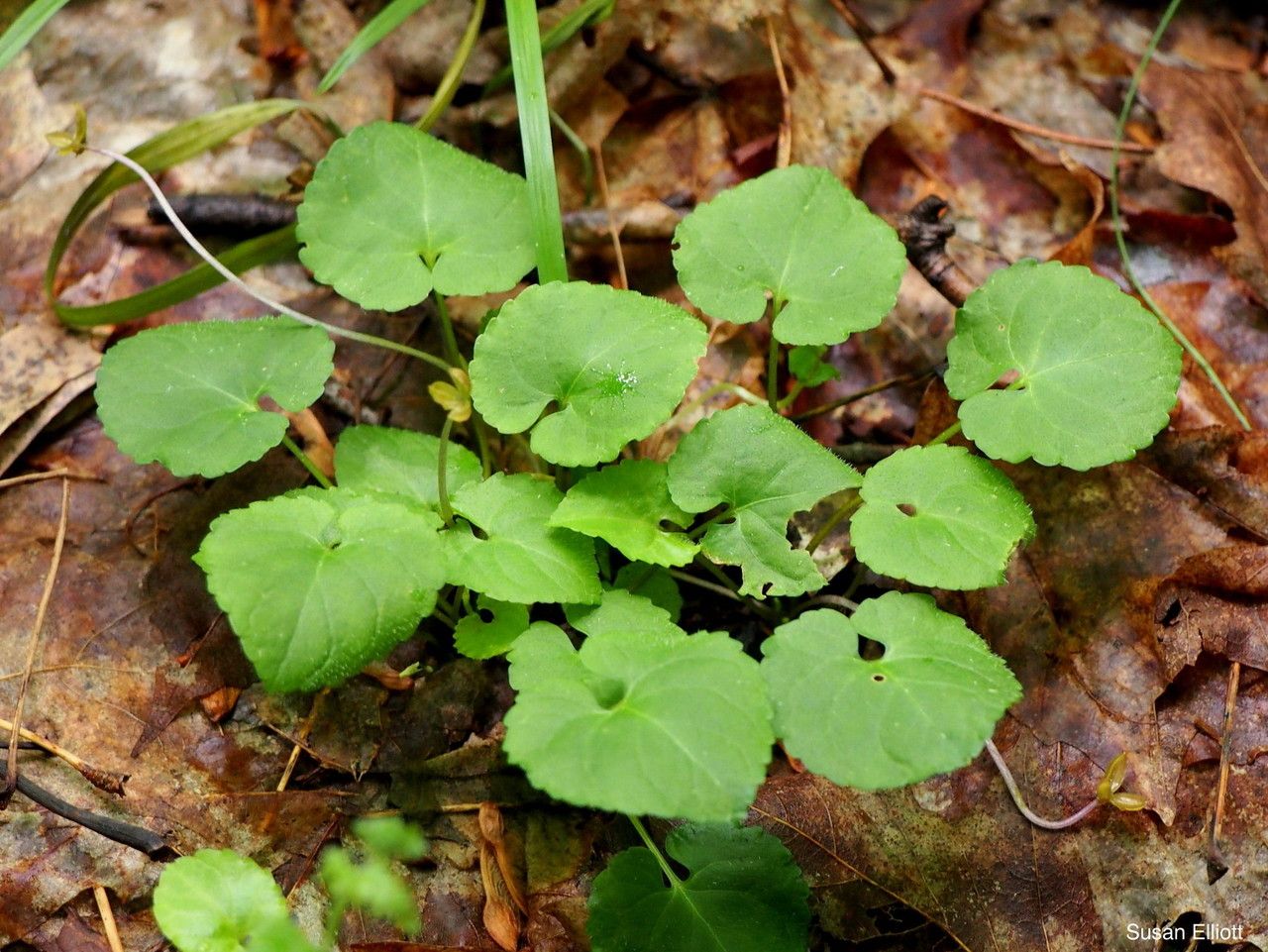
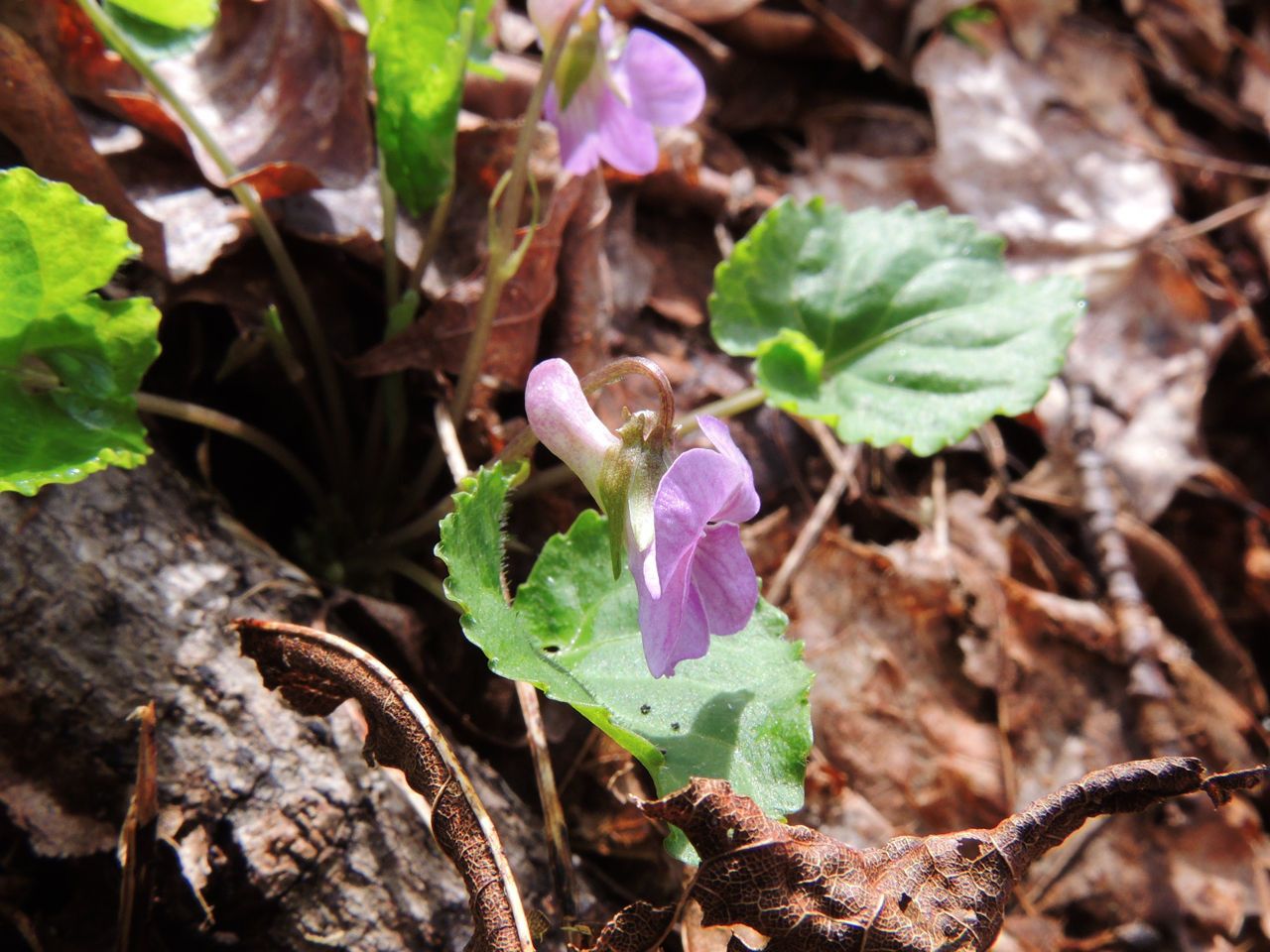
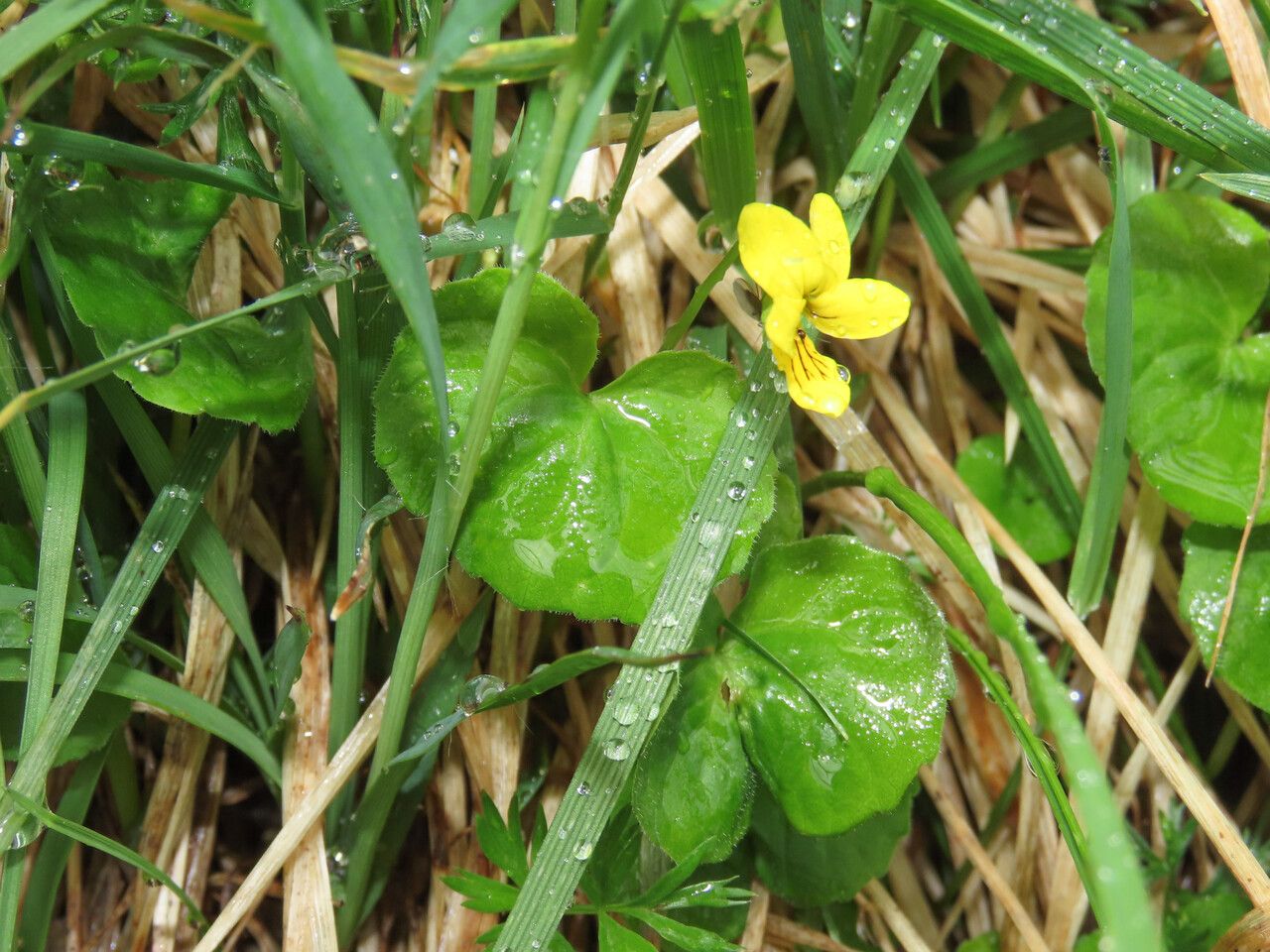
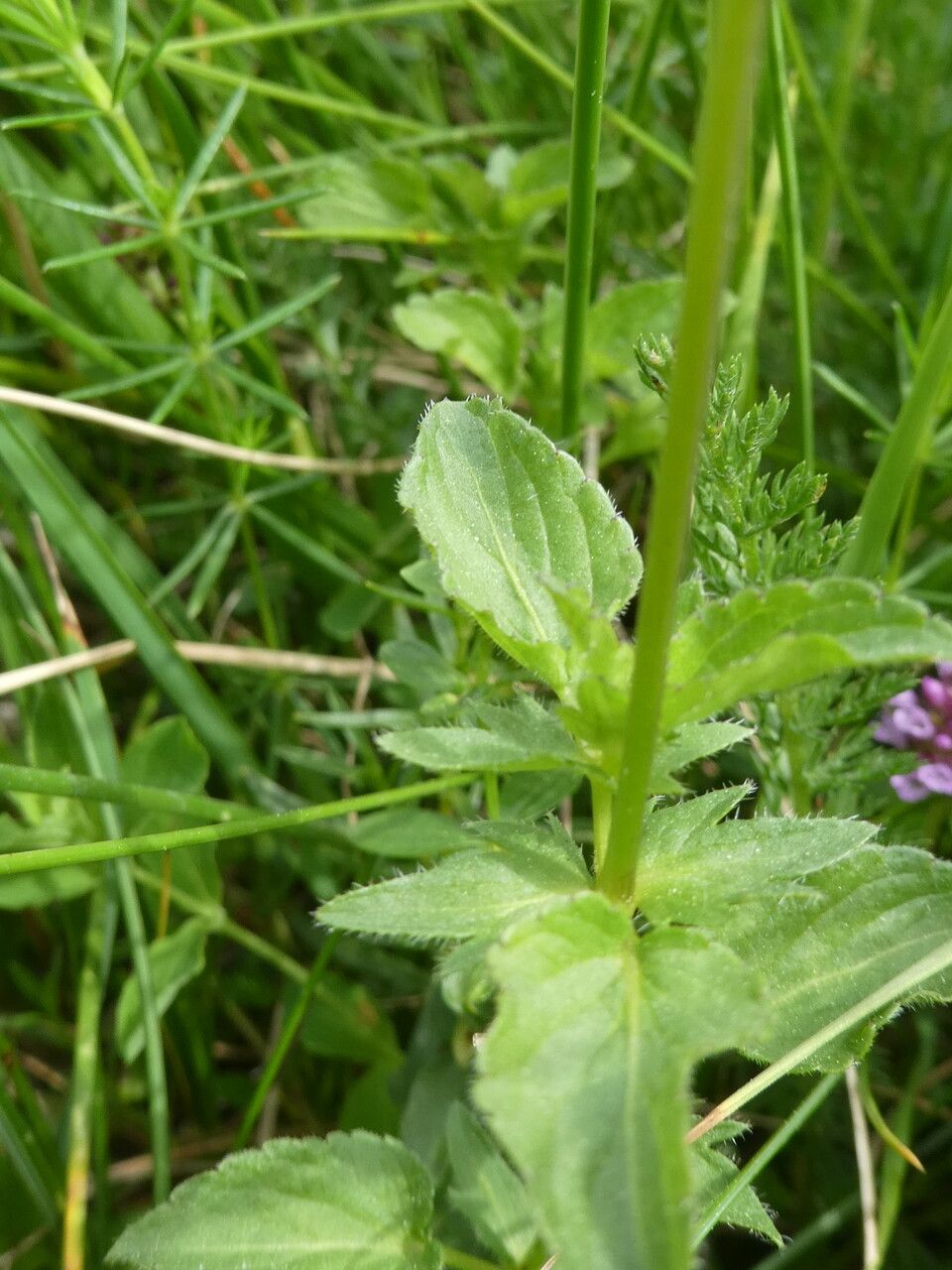
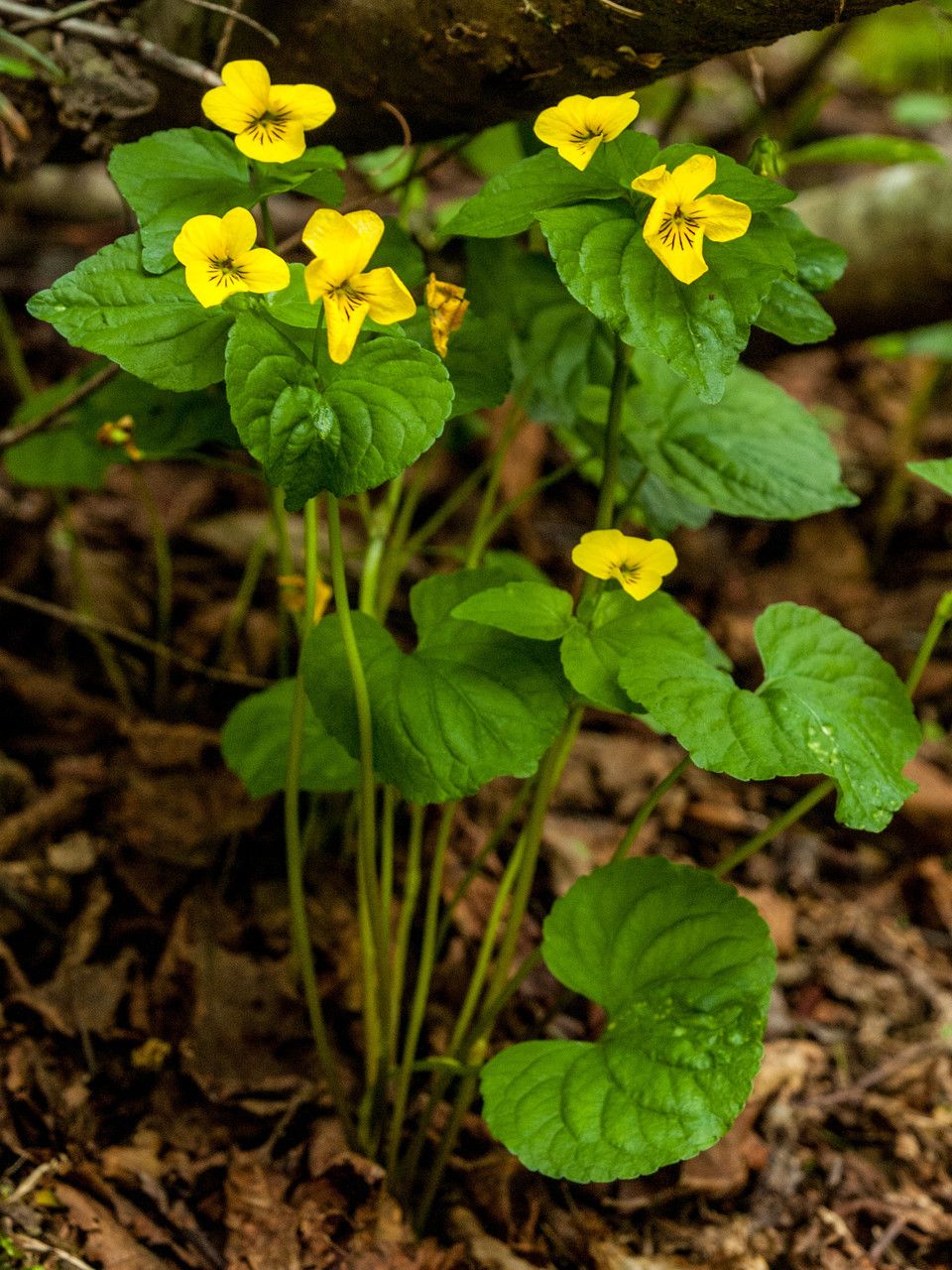
Viola selkirkii is a species of violet known by the common names Selkirk's violet and great-spur violet. It is native throughout the Northern Hemisphere, its distribution circumboreal.This species is a rhizomatous perennial herb with hairy, heart-shaped leaves. The flowers are up to 1.5 centimeters wide and are violet in color. They lack the beards that some other violets have. Each flower has a spur up to 7 millimeters long. The fruit is a capsule up to 6 millimeters wide. Flowering occurs between April and July. In some regions this violet may be confused with its relatives, the hookedspur violet (V. adunca) and the common blue violet (V. sororia). Its relatively large spur is a good distinguishing characteristic.Like some other violets, this species forcefully ejects its mature seeds from the fruit capsules. Ants then pick up the seeds and aid in their dispersal.The plant occupies many types of moist, shady, cool habitat. In North America it is mostly found in forests. Like many other violets it often grows on rotting wood. It also seems to favor calcareous substrates such as limestone.While the plant is not rare in general, it is considered to be an imperiled species in some regions, mainly on the periphery of its range, including the US states of Colorado, Connecticut (where it is listed as a special concern species) Montana, Pennsylvania, and South Dakota. In other places it is a common plant.This plant, which was known at the time only from the vicinity of Montreal, was named by Frederick Traugott Pursh for Thomas Douglas, 5th Earl of Selkirk, who had chosen Pursh to serve as botanist of a proposed expedition to the Red River Colony in what is now Manitoba.
Selkirk's violet shows good resistance to disease and is generally not prone to illnesses. Still, it can be vulnerable to pests and diseases that occur in its environment. Such infections are typically mild. Regarding care, the plant requires moderate maintenance. It should be pruned regularly to preserve a neat appearance and healthy growth. Applying fertilizer can also encourage blooming. Selkirk's violet is appropriate for anyone who has outdoor space, such as a garden or patio, and does not demand extensive care experience. It may need more attention when cultivated indoors.
How to keep Viola Selkirkii.
Light
Selkirk's violet needs a considerable amount of sunlight to grow well, although it can also tolerate moderate light levels. Native to habitats with abundant sun, the plant does best in those conditions. Variations in light intensity during different growth stages are not critical. Very low light can hinder the plant's development, while excessive light may cause stress.
Temperature
Selkirk's violet comes from habitats where temperatures range from 32 to 100.4 °F (0 to 38 °C). It tolerates a broad temperature span; make any seasonal adjustments within these limits as needed to support its growth.
Fertilizer
The best time to fertilize a Selkirk's violet is in early spring, as it comes out of dormancy and begins active growth. Fertilizing supplies essential nutrients needed for healthy development. Although Selkirk's violet has relatively low fertilizer requirements, giving it fertilizer once a year can improve its survival and promote better, longer-lasting flowers.
Pruning
To keep Selkirk's violet healthy, start pruning from early to late spring. Trim away dead stems to improve airflow, remove spent flowers to encourage more blooms, and enhance the plant's overall vigor. With this care, Selkirk's violet will become a robust and attractive addition to your garden.
Botanical profile.
- Plant Type
- Herb
- Life Cycle
- Perennial
- Genus
- Viola
- Family
- Violaceae
- Hardiness Zone
- 2-11
- Mature Height
- 5 cm to 15 cm
- Mature Spread
- 10 cm to 15 cm
- Leaf Color
- Green, Dark Green
- Leaf Type
- Evergreen
- Flower Color
- Purple
- Flower Size
- 1.52 cm
- Bloom Time
- Early spring, Mid spring
- Planting Time
- Spring, Summer
- Harvest Time
- Late spring, Early summer
- Native Area
- Russia, Norway, Sweden, Kazakhstan, Denmark, Japan, Mongolia, Finland, Estonia, Koppen, South Korea, China
Other names.