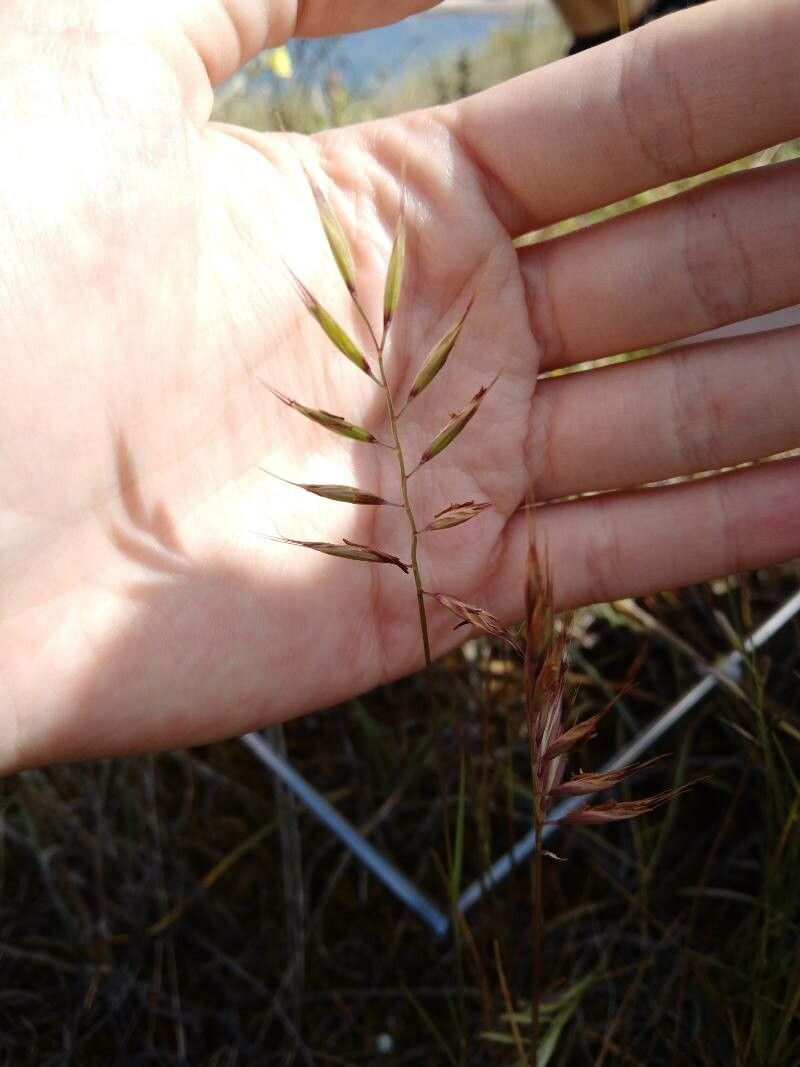
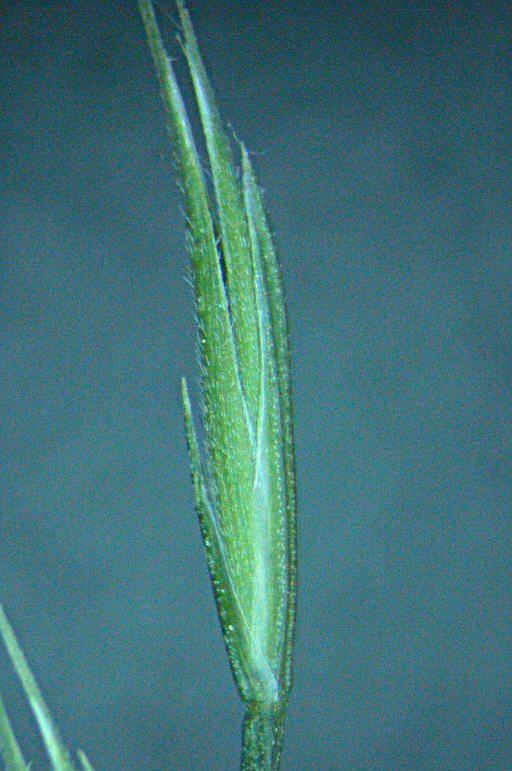
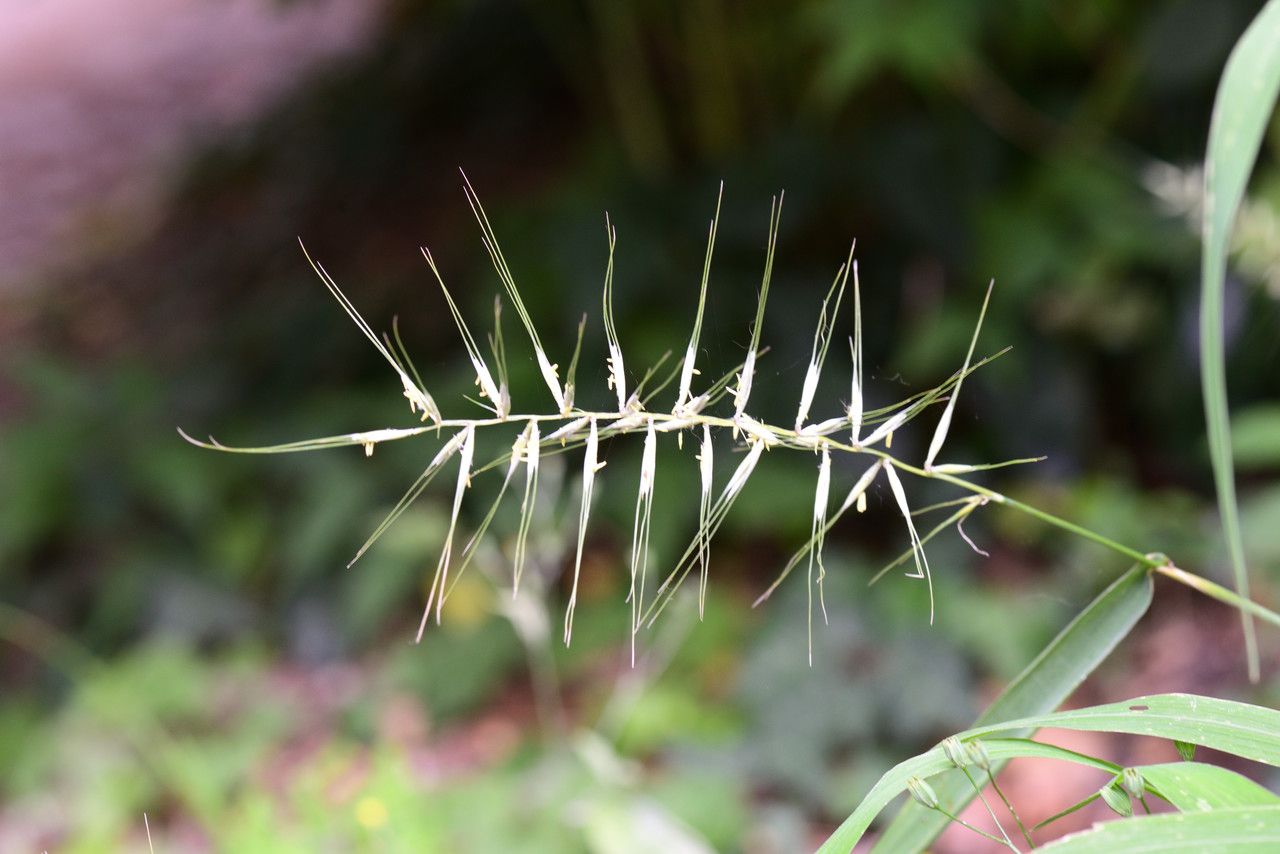
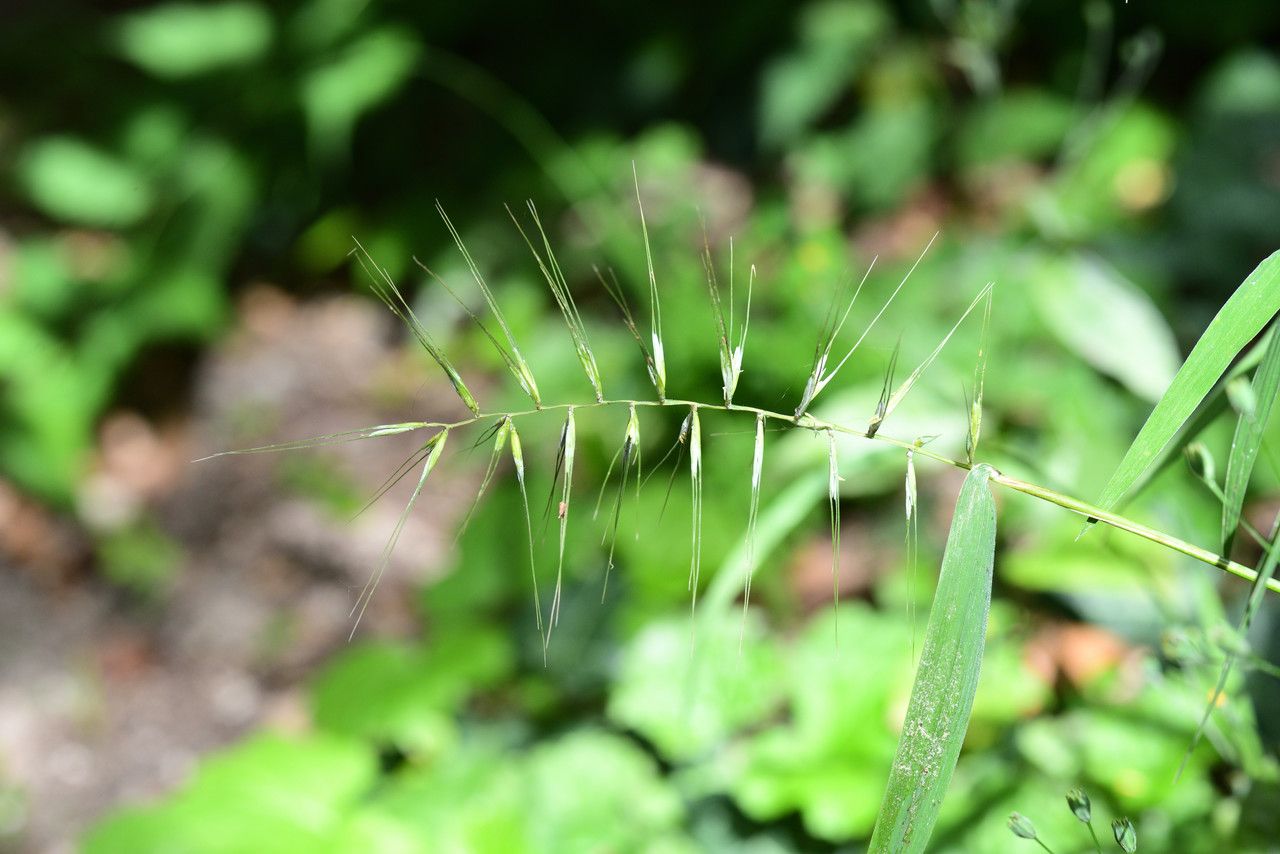
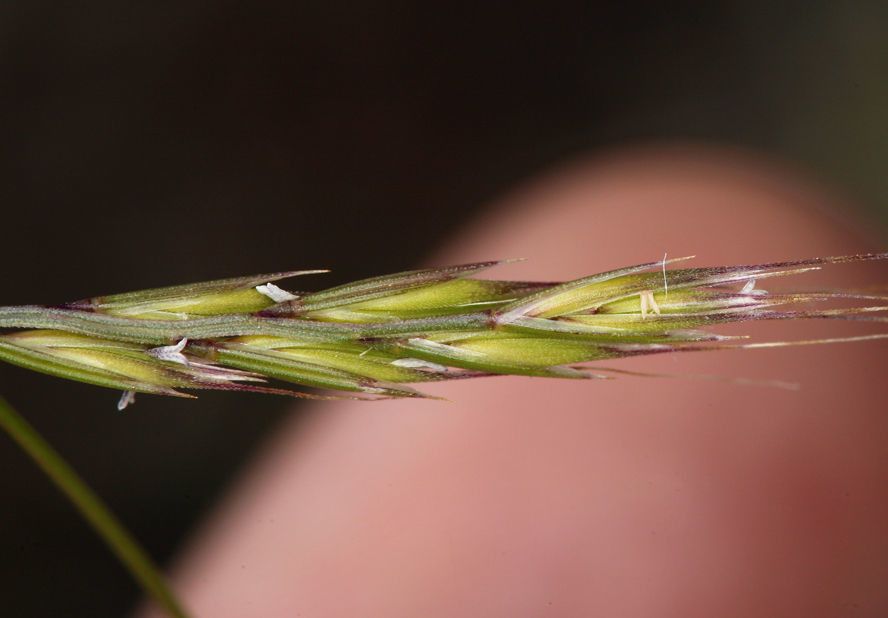
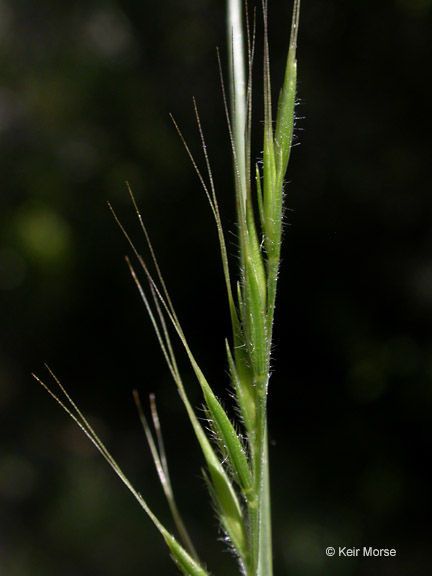
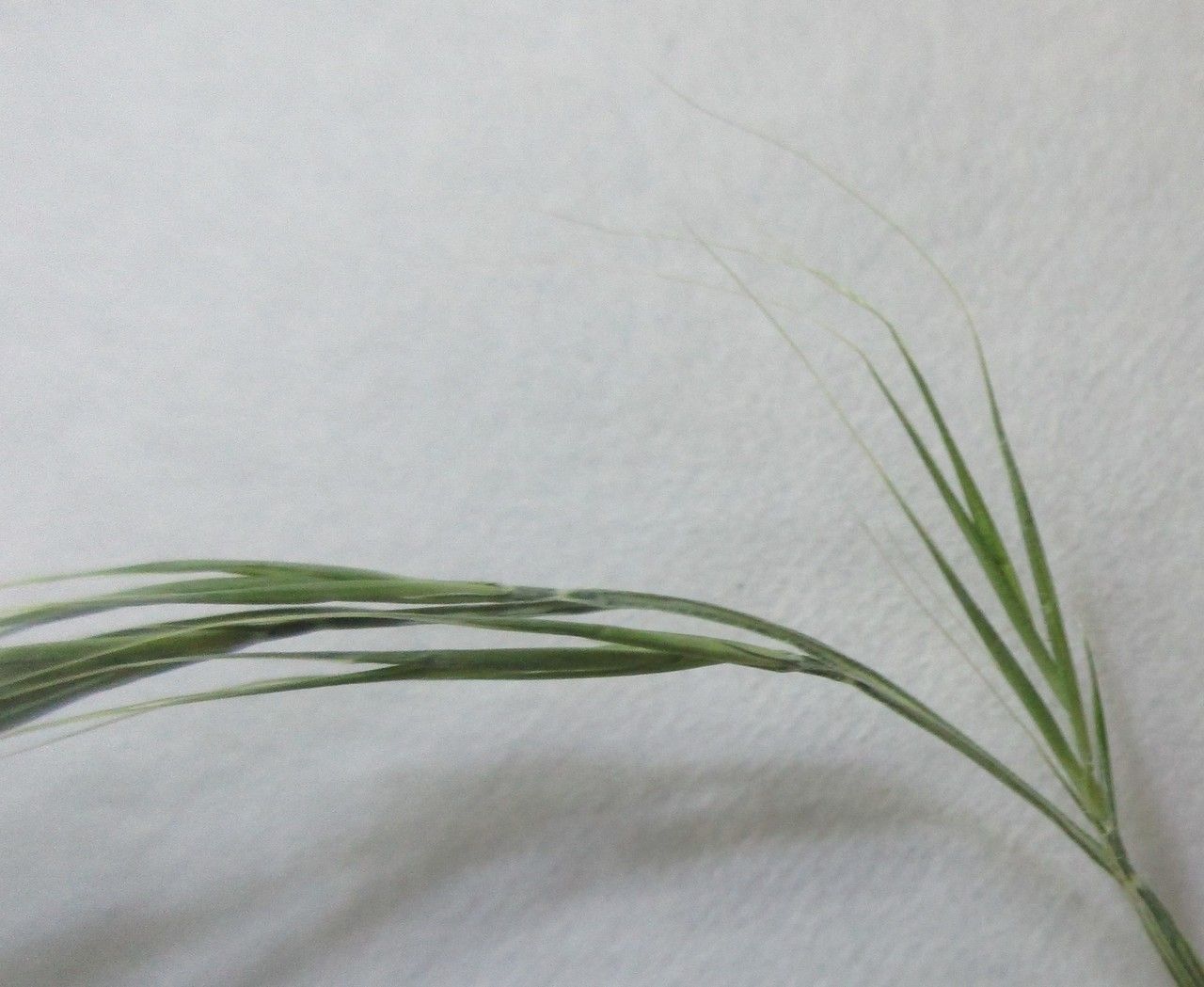
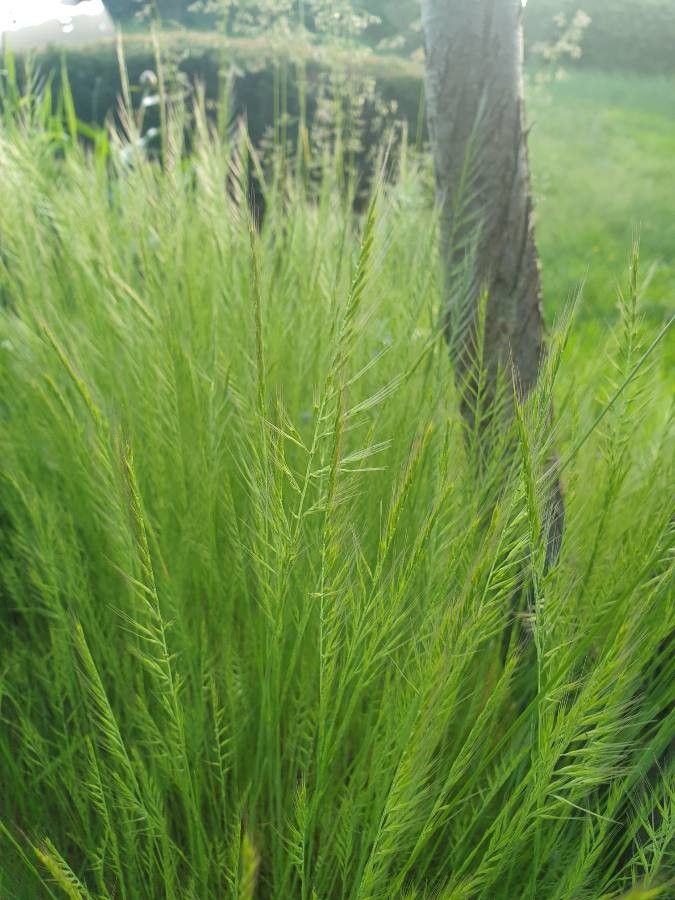
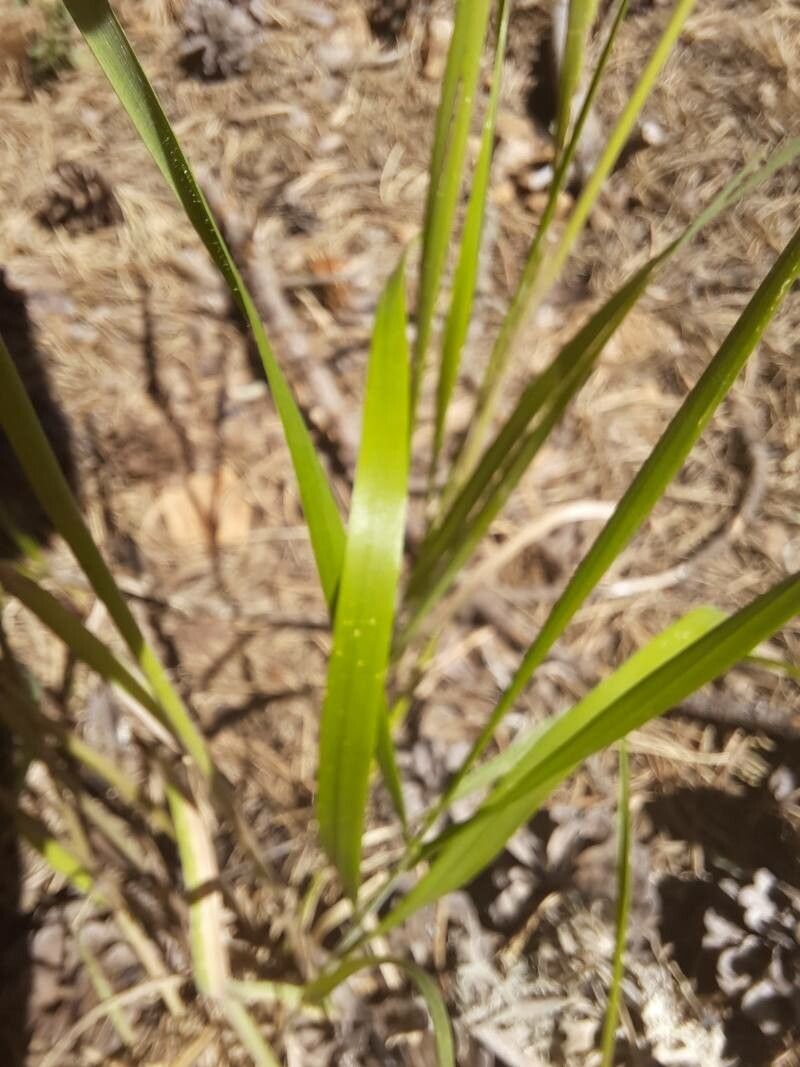
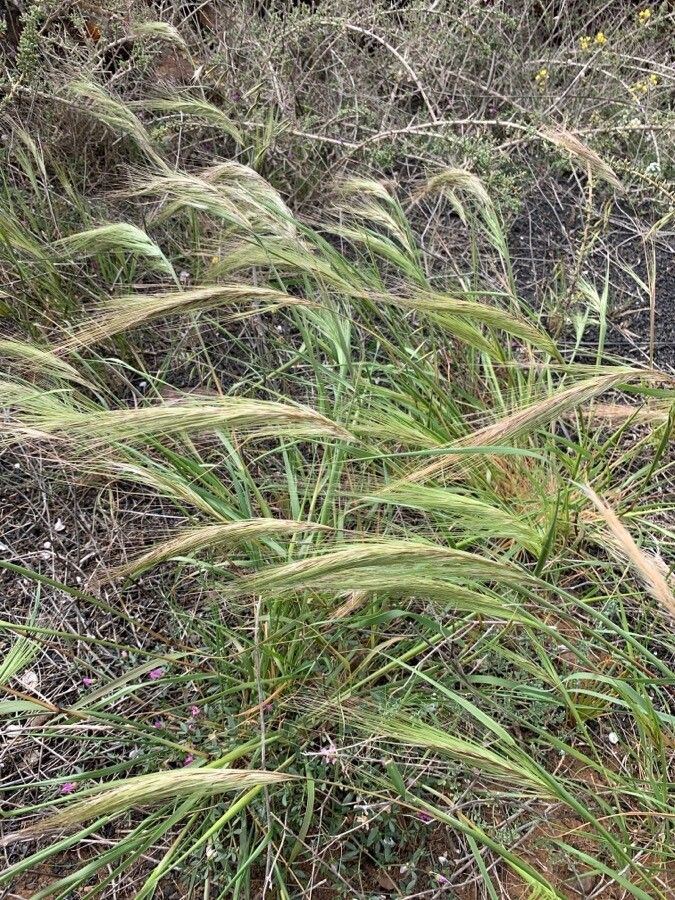
Vulpia microstachys is a species of grass known by the common names small fescue and small sixweeks grass. It is native to western North America from British Columbia to Colorado and New Mexico to Baja California, where it grows in many types of open habitat, including grasslands. It is dominant on some grasslands of California, and it was probably an abundant native grass before the habitat was altered by invasive non-native grasses. It occurs on serpentine soils with associates such as serpentine reedgrass (Calamagrostis ophitidis). It is also known from parts of South America. It is an annual grass producing one stem or a clump of several stems growing up to 75 centimeters tall. The inflorescence has several open branches bearing clusters of purple-tinged spikelets. The spikelet has one to six flowers. The grass is usually cleistogamous, its flowers fertilizing themselves.There are four varieties which are sometimes difficult to tell apart; they are separated on the basis of the arrangement and amount of hairs on the spikelets. V. m. var. ciliata - Eastwood fescue V. m. var. confusa - confusing fescue V. m. var. microstachys - desert fescue V. m. var. pauciflora - Pacific fescue
Small fescue is very resistant to disease and is generally not susceptible to illnesses. In terms of care, this plant is fairly low maintenance. When planted outdoors, it needs little watering, and larger plants usually do not require pruning. Smaller plants, however, should be pruned after they finish blooming. Small fescue is suitable for anyone with an outdoor area, such as a garden or deck, and does not demand much experience in plant care.
How to keep Vulpia Microstachys.
Light
Small fescue comes from bright, open habitats where it does best in full sun. It can tolerate partial sun but favors direct sunlight for optimal growth. This annual and biennial plant is noted for its sun-loving nature.
Temperature
Small fescue can adjust to a wide range of temperature conditions, but its distribution may still be limited by certain combinations of moisture and heat. It grows best in warm summer climates with sufficient rainfall or irrigation. Extended periods of cloudy, rainy weather and prolonged high temperatures can increase the chance of Small fescue dying. In winter, adequate protection from cold can enhance the plant's survival rate.
Botanical profile.
Other names.