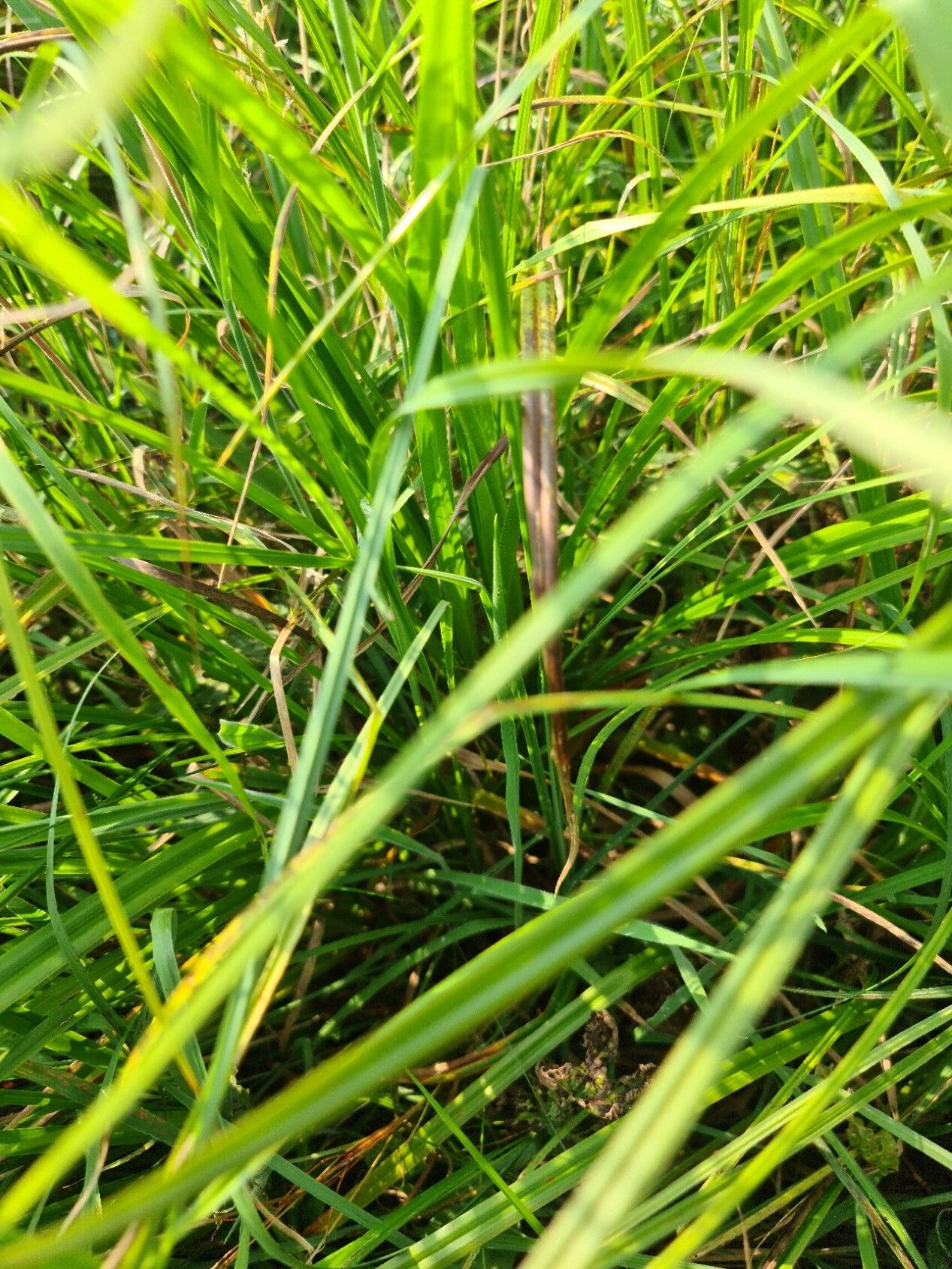
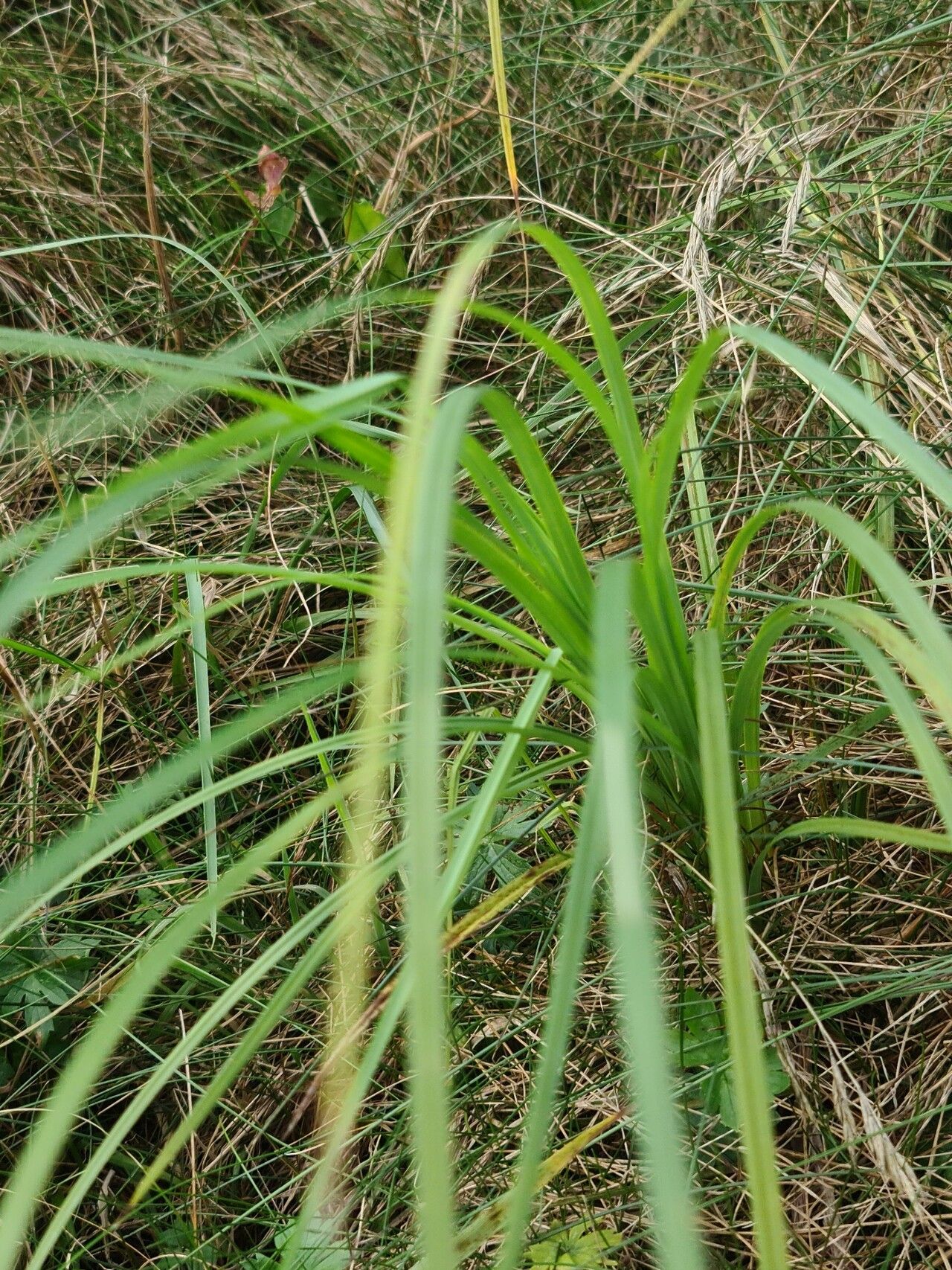
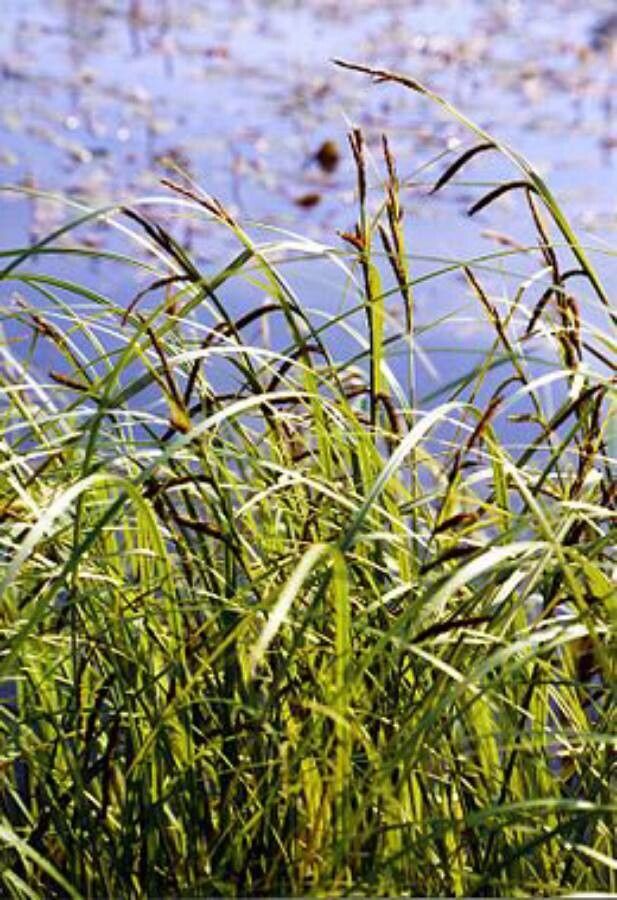
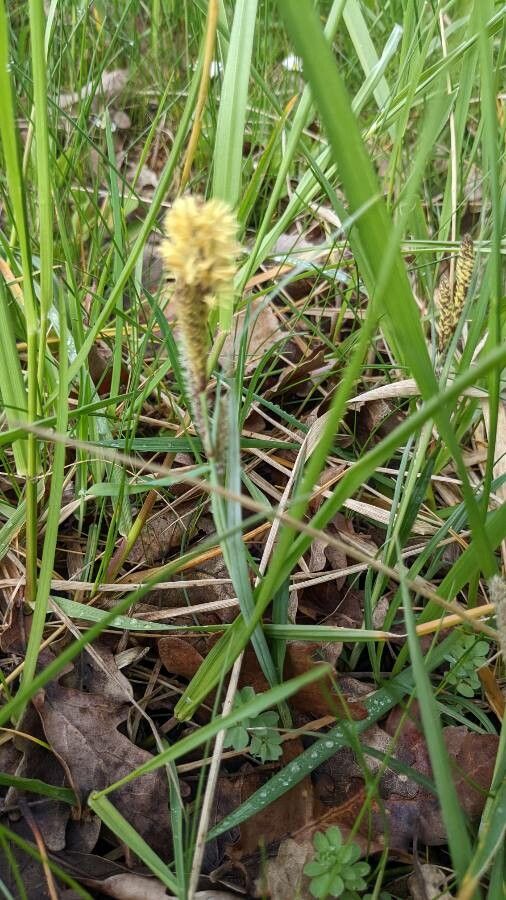
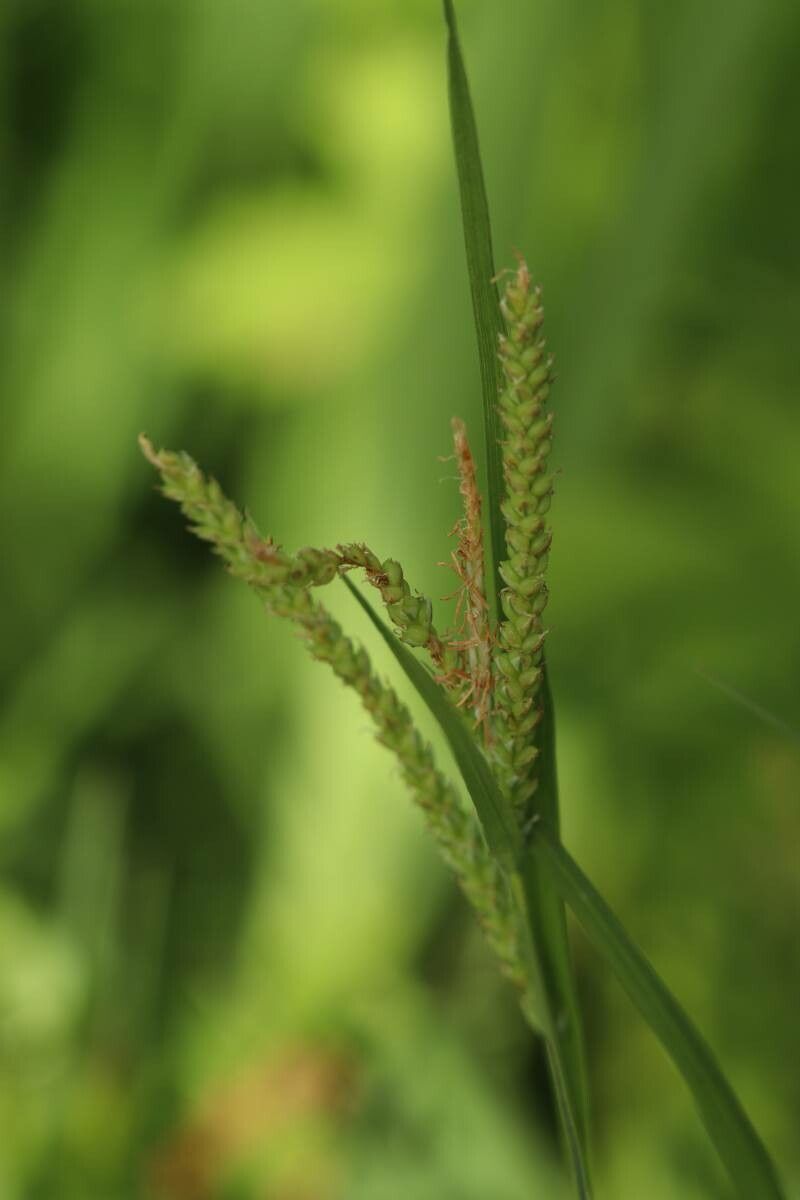
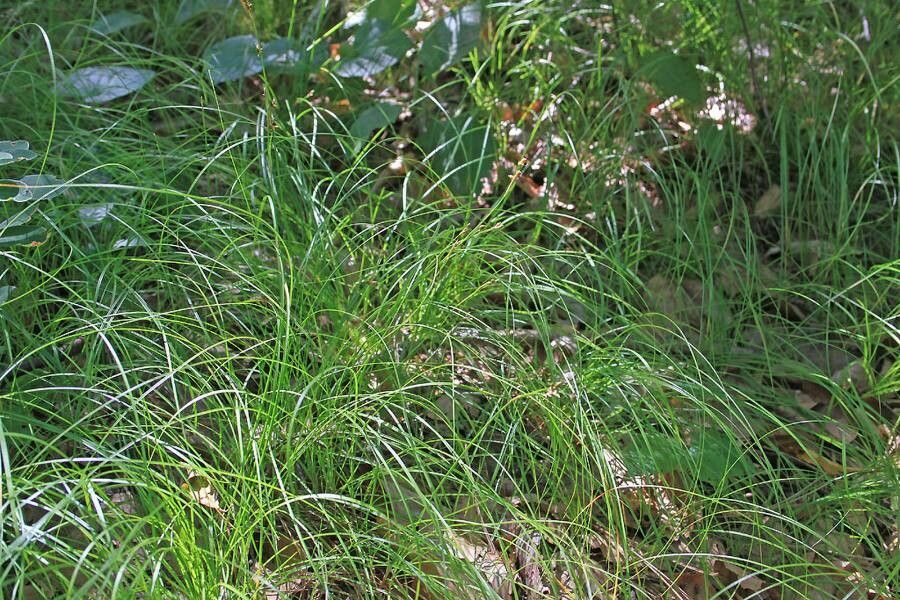
Carex atherodes is a species of sedge known by the common name wheat sedge. It is native to Eurasia and much of North America including most of Canada and the United States. It is a very common wetland plant across the American Midwest and areas west. It grows in moist and wet habitat, such as marshes and moist prairie land, and it may grow in shallow water. This sedge produces triangular, hollow stems 30 to 120 centimeters tall. The leaves are hairy, especially on the lower parts, and the leaf sheath is tinted with reddish purple. The inflorescence is up to 60 centimeters long and made up of several spikes; those spikes near the tip are usually staminate, and those lower in the inflorescence are usually pistillate. The tip of each fruit has two or more long, thin teeth.
Wheat sedge is fairly resistant to disease and typically does not suffer from many illnesses. Regarding maintenance, this plant is fairly easy to care for. Outdoors it needs only light watering, and larger specimens usually do not require pruning. Smaller specimens, however, should be trimmed after they finish flowering. Wheat sedge is appropriate for anyone who has an outdoor area, like a garden or a deck, and it does not demand extensive gardening experience.
How to keep Carex Atherodes.
Fertilizer
Wheat sedge needs extra nutrients to encourage healthy new growth. In spring, adding compost around the base of the plant will effectively supply the necessary nutrition. Fertilizing supports vigorous growth and helps the plant resist diseases and pests.
Botanical profile.
Other names.