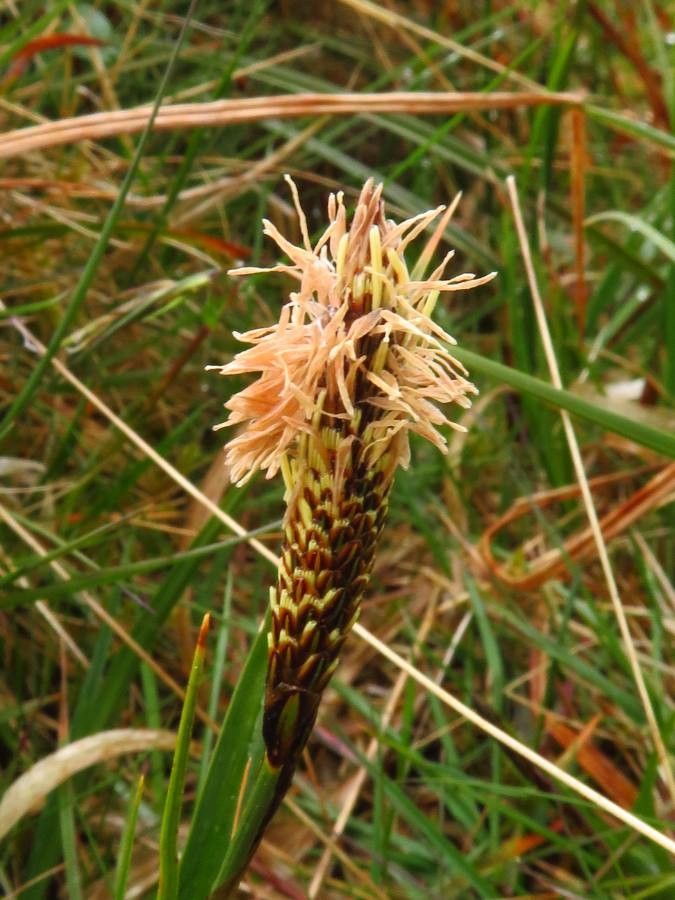
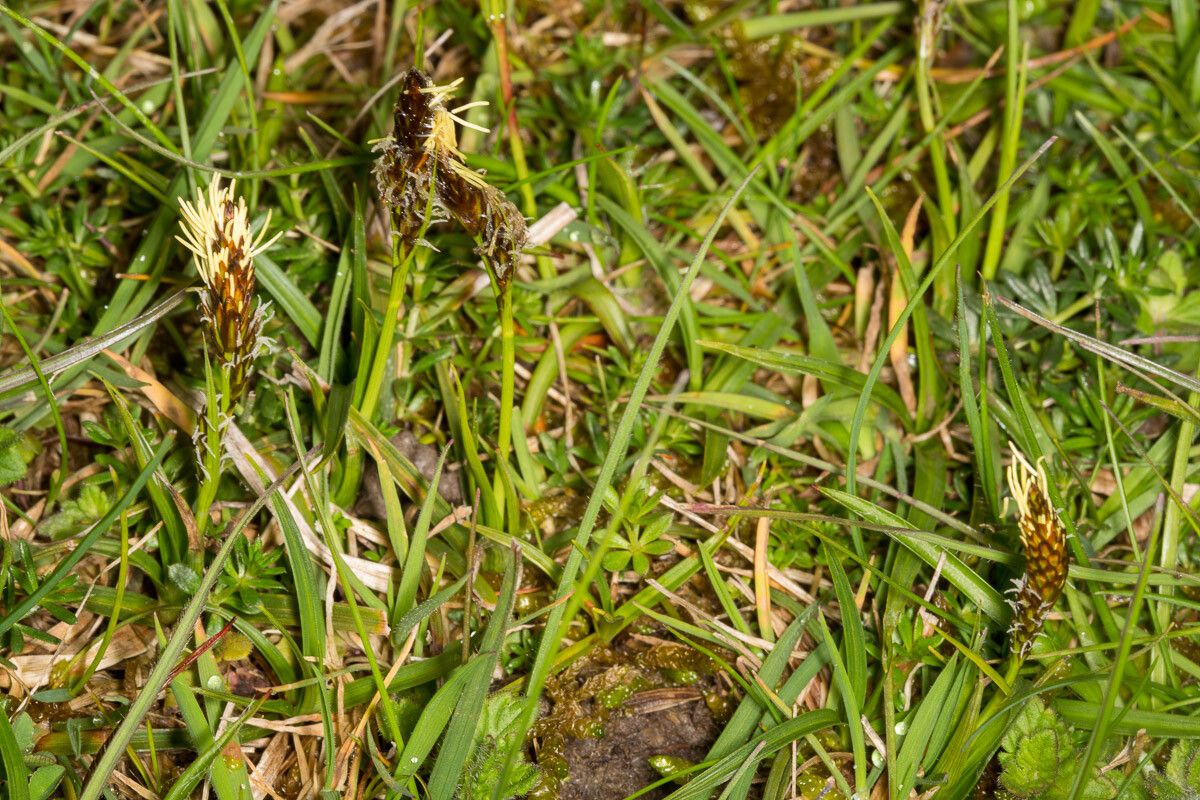
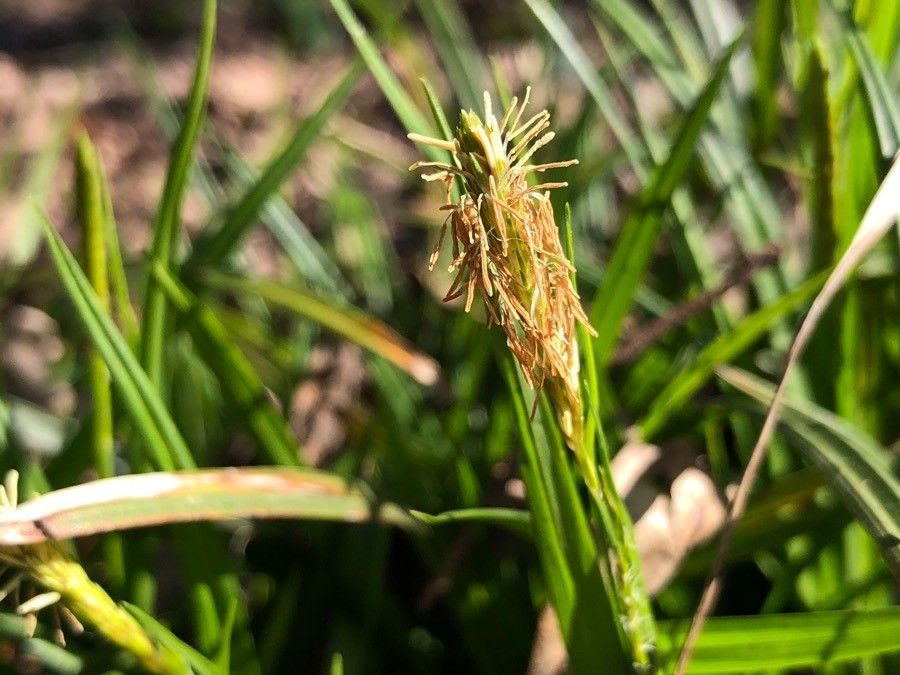
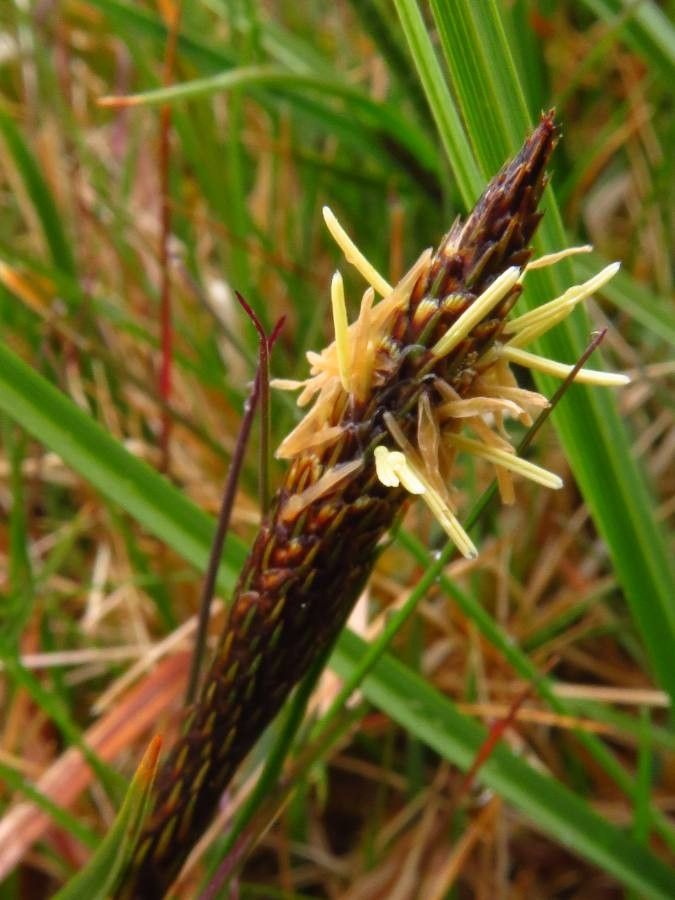
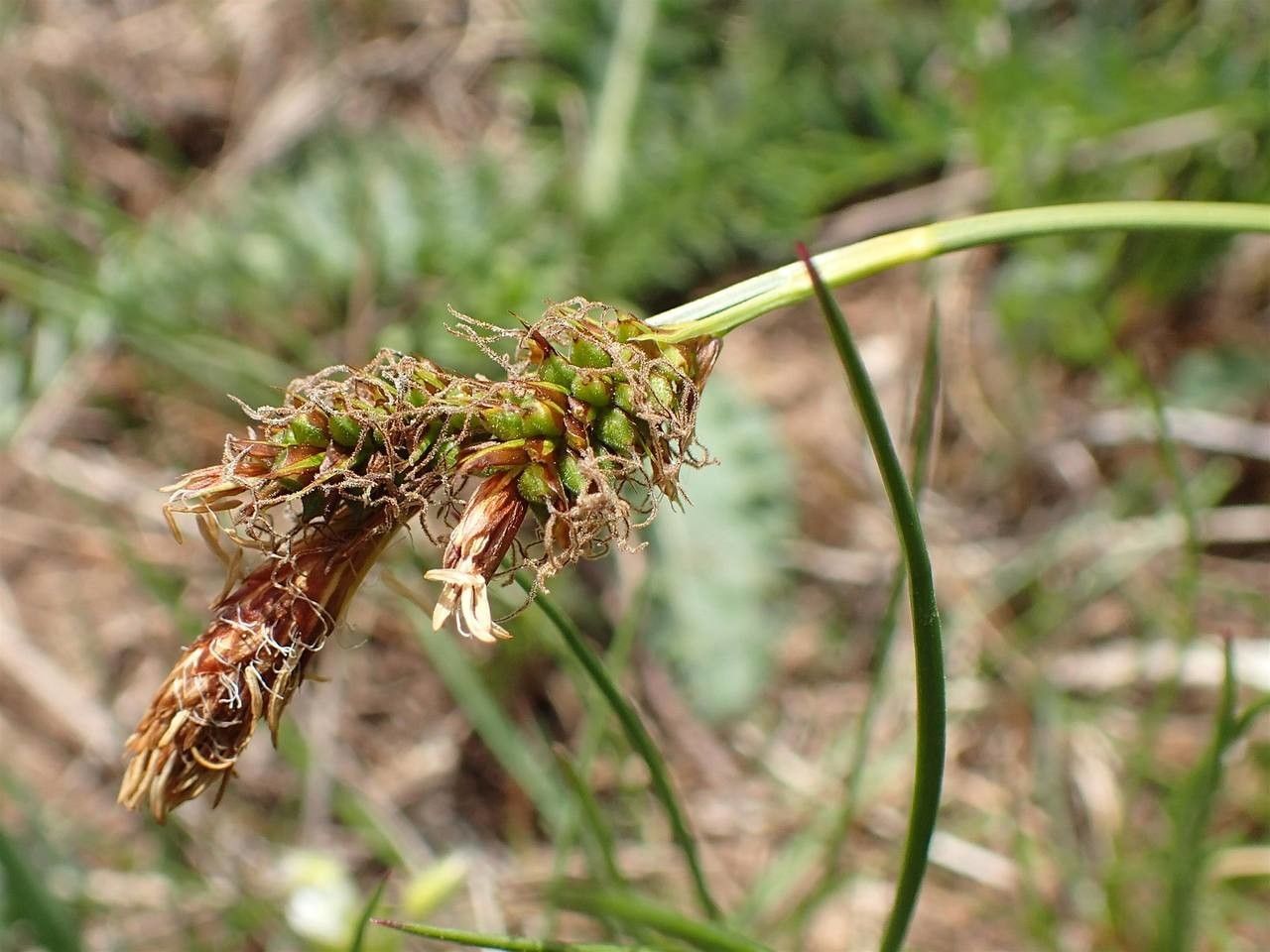
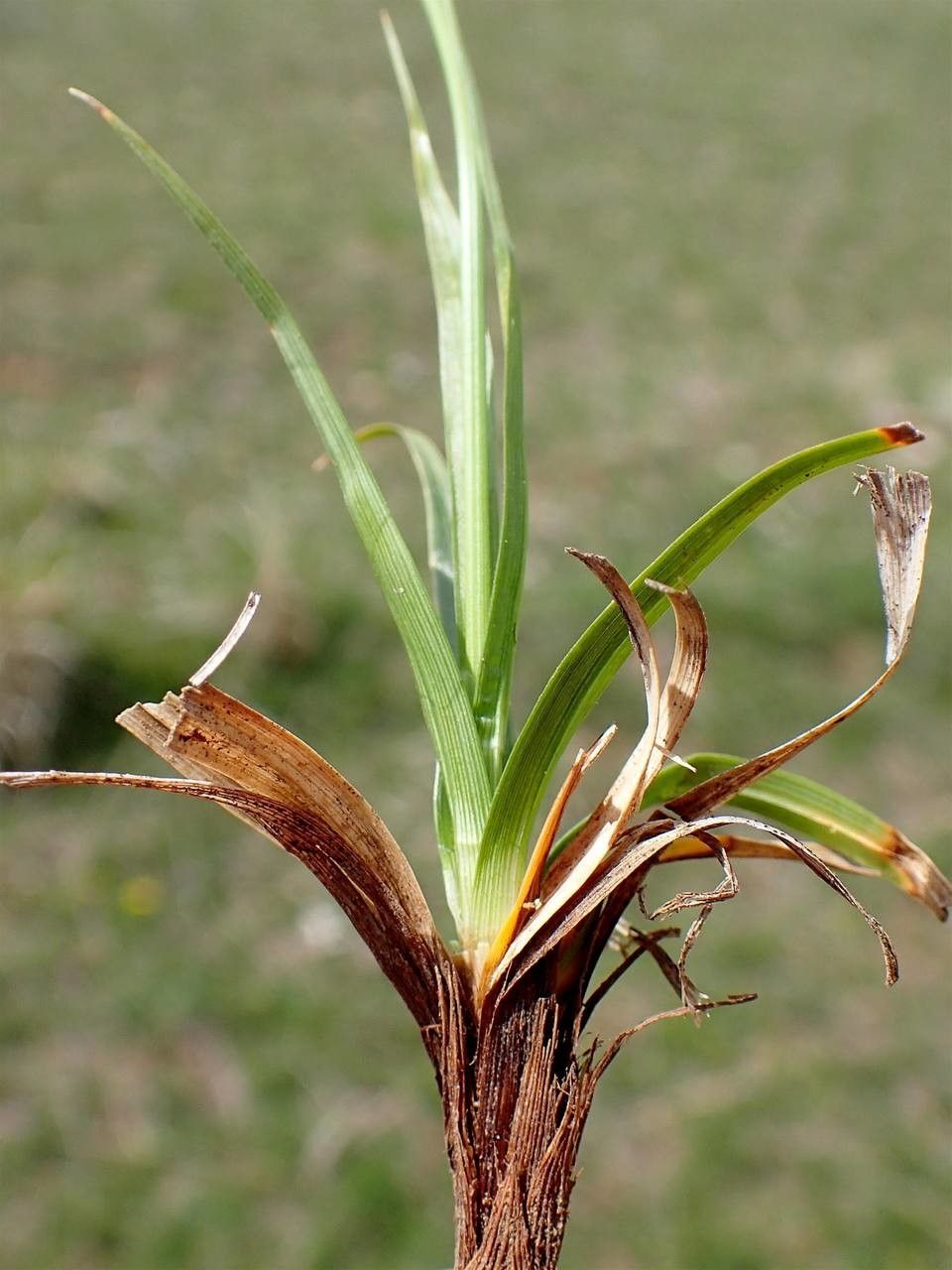
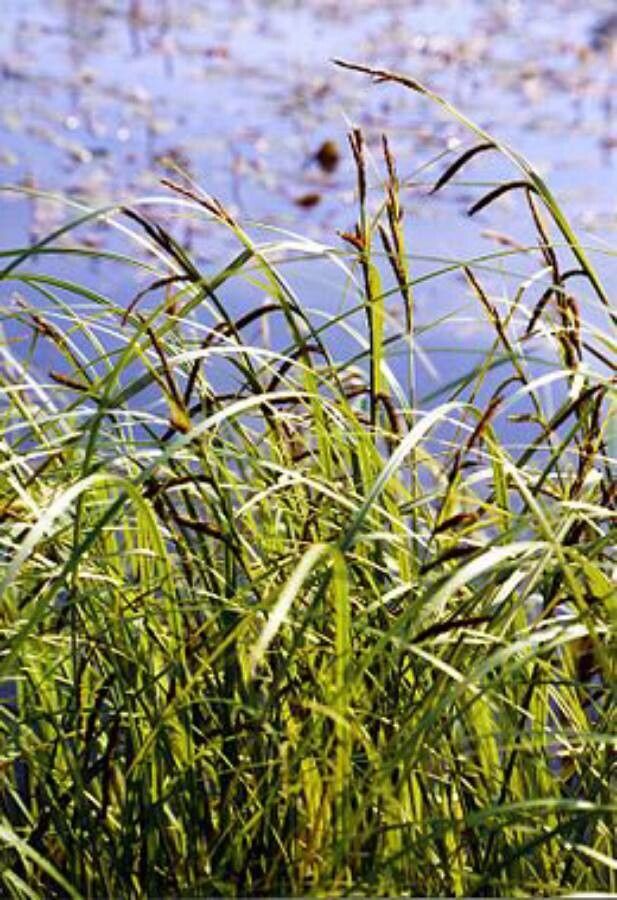
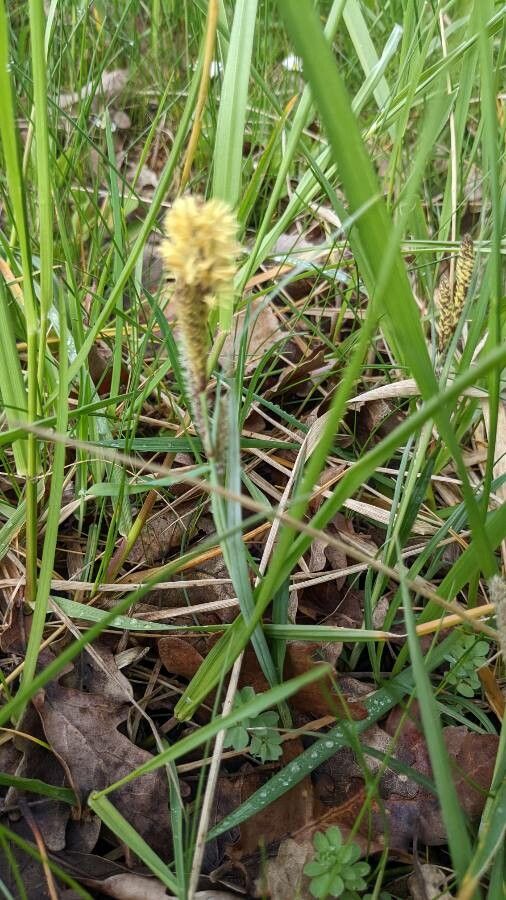
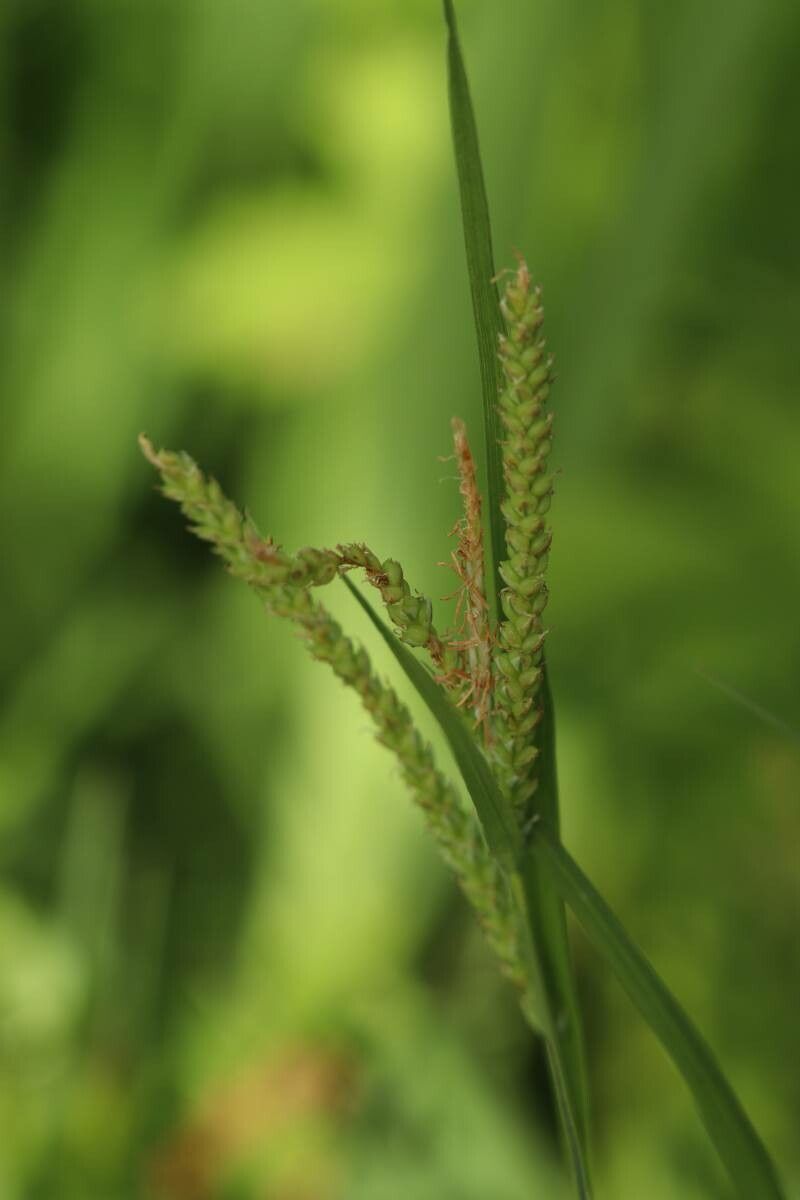
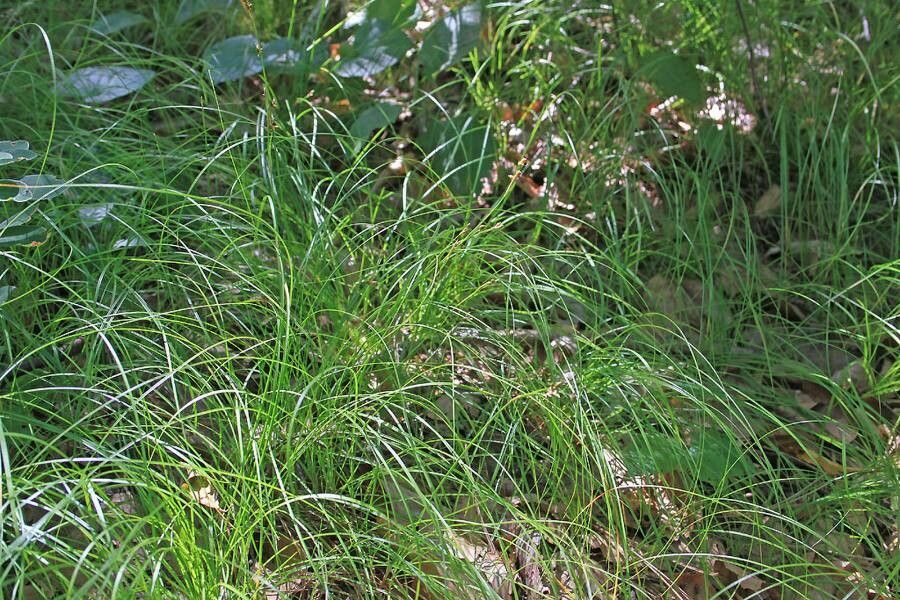
Carex caryophyllea, commonly known as spring sedge, is a perennial plant species belonging to the family Cyperaceae. Native to Europe and Asia, this plant thrives in various habitats, including meadows, woodlands, and wetlands. Spring sedge features narrow, green leaves that can grow up to 30 cm in length. Its stems are triangular and topped with small flower spikes. The greenish-brown flowers are arranged with male flowers at the top of the spike and female flowers below. This plant is crucial for wildlife, offering food for insects such as moths and butterflies, and providing cover for small mammals like voles. In terms of cultivation, Carex caryophyllea prefers moist soil but can tolerate some drought once established. It can be propagated by division or from seed, though establishment from seed may take several years. Overall, Carex caryophyllea is an attractive perennial that adds interest to gardens and natural areas while offering significant ecological benefits to wildlife habitats.
Vernal sedge is resistant to disease and is generally unlikely to suffer from illnesses. Carewise, this plant is fairly low-maintenance. When grown outdoors it needs only minimal watering, and larger plants typically do not need pruning. Smaller plants, however, should be pruned after they have finished blooming. Vernal sedget is appropriate for anyone who has an outdoor area, such as a garden or a deck, and it does not demand much gardening experience.
How to keep Carex Caryophyllea.
Light
Vernal sedge is native to habitats like forest understories or rocky areas, where it exists in natural shade. It prefers partial sun but can tolerate full sun or full shade, reflecting its hardy and adaptable nature.
Water
The vernal sedge thrives in moist, humid environments and does well with a watering schedule of twice a week. It is versatile and can adapt to both outdoor gardens and container settings, making it a great choice for gardeners. Its ability to tolerate different moisture levels also adds to its appeal for a variety of planting designs.
Temperature
Vernal sedge can tolerate a wide range of temperatures, but its distribution may still be restricted by different combinations of moisture and heat. It performs best in warm summer conditions with sufficient rainfall or watering. Extended periods of cloudy, rainy weather or prolonged high temperatures can raise the chance of Vernal sedge dying. In winter, proper protection from the cold can increase the plant’s survival rate.
Fertilizer
Vernal sedge needs extra nutrients to encourage healthy new growth. In spring, applying compost around the base of the plant can effectively supply the nutrition it requires. Fertilizing supports vigorous growth and helps the plant resist diseases and pests.
Pruning
The vernal sedge forms dense clumps of slender, arching leaves. To promote new growth, prune it in early spring by removing dead leaves and trimming back older foliage at the base. Be sure to use sharp tools to reduce the risk of disease, improve air circulation, and help the plant maintain a compact, healthy size.
Botanical profile.
- Plant Type
- Grass
- Life Cycle
- Perennial
- Genus
- Carex
- Family
- Cyperaceae
- Hardiness Zone
- 4-9
- Mature Height
- 0.91 m to 1.22 m
- Mature Spread
- 1.22 m to 1.83 m
- Leaf Color
- Forest Green, Dark Green
- Leaf Type
- Evergreen
- Flower Color
- Yellow, Green, Brown
- Flower Size
- 1.02 cm to 1.52 cm
- Bloom Time
- Early spring, Mid spring
- Planting Time
- Spring, Summer, Autumn
- Harvest Time
- Late spring, Early summer
Other names.
Reader questions.
What should I do if I water my Vernal sedge too much or too little? What should I do if I give my Vernal sedge too much or too little water?
Proper watering is essential for the health of this beautiful ornamental grass. When planted in the ground, watering issues can be fixed, but it becomes more challenging when it is in a container. For Vernal sedge in a container, too much or too little water can quickly cause it to die. If the grass doesn't receive the right amount of water, its growth might be stunted. Overwatering can lead to yellow leaves with brown tips, while underwatering can result in drooping leaves, weak seed head production, and browned leaves. If you suspect improper watering, the first step is to determine if it's receiving too much or too little water. If it's getting too much water, stop watering immediately. The soil may take a while to dry, so be patient. When you see new growth, check the soil moisture and decide whether it needs more water. If the grass is not getting enough water, simply give it a deep drink and see if it improves. Keep in mind that it's better to water deeply and infrequently, as it encourages the grass to grow deep roots, making it more drought resistant and less susceptible to water-related issues.
What are the sunlight requirements for Vernal sedge (Carex caryophyllea)?
Vernal sedge (Carex caryophyllea) thrives best in specific lighting conditions to ensure its health and happiness. It requires full sun, which is defined as receiving more than 6 hours of sunlight daily, to flourish. However, it can also tolerate partial sun, meaning it can grow in areas that receive about 3-6 hours of sunlight. It's important to observe the movement of sunlight through your garden closely, choosing locations that offer the right mix of light and shade to meet the needs of your Vernal sedge.
What is Vernal sedge?
Vernal sedge, known scientifically as Carex caryophyllea, is a type of plant. There wasn't specific information provided on its essential characteristics, symptoms, or additional details.
How often should I water my Vernal sedge?
The watering needs of Vernal sedge depend on where it's planted. In general, watering once a week is recommended. However, in hot climates, watering once or twice a week in the summer may be necessary. In moderate climates, watering once every seven days or more should be enough. Grass in containers generally needs more frequent watering than grasses planted in the ground. The location of the grass also matters, with shaded grass needing less frequent watering than grass planted in the ground. Only water Vernal sedge when the soil is dry. To check if the soil is dry, press your finger a couple of inches into the soil or weigh the pot with a portable scale. Lack of sufficient water can cause the grass blades to appear folded and thinner than usual. Despite its drought tolerance, regular and deep waterings will result in a beautiful color. In the wild, Vernal sedge grows in open scrubland and is subject to extreme heat, bright sun, and intermittent rain. Although it is drought resistant, it still needs care and attention. When first planted, it requires more frequent watering until it establishes deep roots. For potted Vernal sedge, the soil will dry out quickly, especially when placed in hot, direct sun. Test the soil every 3 to 4 days and water only when it feels dry. Vernal sedge planted in the ground generally needs less watering, but this depends on the type of soil. Clay soil can hold water for a long time even if it feels dry on the surface, while sandy soils that drain quickly require more frequent watering.
What things should I watch out for when watering my Vernal sedge in different seasons, climates, or during different stages of growth?
To determine if you are watering your grass enough, pay attention to its growth rate. Vernal sedge, for example, can double in size within a year, especially during the hottest months. If the weather is hot but the grass is not growing properly, you may need to adjust your watering schedule. In winter, you can water once a month but always check the soil for moisture. During the warmest months, when the grass is actively growing, it will require more water. However, during winter and cooler months, the water needs will significantly decrease. Remember, for Vernal sedge, it is crucial to let the soil dry completely before watering.