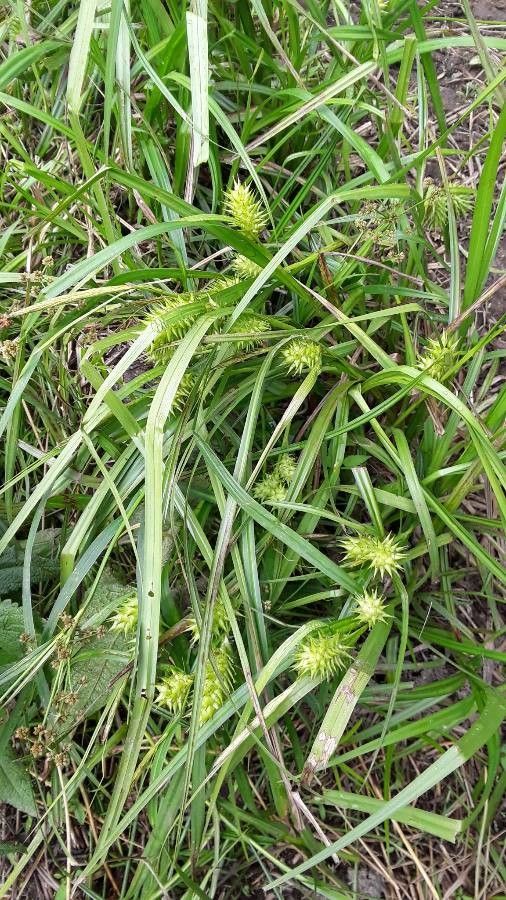
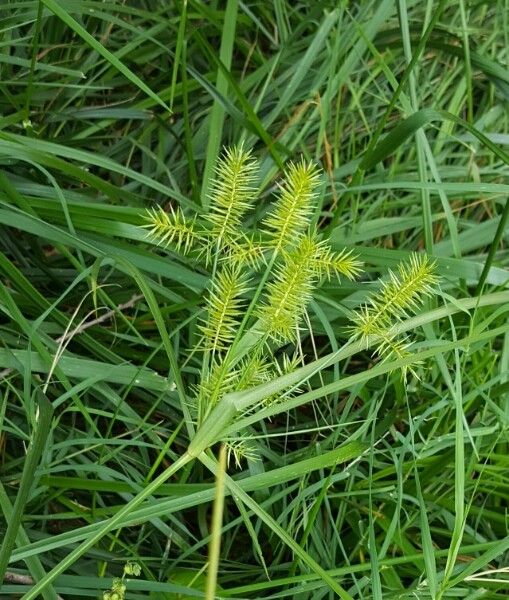
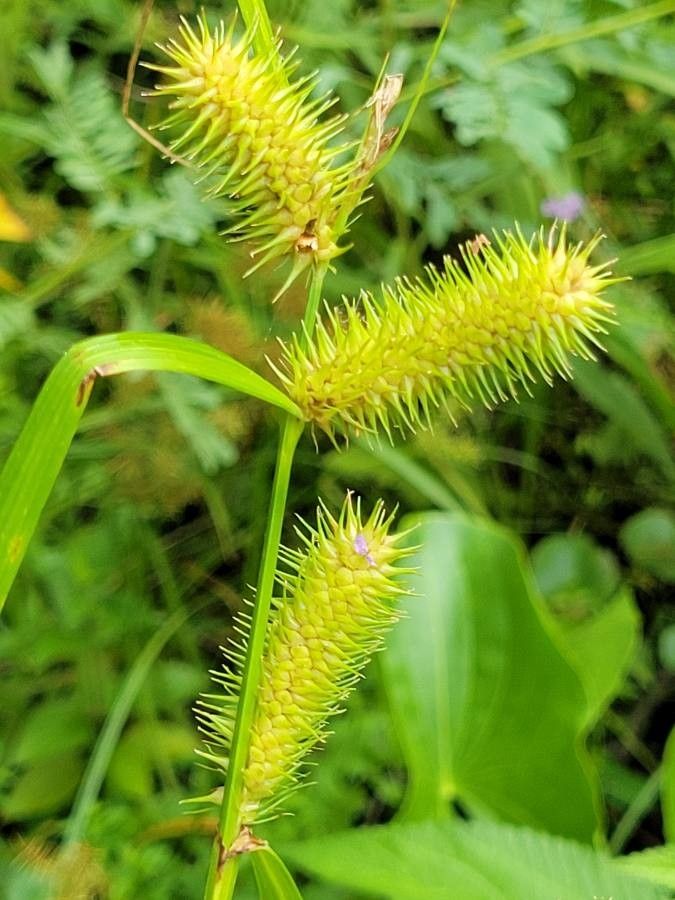
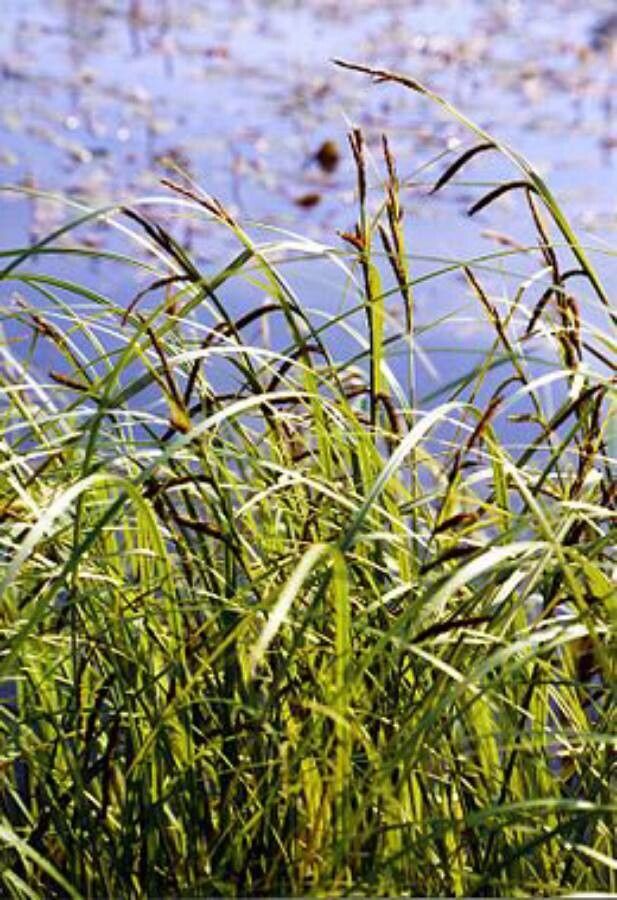
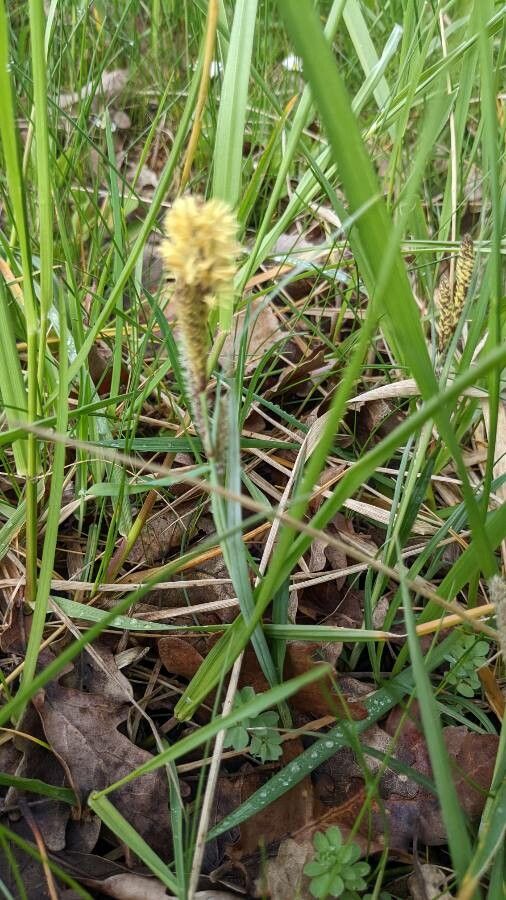
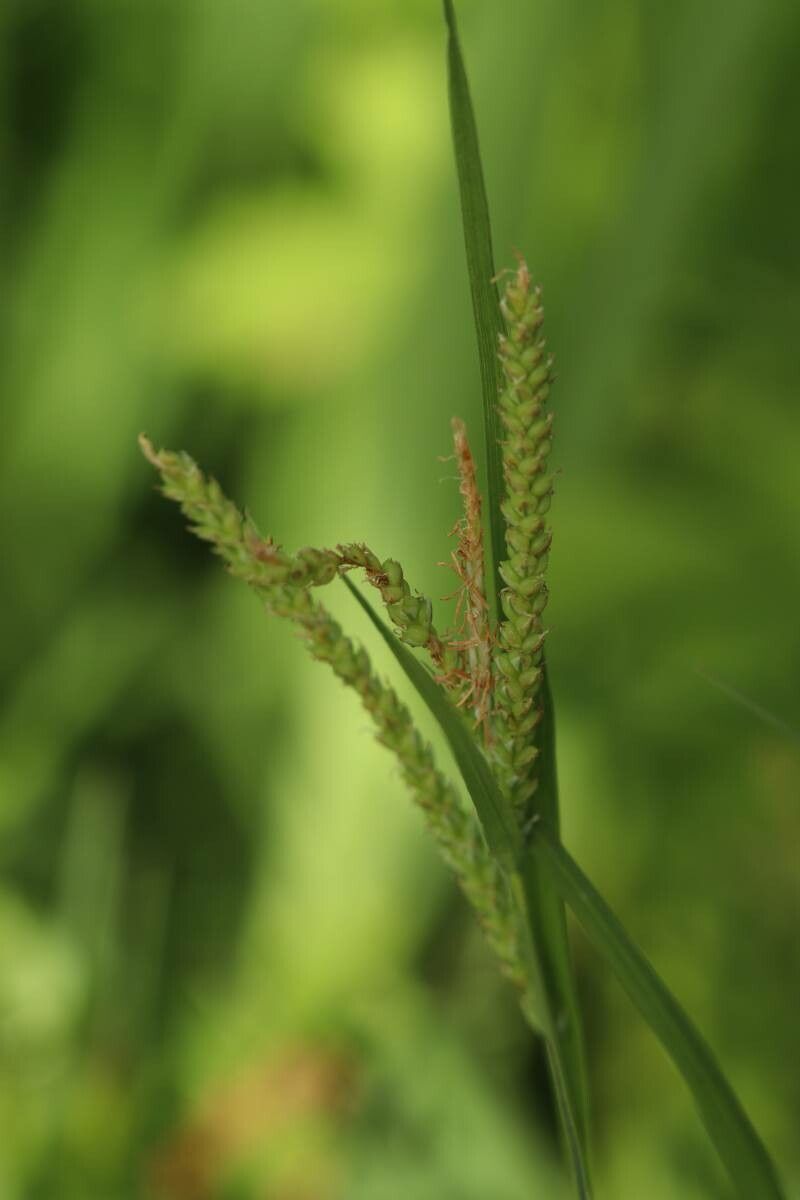
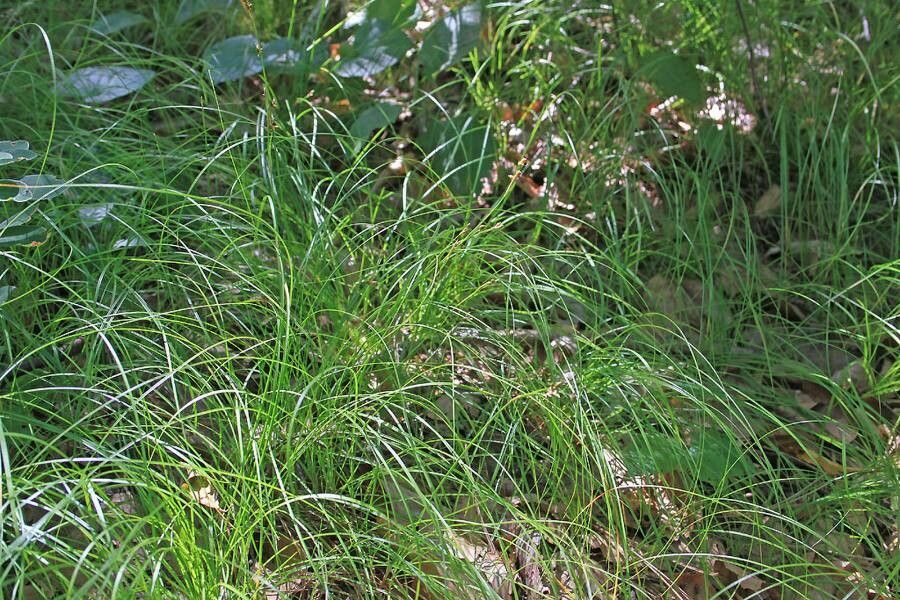
Carex lupuliformis, commonly known as hop sedge, is a perennial plant within the Cyperaceae family. Native to North America, it thrives in wetlands, marshes, and along stream banks. This plant exhibits a clumping growth habit and can reach heights of up to 3 feet.
The leaves of Carex lupuliformis are long, narrow, and exhibit a bluish-green hue. Its triangular stems support brownish-green flowers that bloom from May to July. These small, numerous flowers gather in dense clusters at the top of the stem.
Hop sedge prefers moist soil conditions but is resilient enough to tolerate some drought once established. It is an excellent choice for wetland restoration projects or as an ornamental grass for water gardens and rain gardens.
In 1754, Lin Nai established the genus known as "true sedge." This plant is a significant component of China's flora and is the dominant grass species in the lowest layer of many forests. In some areas, true sedge makes up most of the lower vegetation. FUN FACT · FROM THE LIBRARY
In addition to its ornamental value, Carex lupuliformis provides habitat for various wildlife, including birds and small mammals. Its extensive root system also helps prevent soil erosion along stream banks.
Overall, Carex lupuliformis is an attractive native grass that offers both aesthetic and ecological benefits. It is an excellent addition to any landscape design project focused on sustainability or conservation efforts.
False hop sedge is resistant to disease and is generally not susceptible to illnesses. This plant is fairly low-maintenance. When grown outdoors it needs only minimal watering; mature plants typically do not require pruning, but smaller specimens should be trimmed after they bloom. False hop sedge is suitable for anyone with outdoor space — for example a garden or a deck — and does not demand much gardening experience.
How to keep Carex Lupuliformis.
Fertilizer
False hop sedge needs additional nutrients to encourage healthy new growth. In spring, adding compost around the plant’s base can effectively supply the nourishment it requires. Fertilizing helps maintain vigorous growth and improves the plant’s resistance to diseases and pests.
Pruning
False hop sedge resembles grass and benefits from early spring pruning. To improve its vigor and appearance, remove dead foliage and trim old stems to enhance airflow. Prune before new growth begins to ensure efficient resource allocation, which promotes health and helps prevent disease.
Botanical profile.
- Plant Type
- Grass
- Life Cycle
- Perennial
- Genus
- Carex
- Family
- Cyperaceae
- Hardiness Zone
- 6-10
- Leaf Type
- Semi-evergreen
- Flower Color
- White
Other names.
Reader questions.
What are the sunlight requirements for False hop sedge (Carex lupuliformis)?
False hop sedge (Carex lupuliformis) thrives in various sunlight conditions. For full sun exposure, the plant needs above 6 hours of sunlight daily. If it's in partial sun, about 3-6 hours of sunlight is necessary. It's important to observe how sunlight moves through your garden to find spots that offer the ideal mix of light and shade. This careful placement ensures the plant's health and happiness.