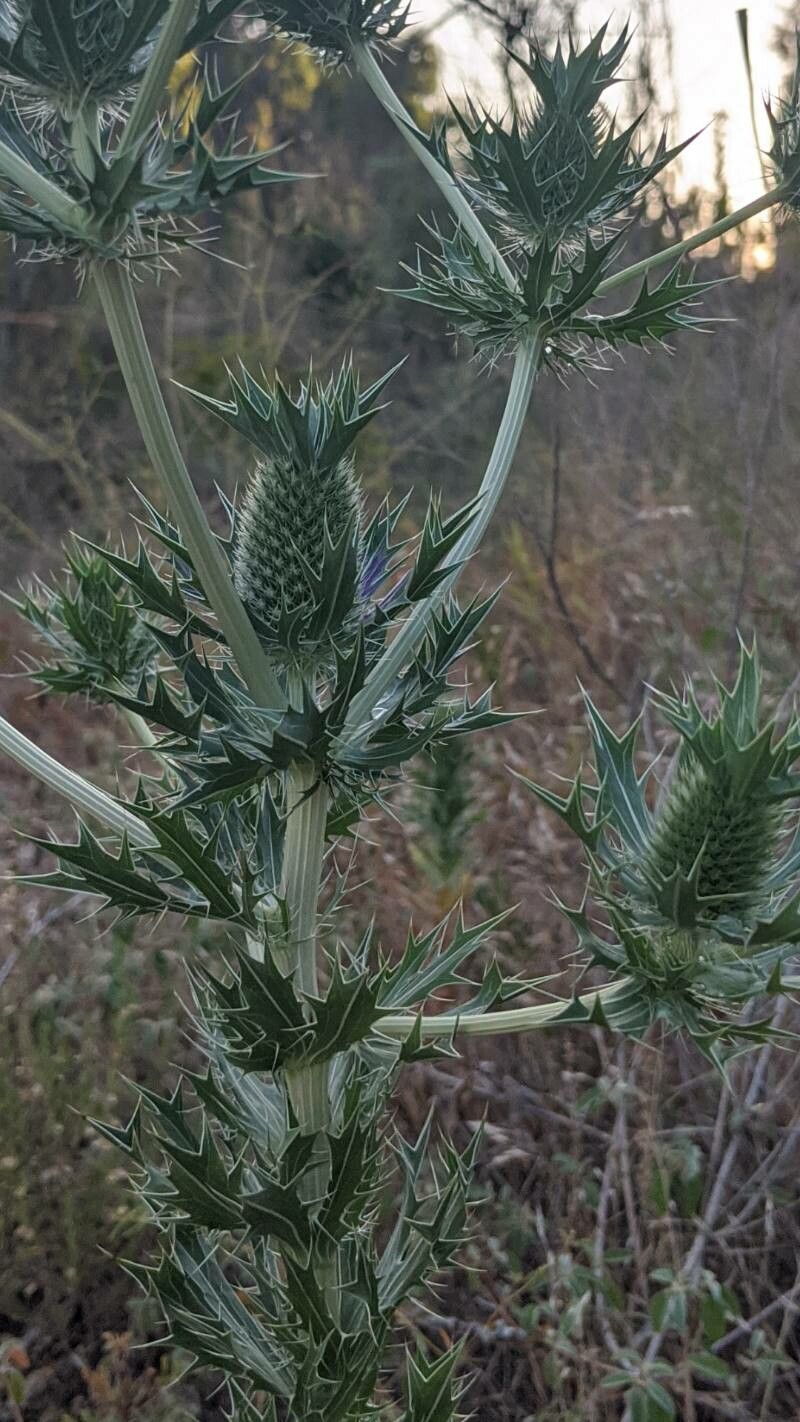
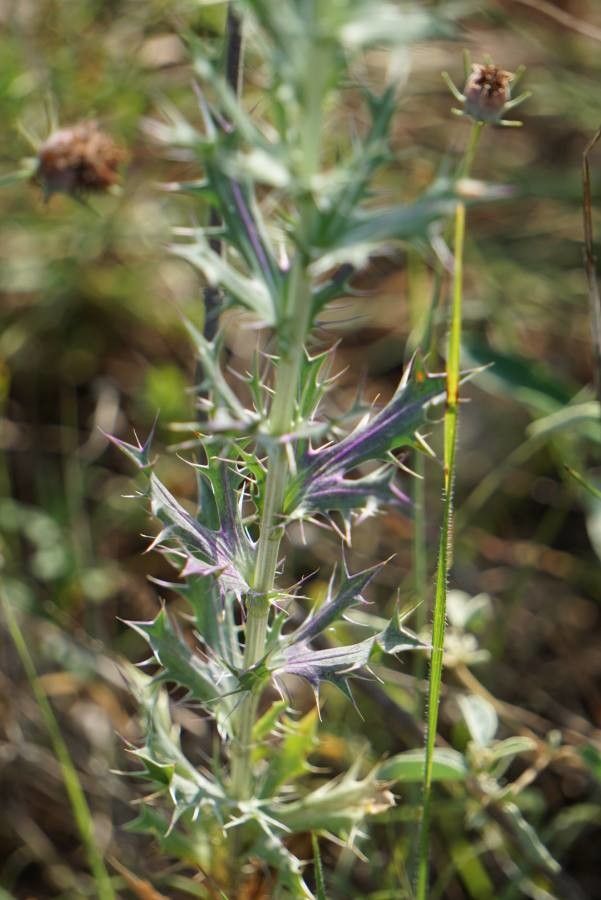
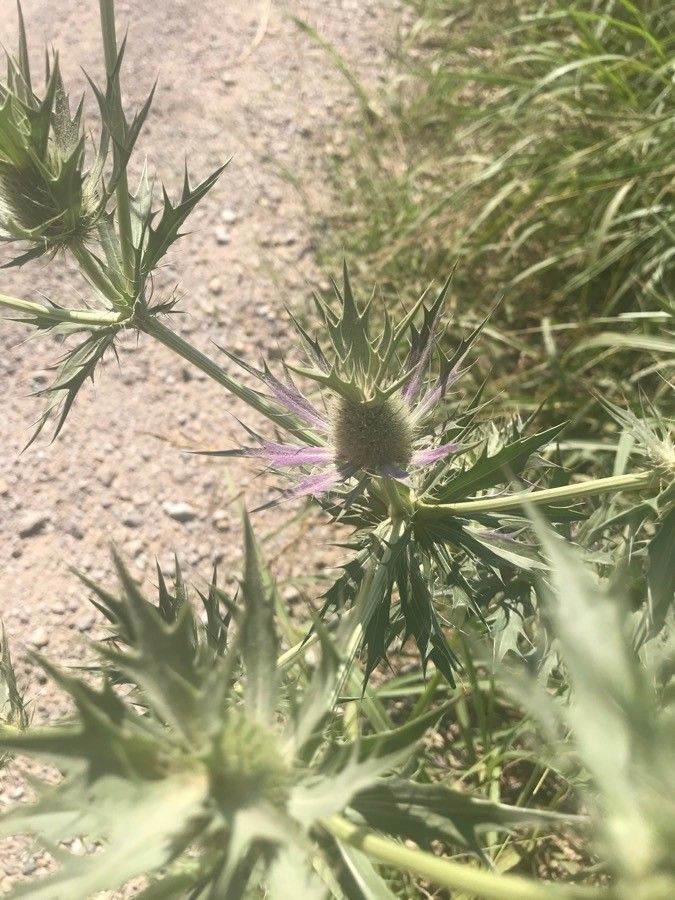
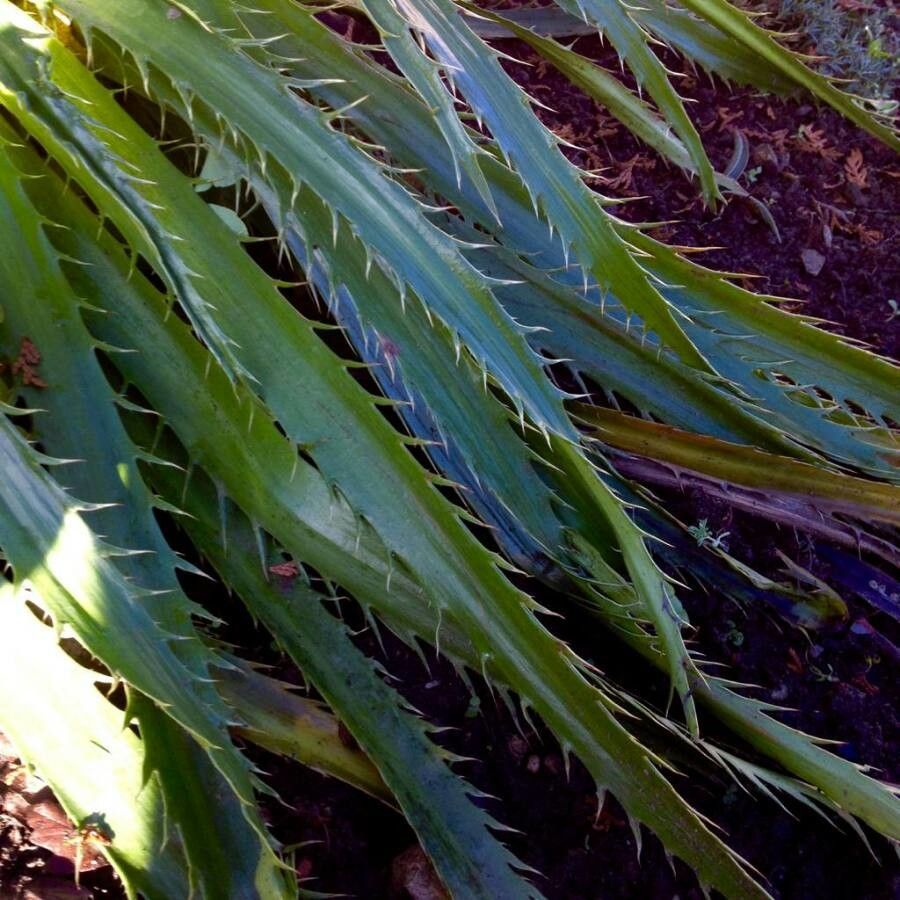
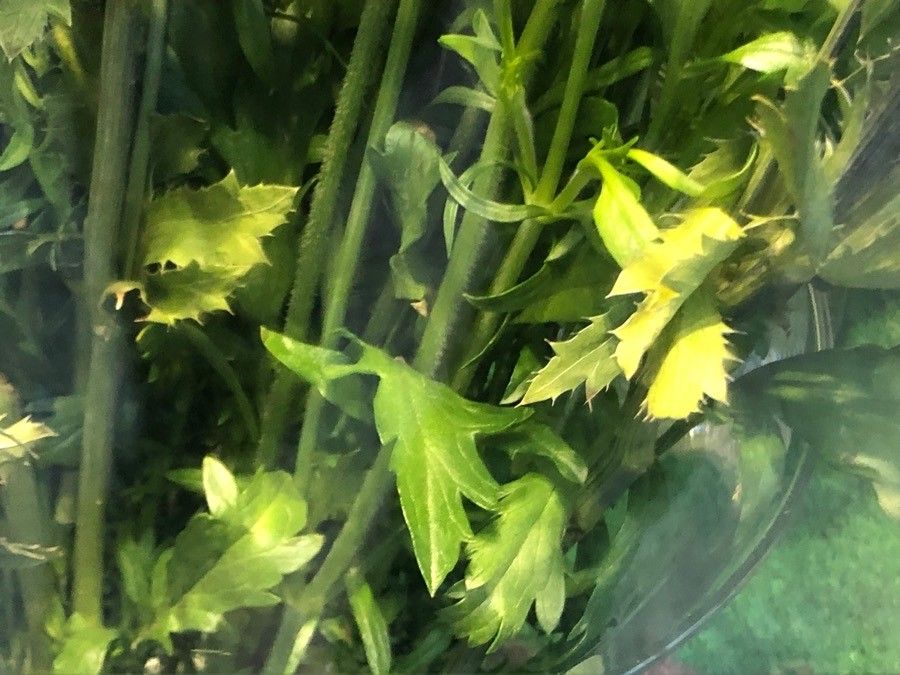
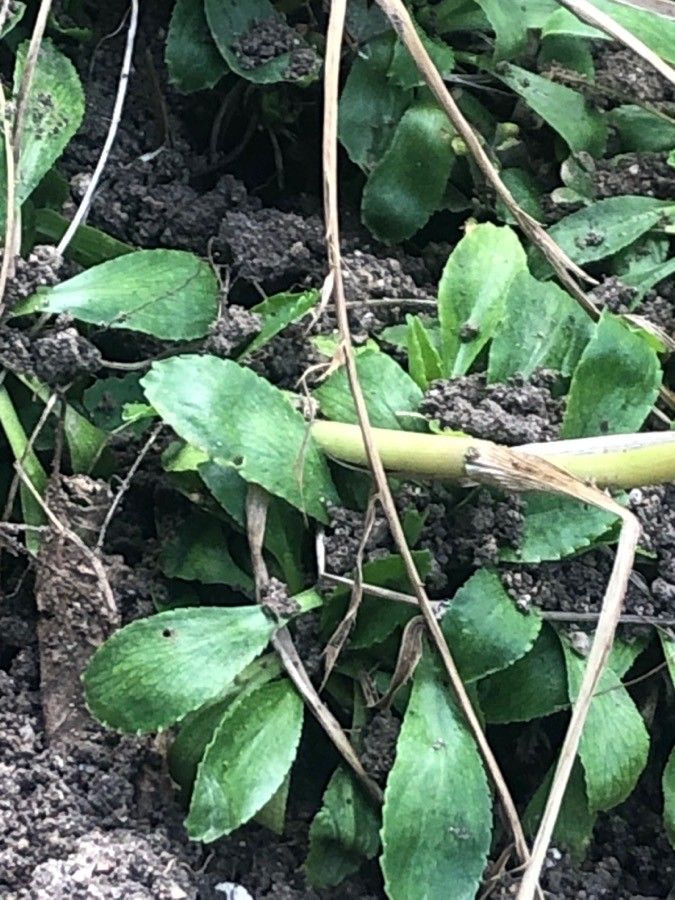
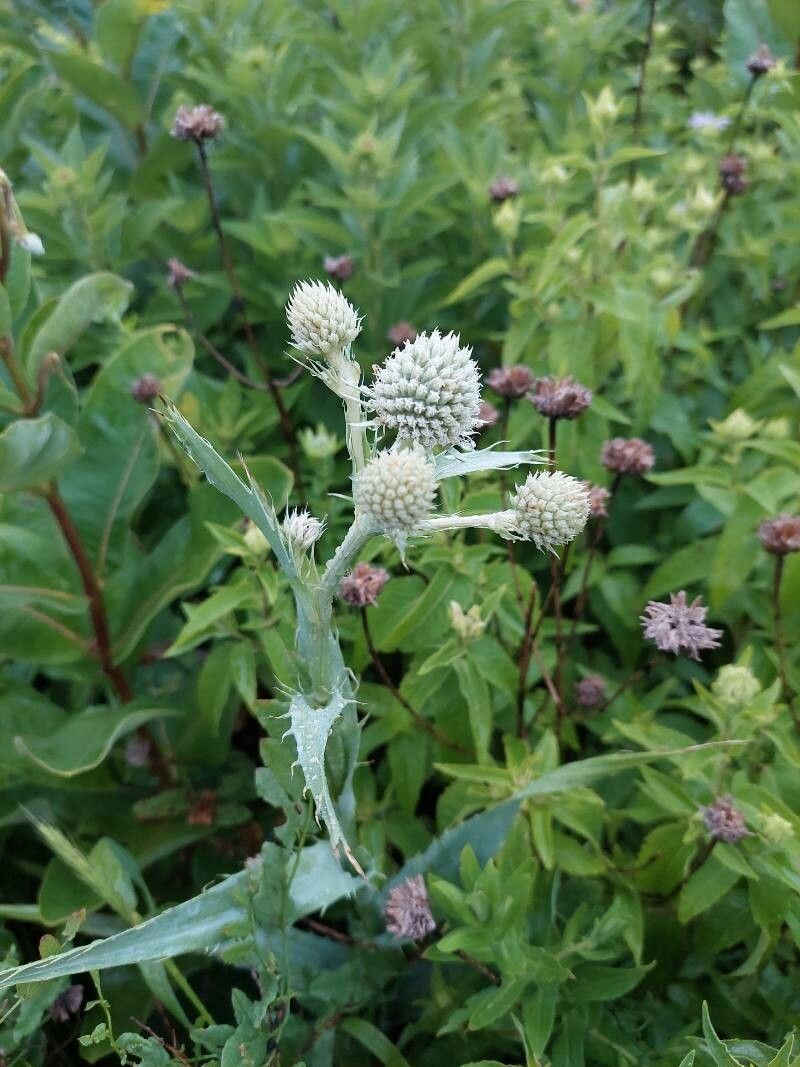
Eryngium leavenworthii, also known as Leavenworth's eryngo, is an annual plant in the family Apiaceae that is native to the central United States. It can reach heights up to 3 feet. It inhabits dry rocky prairies, roadside fields, open woodlands and waste areas. The plant is mostly found in areas with limestone or chalk soils. Its flowers appear between July to September, although in some areas the flowers may bloom as late as November. The flower ranges in length from 1 1/2" to 3" and in width approximately 1/2". It is frequently mistaken for thistle. The flowers sit atop elongated stems on spiked leaves and form cones of purple or wine colored, tightly clustered blossoms that resemble small fuzzy pineapples. It was named after, Melines Conklin Leavenworth (1796–1862) who is credited with its discovery.
Leavenworth's eryngo is fairly resistant to disease and typically does not suffer from them. However, it can still be vulnerable to pests and diseases present in its environment. These problems are usually mild. Care-wise, the plant needs moderate maintenance. Regular pruning is necessary to keep a neat appearance and encourage healthy growth. Fertilizing can also help boost flowering. Leavenworth's eryngo is suitable for anyone with outdoor space, such as a garden or patio, and does not require extensive care experience. It may need extra attention if grown indoors.
How to keep Eryngium Leavenworthii.
Light
Leavenworth's eryngo performs very well with plenty of light, though it can tolerate lower light levels. Native to open habitats, the plant prefers strong sunlight. Too little light can limit its growth, while too much may cause some minor damage.
Water
Leavenworth's eryngo, a plant native to prairie-like environments, thrives with weekly watering but can also tolerate short periods of dryness. This species shows moderate drought resistance and is well-suited to full sun exposure. Its watering needs are influenced by natural rainfall.
Temperature
Leavenworth's eryngo is a species adapted to temperate regions, with a preferred temperature range of 68 to 95 °F (20 to 35 ℃). Effective seasonal temperature adjustments help maintain its health and growth.
Fertilizer
When most of Leavenworth's eryngo blooms have opened to full size, resume fertilizing. At the peak of bloom production, apply fertilizer once every three to four weeks, as weather allows. Then, once Leavenworth's eryngo begins producing fewer new blooms, stop fertilizing; there’s no need to fertilize when the plant cannot produce any more blooms.
Pruning
Leavenworth's eryngo features spiky foliage and striking purple flowers. To encourage growth and maintain an attractive shape, prune the plant from early to late spring. During this time, remove any dead stems and leggy growth. Avoid heavy pruning in late summer to protect any new growth. Regular pruning not only promotes flowering but also improves air circulation around the plant.
Botanical profile.
- Plant Type
- Herb
- Life Cycle
- Annual, Perennial
- Genus
- Eryngium
- Family
- Apiaceae
- Hardiness Zone
- 5
- Mature Height
- 91 cm
- Mature Spread
- 30 cm to 46 cm
- Leaf Color
- Green, Gray, Silver, Bronze
- Leaf Type
- Semi-evergreen
- Flower Color
- Purple
- Flower Size
- 1.27 cm
- Bloom Time
- Mid summer, Late summer, Early fall
- Planting Time
- Spring, Summer, Autumn
- Harvest Time
- Early fall, Mid fall
Other names.
Reader questions.
How should I water my Leavenworth's eryngo plant?
There are various ways to water Leavenworth's eryngo, such as using a garden hose with a spray nozzle or a watering can. This plant is not very particular about the type of water it receives, as it can thrive from rainwater, tap water, or filtered water. It is generally advised not to water this plant from above, as it can harm the leaves and flowers, and potentially cause disease. Instead, a drip irrigation system is often recommended, as it applies water evenly and directly to the soil. For Leavenworth's eryngo grown in a container, a similar approach can be used but with different tools, like a cup, watering can, or tap, to directly water the soil.
Why is it necessary to put fertilizer on my Leavenworth's eryngo?
Plants require nutrients to grow, but some can obtain what they need without any additional fertilizers. Leavenworth's eryngo, like other plants, utilizes nutrients for growth and internal processes. Nitrogen, phosphorus, and potassium are the main nutrients plants need, with nitrogen being crucial for foliage development. However, Leavenworth's eryngo often struggles to obtain sufficient nitrogen from the soil. Consequently, many gardeners opt to supplement it with additional nitrogen.
What are the sunlight requirements for Leavenworth's eryngo?
Leavenworth's eryngo demands sufficient sunlight to flourish optimally, thriving best in full sun conditions which means it requires more than 6 hours of direct sunlight daily. It can also adapt to partial sun situations with about 3-6 hours of sunlight. The plant's native habitat in open environments contributes to its preference for intense sunlight. However, it's important to observe the way sunlight traverses your garden throughout the day to find spots that offer a harmonious balance of light and shade, ensuring the well-being of your plants.
What is Leavenworth's eryngo and what are its ideal climate conditions?
Leavenworth's eryngo, scientifically known as Eryngium leavenworthii, thrives in temperate climate regions. It prefers a temperature range of 68 to 95 °F (20 to 35 °C) and adjusts well to seasonal temperature variations to sustain health and growth. This species is highly cold-tolerant, eliminating the need for additional frost protection measures during winter. To prepare for winter, it is recommended to water the plant generously before the first freeze of autumn to ensure the soil remains moist and freezes, preventing drought and water scarcity for the plant during winter and early spring.
What should I do if I give too much or too little water to my Leavenworth's eryngo?
To keep your Leavenworth's eryngo plant healthy, it is important to address both underwatering and overwatering. When you notice that your plant is lacking moisture, simply increase the frequency of watering to ensure it stays hydrated. On the other hand, overwatering can be a more serious problem if not detected early. Excessive water can cause diseases and ultimately lead to the decline and death of your plant. To prevent this, choose a suitable location for your Leavenworth's eryngo, one that receives ample sunlight to dry out the soil and has good drainage to prevent water from pooling. If your potted eryngo is overwatered, it may be necessary to transfer it to a new pot. Your previous container may not have provided proper drainage or had enough drainage holes. When repotting, use loose soil and a pot that allows efficient drainage.
When should I fertilize my Leavenworth's eryngo?
Leavenworth's eryngo typically grows well, but it can benefit from a monthly application of fertilizer during its active growth period in the spring and summer. It is important to note that you should only fertilize Leavenworth's eryngo during the spring and summer months, as it becomes less active and requires fewer nutrients in the fall and winter. You'll be able to tell when to start fertilizing by looking for new growth on the plant. Whether you're growing Leavenworth's eryngo outside or indoors in a container, the fertilization schedule remains the same. However, if your plant is in a container, you may not need to fertilize for the first one to two months. This is because potting soil for container plants already contains sufficient nutrients. You should only begin fertilizing after your plant has been in the same soil for a while.
How does artificial lighting benefit indoor plants like Leavenworth's eryngo?
Artificial lighting plays a crucial role, especially for indoor plants like Leavenworth's eryngo when natural sunlight is insufficient. This is common during winter or in spaces that do not receive ample sunlight. By employing artificial lights, such as LED lights which can be tailored to provide specific light wavelengths needed by the plant, growth is promoted more effectively. For instance, full sun plants need between 30-50 watts per square foot of artificial light, partial sun plants require 20-30 watts per square foot, and full shade plants should have 10-20 watts per square foot. It's essential to mimic natural sunlight as closely as possible in terms of duration, usually aiming for 8-12 hours per day, and adjusting the distance of the light source (12-36 inches above the plant) to stimulate healthy plant development.
How does Leavenworth's eryngo respond to low temperature conditions and what solutions are recommended?
Leavenworth's eryngo exhibits extreme cold tolerance, capable of withstanding temperatures above -25°C (-13°F). However, if temperatures fall below this threshold, the plant might not show immediate distress in winter, but a decrease in sprouting or total absence of sprouting during spring could occur. The solution for spring includes removing any parts of the plant that have failed to sprout, encouraging healthy new growth.
How often should I give water to my Leavenworth's eryngo?
To keep your Leavenworth's eryngo healthy, it's important to water it regularly, especially during the growing season. In the spring, watering once a week should be sufficient. However, as the weather gets hotter, you may need to increase watering to two or three times a week. But be careful not to overwater, as it can harm the plant. Regardless of how often you water, make sure the soil is consistently moist but not soaking wet. If you have a potted Leavenworth's eryngo, you'll need to water more frequently compared to one planted in the ground. Potted soil tends to dry out faster due to heat, so aim to water the container-grown plant a few times per week, instead of just once a week for in-ground plants.
When is the best time to not add fertilizer to my Leavenworth's eryngo?
To ensure healthy growth, avoid fertilizing a Leavenworth's eryngo that is already unhealthy due to a disease or insect infestation. Additionally, refrain from fertilizing dehydrated plants as it may exacerbate the problem. Instead, focus on fertilizing only when plants are in good health. Take care not to splash fertilizer onto the leaves or stem of the plant, as this can result in burned spots. Unless using a specific foliage fertilizer, avoid direct contact between the plant and the fertilizer.
What are the symptoms of inadequate light in Leavenworth's eryngo?
Leavenworth's eryngo exhibits various symptoms when exposed to insufficient lighting, including smaller new leaves compared to older ones, leggy or sparse growth indicating a stretched appearance due to the long spaces between leaves or stems, faster leaf drop as a resource-conserving measure, delayed or halted growth due to poor light conditions triggering survival mode, paler new leaves or chlorosis reflecting a lack of chlorophyll and essential nutrients, and additional symptoms like sunscald, leaf curling, wilting, and leaf scorching due to inappropriate light levels. These symptoms manifest differently depending on whether the plant receives too little or too much light.
What should be done if Leavenworth's eryngo is exposed to high temperatures?
Leavenworth's eryngo is sensitive to high temperatures above 35°C (95°F), leading to halted growth and increased susceptibility to rot. In such cases, it is crucial to trim away the sunburned and dried-up parts of the plant. Moving the plant to a shadier location or employing a shade cloth can provide necessary protection from intense midday and afternoon sun. Additionally, watering the plant in the morning and evening will help keep the soil moist, aiding the plant in coping with the heat.